A manufacturer's view of the white and near-white stones that actually work around a pool — white-grey granite, pale grey marble and warm beige travertine — with the profile choices and the honest sealing, deposit and heat trade-offs of a light edge.
Stone selection & care
A white pool edge photographs beautifully. It lifts the water colour, makes the deck read wider, and stays legible against a dark liner or a green garden. That is the reason most buyers start a search with white pool coping in mind.
The trade-off shows up after the first season. Light stone around chemically treated water is honest about everything: splash lines, dissolved minerals, leaf tannin and sunscreen all settle where they can be seen. None of that rules white out — it just means the stone choice and the finish have to be made with maintenance in mind, not only with a photograph in mind.
This article is written from the factory side. It covers the three white and near-white families we actually cut for pool jobs, the profiles and finishes that suit a pale edge, what sealing really buys you, and how to keep a whole pool consistent when coping, decking and steps are ordered together.
The short version
White-grey granite is the lowest-maintenance pale option because of its low absorption. Pale grey marble gives a softer, more architectural look; sealing lowers its surface water absorption and reduces freeze-thaw risk, and whether that is enough depends on the local freeze-thaw cycles and on how the installation drains. WARM beige travertine is not white, but it is the warmer-leaning alternative when glare and heat underfoot matter more than brightness.
The white and near-white stones we actually cut
There are many white stones on the market. These are the ones that come off our lines as pool coping with a known profile and thickness range, so a buyer can specify them with confidence.
White-grey granite: Bianco Crystal (Hubei 603)
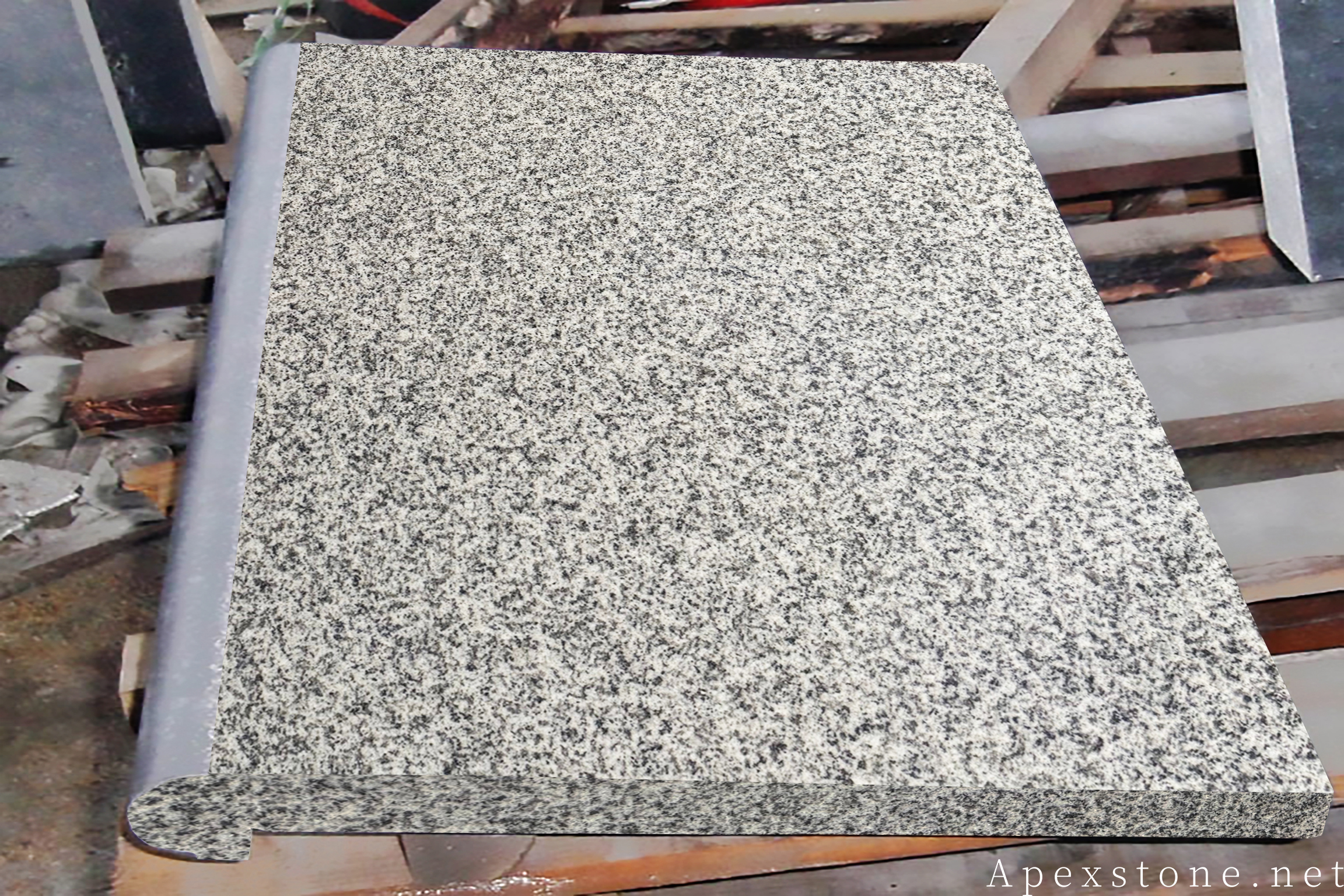
Bianco Crystal is a light grey/white granite with a fine, even grain — no dramatic movement, which is exactly what you want on a long coping run. It is available as white-grey granite pool coping with bullnose, double bullnose, eased and rebated profiles, and thickness from 30 mm (1-1/4 inch) up to 2 inch.
Two properties matter here. Granite has low absorption, which makes it the lowest-maintenance pale option among the three. And the same production lot can be matched across coping, decking and steps — more on why that matters below.
Typical build: flamed or sandblasted deck surface with a honed or polished nose. The textured top gives grip where people walk wet; the smoother nose is comfortable against a hand or a foot when someone is climbing out.
Pale grey marble: Chanel Grey
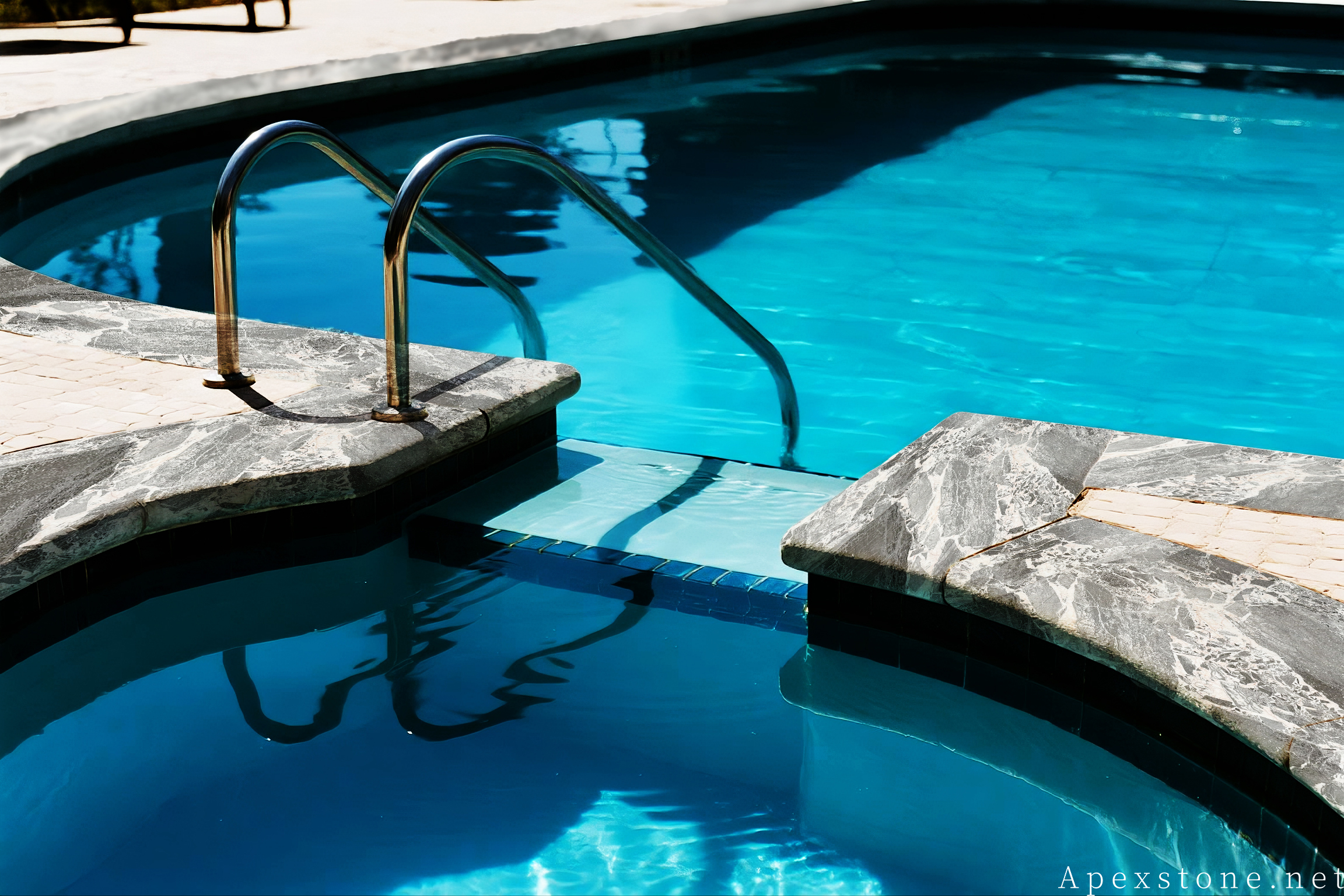
Chanel Grey is a soft grey base with subtle darker veining. It is quieter than a pure white marble and, in our experience, easier to live with on an outdoor edge because the veining breaks up the surface visually. It comes as pale grey marble coping in honed, flamed and brushed finishes, with bullnose, eased, beveled and custom edges, at 20, 30, 40 and 50 mm thickness.
Marble needs sealing to perform outdoors, and the sealing specification plus the maintenance cycle should be written into the order. Sealing lowers surface water absorption and reduces freeze-thaw risk; whether that is enough for your site depends on the local freeze-thaw cycles and on how the installation drains. Confirm the sealer type and re-sealing interval with your supplier for your project's climate.
Warm beige travertine: Travertine Romano (Classico Roma, Italy)
Travertine Romano is warm beige rather than white, and that is the point. Where a buyer's real concern is heat underfoot or the glare of a very bright deck, a warm neutral solves the comfort problem that a white stone cannot. In direct sun, a warm beige tone generally reads less hot underfoot than a very light white surface, with the gap depending on the finish — a honed or textured face narrows it, a polished one widens it. The unfilled brushed or tumbled finishes give a grip surface that suits a wet edge. Coping is 30 mm (1-1/4 inch).
If the brief is strictly "white pool coping," travertine is the wrong answer. If the brief is "light edge that stays comfortable and hides debris," it is often the right one. See the warm beige travertine coping range for the available finishes. When the comparison in your head is a cooler grey rather than a beige, silver travertine coping versus ivory sets out how the two tones age at the waterline.
| Stone | Colour read | Thickness range | Profiles / finishes noted | Best fit |
|---|---|---|---|---|
| Bianco Crystal granite | Light grey/white, fine even grain | 30 mm (1-1/4 inch) to 2 inch | Bullnose, double bullnose, eased, rebated; flamed/sandblasted deck, honed/polished nose | Lowest-maintenance pale edge |
| Chanel Grey marble | Soft grey with subtle darker veining | 20 / 30 / 40 / 50 mm | Bullnose, eased, beveled, custom; honed, flamed, brushed | Softer architectural look, sealed |
| Travertine Romano | Warm beige | 30 mm coping | Unfilled brushed or tumbled | Heat comfort, warmer palette |
Finishes and profiles for a pale edge
On a light stone, the finish choice is more visible than on a dark one. A polished white surface reflects and amplifies brightness; a honed or flamed surface softens it and hides the small marks that a pool environment produces.
- Deck surface: flamed or sandblasted on granite, brushed or tumbled on travertine, honed or brushed on marble. Texture is what a wet deck needs.
- Nose (the poolside edge): honed noses feel better in the hand than polished ones on hot days, and they show fingerprints and splash less. Polished is still available where a crisper, more formal look is wanted.
- Profile: bullnose and double bullnose are the standard soft edges; eased is a squarer, more contemporary line; rebated profiles suit specific coping-over-wall details.
The distinction between deck finish and nose finish is the single most useful specification decision on a light pool edge. It lets you keep the slip-relevant texture on the walking surface and the comfort-relevant smoothness on the edge, without compromising either. More on profiles and sizing is in our guide to stone coping for pools.
Honest care trade-offs
Light coping does not fail because it is light. It shows things sooner, and buyers should price that into the decision.
Sealing
Sealing is not cosmetic on pale stone around treated water. It slows the uptake of water and dissolved minerals at the surface, which is what waterline deposits and staining feed on. Granite's low absorption means it needs less help than marble or travertine, but no pale stone around a pool should be treated as zero-maintenance. Marble in particular relies on sealing: it lowers surface water absorption and reduces freeze-thaw risk, and how far that goes depends on the local freeze-thaw cycles and on how the installation drains.
Waterline deposits and organic debris
Chemically treated water leaves a splash line, and light colours make it visible earlier than mid-tones do. Leaves, pollen and insects also show on a white surface in a way they do not on grey or beige. This is a routine-care question, not a defect question: the same debris is on every pool edge, it is simply more legible on a pale one.
Heat comfort
Very light colours make water look brighter, and in direct sun a white surface generally reads hotter underfoot than warm beige does. Finish is the other half of the equation: on a honed or textured surface the difference narrows, on a polished one it widens. Buyers with barefoot traffic and full-day sun should weigh travertine's comfort against the brightness they wanted.
The one thing that should never be promised about a light stone is that it will stay exactly as delivered. White stone changes with exposure and chemistry. What you control is how slowly that happens — through finish choice, sealing and cleaning routine.
Keeping a light edge consistent across the whole pool
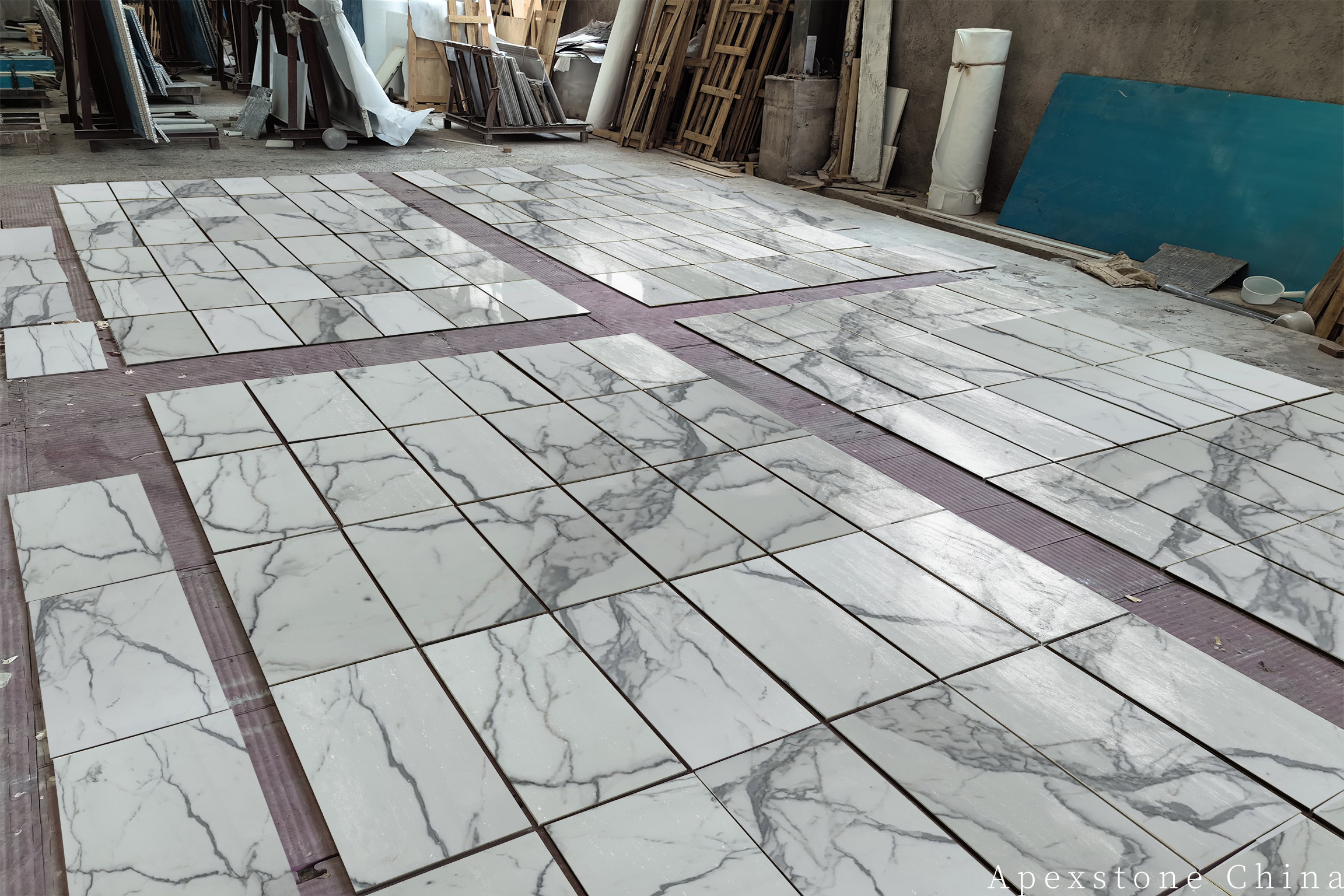
On a white or near-white stone, lot variation is far more visible than on a dark one. A coping run cut from one block and a deck panel cut from the next can read as two different stones once they are side by side in daylight, and near a pool they always are side by side.
This is where a factory-side decision saves a project on site. Ask for coping, decking and steps to be produced from the same production lot, so the slab across the whole pool shares one background and one grain. For Bianco Crystal specifically, our production matches the lot across all three elements — which is why the specification should list coping, decking and step treads as one order, not three.
Order the curved sections at the same time as the straight runs, for the same reason. A later curve cut from a different block will often sit visually apart from the edge it joins. If the deck behind that edge is still an open question, coping pavers and how they differ from pool coping stones covers where a standard paver works as a deck and where it cannot serve as the edge.
FAQ
Which white stone needs the least maintenance?
White-grey granite, such as Bianco Crystal, has low absorption and is the most forgiving of the pale options around treated water. It still needs routine cleaning, but it needs the least help from sealers.
Does white coping get hot?
In direct sun a very light surface generally reads hotter underfoot than a warm beige one, though the finish matters: a honed or textured face narrows the difference and a polished face widens it. Where heat comfort is the priority, Travertine Romano is the warmer-leaning alternative.
How often does light coping need sealing?
There is no single answer — it depends on the climate, the amount of splash and sun the deck receives, and the sealer used. Confirm the re-sealing interval for your chosen sealer with your supplier before you specify it, and treat that interval as part of the maintenance plan rather than an optional extra.
Choosing a white pool coping is a decision about how much visible upkeep you are willing to plan for in exchange for a brighter edge. If your project has a stone in mind and a climate to match, the next step is to confirm the profile, finish and lot-matching on the coping, decking and steps as one specification.