A manufacturer's guide to stone coping for pools: which natural stones work around water, the edge profiles buyers actually order, thicknesses for bond beams and handrail fixings, and exactly what to send us for a matched-package quotation.
Apexstone · Stone for pools
Every pool package that leaves our factory in Xiamen gets checked piece by piece, but the coping line is the one that gets handled most. Cut lengths have to match the bond beam. The profile has to be identical from the first piece to the last. If one bullnose comes out a millimetre flat, it shows up straight away against the pool wall, and somebody on site has to fix it. Since 2002 we have shipped stone into projects in 42+ countries, and the same lesson holds everywhere: coping is the stone everyone touches, sits on and judges first.
This page is the working version of what we explain to pool builders, landscape contractors and importers before they order stone coping — what it is made of, which natural stones belong around a pool, which profiles and sizes we actually cut, and what to send us so the quote comes back correct.
- Granite is the hardest, lowest-absorption option and the easiest to specify in a full matched package.
- Travertine stays cool underfoot and needs sealing; marble needs care around chemicals.
- Profile and thickness consistency across the whole lot matters more than any single spec number.
- Send drawings, profile, lengths and finish — that is enough to quote.
What stone coping is, and what it is made of
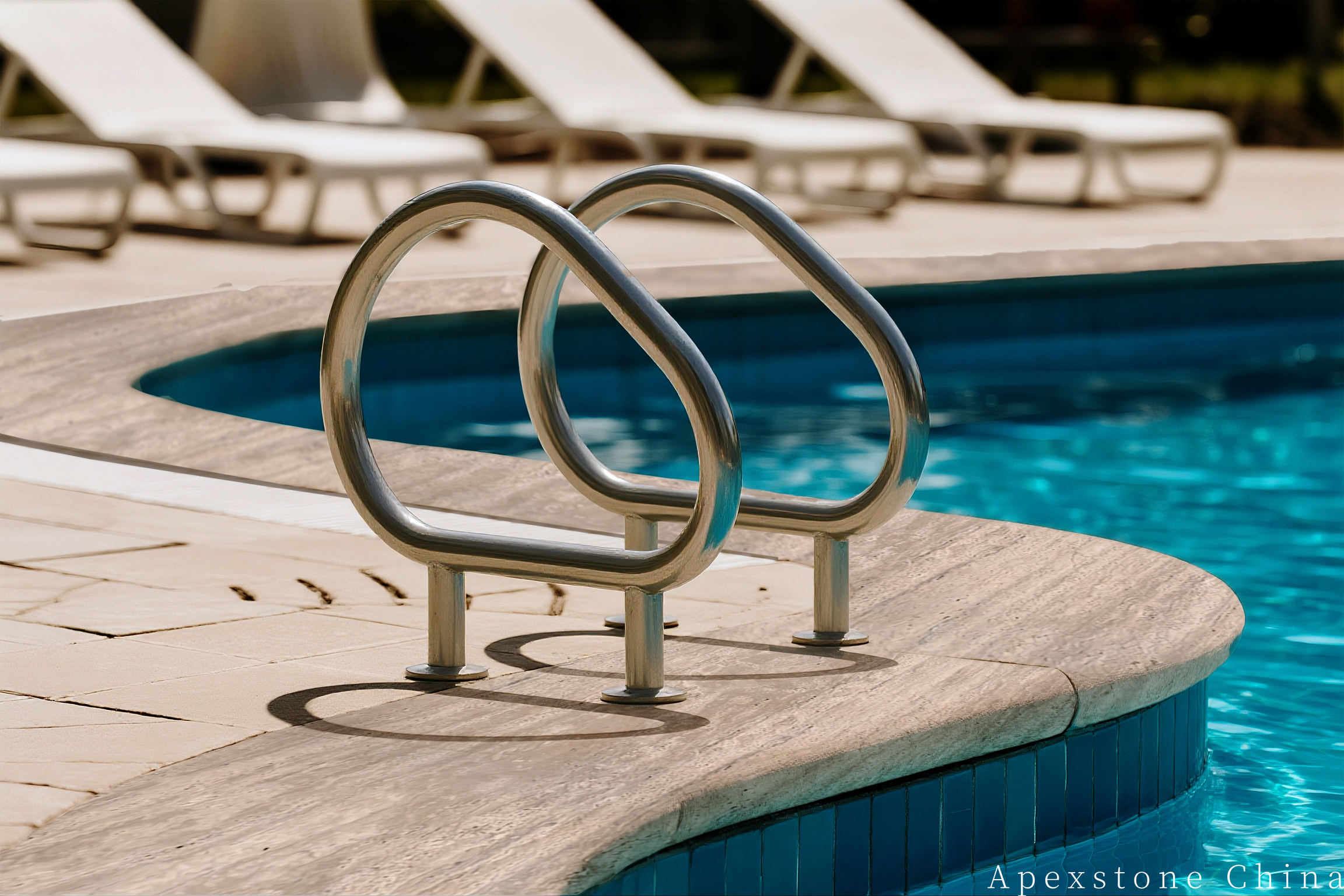
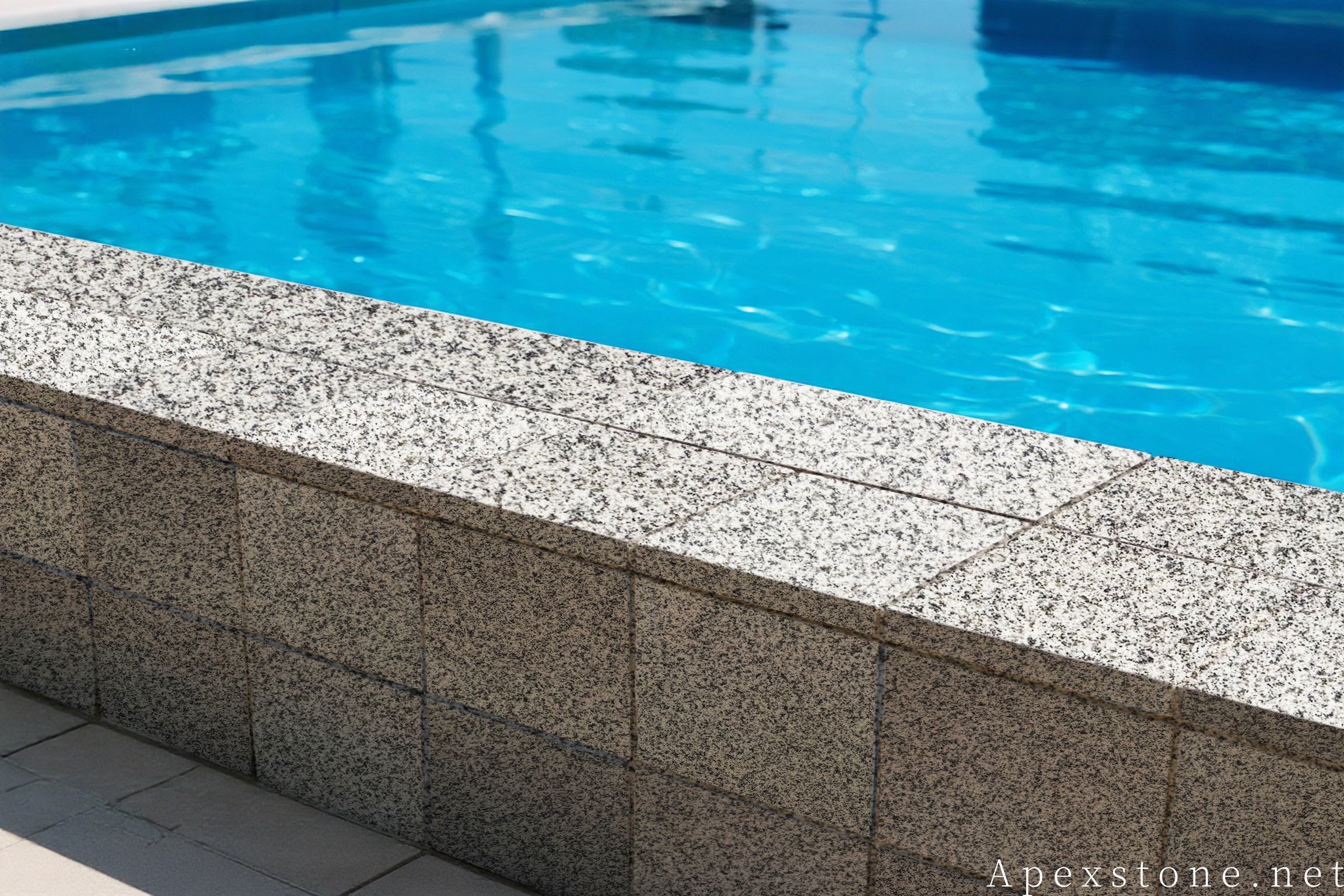
Pool coping is the stone that caps the pool wall and closes the gap between water and deck. It does three jobs at once: it covers the top of the bond beam, it gives swimmers a grip edge they can pull themselves out on, and it sets the visual line of the whole pool surround.
Natural stone pool coping is almost always cut from one of four materials we work with daily: granite, travertine, marble or limestone. Each is quarried as block, sawn to thickness, then profiled and finished on the edge and the face. The finished product you receive is a cut-to-length stone piece — not a moulded concrete cap — so every dimension comes off the block and off the saw, which is precisely why the specification sheet matters.
What it is made of also decides how it should be sold to you: as one matched production lot, so the coping, the decking and the step treads around the same pool read as the same stone.
Material options, with the trade-offs we will tell you straight
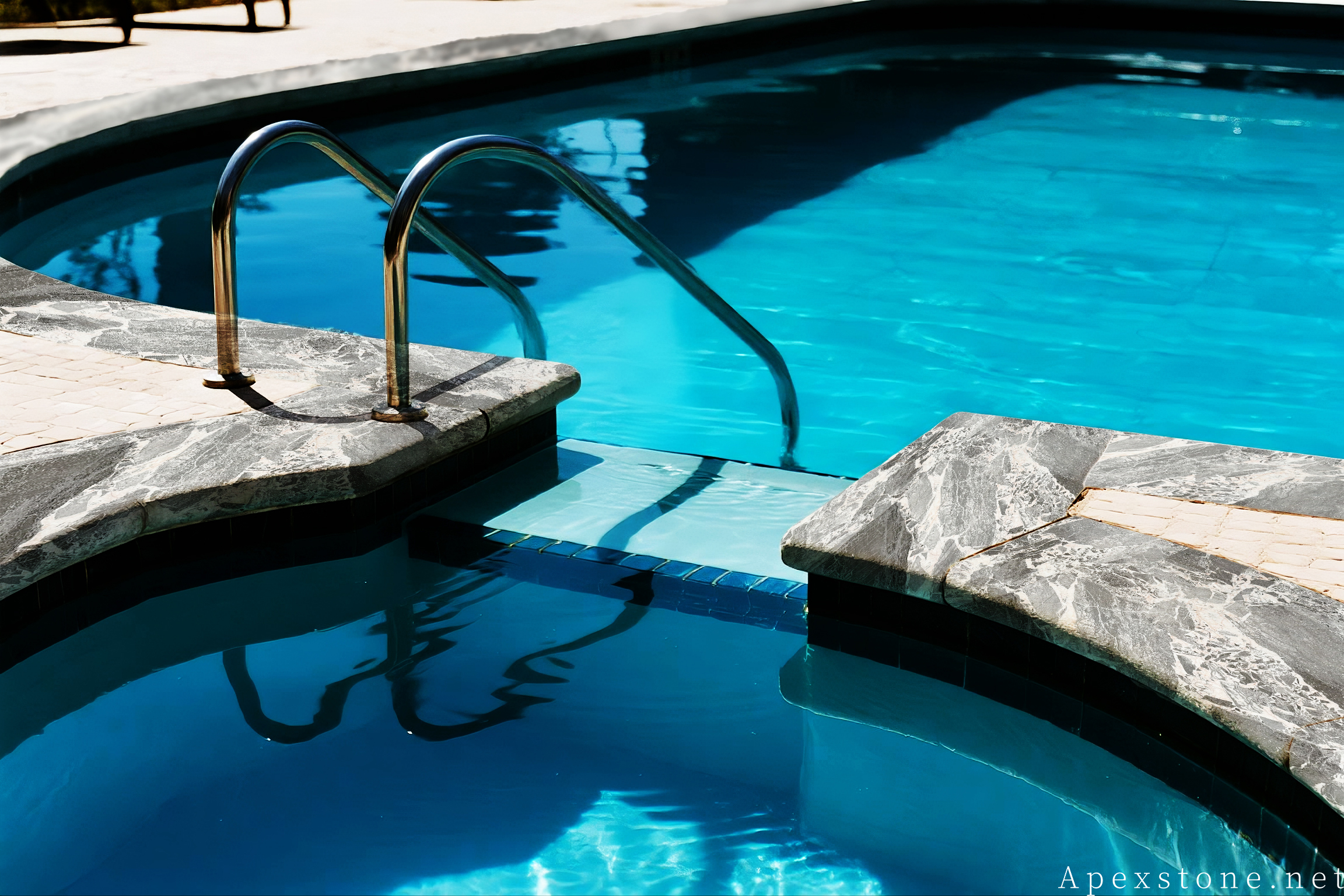
Granite
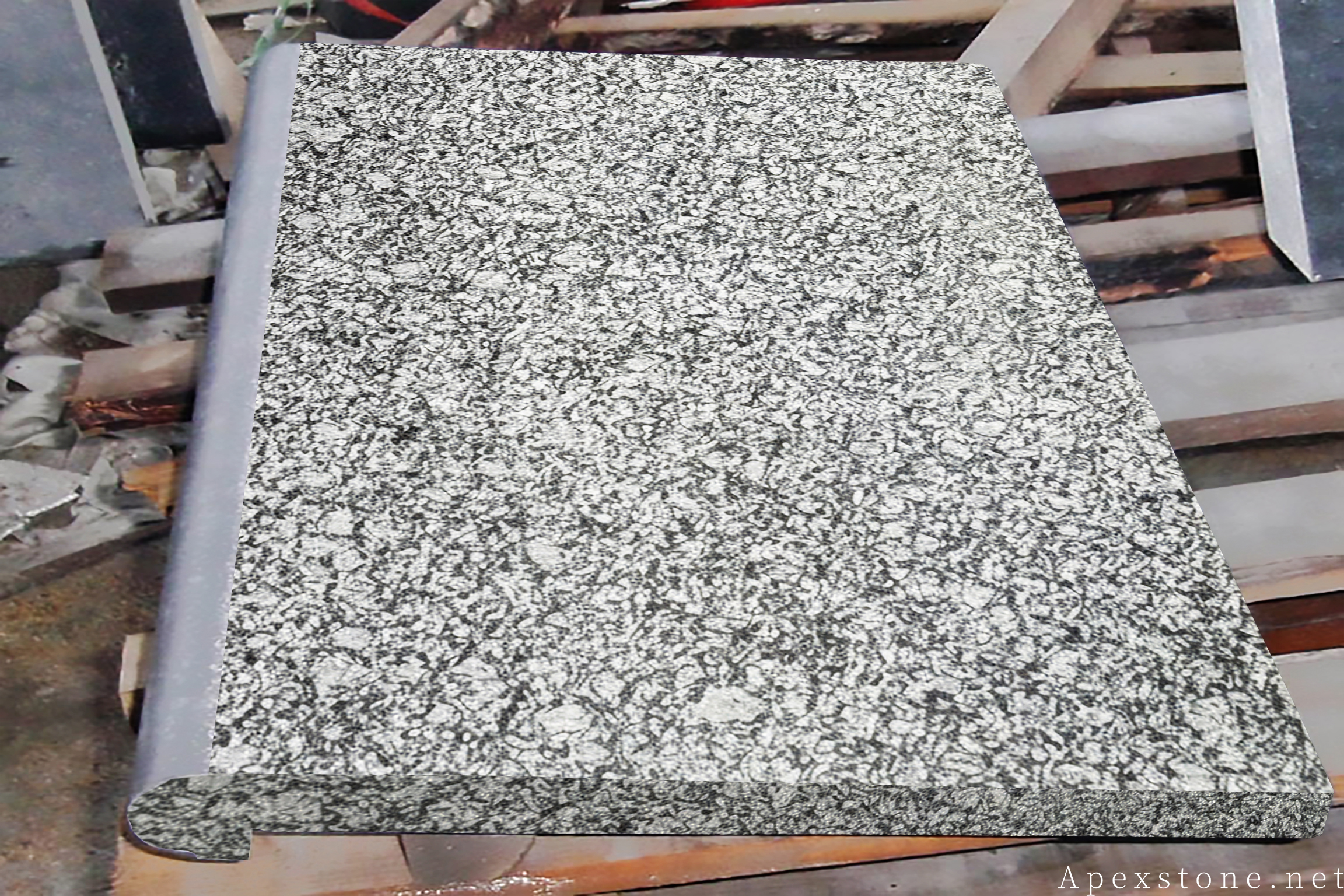
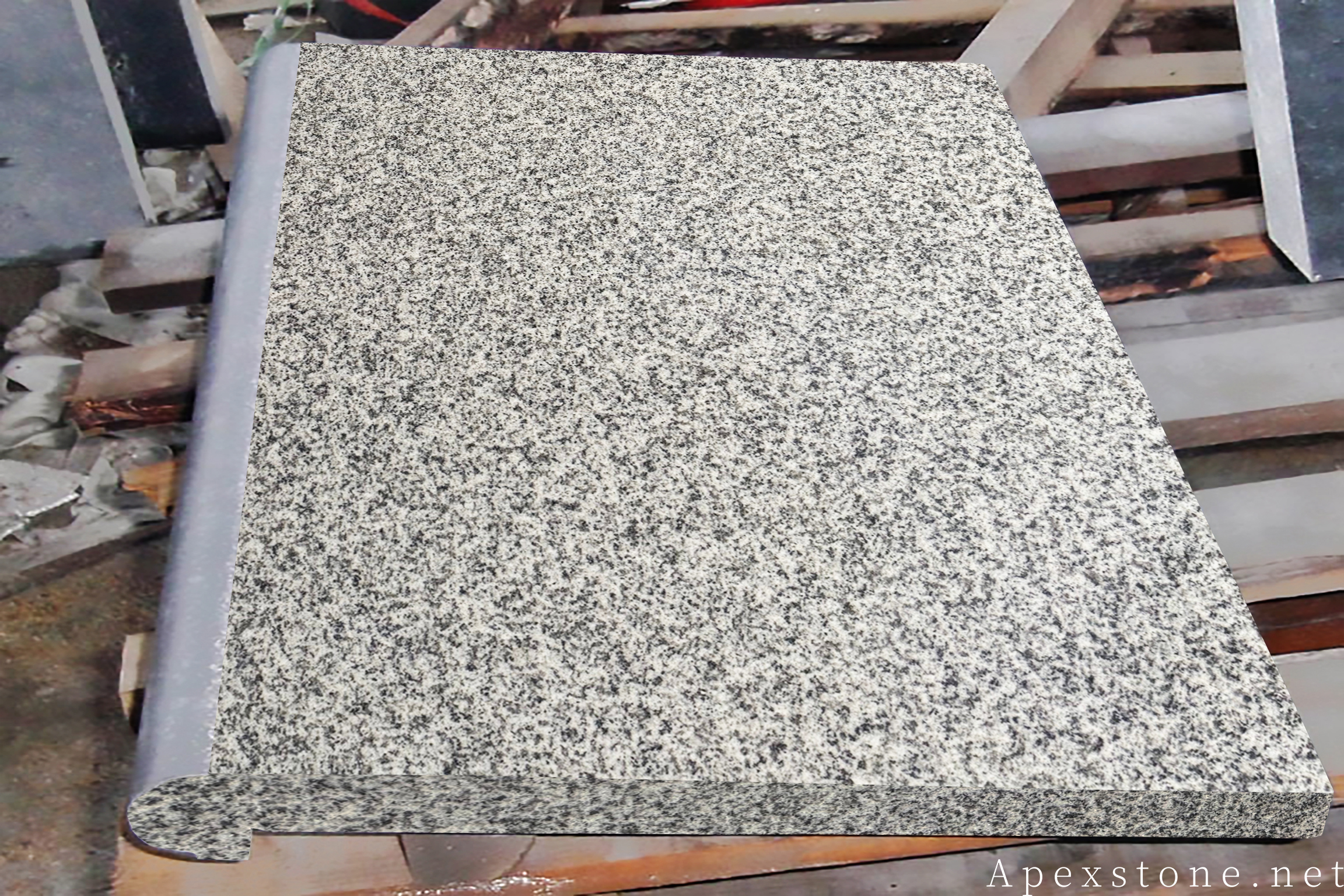
Granite is the hardest and lowest-absorption option in our range, and for most pool projects it is the safe answer. Our Bianco Crystal granite pool coping and decking program covers bullnose, double bullnose, eased and rebated coping, with decking in 12x24, 16x24 and 24x36 inch formats alongside 600x300 and 600x600 mm. Deck faces can be flamed or sandblasted with a honed or polished nose. Sea Wave granite runs bullnose, half-bullnose and flat eased profiles at water absorption below 0.5%, flamed or honed for slip resistance. More on our granite pool coping supply program.
Travertine
Travertine is chosen for the way it feels. A brushed or tumbled unfilled finish gives grip, and an unfilled face generally feels cooler underfoot than a polished one — how much cooler depends on the finish and on the sun exposure. Our Travertine Romano from Italy is cut at 30 mm (1-1/4 inch) for coping with bullnose or eased edges, and pairs with 600x600 mm (24x24 inch) paving or French Pattern. It needs sealing; in freeze-thaw climates we specify a premium water-repellent sealer.
Marble
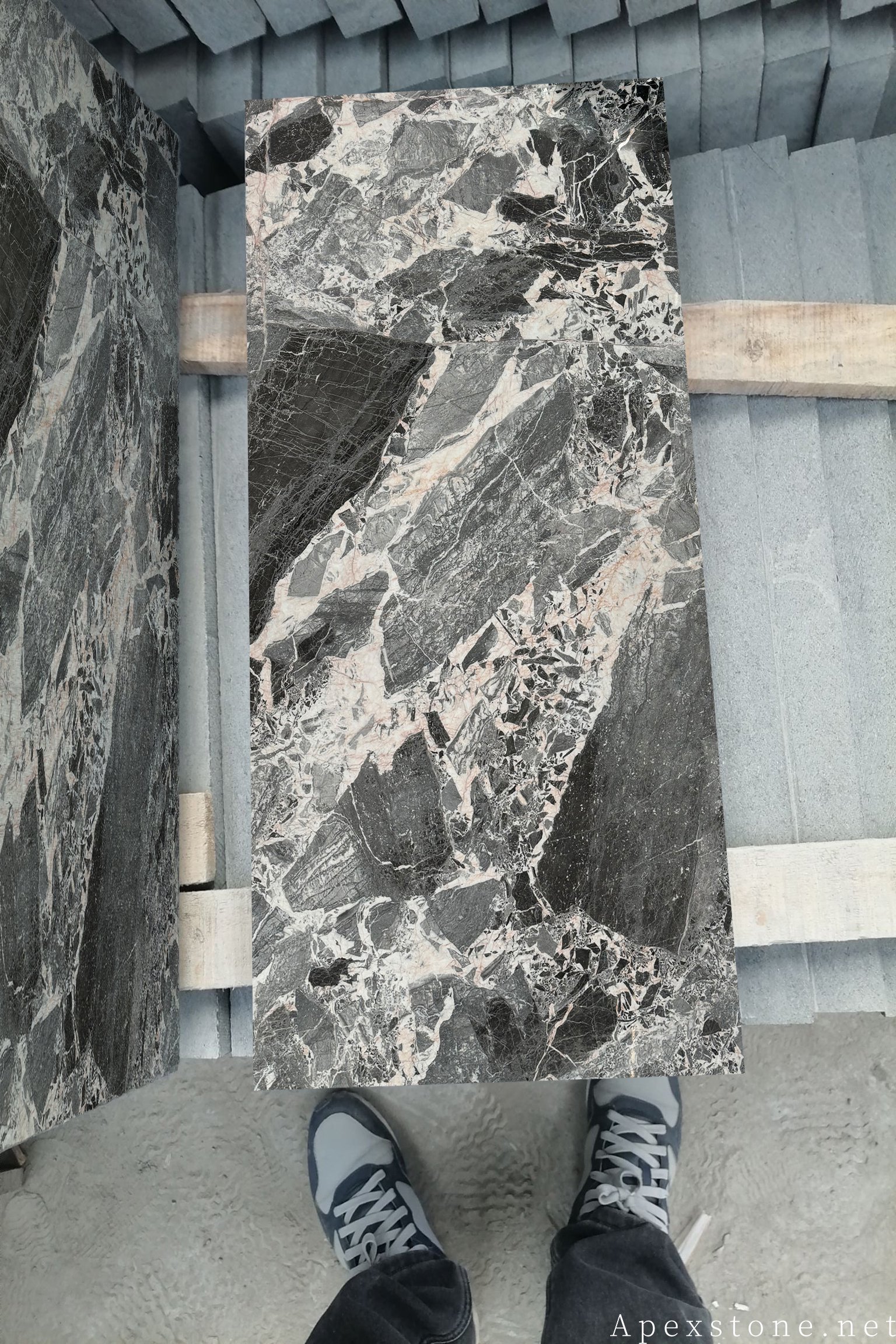
Marble gives the cleanest visual line, often as curved coping around a freeform pool. Chanel Grey marble is available at 20, 30, 40 and 50 mm thickness in honed, flamed or brushed finishes, with bullnose, eased, beveled or custom edges. Sealing lowers its surface water absorption and reduces freeze-thaw risk; whether that is enough for your project depends on the local freeze-thaw cycles and on how the installation drains. Around pool chemicals it wants more care than granite — that is the honest trade.
Limestone
Portuguese Grey limestone has a warm grey base with fossil shell deposits that photographs beautifully. It is also Mohs 3–4 with water absorption up to 3% — softer and more absorbent than granite. It works at a pool when density and sealing are checked first; we would not quote it blind.
If you want the detailed side-by-side, we have written our full travertine vs granite vs limestone comparison.
Edge profiles buyers actually order
Profiles are where most specification mistakes happen, because a drawing shows an edge profile at full size and a shipment is judged at arm's length. These are the four we cut most, plus one variant:
- Bullnose — a full rounded edge, the standard for a pool where the coping is gripped on exit. The most ordered profile in both granite and travertine.
- Half-bullnose — rounded on the pool side, square on the deck side. A clean transition when the deck paving sits flush.
- Double bullnose — rounded on both faces. Common where the coping is exposed on the outside of the beam as well.
- Eased — a small chamfer break rather than a full round. Modern, minimal, and easier to align with thin deck joints.
- Rebated — a stepped underside that sits over the bond beam or laps the pool wall, cut to your rebate depth.
If you are comparing rounded options, our bullnose coping range in Sea Wave granite shows the profile set. For curved pools, marble pool coping can be cut to radius as custom edges.
Sizes and thickness: specify both units
We quote in metric and imperial side by side because our drawings come in both. The table below reflects what our lines are set up for.
| Material | Coping profiles | Thickness | Decking formats |
|---|---|---|---|
| Bianco Crystal granite | Bullnose, double bullnose, eased, rebated | From 30 mm (1-1/4 in) up to 50 mm (2 in), used over bond beams or ladder / handrail fixings | 12x24, 16x24, 24x36 inch; 600x300, 600x600 mm |
| Sea Wave granite | Bullnose, half-bullnose, flat eased | 30–50 mm (1-1/4 to 2 inch) | 300x300 mm to 600x600 mm (12x12 to 24x24 inch) |
| Chanel Grey marble | Bullnose, eased, beveled, custom | 20 / 30 / 40 / 50 mm | Terrace paving and pathways on request |
| Travertine Romano | Bullnose, eased | 30 mm (1-1/4 inch) | 600x600 mm (24x24 inch) or French Pattern |
Thickness is not a style choice. Coping carrying a ladder or handrail fixing needs the extra depth to hold the anchor; coping spanning a wide bond beam needs enough section to sit without rocking. That is why our Bianco Crystal line goes up to 50 mm (2 in) where the fixing demands it, and why we ask what is being bolted through the stone before we cut.
One practical point: cut lengths are as important as nominal sizes. Send us the actual coping run and the corner conditions, and we will plan the lot so joints land where you want them.
How to choose: five questions worth answering first
- Climate. In freeze-thaw regions, sealing moves up the list — especially for travertine, limestone and marble, where a penetrating sealer lowers surface water absorption and reduces freeze-thaw risk; whether sealing is sufficient depends on the local freeze-thaw cycles and on how the installation drains.
- Deck pairing. Coping and deck should come from the same production lot. We match coping, decking and steps across the same block run so the colour does not drift between the pool edge and the paving.
- Water chemistry. Granite tolerates chemical exposure best in our experience; marble wants more attention. Do not put marble on a pool you know will be aggressively dosed without accepting that.
- Heat underfoot. A lighter stone absorbs less solar heat than a dark one, so its surface usually stays cooler in direct sun; how much cooler depends on the finish — a honed or textured face narrows the gap, a polished face widens it. Darker honed surfaces can still get uncomfortable in strong sun. Lighter stone may need more sealing care.
- Finish. Flamed or sandblasted faces and brushed or tumbled travertine give grip; polished or honed noses look sharper but are slicker when wet. Most pool jobs end up with a textured face and a smoother nose.
For the travertine route specifically, we have a separate walkthrough on how to specify travertine pool coping and a product page for travertine pool coping.
How and where to buy pool coping
You can buy pool coping through a distributor, a stone yard, or direct from the factory. Direct means you are talking to the people who cut the stone, which is useful when a profile needs adjusting or a lot needs matching — and it is how we prefer to quote.
To get an accurate quotation from us, send:
- Drawings — pool plan with coping run, corners and any radius.
- Profile — a section drawing or a named profile (bullnose, half-bullnose, eased, rebated, double bullnose).
- Lengths and quantities — linear metres or feet of coping, plus square metres of decking if it is in the same package.
- Finish — face finish and nose finish, separately.
- Material and colour direction — if you are still deciding, tell us the climate and we will narrow it.
On timing: Sea Wave granite carries an MOQ from 50 m2 and a lead time of 25–35 days from drawing approval. Other lines are quoted per project. We would rather agree the profile and the lot plan before production than argue about a rounded edge after it ships. If you are still comparing materials, sample orders under 10 m² can be arranged for a USD 200 handling fee, so the tone and finish are approved on real stone before you commit.
FAQ
Where to buy pool coping?
Distributors and stone yards stock standard profiles, which suits small repairs. For a full pool package with matched coping, decking and steps, buying direct from the manufacturer is usually the cleaner route — one lot, one profile standard, one shipment.
What is pool coping made of?
Natural stone pool coping is cut from granite, travertine, marble or limestone, sawn to thickness and profiled on the edge. Granite is the hardest with the lowest absorption; travertine is cooler underfoot but needs sealing; marble is visually cleanest but wants care around chemicals; limestone varies by density and should be checked and sealed before pool use.
How to choose pool coping?
Start with climate and water chemistry, then match the coping to the deck from the same lot. Decide the profile against how the pool will be used — a full bullnose where people grip the edge, an eased edge for a minimal look. Then set thickness by what has to be fixed through the stone.
If you have a pool drawing and a profile in mind, send them over. We will come back with a matched-package quotation covering coping, decking and steps from the same production lot — in metric and imperial, with the profile and thickness written down so nothing is left to interpretation on site.