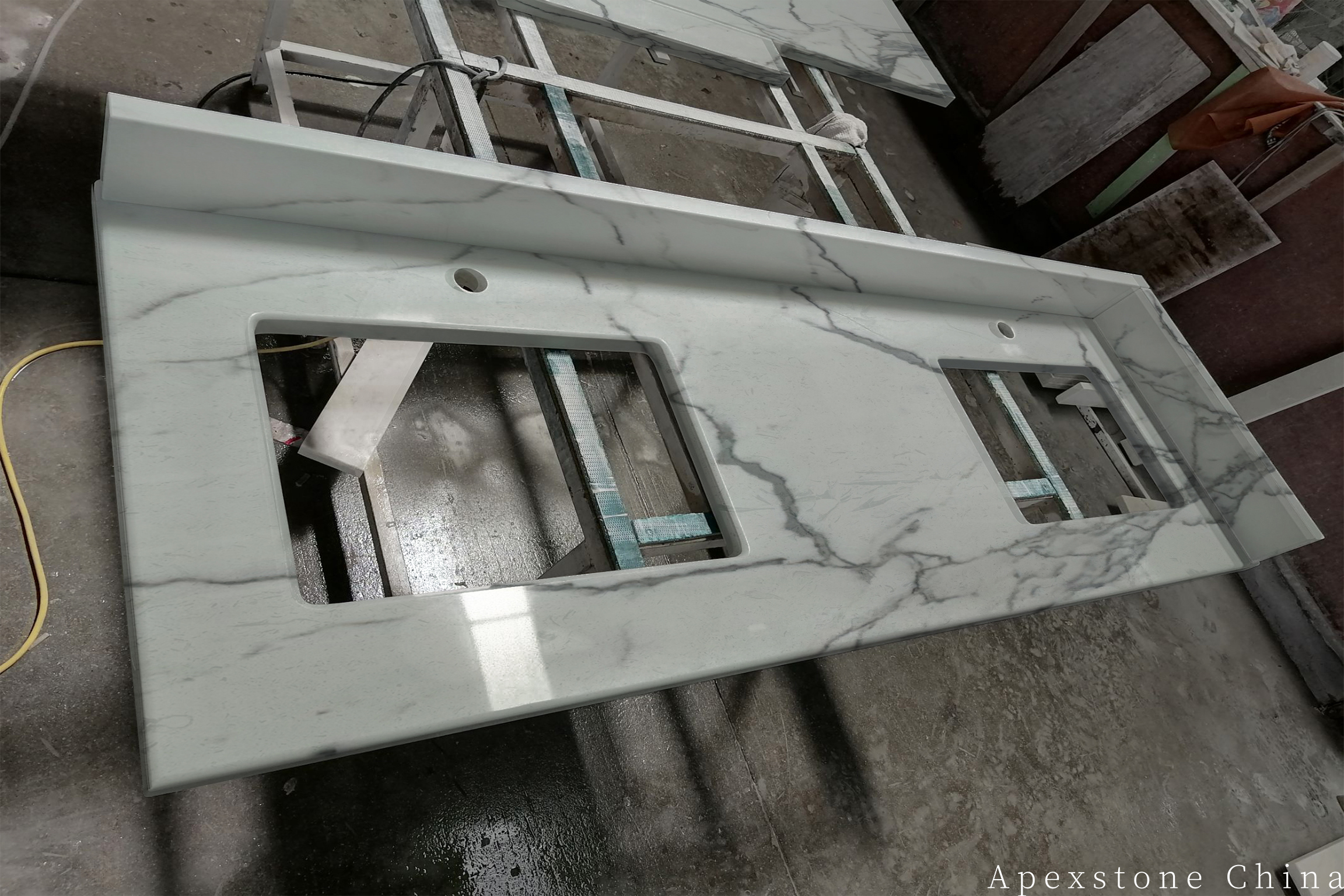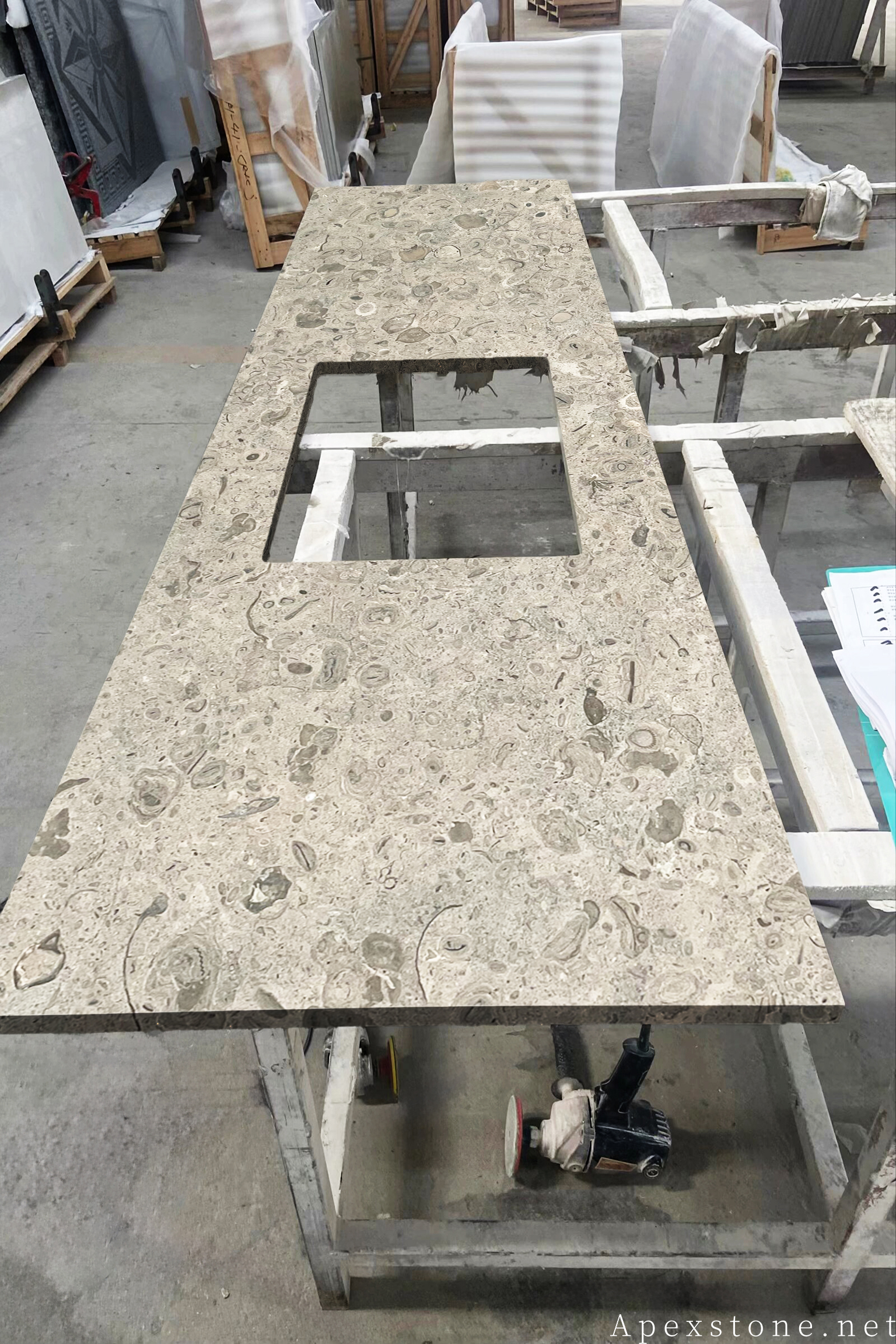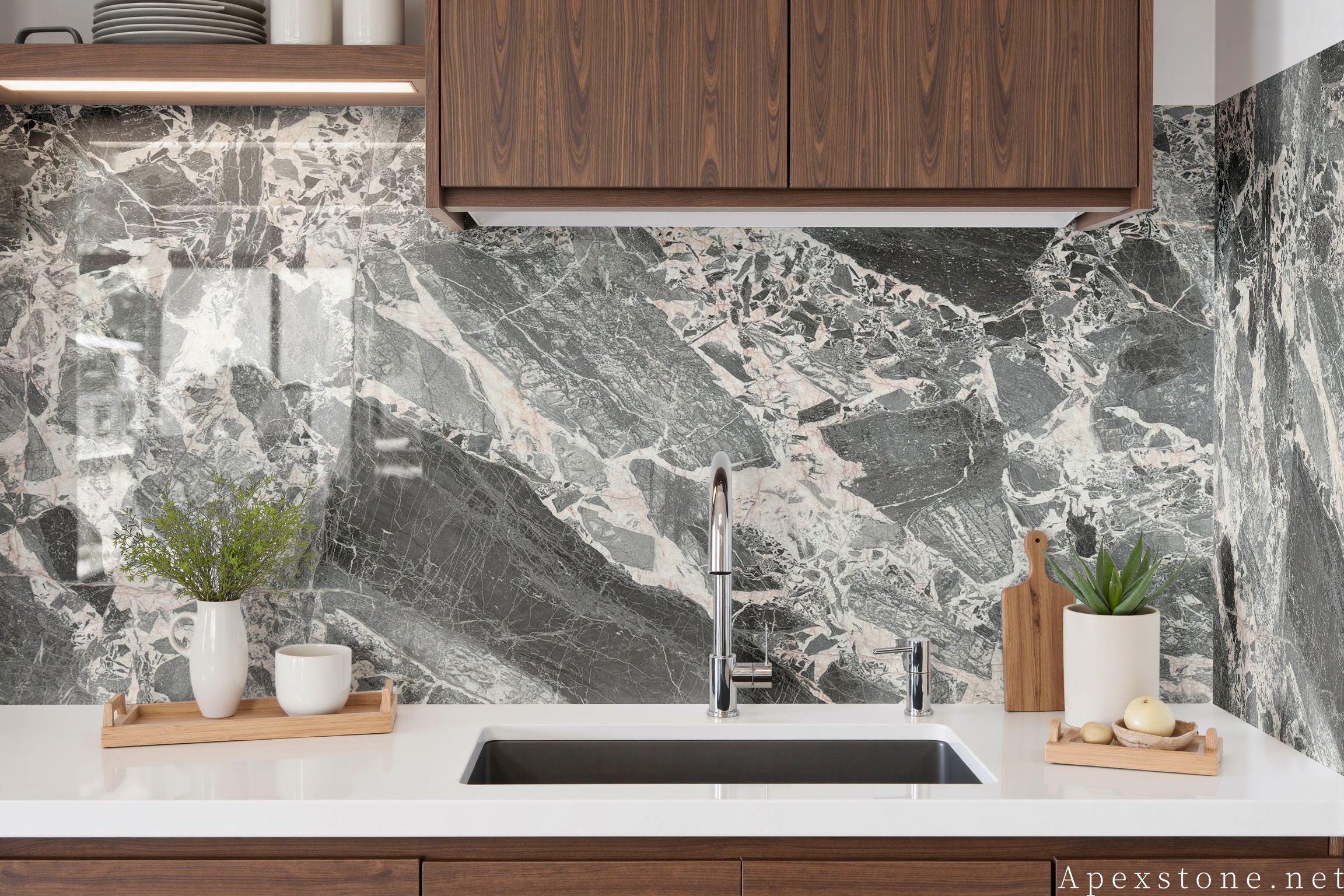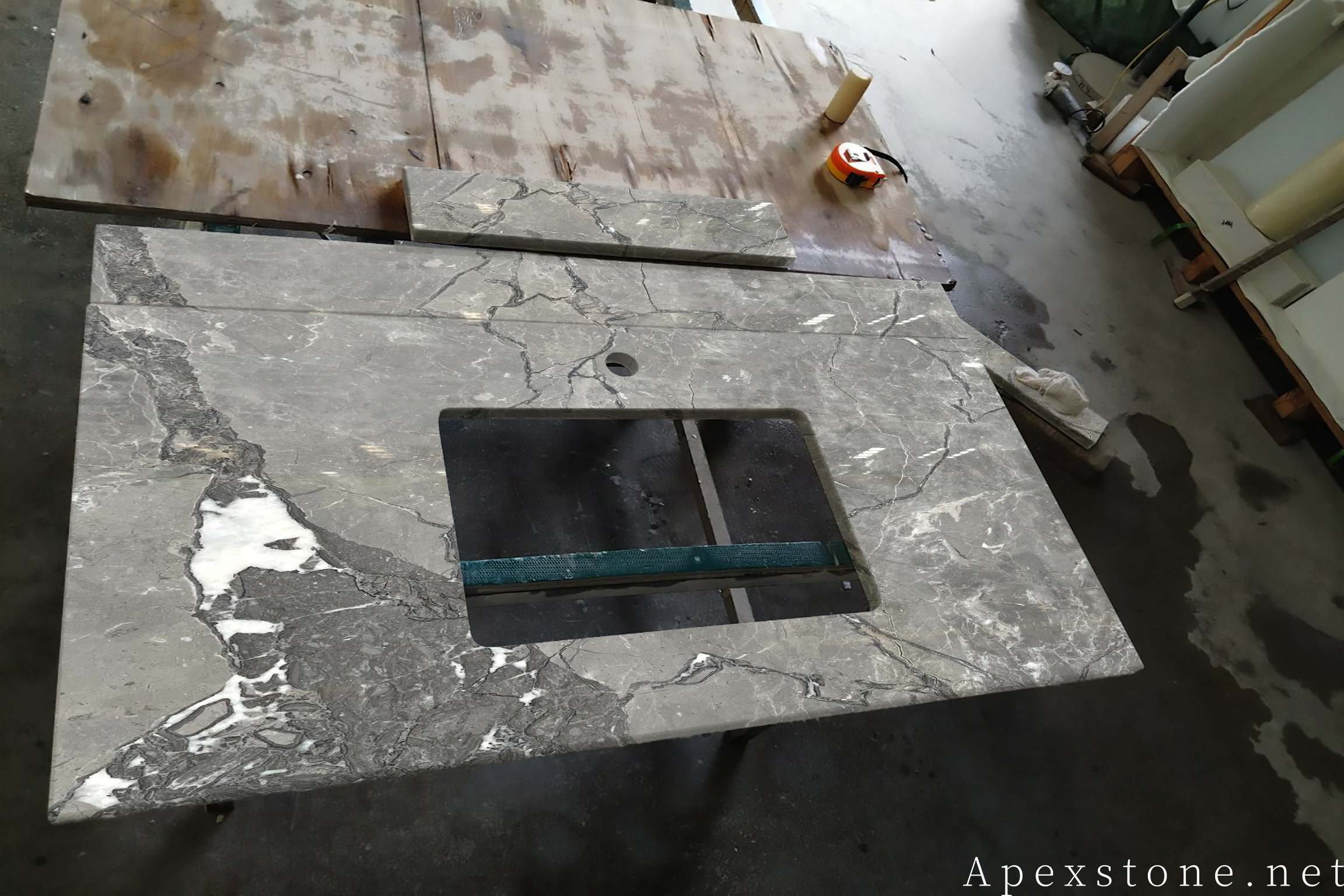
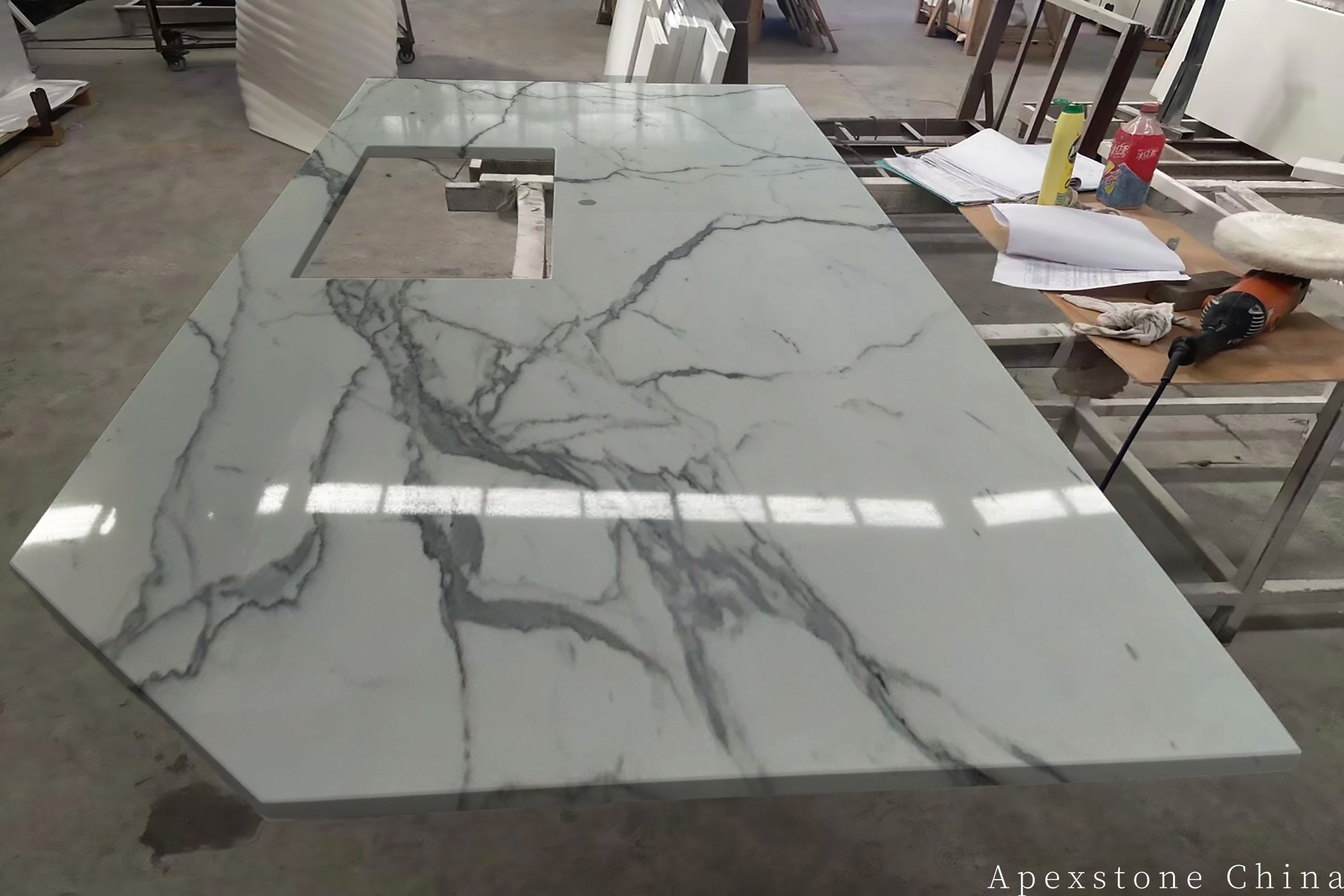
Calacatta White Marble Countertops & Islands
Calacatta White marble countertops and islands explained honestly: what the stone is, how it behaves as a working surface, how veining, thickness and nesting decisions shape the finished kitchen.
Highlights
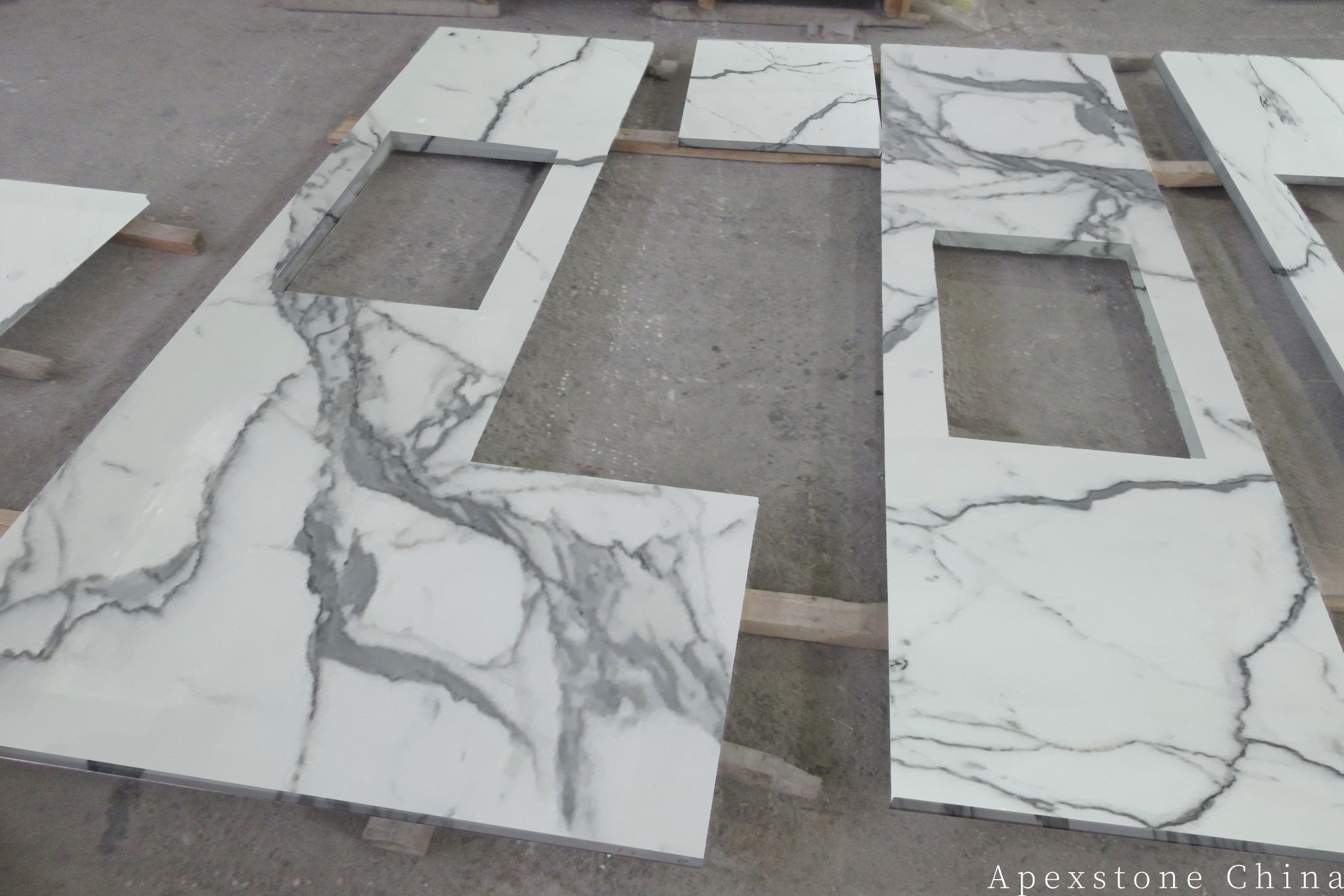
- Countertops and islands nested from approved actual-slab images
- 20 mm (about 3/4 in) or 30 mm (about 1-1/4 in) reference thickness with edge build-ups by drawing
- CNC cut-outs for sinks, taps and appliances after template approval
- Vein direction planned across long runs, backsplashes and waterfall returns
- Piece labels and inspection records support installation sequencing
Specifications
| Material | Italian Calacatta White natural marble |
|---|---|
| Reference Thickness | 20 mm (about 3/4 in) or 30 mm (about 1-1/4 in) |
| Typical Counter Depth | 600-650 mm (24-26 in), project drawing governs |
| Island Format | Custom; large pieces depend on approved slab dimensions and access route |
| Finish | Honed or polished |
| Cut-outs | Undermount/top-mount sink, tap, cooktop and service holes by approved template |
| Edges | Eased, bevel, bullnose, mitred build-up or project profile |
| Backsplash | 100 mm (4 in) upstand or full-height panel by drawing |
| Documents | Shop drawing, slab layout, cut-out template and piece schedule |
Product Detail
One kitchen, three lots: the countertop mismatch that stalls installation
If you buy calacatta white countertop material for one kitchen from three different suppliers, you are almost certainly buying three different batches. The island top from one lot, the perimeter countertops from a second, the backsplash panels from a third — and each lot carries a different white, a different vein direction, and a different idea of how far the grey veining should travel across the slab. On paper every piece is "Calacatta White marble". On site, the polished marble kitchen island reads as a brighter, bolder stone than the counters beside it, and the whole specification is called into question in front of your client.
This is not a rare bad-luck story. It is the predictable result of splitting a natural-stone order across suppliers or lots. Marble is a geological product, not a printed pattern: every quarry lot shifts, and no two slabs repeat. The buyer who treats Calacatta White as a catalogue item inherits the mismatch; the buyer who controls the batch and the layout controls the result.
What the mismatch actually costs you
When a calacatta countertop set arrives looking like three projects instead of one, the installation stops. Your fabricator waits for replacement pieces, the cabinet installer pushes the dates, and the client sees a kitchen that is supposed to be finished sitting on sawhorses. The cost rarely shows up as a discount — it shows up as delay, re-cutting charges, a shrunken margin, and a reference project you no longer want to show. On a high-ticket stone like Italian Calacatta, where each slab is expensive and sound blocks are scarce, an unapproved layout that ignores where the strong veining falls can also mean the replacement pieces simply do not exist in the same lot. At that point there is no fix to buy, only a compromise to explain.
Our answer: one factory, one lot, one layout
The way we keep a marble kitchen island, the run of counters and the backsplash reading as one installation is to keep them inside one production chain from the start. Every stone variety a complex project needs — slabs, cut-to-size countertops, vanity tops, feature panels — comes from our single factory under one order and one set of working drawings, so there is no second supplier to argue with when two pieces must meet on a mitered corner. That is our one-stop full-chain service, and it is the structural reason batch mismatch does not happen here.
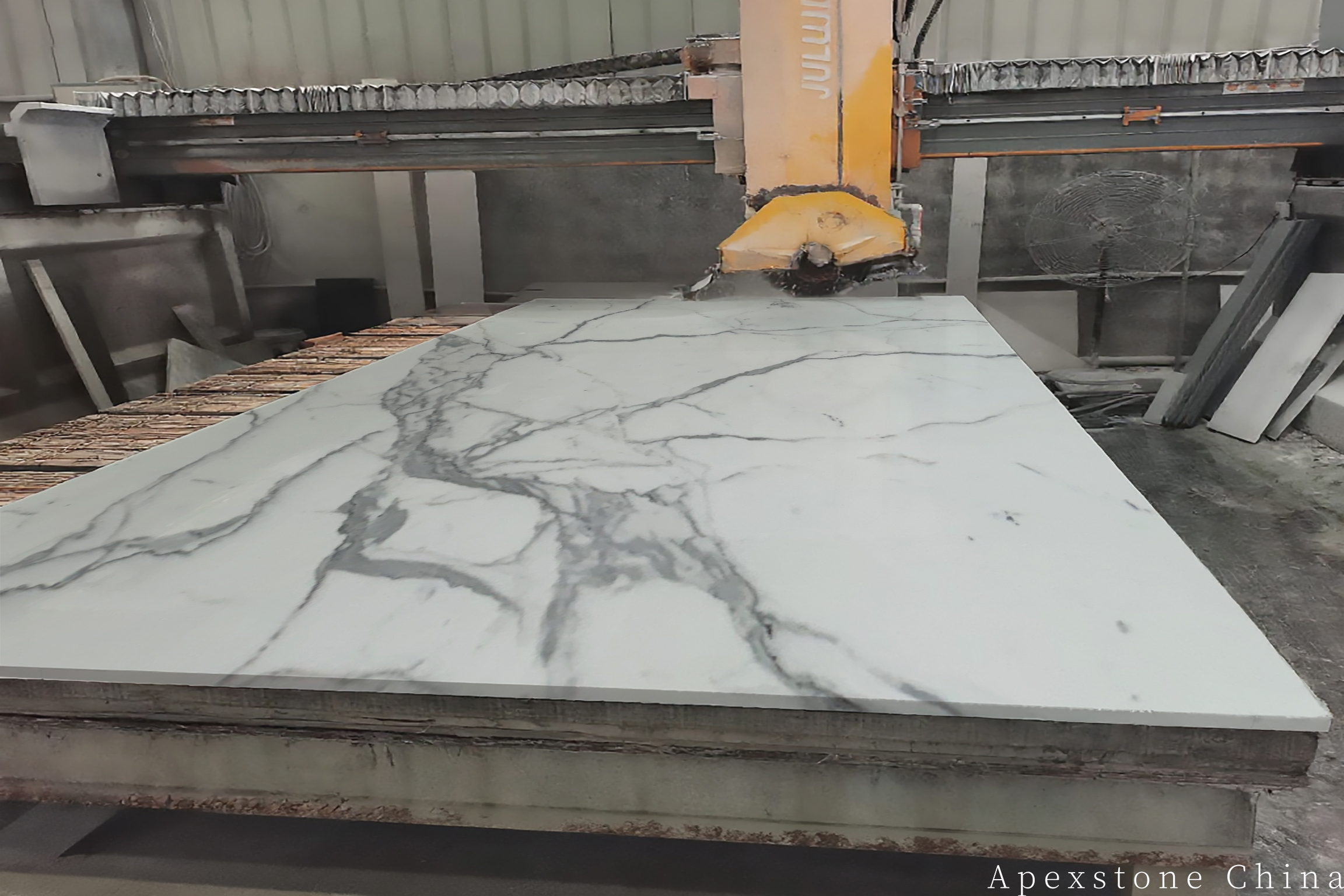
Then the layout is planned on reality, not on a sample. When you send the cabinet plan, we convert it into a production-ready shop drawing and place every piece — island first, then waterfall returns and full-height backsplash panels, then the perimeter counters — onto the images of the actual slabs your order will be cut from. Same-day shop drawing conversion means the drawing you approve today is the drawing the saw follows this production cycle, and if the client revises the design, we accept multiple drawing revisions and order adjustments rather than locking you into a version you already know is wrong.
How the process protects the set, piece by piece
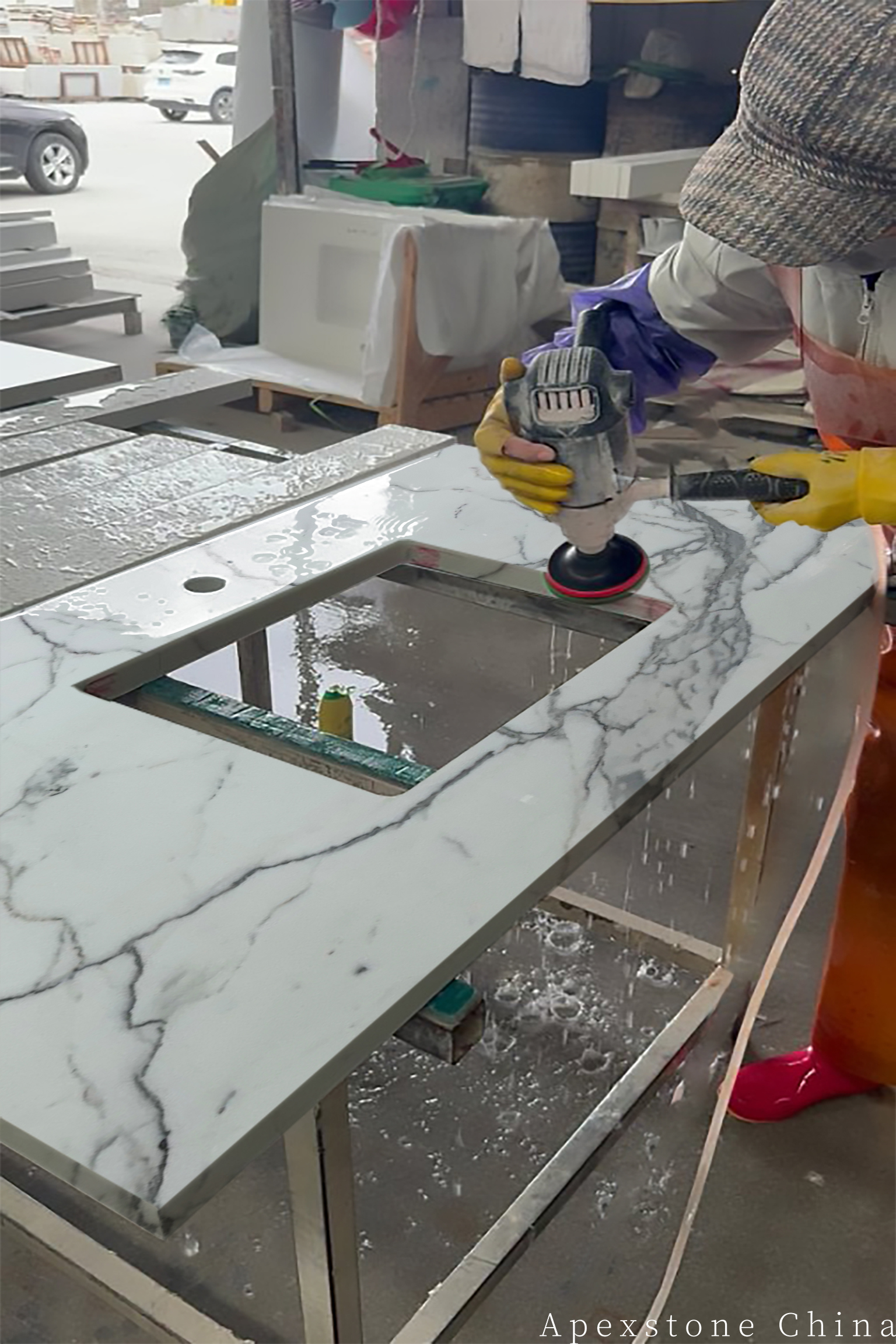
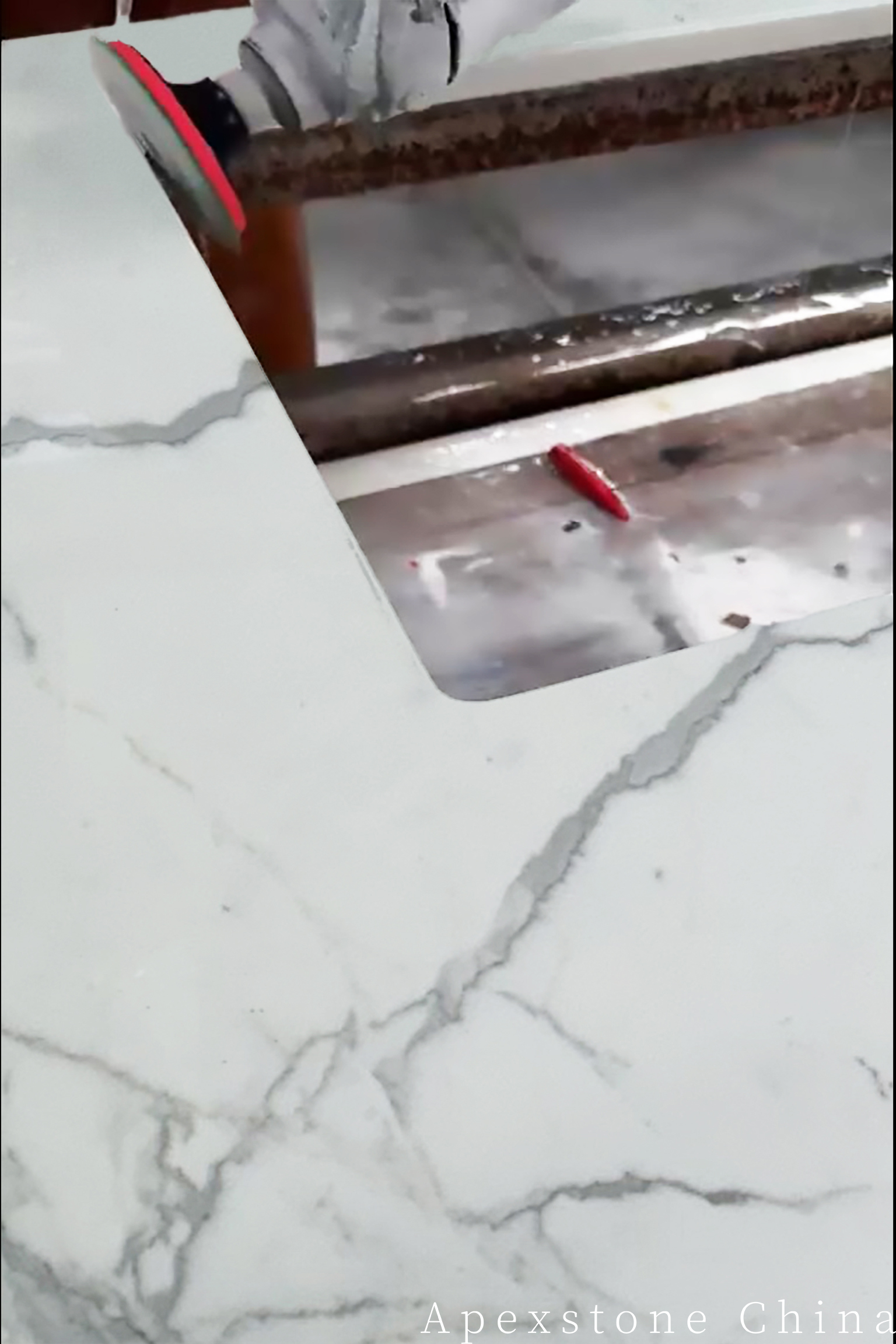
Each approved drawing turns into numbered pieces cut on CNC equipment against frozen templates: sink and cooktop cut-outs, tap-hole centres, drainer grooves and corner radii are machined to the template, not improvised at the saw. Strong veins are kept off the narrow rail in front of an undermount sink unless the widened rail is agreed on the drawing. Reference thickness runs at 20 mm (about 3/4 in) or 30 mm (about 1-1/4 in); a 30 mm top mitred over a build-up gives the deep monolithic edge most island designs want without paying for solid 50 mm (2 in) stock. Island lengths follow the dimensions buyers actually search for and build — 96 in, 72 in, 48 in and 36 in (about 2440, 1830, 1220 and 915 mm) — and companion vanity tops stay on the same lot in the 25.5 in, 36 in, 37 in, 60 in and 72 in formats the trade asks for (about 650, 915, 940, 1525 and 1830 mm). Before anything is packed, every single piece goes through full inspection: dimensional accuracy, fabrication detail and surface condition, checked piece by piece so no defect slips into a container.
What leaves our workshop is a labelled set — pieces numbered in installation order, polished faces protected, packing designed and loaded by our own team to keep breakage near zero and container space well used. The counter that arrives is the counter that was drawn; the veining you approved on the slab image is the veining on the island.
What this buys you as a buyer
You bid with confidence instead of caveats, because the installation is a documented set rather than a lottery of lots. You hold the schedule, because drawing revisions and order adjustments are absorbed inside one factory instead of renegotiated across three. You keep the margin, because re-cuts, delays and site-day arguments cost money that no stone discount returns. And because the same controls apply to repeat orders, the Calacatta White that ships on the next project matches the batch your client already fell in love with — which is how a one-off order becomes an annual programme.
Specify it in one step
Send the cabinet plan, the sink and appliance models, preferred thickness and honed or polished finish, and the destination port. You get back a layout on the actual slab images with every seam, cut-out and vein direction resolved on paper — the cheapest place to change your mind is before the first cut.
Questions buyers ask before ordering
Can one order really supply counters, island, vanity tops and panels together? Yes — complex-project stone is supplied from one factory under one order, which is precisely why the pieces meet on site without shade surprises.
What if my client revises the island after the drawing is approved? Drawing revisions and order adjustments are supported; the layout is re-issued on the actual slab images and cutting follows the latest approved version.
How is the veining controlled across a long run? Vein direction and movement are decided on the approved layout drawing — continuous along long runs, planned through waterfall returns and backsplash joints — and each piece is inspected against that layout before packing.
Is Calacatta White marble hard to maintain? It is a calcite marble: it takes a superb polish but etches from acids, so we plan honed or polished finish honestly with you and document care guidance with the set. What a sealer does — and does not — do is stated plainly, so you can advise your client from facts.
What is the minimum order? Single-piece orders are accepted; small repairs and sample programmes ship on the same quality controls as full containers.
Request your slab layout
Tell us the kitchen dimensions, sink and appliance models, preferred finish, and target port. We will return the actual-slab layout drawing and a piece schedule you can put straight in front of your client. Request countertop pricing and slab layout