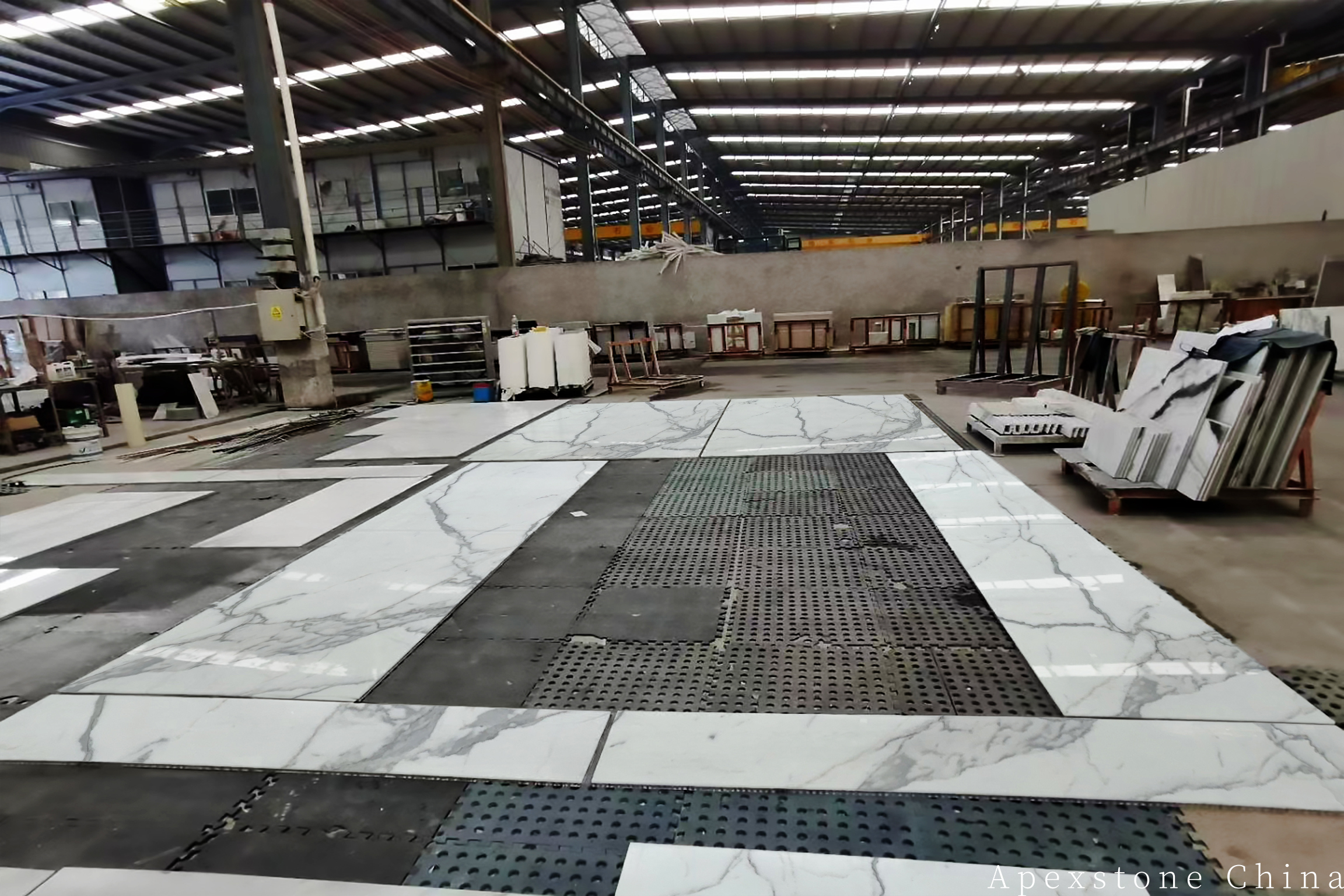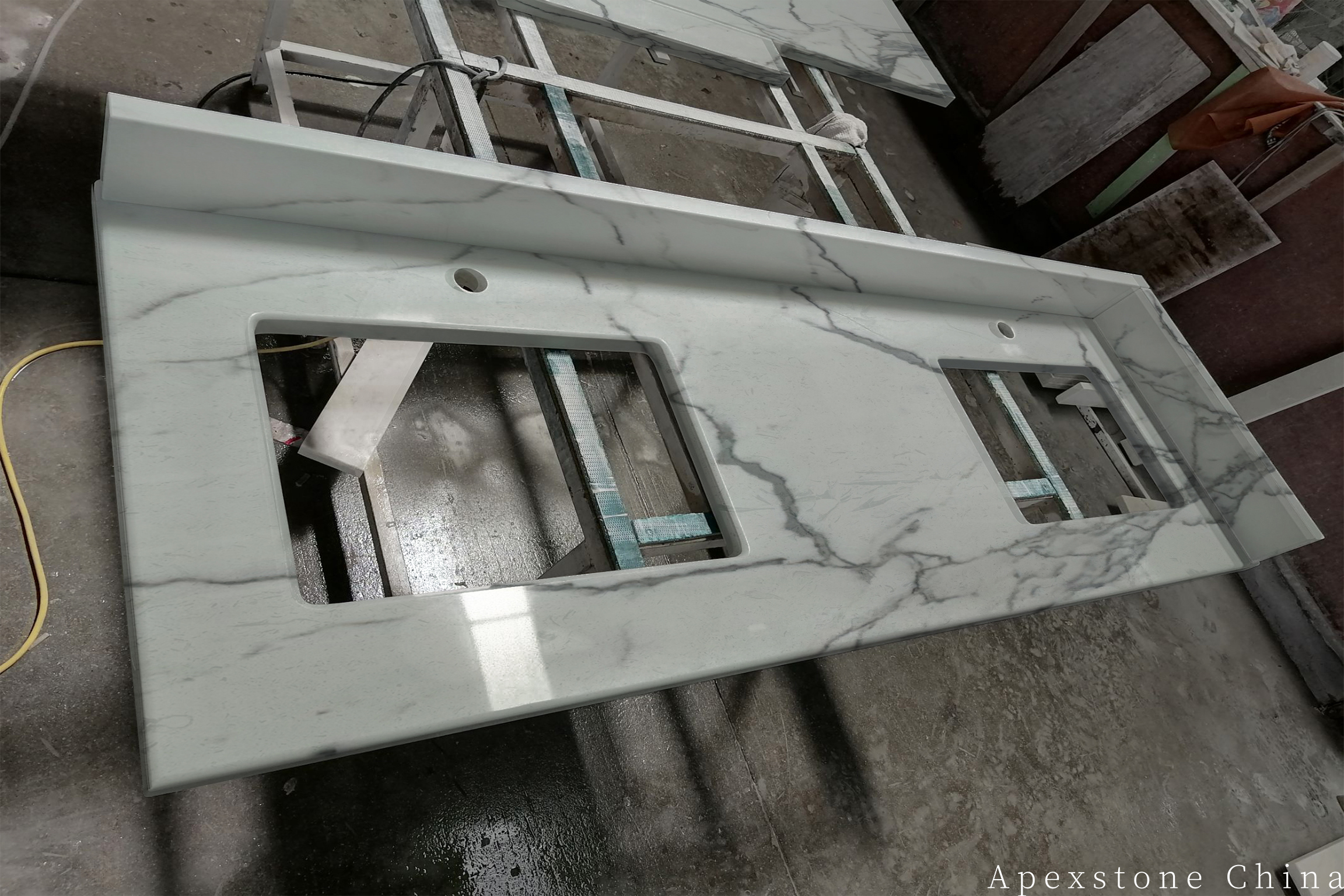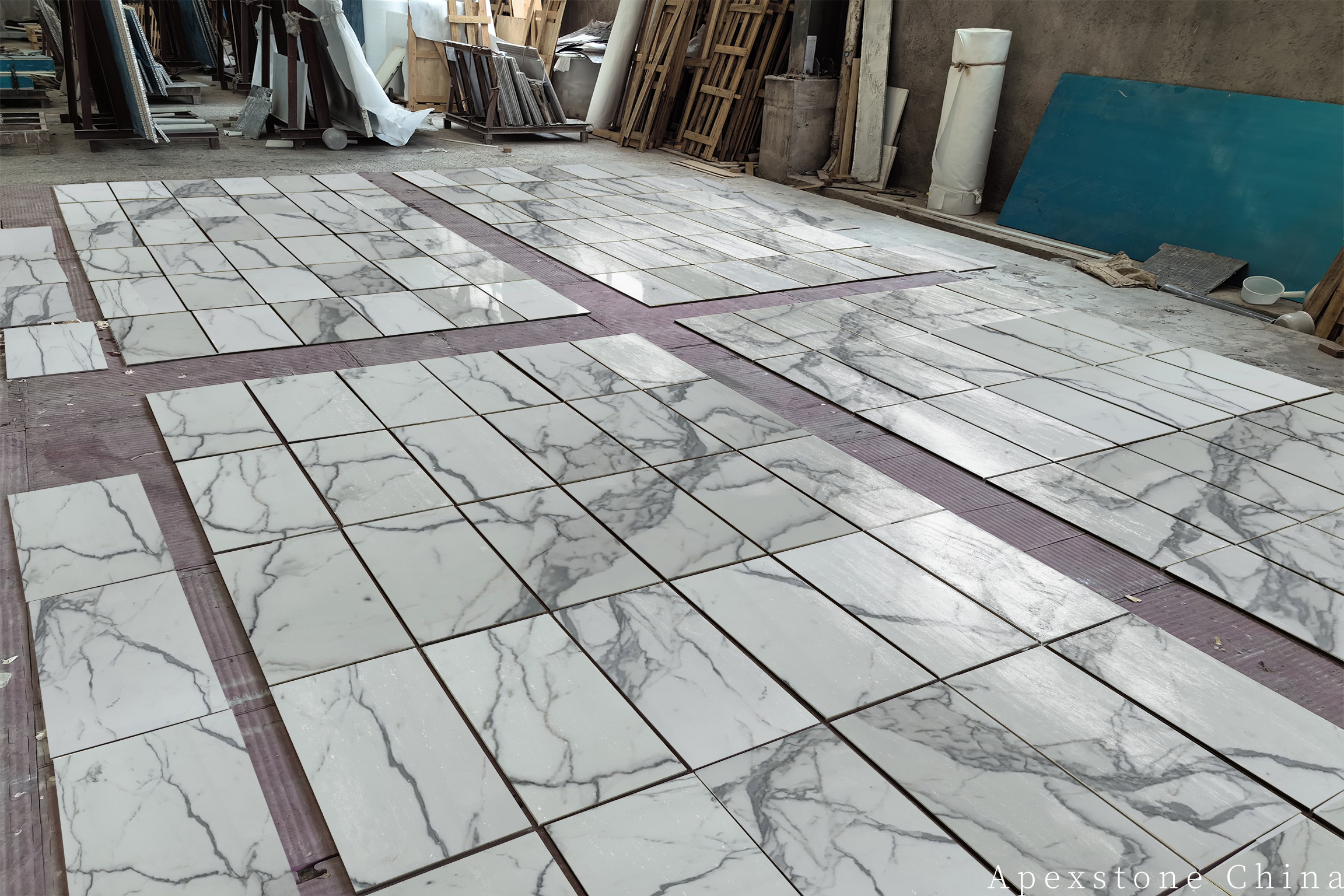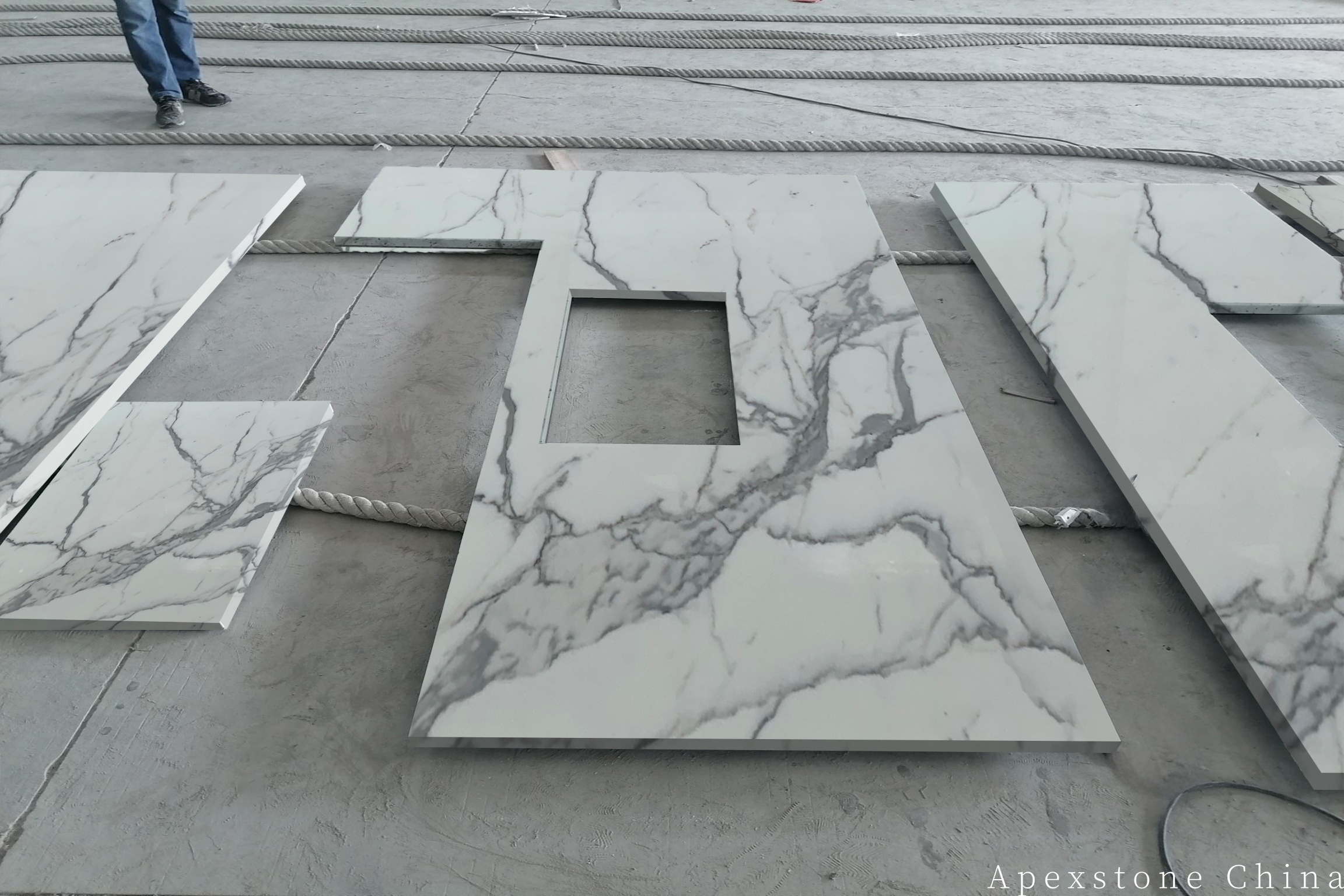
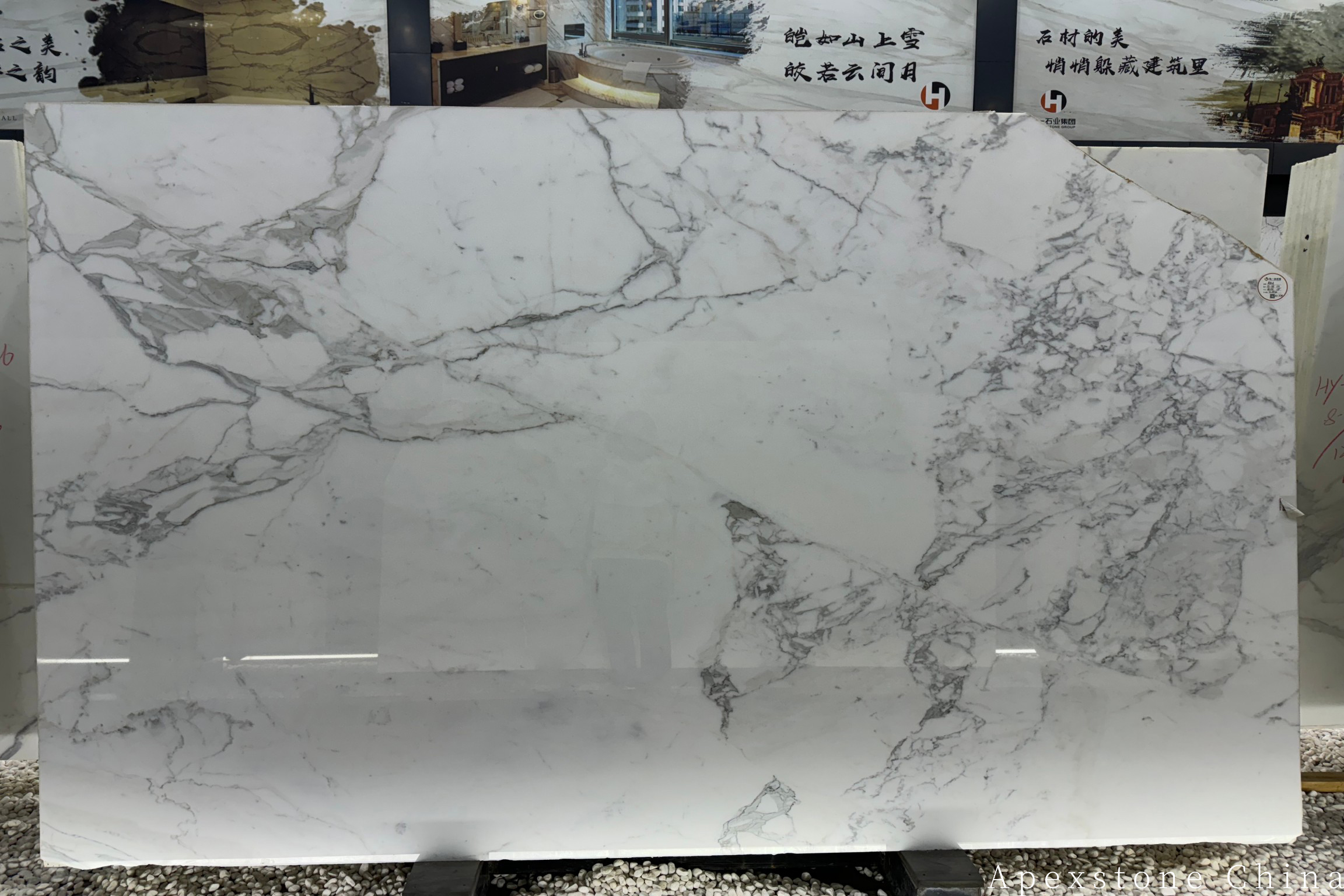
Calacatta sits at the top of the white-marble price ladder, and the reasons are structural rather than cosmetic: a snow-white ground with bold grey veining that varies from block to block, which makes coherent batches scarce; a batch-reservation workflow built on full-slab images, batch references and slab numbers; and slab size, thickness and inspection costs. This explainer walks through each factor and closes with how to request a comparable quote without getting a number that means nothing.
Material Cost Explainer
Buyers who ask how much does calacatta marble cost usually expect a rate card. What they get instead, in any serious supplier conversation, is a question back: which batch, which thickness, how many slabs, and whether the slabs need to match across a continuous wall. Calacatta White is Italian natural marble with a snow-white ground and light-grey random veining, and its price position at the top of the white-marble ladder comes from four structural factors rather than from a markup decision.
This article explains those factors. It does not quote figures, because a number without a batch reference and a slab list cannot be compared to anything.
Key takeaways
- Calacatta's premium starts with the material itself: a snow-white ground crossed by light-grey veining whose movement varies from block to block.
- Coherent batches are scarce, so buyers reserve by batch reference and slab numbers, not by sample photo.
- Standard slab sizes run around 3000 x 1900 mm (about 118 x 75 in), with reference thicknesses of 18–20 mm (about 3/4 in) or 30 mm (about 1-1/4 in).
- Full-slab images and third-party inspection with a QC report before dispatch are part of the cost structure, not extras.
- A comparable quote needs your batch requirement, thickness, slab count and inspection scope stated up front.
Why Calacatta sits at the top of the white-marble price ladder
Most white marbles are priced on a fairly simple logic: base colour, background cleanliness, and how much veining the block carries. Calacatta White is harder to price that way because the veining is the product. The ground is snow-white, and the light-grey veining runs randomly rather than in an even field. Two slabs cut from adjacent blocks can look like distant relatives. That is normal for the material, and it drives everything downstream.
Bold veining on a snow-white ground
A white marble with faint, even cloud is forgiving: small variations disappear once the stone is installed. A white ground with distinct grey veining gives the eye something to follow, so any discontinuity is visible. For a book-matched feature wall or a large kitchen island, the veining has to be selected rather than accepted. That selection work starts at the block, before any slab is cut, and it is one of the reasons Calacatta commands a premium: the supplier is not selling area, it is selling a chosen section of a specific block.
Block-to-block variation makes coherent batches scarce
Movement varies block to block. A quarry may produce blocks with soft, sparse veining in one period and blocks with strong, directional veining in another. Neither is defective; they simply cannot be used together in one room without a visible seam. So the commercially scarce item is not Calacatta marble in general — it is a coherent batch: enough slabs from the same block or matched blocks to cover an entire project with consistent veining.
This is where budgets are usually won or lost. A buyer who prices the material per square metre and then discovers, mid-project, that the remaining slabs come from a different block is facing either a redesign or a mixed-vein installation. Reserving the batch first avoids that.
Two slabs of the same nominal product can be priced differently because they belong to different batches. The batch is the unit that determines whether a project stays visually coherent.

The batch-reservation workflow and what it costs
For Calacatta, the practical purchasing unit is a reserved batch. A workable workflow looks like this:
- Full-slab images. You receive images of the actual slabs on offer, not a catalogue photograph or a sample chip. You can inspect veining direction, distribution and any natural features across each slab.
- Batch reference and slab numbers. The offer identifies the batch and the individual slab numbers within it, so what you approve is what is reserved.
- Reservation before commitment. The batch is held against those slab numbers while you complete your review, so the slabs you selected are not released to another buyer in the meantime.
- Confirmation, then fabrication or dispatch. Only after that review does the material move to cutting, finishing or shipping.
Each of these steps consumes time and handling. Photographing and cataloguing full slabs, holding stock against a reference, and re-verifying the batch at loading all add cost that does not appear on a per-square-metre line. They also remove the single largest risk in natural stone purchasing: surprise. Buyers who have been through a mismatched delivery generally treat this workflow as the cheaper option, even though it appears in the quotation.
Slab size and thickness: two variables that move the quote
Calacatta White slabs are typically around 3000 x 1900 mm (about 118 x 75 in). Reference thicknesses are 18–20 mm (about 3/4 in) for standard work and 30 mm (about 1-1/4 in) for thicker profiles such as kitchen island edges and heavy benchtops.
| Factor | Typical reference | Effect on cost structure |
|---|---|---|
| Slab footprint | ~3000 x 1900 mm (118 x 75 in) | Large slabs reduce the number of joints but leave less flexibility for small jobs; offcut use matters for yield. |
| Standard thickness | 18–20 mm (~3/4 in) | Common reference for wall cladding, vanity tops and general fabrication. |
| Thicker profile | 30 mm (~1-1/4 in) | More material per slab, heavier handling and different fabrication needs. |
| Vein continuity | Batch-dependent | Book-matching and vein matching constrain which slabs can be used together, reducing usable choice. |
Thickness decisions are often made for structural or aesthetic reasons, but they also change how the material is packed and handled. A 30 mm slab is not simply a 20 mm slab with more stone in it; it changes the logistics around the order. If your fabricator has a fixed edge profile in mind, confirm the thickness before the batch is reserved, because changing thickness afterwards may mean changing slabs.
Inspection costs and why they belong in the comparison
Natural stone is inspected before dispatch, and a third-party inspection with a QC report is available before the material ships. That report is a check against the reserved batch, not a general certificate for the product line. It covers what was actually inspected, and the report should be read against the slab numbers you approved.
For a buyer sourcing from overseas, the arithmetic is straightforward. An inspection adds a cost line before shipment. Skipping it shifts the risk to arrival, where a discrepancy costs freight, time and a second order. On a batch-sensitive material like Calacatta, where visual coherence is the whole point, inspection before dispatch is generally the cheaper route.
What a comparable quote actually needs
Because the price drivers are batch, thickness, slab count and inspection, a quote is only comparable when those inputs are the same. A short brief shortens the loop considerably.
- Project scope: wall cladding, flooring, benchtops, feature panels — and whether slabs must match each other.
- Quantity in slabs, not just area, since yield from a 3000 x 1900 mm slab depends on your cut list.
- Thickness: 18–20 mm or 30 mm.
- Vein requirement: any direction, or booked and matched.
- Inspection scope: whether you want the third-party QC report before dispatch.
- Destination and timeline, which affect packing and reservation length.
With that information, a supplier can reserve a specific batch and send full-slab images with batch reference and slab numbers for your review — a quote you can compare line by line against another offer instead of against a headline figure.
The Calacatta White marble slab page shows the material reference; the batch images and slab list are what turn it into a comparable offer.
Frequently asked questions
- Is Calacatta always more expensive than other white marbles?
- Calacatta White carries a premium because of its snow-white ground with light-grey random veining and the scarcity of coherent batches. Specific comparisons depend on the batch, thickness and slab count in each offer, so compare like with like.
- Why can't a supplier quote from a sample photo?
- A sample shows one small section. The slab you receive may come from a different block with different movement. Full-slab images with batch reference and slab numbers are the reliable basis for commitment.
- Can I mix batches in one project?
- Physically yes, but movement varies block to block. Mixing batches may produce visible vein discontinuities, so decide this before ordering rather than at installation.
- Does thickness affect more than the amount of stone?
- Yes. A 30 mm slab involves different handling and fabrication from an 18–20 mm slab. Confirm the thickness before the batch is reserved.
- What does the QC report cover?
- It records the third-party inspection before dispatch. Read it against the slab numbers you approved, since the report applies to the inspected material, not to the product line in general.
Next step: if you are pricing a Calacatta project, send the slab count, thickness, vein requirement and inspection scope. You can then receive full-slab images with batch reference and slab numbers, plus a third-party QC report before dispatch, and compare offers on the same basis.