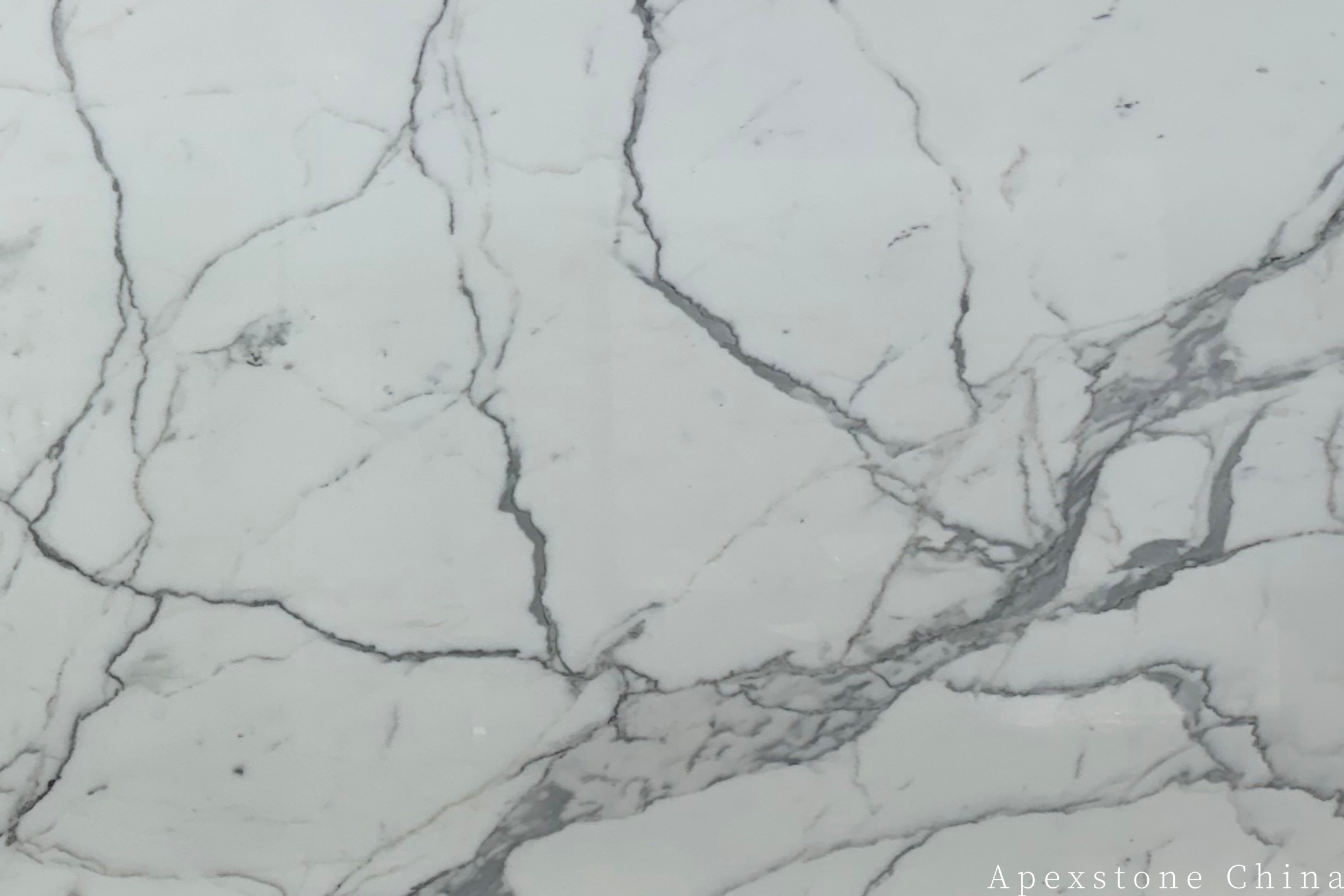
Calacatta White Marble Slab
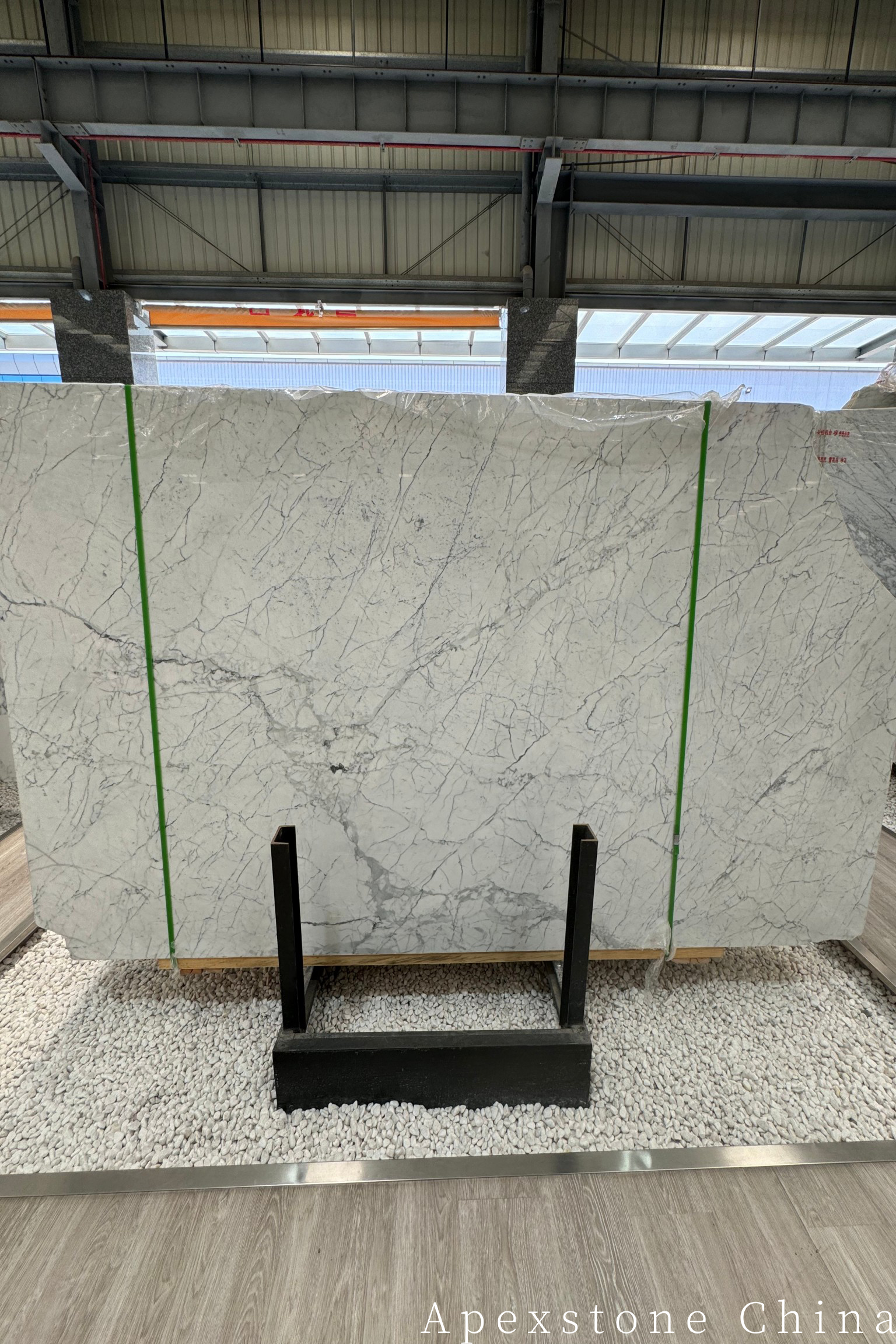
Italian Calacatta White marble slabs selected by full-slab image, batch and vein movement for fabricators, importers and design-led projects. Snow-white ground, light-grey random veining, polished or honed finish; confirm live slab dimensions before nesting.
Highlights
- Italian natural marble with snow-white ground and light-grey random veining
- Full-slab, close-up and detail images supplied for actual-batch approval
- Dry-lay yield planning: clean-centre pieces to counters, strongest movement to book-matched panels
- Reference thickness 18-20 mm (about 3/4 in) and 30 mm (about 1-1/4 in); slab sizes around 3000 x 1900 mm (about 118 x 75 in)
- Third-party inspection and QC report available before dispatch
Specifications
| Stone Type | Natural Marble |
|---|---|
| Commercial Name | Calacatta White (鱼肚白) |
| Origin | Italy |
| Base Color | Snow white |
| Veining | Light-grey random veining |
| Reference Thickness | 18-20 mm (about 3/4 in) or 30 mm (about 1-1/4 in); confirm live stock |
| Slab Dimensions | Around 3000 x 1900 mm (about 118 x 75 in); approve actual full-slab dimensions and usable area |
| Finish | Polished or honed; other finishes by sample approval |
| Primary Applications | Countertops, islands, wall panels, floor and wall tiles, vanity tops |
| Order Control | Batch reference, slab numbers, full-slab images and packing list |
Product Detail
The sample you approved is not the batch you will receive
Every importer and fabricator knows the moment: a calacatta white marble slab is chosen from a showroom sample or a warehouse photo taken a year ago, the purchase order says "Italian white marble, polished", and eight weeks later the container opens on slabs that are visibly not the stone in the sample — whiter ground, greyer movement, veining that runs the wrong way for the island front you planned. Nothing was mislabelled. Calacatta White shifts block by block, and a sample fixes a colour direction, never a batch. Buying a marble slab remotely without controlling which actual slabs are reserved is the single most expensive way to save time.
The damage compounds through the project. Book-matched panels need consecutive faces from the same block; an island front needs a clean centre free of weak veins; a run of vanity tops needs pieces whose ground tone agrees under the same light. None of that can be retro-fitted onto slabs that were picked by description. The buyer discovers the gap when the slabs are already on the water, when the only options left are discounts, apologies and a specification renegotiated in front of the client.
What buying blind actually costs you
The direct costs are the visible ones: re-selection trips, replacement slabs shipped at your freight, fabricator days lost waiting for usable material. The indirect costs are larger. Yield collapses when beautiful slabs are cut into the wrong parts — strong movement across a counter run that wanted calm, or quiet centres wasted on panels that wanted drama. And on a stone at the top of its price range, where every square metre of Italian Calacatta carries serious money, a misallocated block is the most expensive kind of waste there is: the material was right, the decision was made without seeing it.
Our answer: reserve the batch, not the description
Our slab programme starts from full-slab images of the actual stock — face, close-ups of vein junctions, resin lines and edge condition — so the slabs you approve are the slabs reserved under your batch reference and slab numbers. Before a batch is committed, our team dry-lays the selected slabs and photographs the layout: this is where yield is won, because pieces with clean centres are assigned to island tops and long counter runs while the strongest movement is reserved for book-matched wall panels. Marking priority pieces against your cutting list before packing is what prevents the classic remote-sourcing failure — a beautiful slab cut into the wrong parts.
Everything arrives as documents a buyer can act on: batch reference and slab numbers, actual slab dimensions and usable area, finish reference (polished for stronger reflection, honed for a softer reading), reference thickness, crate plan and packing list. Third-party inspection with a QC report can be arranged before dispatch, so the standard you approved is the standard someone independent has checked — that is what makes remote buying auditable instead of hopeful.
How the approval chain works
First you send the cutting list — which surfaces, which dimensions, which pieces must read as one composition. We return a batch-specific proposal built on real slab imagery, assigning each slab to its final use before cutting so vein layout, thickness and reinforcement follow the design. The approved images, drawing revision and piece schedule then stay together as one record, so your receiving and installation teams compare delivery against the same evidence used at release.
What the stone actually is
Calacatta White (鱼肚白) is an Italian natural marble: a snow-white base crossed by light-grey random veining, with a noble, visually engaging character. The movement varies block to block — one crate reads calm and architectural, the next is bold and sculptural. That variation is not a defect to be hidden; it is the reason the batch must be chosen, not assumed. A sample fixes the colour direction; only current full-slab photos show the layout you are actually reserving.
Dimensions buyers plan around
Standard slab sizes run around 3000 x 1900 mm (about 118 x 75 in); confirm live dimensions before nesting, because jumbo and standard formats price and pack differently. Reference thickness runs 18–20 mm (about 3/4 in) or 30 mm (about 1-1/4 in); 2 cm stock is the trade default for tops and cladding, 3 cm for heavier fabrications and mitred build-ups. Cut from the same batch, a honed 600 x 600 mm (24 x 24 in) floor module reads restrained while a full-height panel reads dramatic — the same batch supports statement islands, quiet perimeter counters, bathroom vanity tops, large wall panels and cut-to-size tiling. Final dimensions and tolerances belong on the purchase order, not in a brochure.
Where the slab goes next
Fabricators and wholesale buyers use this programme differently. A countertop fabricator reserves clean-centre slabs for counter runs and islands, keeping the approved vein direction on file for future repeat orders. An importer building stock allocates part of the batch to 24 x 24 in (600 x 600 mm) tiles and part to book-matched panels, so one container serves both the trade counter and the design-led projects. A contractor on a hotel fit-out approves the panel layout from the elevation and lets the same batch feed matching vanity tops. In every case the decision that matters — which slab becomes which part — is made before the saw, on evidence, not after delivery.
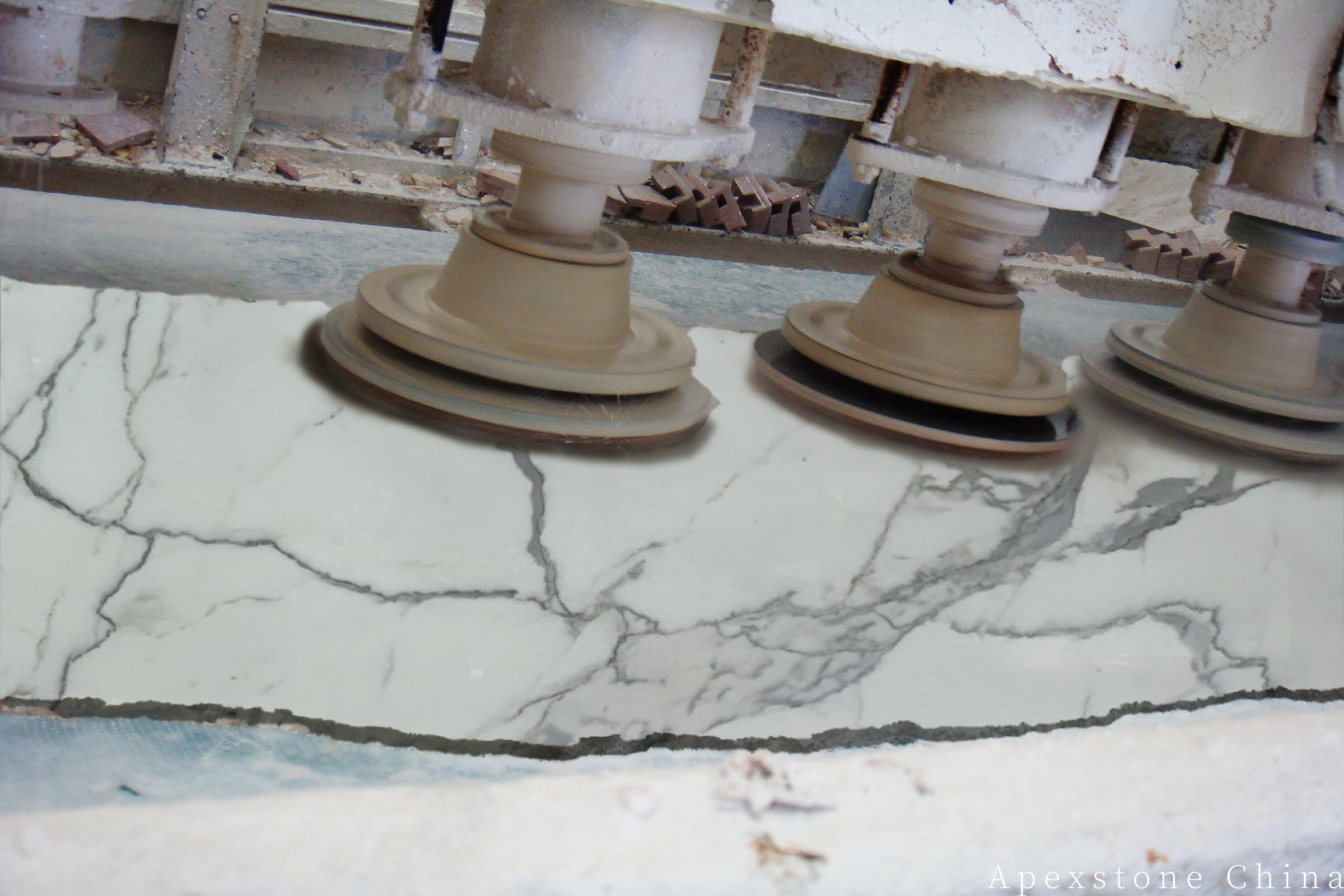
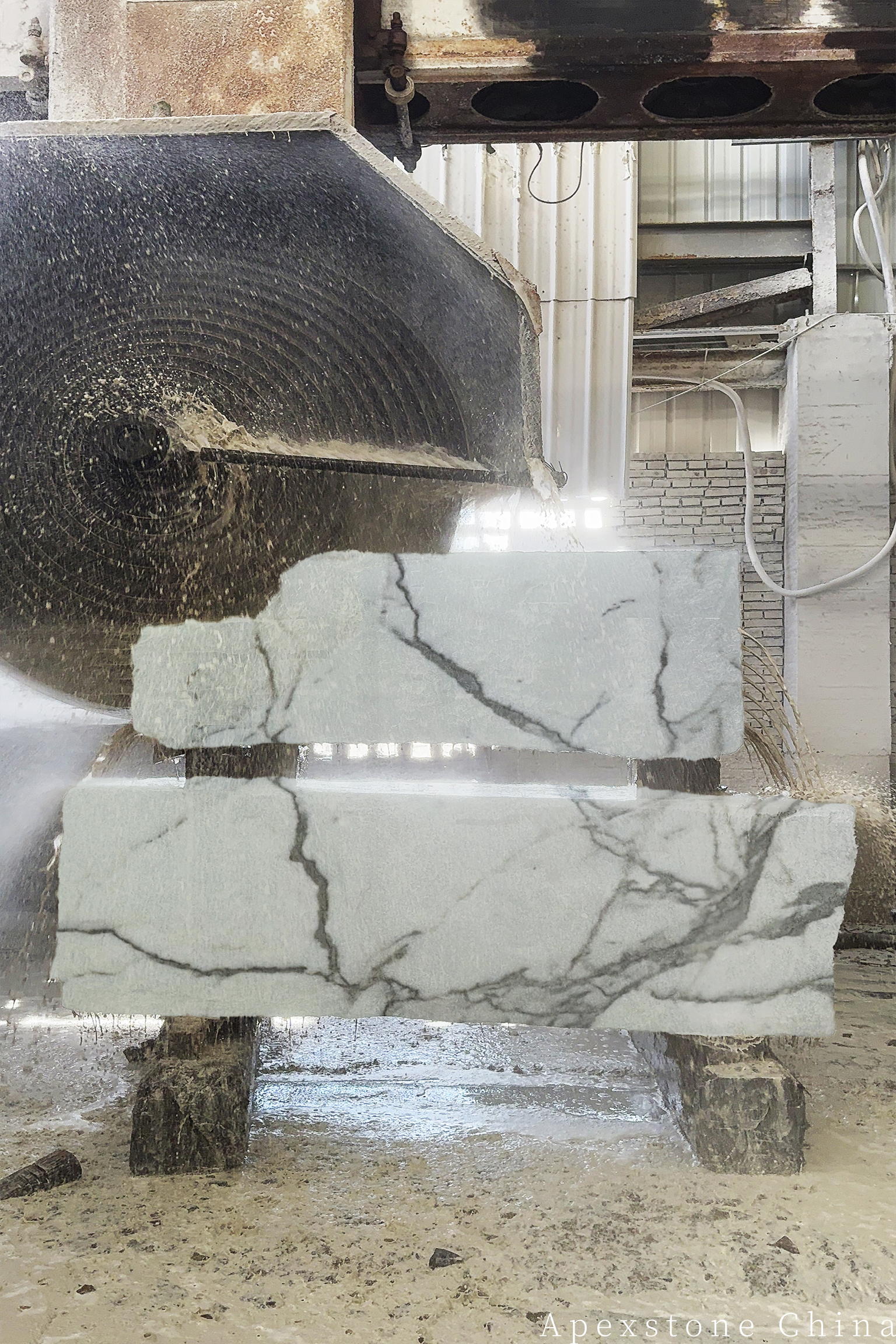
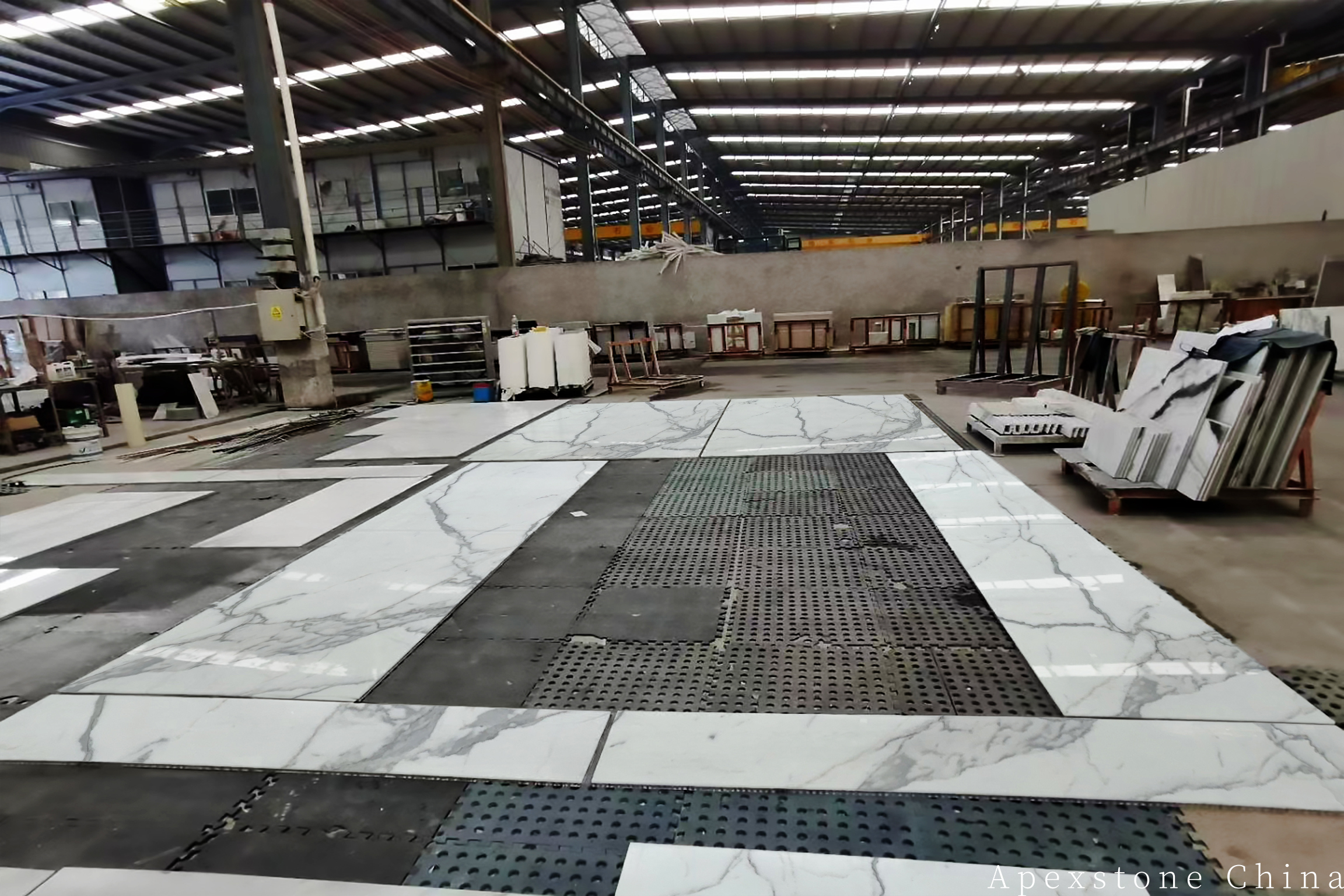
Send the cutting list, not only the square metres
Share drawings, target finish, thickness, destination and the surfaces that must read as one composition. We return a batch-specific proposal based on real slab imagery — and keep the approved images, drawing revision and piece schedule together so the receiving and installation teams compare delivery against the same evidence used at release.
Questions buyers ask before reserving
Can I actually see the slabs I am buying? Yes — every batch is offered with full-slab images and close-ups of the actual stock, and the batch reference and slab numbers on your order point to exactly those slabs.
Can you guarantee book-match across a whole wall? Book-matched pairs are reserved as consecutive faces from the same block and approved on a numbered layout before cutting; the pairings you approve on the layout are the pairings that ship.
Can an independent inspection be arranged? Yes — third-party inspection with a QC report can be arranged before dispatch, alongside our own piece-by-piece checks.
What thickness should I order? Reference stock runs 18–20 mm (about 3/4 in) and 30 mm (about 1-1/4 in); the right choice depends on the fabrication — mitred edges and heavy tops favour 30 mm — and it is confirmed on the purchase order, not assumed.
Do repeat orders match the first batch? Repeat orders run under the same batch and yield controls; natural veining never repeats identically, so we supply current-lot images for comparison before you commit rather than promising the impossible.
Request your batch reservation
Send the cutting list, target finish and thickness, and the destination port. We will return full-slab images of the actual candidate stock with a batch-specific allocation proposal — the cheapest place to change your mind is before the first cut. Request slab images and batch pricing