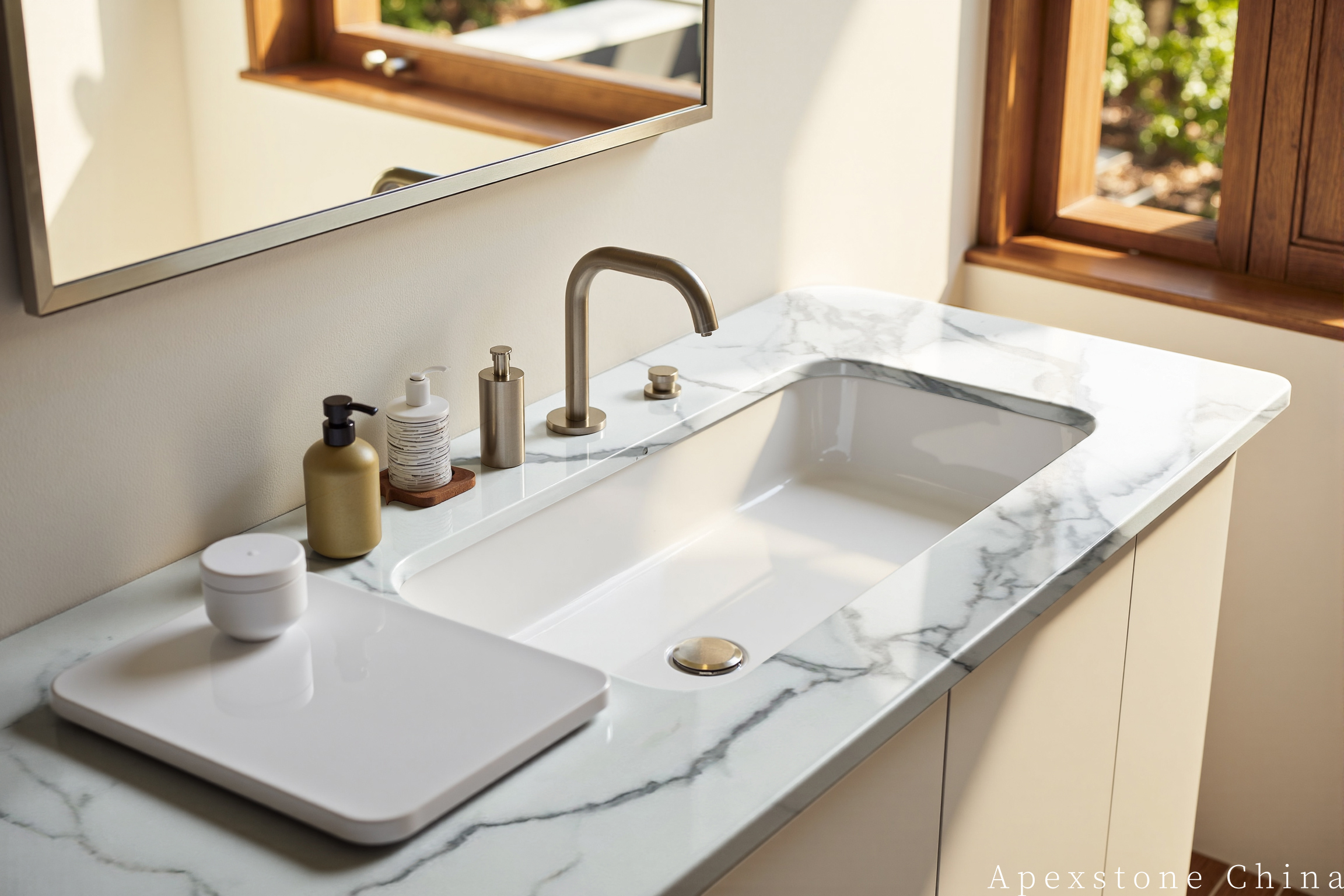
A design guide to choosing white marble for a bathroom vanity, comparing real white stone options, basin types, tone pairing, and care expectations.
Design & material guide
White marble is still the first name most people reach for when they picture a bathroom vanity. It is not the only white-adjacent stone worth considering, though, and the choice changes what the top looks like, how it ages, and which basin type works cleanly on it. This guide focuses on the real options in whites and light tones, how their veining reads at vanity scale, and how the basin decision shapes the top before it is cut.
- Calacatta White marble gives a snow-white ground with light-grey veining that stays quiet from a distance; it is a calcite marble, so acidic products can dull a polished patch if left to sit.
- Pandora quartzite is a cream, white-adjacent option with brown floral movement and crystal sparkle; it resists etching far better than calcite marble, though strong acids left to sit can still affect the surface.
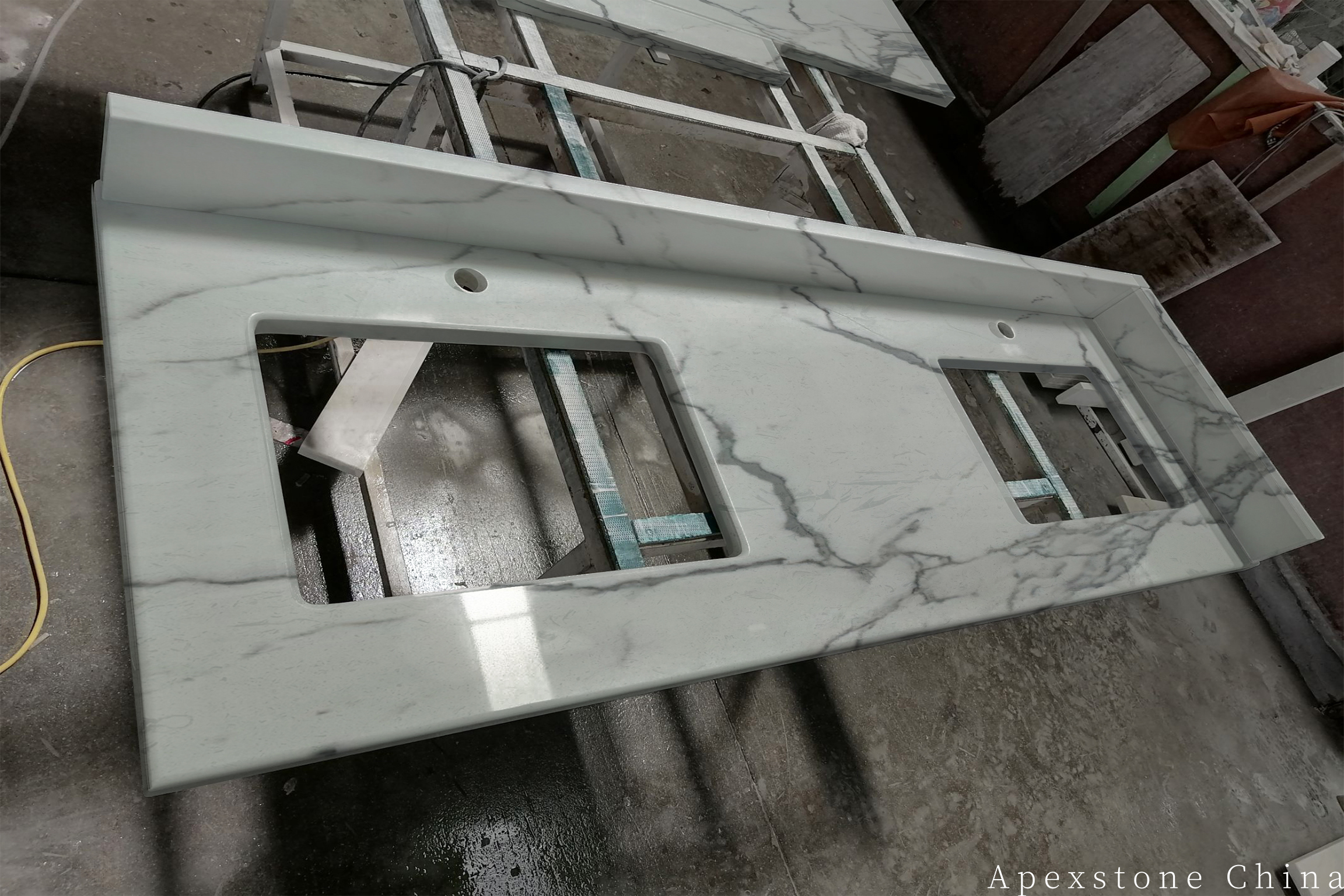
- Basin type — undermount, vessel, or integrated stone — must be chosen before the stone is cut, because the opening is machined to the approved template.
- Approve the actual slab, not a generic photo: veining on a small vanity canvas can dominate, so mark the basin position on the slab image before fabrication.
Why white marble stays the default
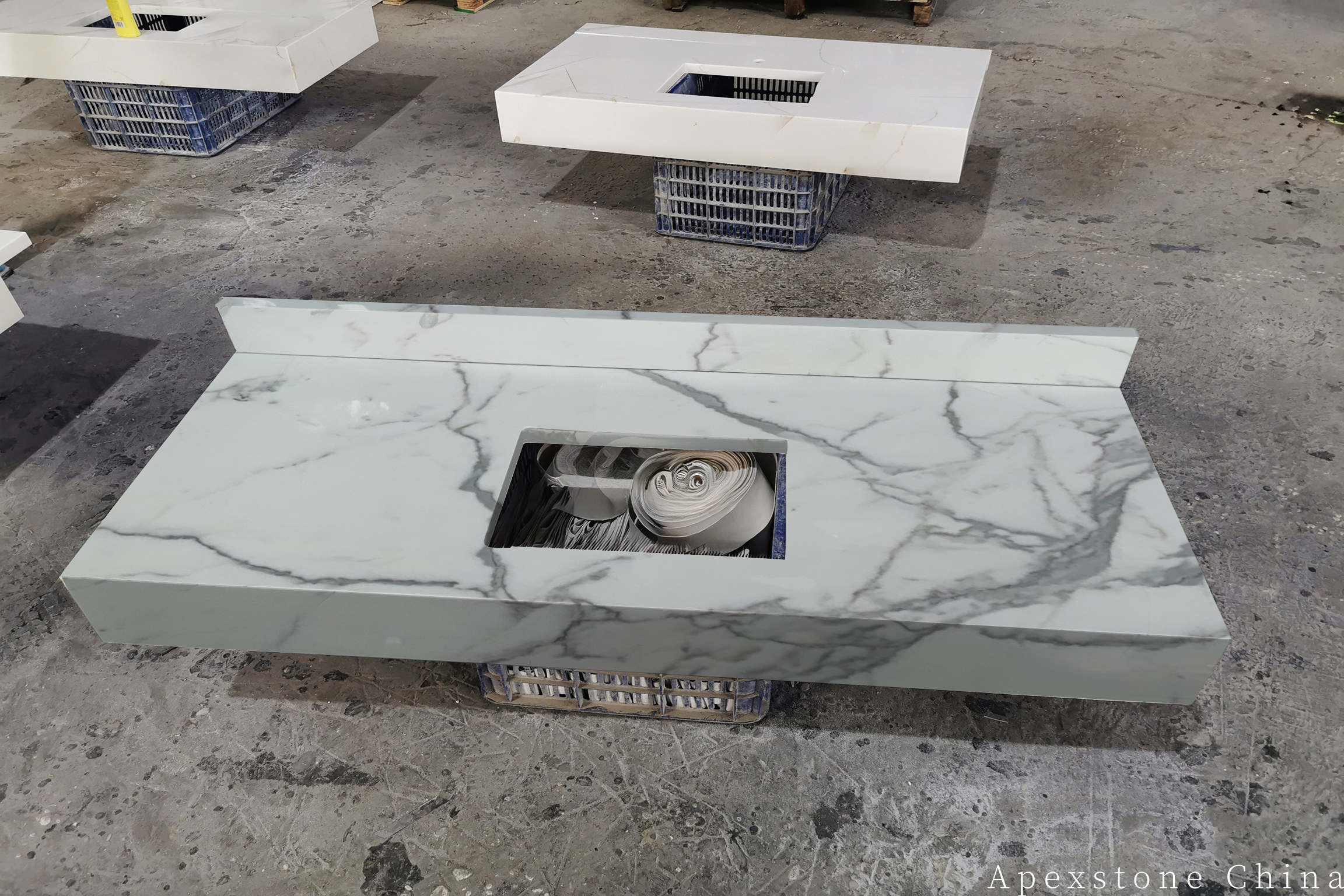
White marble reads as clean and bright in a small room, and its veining gives a natural focal point that porcelain or quartz often imitate but rarely match. The trade-off is that “white marble” is not one material. Calacatta White, for example, shares the Carrara family but has fewer, bolder veins on a whiter ground, so the same name can describe very different visuals depending on the block. That is why the choice should start with the specific stone, not the category.
For vanities, the two common reference thicknesses are 20 mm (3/4 in) and 30 mm (1-1/4 in). The thicker stock suits vessel basins and integrated stone basins, where the edge and the basin walls need more material to work with. Standard vanity widths — such as 25.5, 31, or 37 in singles and 60 or 72 in doubles — are covered in our sizes guide; here the focus is on the stone and the basin.
The real white options compared
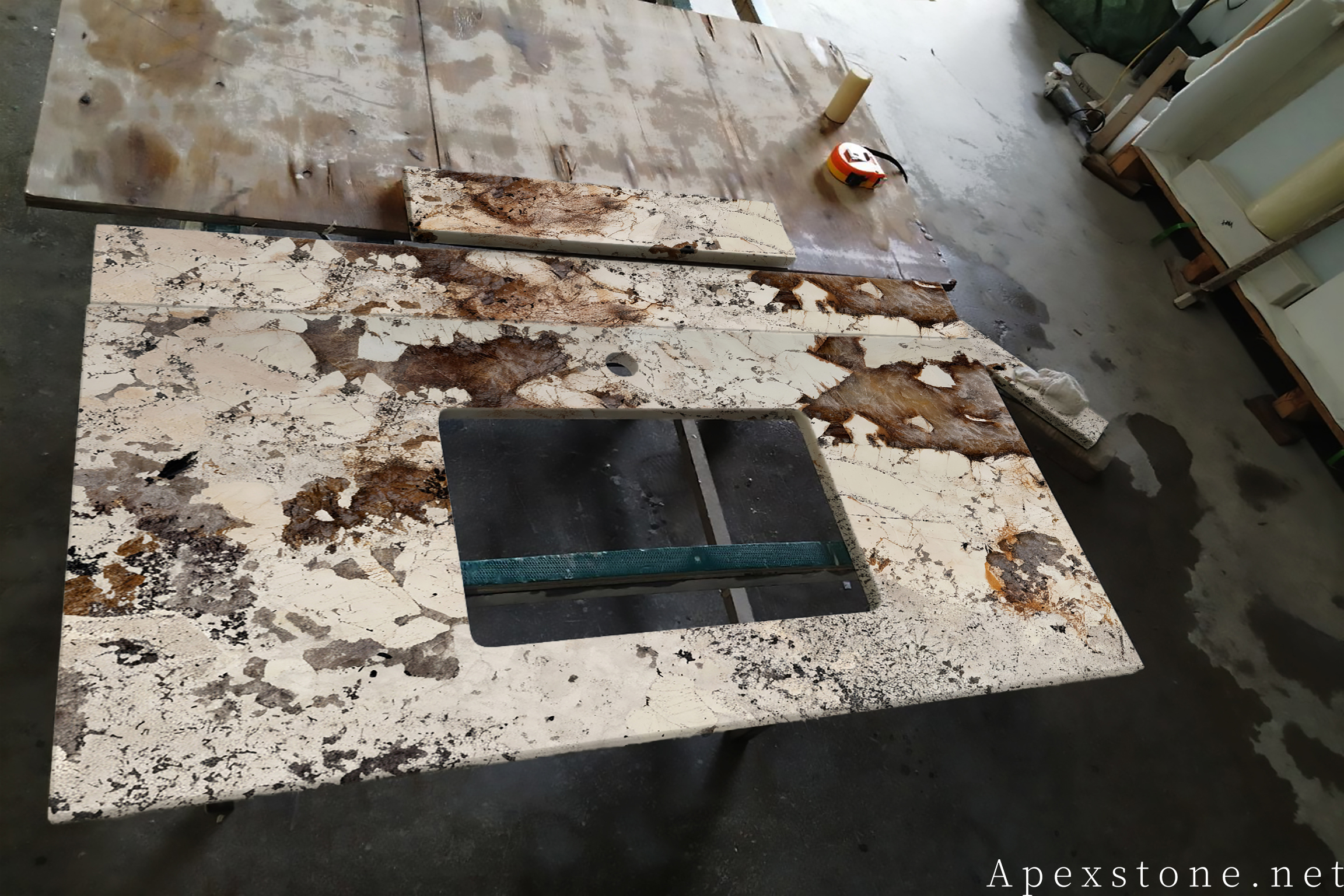
Three stone directions cover most white-vanity briefs: a true white marble, a cream quartzite, and a toned grey-white marble. They differ in ground colour, veining character, and how much care they ask for.
Calacatta White marble (Italy)
Calacatta White has a snow-white ground with light-grey random veining that stays quiet at a distance. Compared with other Carrara-family marbles, it shows fewer but bolder veins on a whiter base, which makes it a strong choice for a vanity where the stone is seen up close but should not overwhelm the room. It is a calcite marble: acidic products can dull a polished patch if left to sit, so care matters. A honed finish hides daily marks better, while a polished finish deepens the contrast of the veining. The stone can be re-honed on site if needed.
For a closer look at this option, see Calacatta White marble bathroom vanity tops.
Pandora quartzite (Brazil)
Pandora quartzite is a cream ground with brown floral movement and natural crystal sparkle. It is a bright, white-adjacent option that resists etching far better than calcite marble — a real advantage in a bathroom, though strong acids left to sit can still affect the surface. It comes in polished, honed, or leathered finishes and is available in 2 cm (3/4 in) standard thickness. It is suitable for vessel openings cut by template. If you want the lightness of white with more warmth and less acid sensitivity, this is the honest alternative.
See Pandora quartzite bathroom vanity tops for the full specification.
Aqua Grey marble (China)
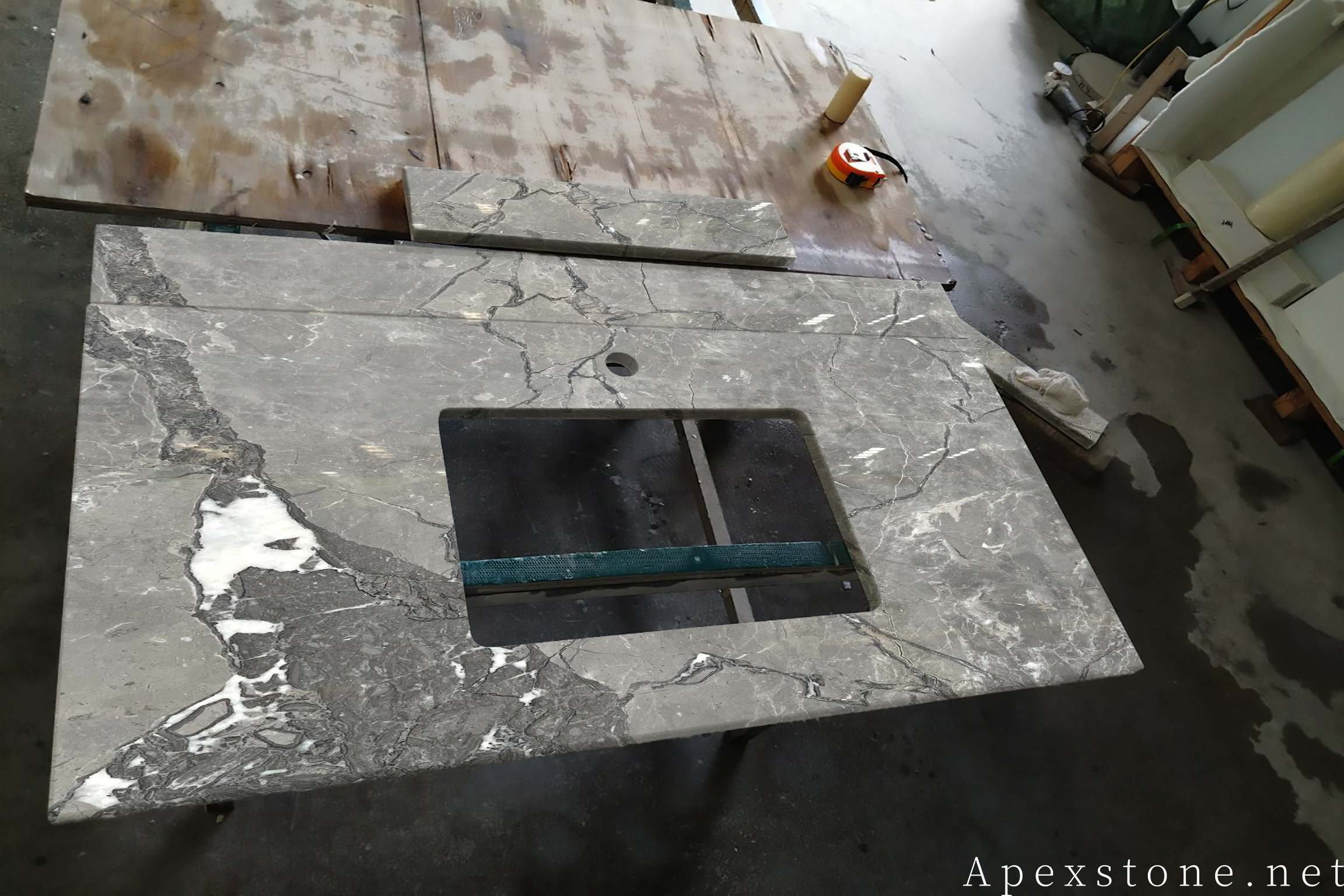
Aqua Grey marble has a blue-grey base with lighter, fluid vein bands that look like moving water. It suits readers who want white-adjacent lightness but are willing to accept more tone and movement in the stone. For wet areas, a honed finish is recommended. This is the option when a pure white ground feels too flat and you want the vanity top to carry more visual weight without going dark.
See Aqua Grey marble benchtops and vanity tops.
| Stone | Ground & veining | Care note | Typical thickness |
|---|---|---|---|
| Calacatta White marble | Snow-white ground, light-grey random veining; quiet at a distance | Calcite marble — acidic products can dull a polished patch if left to sit; re-honable on site | 20 mm (3/4 in) or 30 mm (1-1/4 in) |
| Pandora quartzite | Cream ground with brown floral movement and crystal sparkle | Very high etch resistance; better than calcite marble, not immune to strong acids | 2 cm (3/4 in) standard |
| Aqua Grey marble | Blue-grey base with lighter fluid vein bands | Honed recommended for wet areas | Confirm on the product page |
Basin choice: undermount vs vessel vs integrated
The basin decision is not a styling afterthought. Vessel, undermount, and integrated stone openings are all cut to the approved template before the stone is cut, so the basin type belongs in the specification before fabrication begins.
- Undermount keeps a clean stone rim and is the easiest to clean around, because the basin sits below the top and there is no lip to catch water. It suits a calm, seamless look.
- Vessel raises the working height and shortens the tap reach, which changes how the vanity feels in use. On a marble vessel sink vanity top, the vessel sits on the stone, so the top needs to be thick enough to support the look — 30 mm (1-1/4 in) stock is the more natural fit for this.
- Integrated stone basin removes the joint entirely, giving a single carved piece. It needs thicker material and more machining, so it is usually paired with 30 mm (1-1/4 in) stock and planned early.
For a vessel or integrated basin, confirm the template and the basin model before the slab is cut. For undermount, confirm the cut-out dimensions against the basin you will actually install.
Tone pairing and finish
White is not a single temperature. A cool, snow-white marble like Calacatta White pairs naturally with cool greys, chrome, and bright white joinery. A cream ground like Pandora quartzite warms the same room, and sits better with brass, oak, and off-white walls. Aqua Grey’s blue-grey base is the coolest of the three and works well with muted greens or soft greys.
Finish changes both look and care. Polished deepens the contrast of veining and reflects light; honed softens the surface and hides daily marks better; leathered adds texture. For a bathroom, honed is often the practical choice on marble, while quartzite gives you polished, honed, or leathered options. Our guide to honed vs polished vs leathered stone explains how each finish changes the look and the care routine.
Honest care expectations
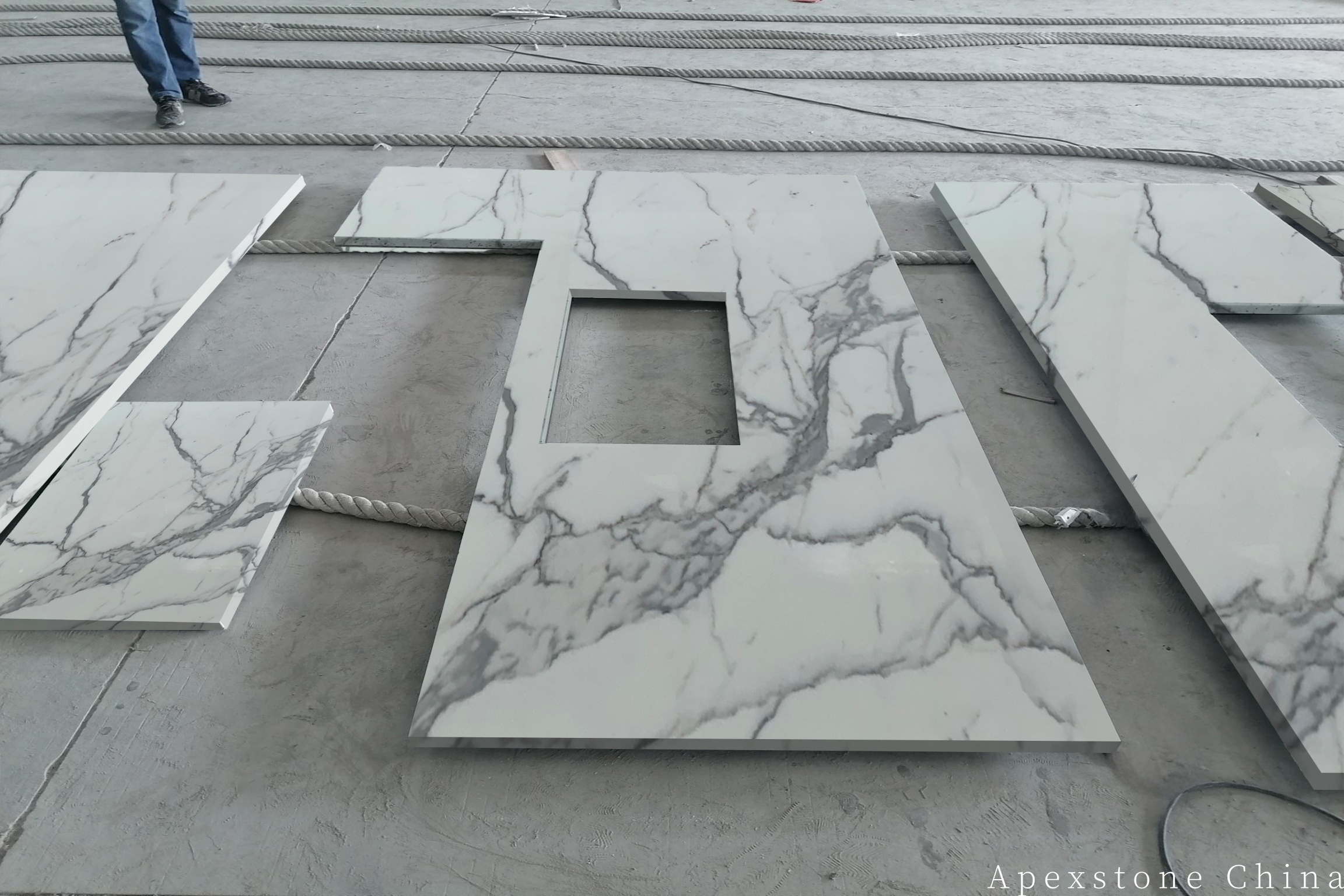
No two marble tops are identical — veining is random, so approve from photos of the actual piece. On a small vanity canvas, veining can dominate; mark the basin position on the actual slab image before cutting so you can see how the pattern sits around the opening.
For calcite marbles like Calacatta White, wipe up acidic products rather than letting them sit, and expect that a polished patch can dull if something is left on it. Re-honing on site is possible. Quartzite like Pandora is more forgiving of a forgotten splash, but it is still stone. Sealing is part of the routine; our article on marble countertop sealing, protection and honest limits sets out what sealing can and cannot do.
FAQ
Can I use a vessel sink on a white marble vanity top?
Yes. Vessel openings are cut to the approved template before the stone is cut. The main considerations are thickness (30 mm / 1-1/4 in stock suits vessel basins) and the change in working height and tap reach.
Will white marble etch in a bathroom?
Calcite marbles such as Calacatta White can dull where acidic products are left to sit. Quartzite such as Pandora resists etching far better than marble, but strong acids left to sit can still affect the surface. Honed finishes hide daily marks better than polished.
How do I choose between the white options?
Start with the ground colour and veining you want at vanity scale, then weigh care. Approve the actual slab, and mark the basin position on the slab image before fabrication.