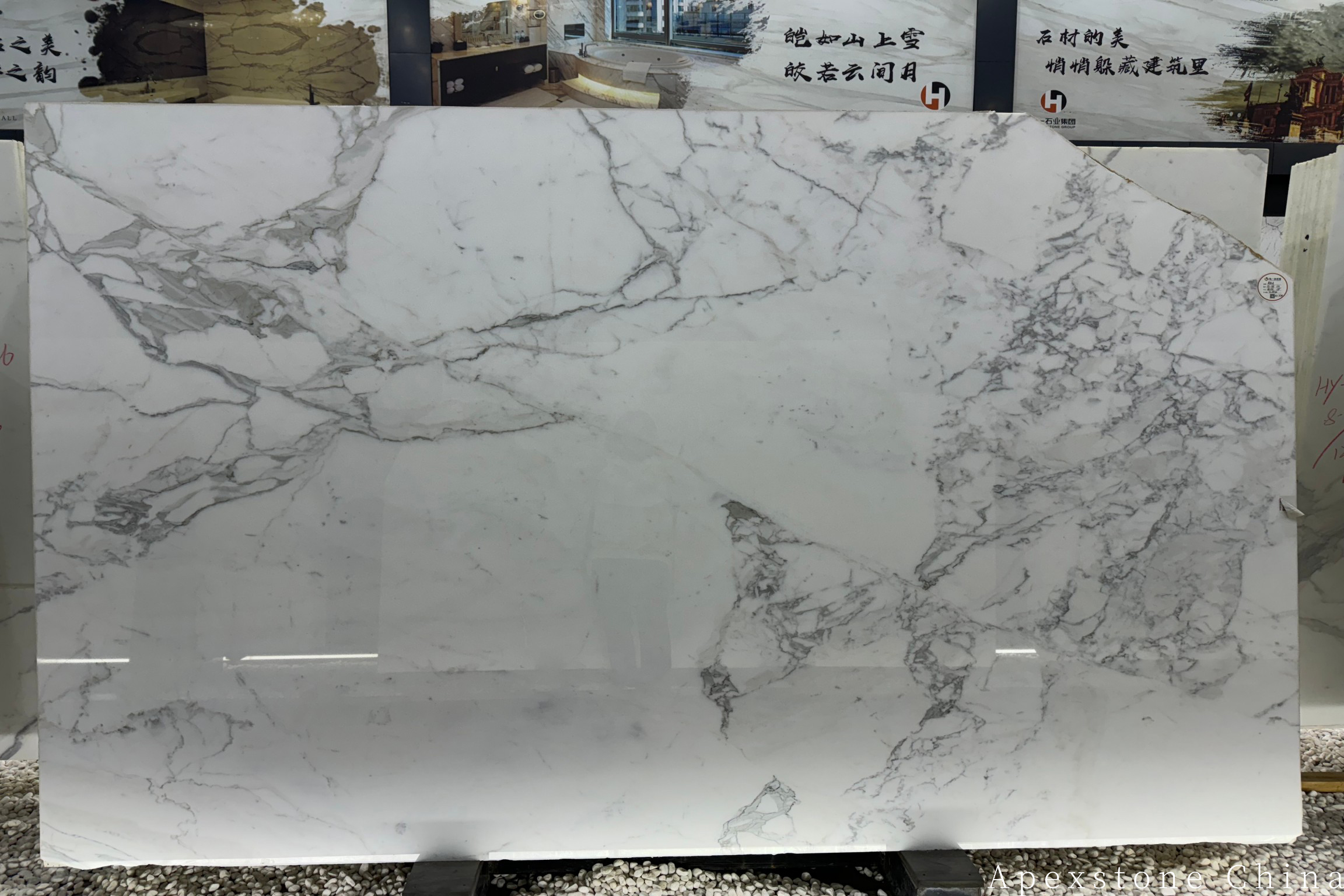
Carrara marble is an Italian white marble with a cool white background and soft, random grey veining in a net-like pattern. This explainer sets it against Calacatta and Statuario, explains why it sits at the accessible end of the Italian white price ladder, and covers the practical buying point that matters most: white marble varies block to block, so approve full-slab images, not a small sample.
If you have specified stone for a bathroom, a fireplace surround or a hotel lobby, you have met Carrara marble — or its look — already. It is the reference white of classic interiors: cool, quietly veined, and easy to work into a room that does not want to shout. What buyers often get wrong is treating all Italian whites as interchangeable. They are not. This article explains what Carrara is, how it sits between Calacatta and Statuario, and how to buy white marble without being surprised by the slab that arrives.
- Carrara marble is an Italian marble with a cool white background and light grey veining that runs in a random, net-like pattern.
- Its visual character is fine and gentle — a refined, understated look rather than a dramatic one.
- Among Italian whites it holds an accessible, affordable position on the price ladder.
- Calacatta shows bolder movement on a snow-white ground and is rarer; Statuario sits at the top luxury tier.
- White marble varies block to block, so approve full-slab images rather than relying on a small showroom sample.
What is Carrara marble, in plain terms
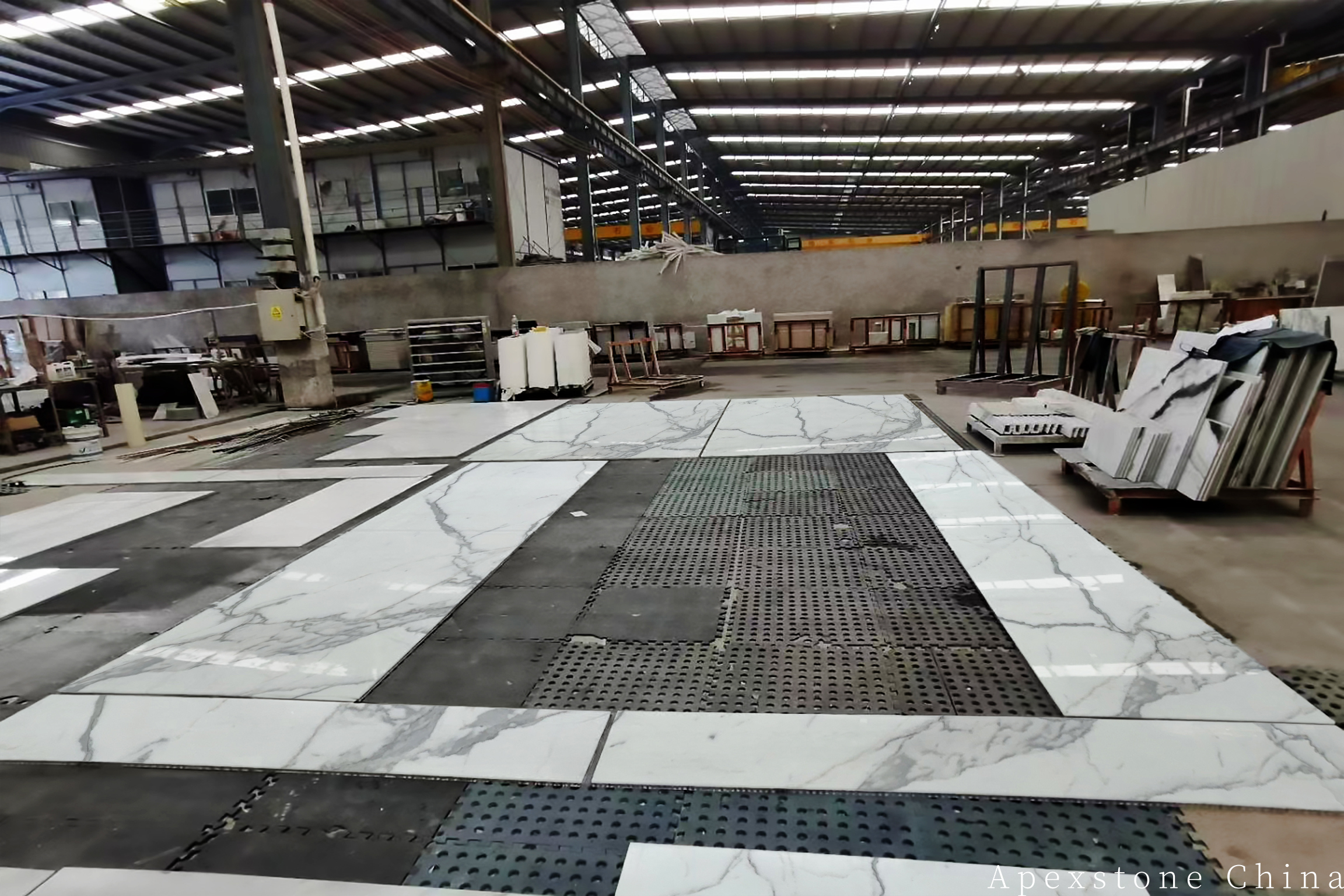
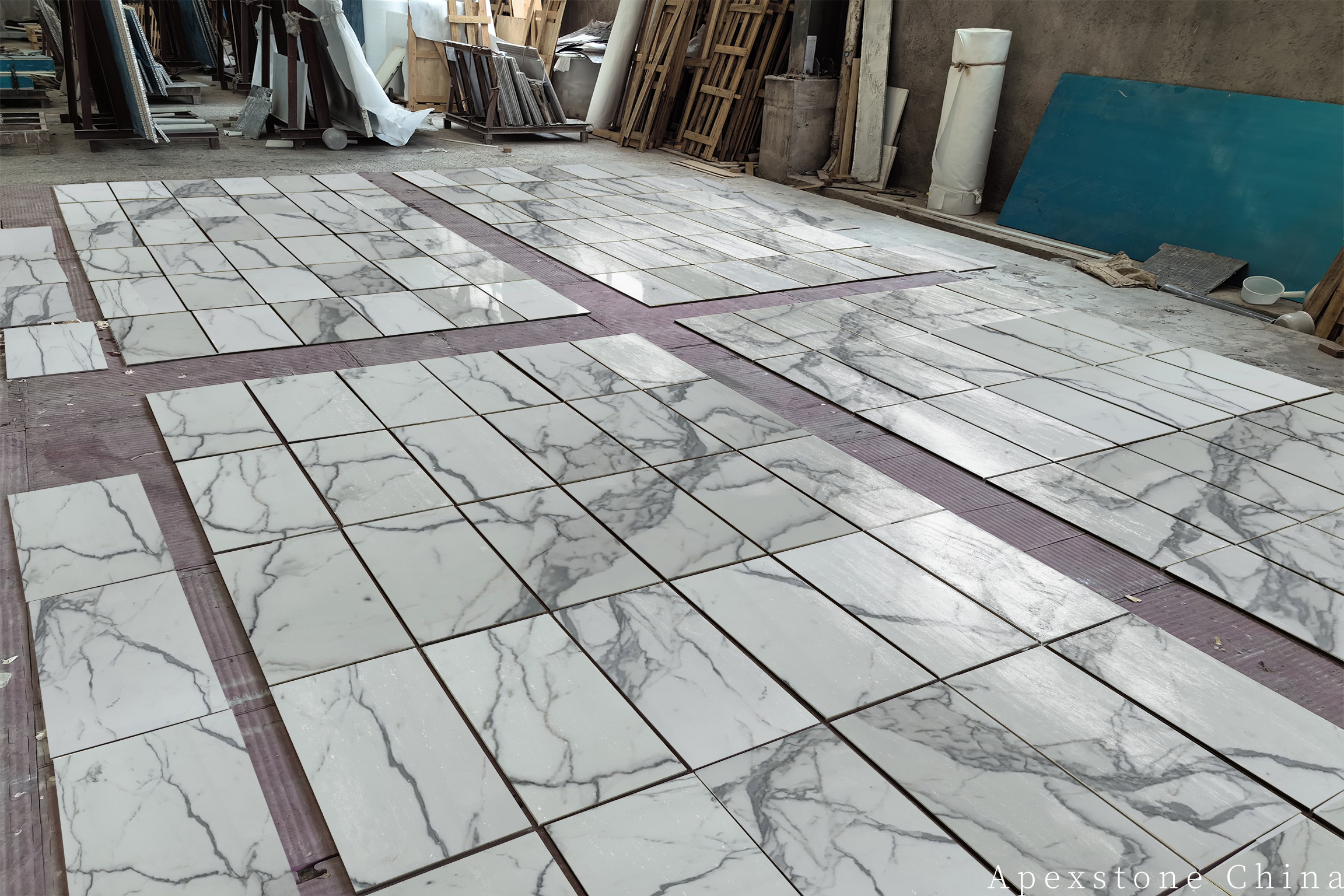
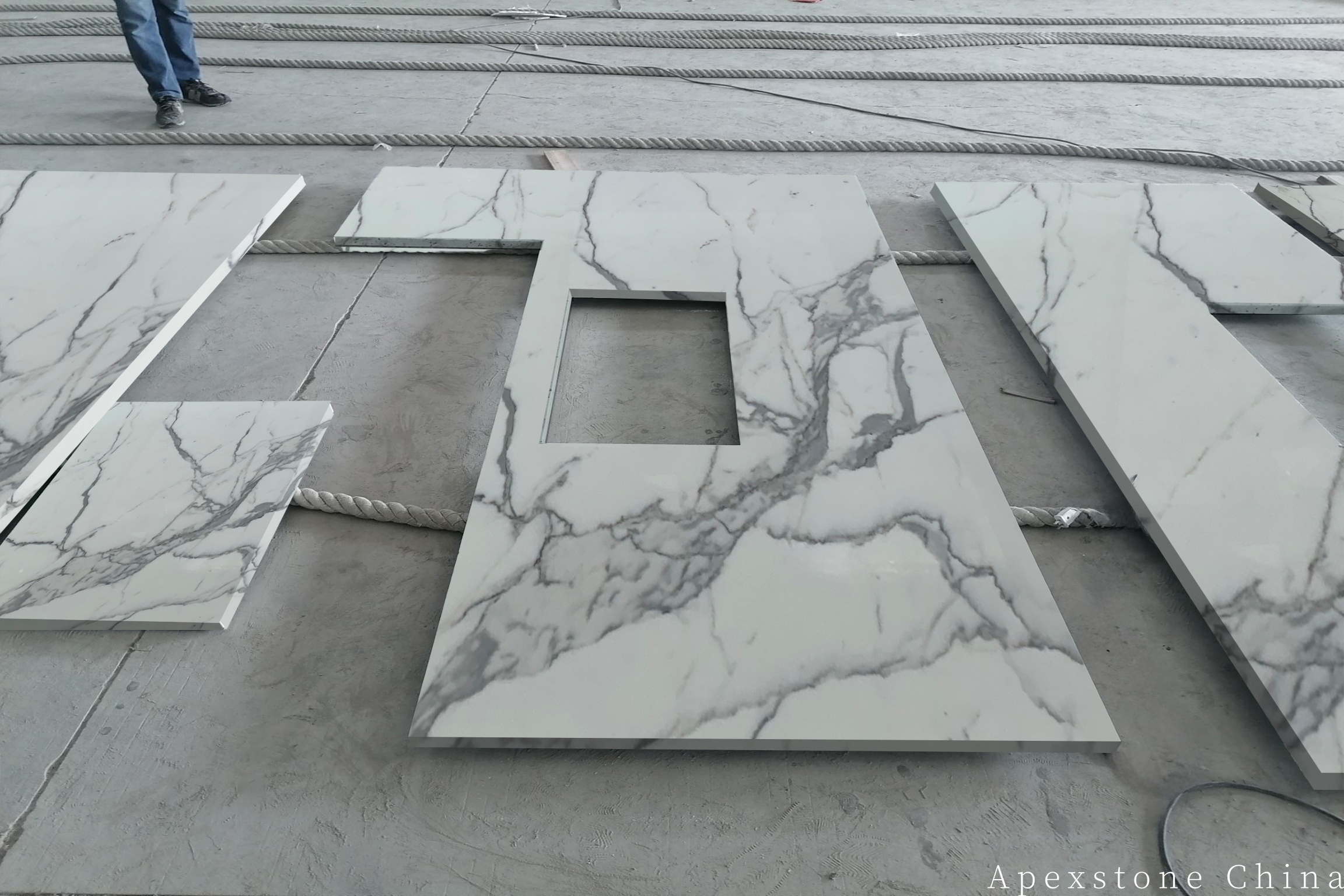
Bianco Carrara is an Italian marble. Its background is a cool white, and across that background light grey veins run in a random, net-like pattern. The overall visual character is fine and gentle: the veining reads as soft lines rather than strong gestures, and the white stays cool rather than creamy.
That combination — cool ground, pale grey net, restrained movement — is why Carrara became the quiet white of classic interiors. It does not compete with a patterned floor, a dark timber joinery or a strong paint colour. In period-style bathrooms, traditional fireplaces, stair treads and wall cladding, it provides a white that looks composed rather than bright.
So when a buyer asks what is carrara marble, the useful answer is not just "a white marble from Italy". It is a specific look: cool white, light grey, random net veining, gentle in character, and positioned at the accessible end of the Italian white range.
Where Carrara sits among the Italian whites
Italian whites are usually grouped by how much movement they carry and how rare they are. The three names that come up most in specification conversations are Carrara, Calacatta and Statuario. They are not grades of the same stone; they are different materials with different visual personalities and different positions on the price ladder.
| Italian white | Background | Veining | Visual character | Position |
|---|---|---|---|---|
| Bianco Carrara | Cool white | Light grey, random net pattern | Fine, gentle, understated | Accessible / affordable tier among Italian whites |
| Calacatta | Snow white | Bolder movement | Dramatic, statement veining | Rarer than Carrara |
| Statuario | White | Distinctive veining | Premium, sculptural presence | Top luxury tier |
Carrara vs Calacatta
The clearest difference is contrast and movement. Carrara's grey veining is light and its pattern is a soft net; Calacatta sets bolder movement against a snow-white ground. Put the two side by side and Calacatta draws the eye first. That is exactly why some projects want it and others do not — a bold slab in a small bathroom can dominate the room, while Carrara leaves space for everything else.
Calacatta is also the rarer of the two, which is reflected in how it is positioned commercially. Carrara's accessible position is not a comment on quality; it is a comment on availability and on how the material is used. For large-format wall cladding, repeated stair treads or a full bathroom where the white is a background rather than a centrepiece, the quieter stone is often the more practical specification.
Carrara vs Statuario
Statuario occupies the top luxury tier of the Italian whites. Its presence is more sculptural, and it is typically chosen when the stone itself is the focal point — a feature wall, a statement vanity top, a fireplace that is meant to be looked at. Carrara plays a different role: it is the white that holds a classic interior together without asking for attention.
In a mixed project, the two can even coexist. A designer might use Statuario where the eye lands and Carrara where the surface needs to stay calm. The decision is about the role of the stone in the room, not about which white is "better".
Why the price ladder matters to buyers
For a buyer pricing a project, the practical consequence of Carrara's accessible position is flexibility. When the white is a background element — floors in a hallway, wall panels behind sanitaryware, fireplace surrounds in a repeated unit type — the visible difference between a gentle grey net and a bold Calacatta movement is often smaller than the difference in material cost. Spending the budget on the one surface people actually touch and look at closely is a common and sensible approach.
The reverse is also true. If the design intent is a dramatic white marble centrepiece, Carrara will not deliver that effect, however well it is executed. Matching the stone to the design intent is the first decision; the tier follows from it.
How to buy white marble without surprises
White marbles are natural materials and they vary block to block. A showroom sample the size of a coaster shows you the character of the material, not the appearance of the slab you will receive. The veins on a full slab run across metres of surface; the density of the net, the position of the strongest lines and the overall balance of white to grey can all differ from the sample in your hand.
This is the single most useful buying note for Carrara and its neighbours: buy against full-slab images. Ask for photographs of the actual slabs allocated to your order, at a scale where you can see the whole surface, and approve those images before cutting begins. A small sample is useful for confirming colour temperature and finish; it is not a reliable preview of the finished wall.
A practical approval sequence
- Confirm the material identity in writing. Make sure the quotation names the marble (for example Bianco Carrara) rather than a generic "white marble", so there is no ambiguity about which Italian white you are buying.
- Agree the finish and the application. Polished, honed and other finishes change how veining reads under light, and the intended use — floor, wall, wet area, fireplace — should be stated up front.
- Request full-slab images of the allocated blocks. Review the whole surface, not a cropped detail. If a project has several slabs, review them as a set so the veining can be sequenced across the installation.
- Approve in writing before fabrication. Sign off on the slab images and keep a record of what was approved, so the delivered material can be checked against it.
- Plan the layout around the veining. Where the net pattern meets at corners and edges affects the final look; agree the layout before cutting.
For large projects, ask how the supplier handles slab selection and whether book-matching or sequencing is available. These are process questions worth raising early, because they influence both the look and the cutting plan.
Where Carrara fits in a project
Carrara's cool white and gentle veining suit interiors where the stone is meant to be a quiet, classic presence:
- Bathrooms in period or traditional styles, where a cool white ground reads as calm rather than clinical.
- Fireplace surrounds and hearths that need to sit alongside timber and painted joinery.
- Stair treads, thresholds and hallway flooring where a consistent, understated white is repeated across many pieces.
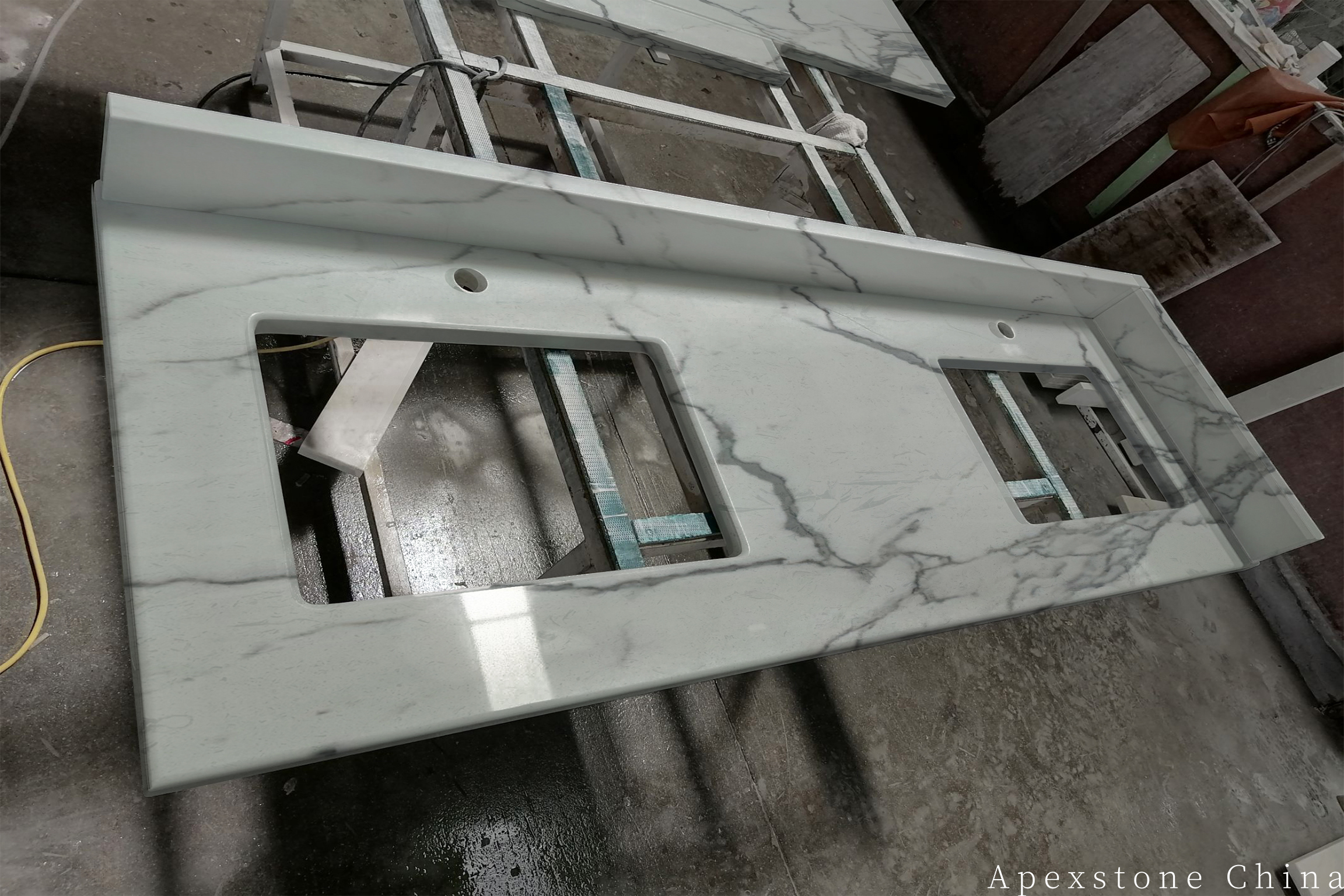
- Wall cladding and vanity tops where the surface supports the room rather than defining it.
- Larger schemes where the budget is better concentrated on one or two focal surfaces in a bolder white.
Where it is less suitable is where the design calls for dramatic movement or a snow-white ground with bold veining — that is Calacatta territory — or where the stone is intended as the sculptural centrepiece of the room, which is where Statuario is normally specified.
Common questions
Is Carrara marble the same as Calacatta?
No. Both are Italian whites, but Carrara has a cool white background with light grey veining in a random net pattern and a gentle character, while Calacatta has a snow-white ground with bolder movement and is rarer.
Is Carrara a budget marble?
It sits at the accessible, affordable end of the Italian white range. That reflects its availability and its typical role as a background white, not a lower standard of material.
Why can't I approve from a sample?
White marble varies block to block. A small sample shows the material's character but not the veining of your specific slabs, so full-slab images of the allocated blocks are the reliable reference for approval.
Can Carrara and a bolder white be used together?
Yes. A common approach is to use a bolder white such as Calacatta or Statuario where the eye lands and Carrara on the larger, calmer surfaces. The stone should be chosen by the role it plays in the room.
The short version
Carrara marble is the quiet white of classic interiors: an Italian marble with a cool white background, light grey veining in a random net pattern, and a fine, understated character. Among the Italian whites it is the accessible option, with Calacatta offering bolder movement on a snow-white ground and Statuario occupying the top luxury tier. If you are sourcing white marble, decide first what role the stone plays in the room, then confirm the material by name and approve full-slab images of the allocated blocks before fabrication. That single step prevents most of the disappointment buyers experience with white marble.