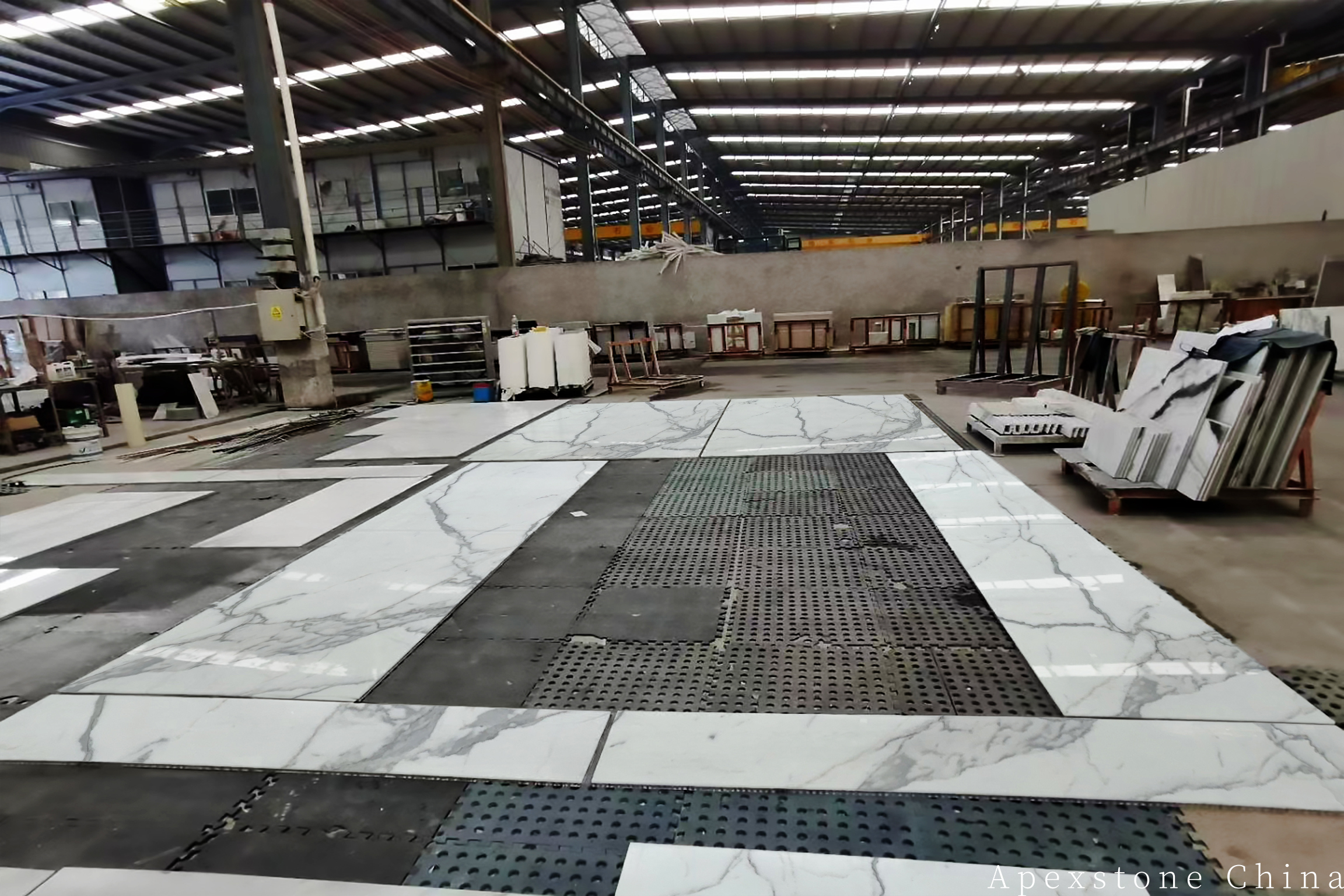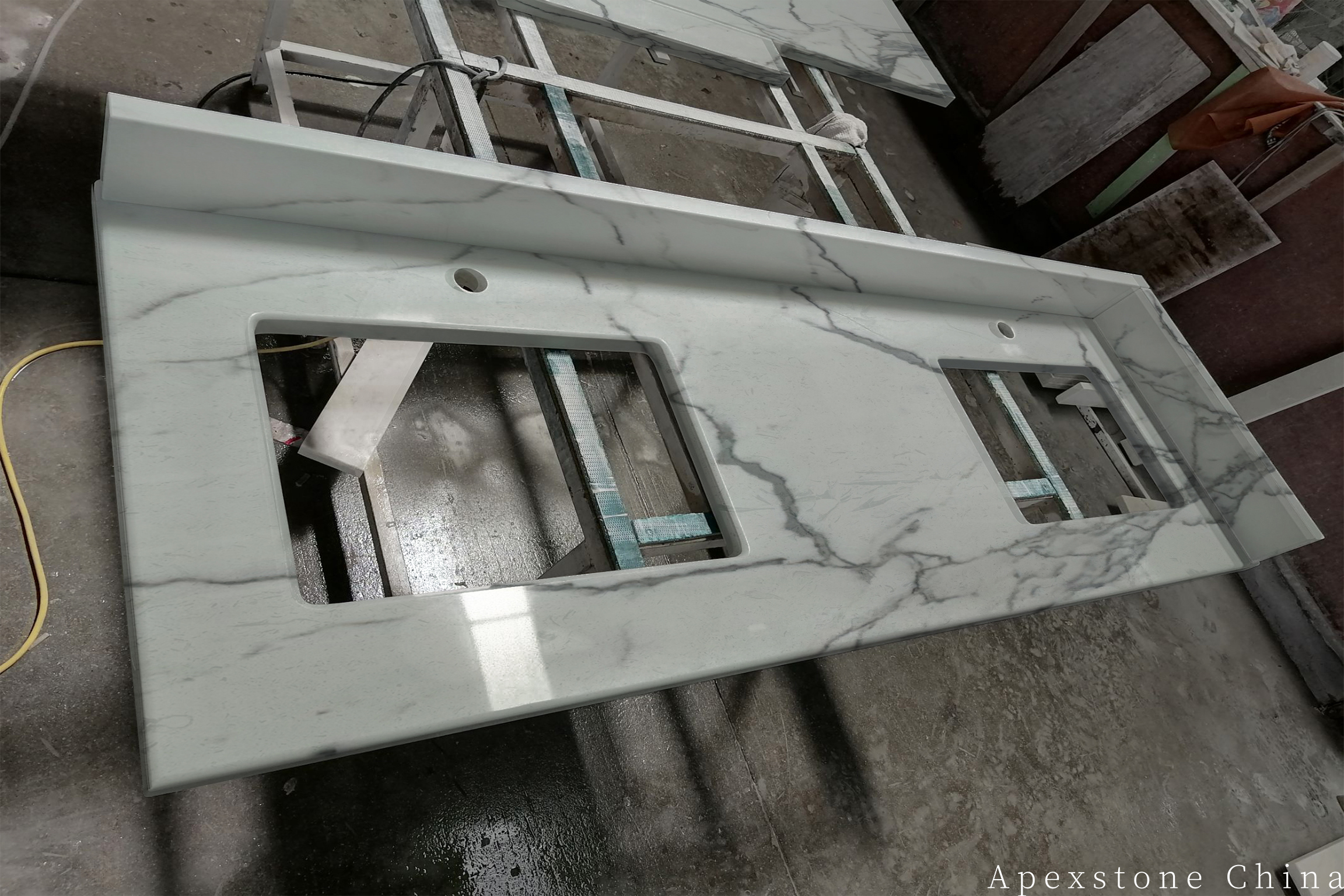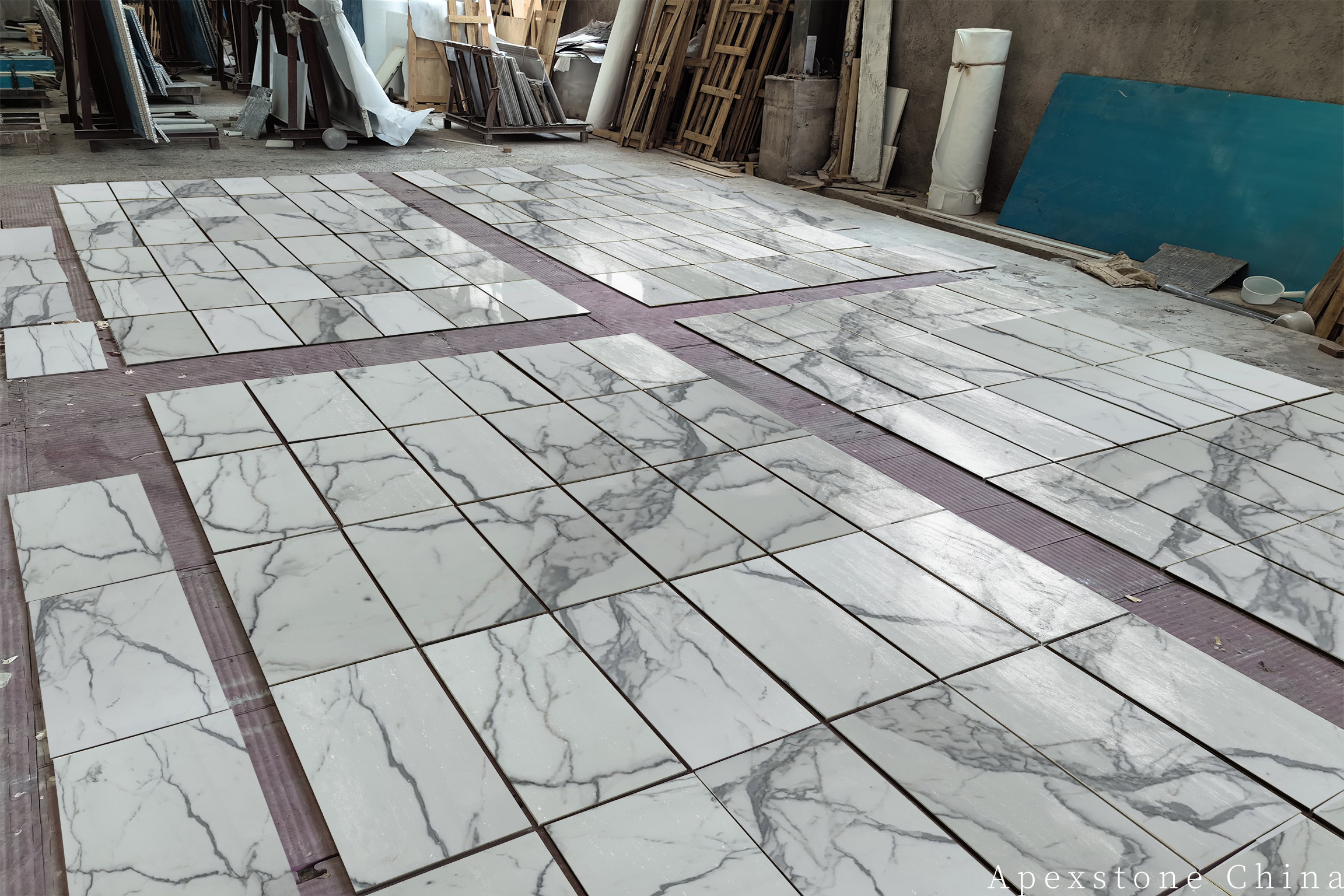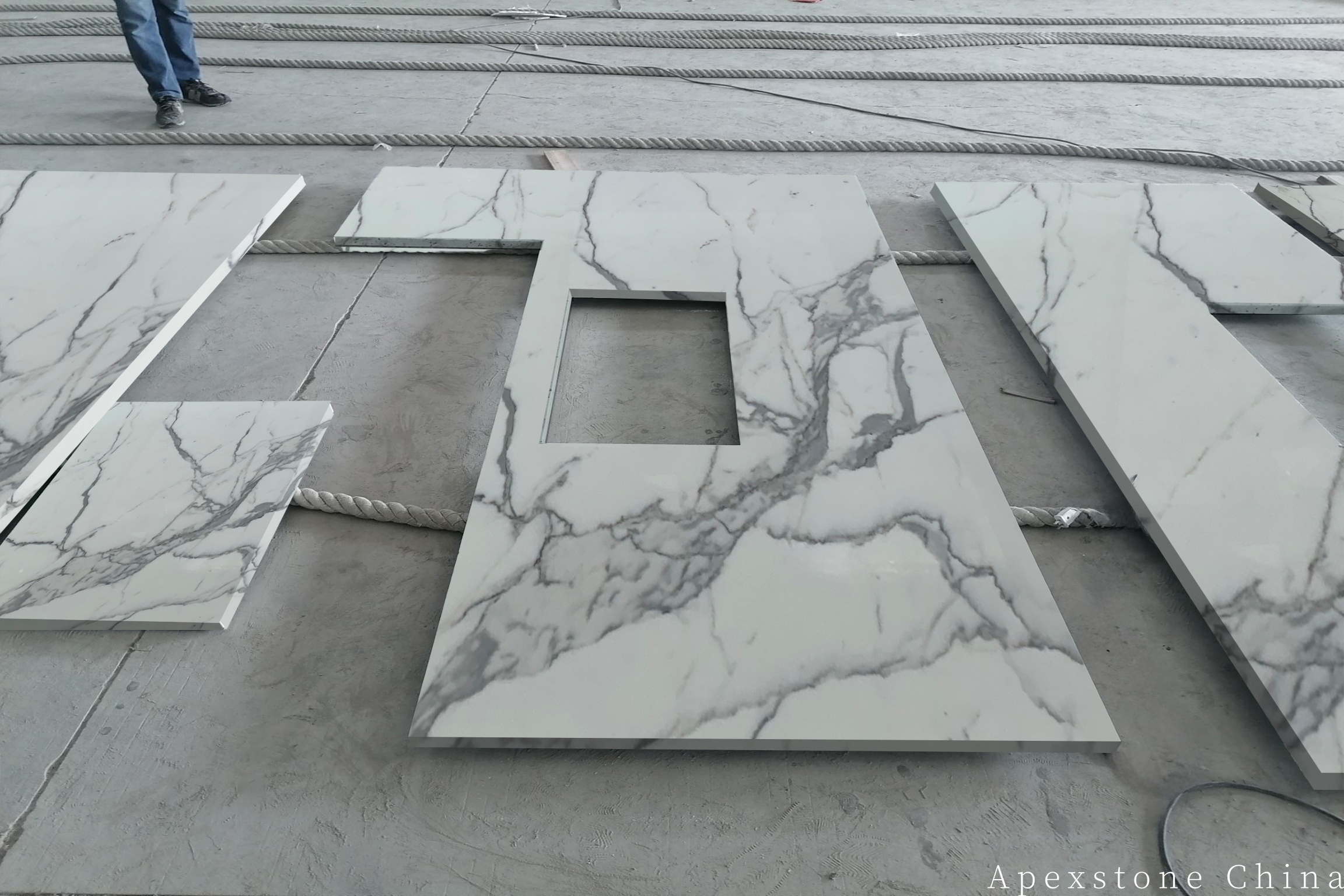
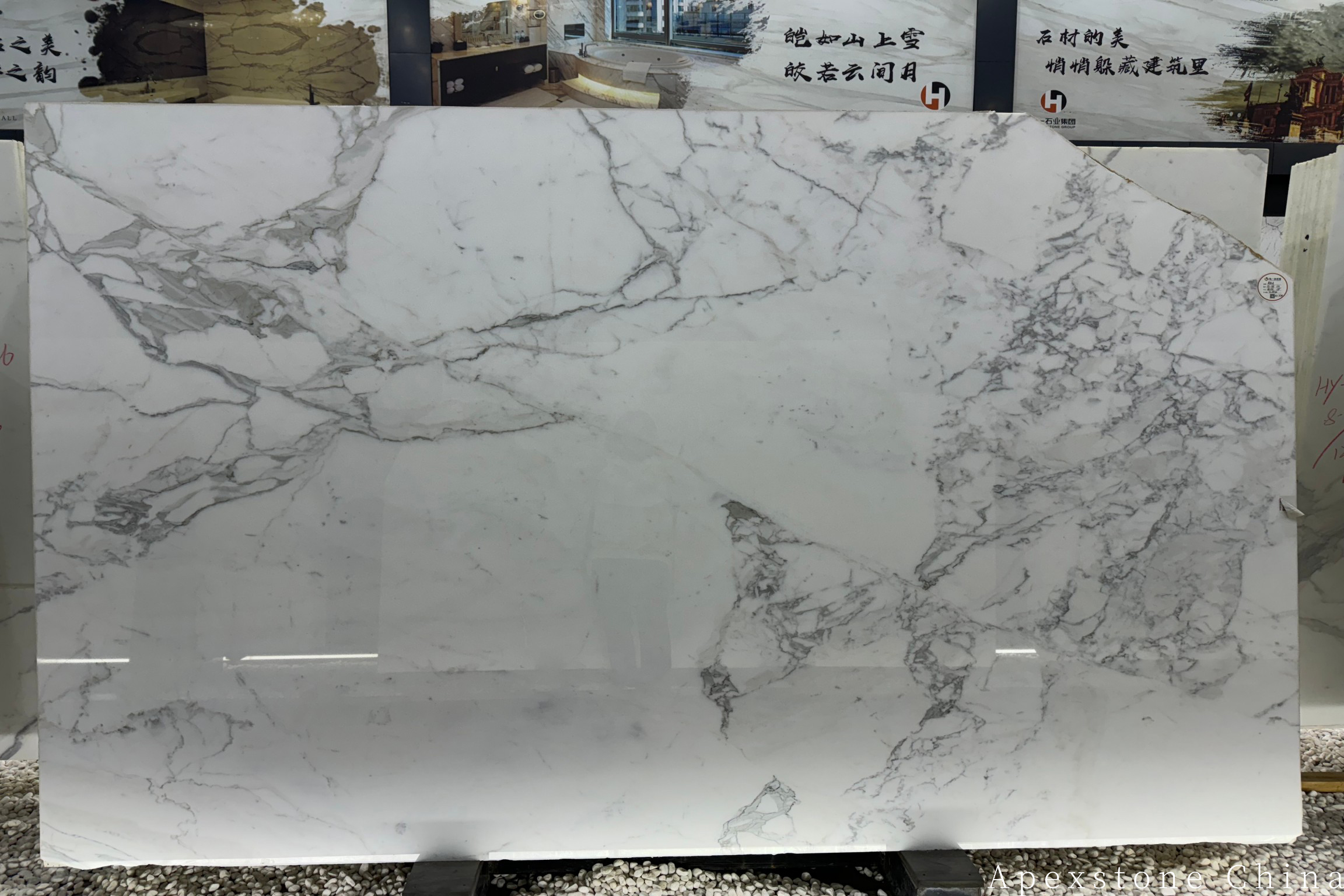
Calacatta marble is an Italian natural stone with a snow-white ground and light-grey veining that varies from block to block. This article explains what calacatta marble is and why professionals reserve actual slabs by batch—with full-slab images and slab numbers—instead of relying on a small sample.
If you have ever specified a white marble with dramatic grey veins, you have likely encountered Calacatta. But the stone sold under that name is not a single uniform product—it is a natural material that changes from one quarry block to the next. That simple fact is why serious buyers reserve slabs by batch, not by sample. This article explains what Calacatta marble is and why a small sample cannot represent the batch you will receive.
What Is Calacatta Marble?
Calacatta marble is a natural stone quarried in Italy. Its defining visual character is a snow-white ground crossed by light-grey veins that run in random directions—sometimes bold and clustered, sometimes fine and scattered. The stone is calcite-based, which gives it the deep, translucent white that designers associate with classic marble, but also makes it sensitive to acids.
In the trade, Calacatta is understood as a family of white marbles rather than a single, locked-in pattern. Two slabs from the same block can look similar; two slabs from different blocks can look noticeably different. That block-to-block variation is not a defect—it is the nature of the material. And it is the reason a sample in your hand may tell you very little about the slab that will arrive on site.
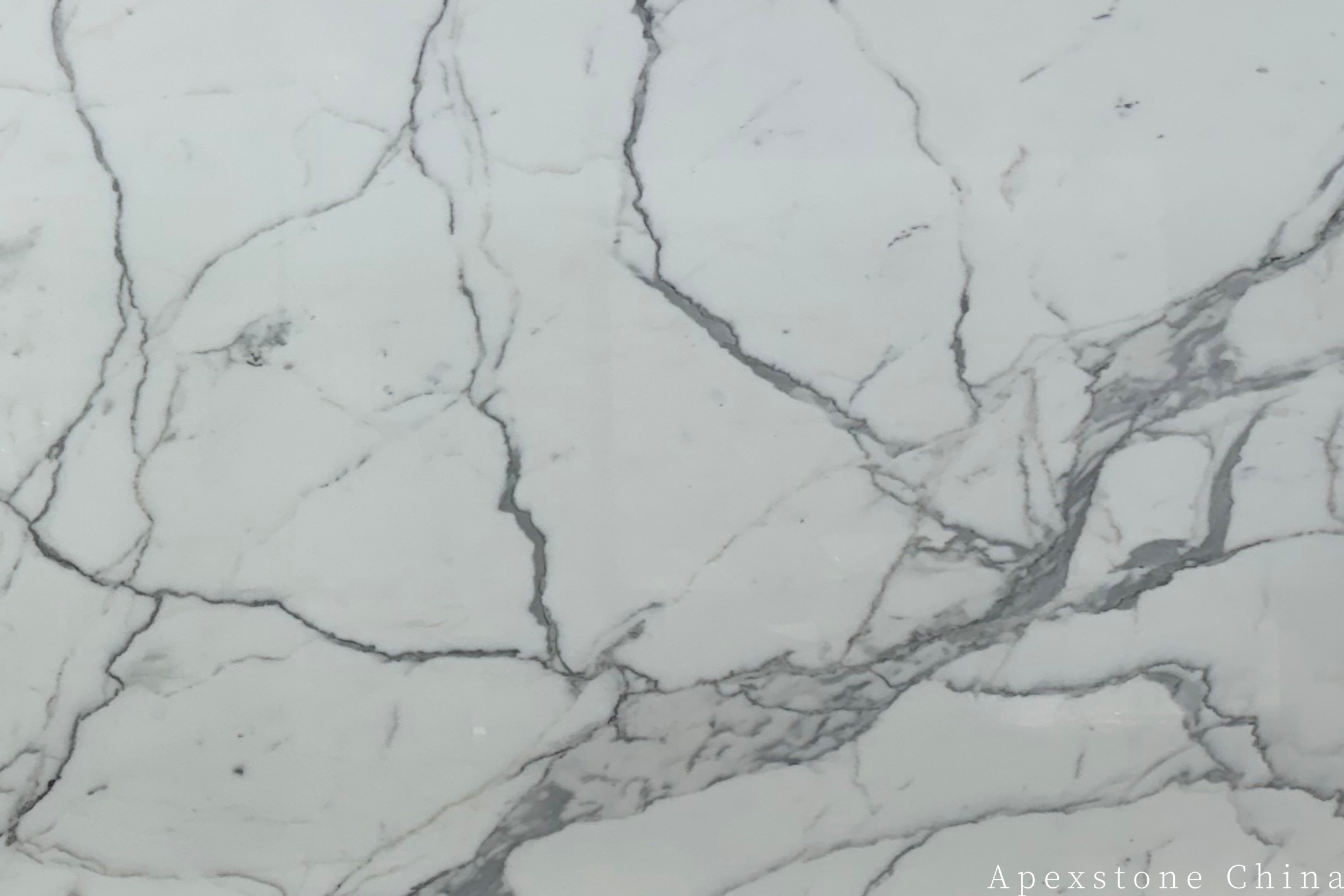
Key takeaway: Calacatta is defined by its origin and general appearance—Italian natural marble with a snow-white base and light-grey random veining—but the exact veining you receive is determined by the specific block and slabs you reserve.
Why Samples Can Mislead
A sample is typically a small offcut, perhaps 100 x 100 mm or 150 x 150 mm, taken from one slab. It shows the stone’s color palette and general vein style. What it cannot show is how the veining behaves across a full slab—how veins enter and exit the edges, how dense they become in one area, or how the white ground reads at scale.
Buyers who approve a sample and expect every slab to match it are often disappointed. The sample may have come from a block with tight, uniform veining, while the production batch comes from a block with broader, more dramatic movement. For a kitchen island or a feature wall, that difference can change the entire design. This is why the professional approach is to reserve the actual slabs you will receive, not just a sample.
Block-to-Block Variation: What Professionals Expect
Calacatta blocks are extracted from different parts of the quarry and can vary in vein density, vein thickness, and the amount of grey versus white. Some blocks produce slabs with subtle, delicate veining; others produce bold, high-contrast movement. Even within a single block, slabs cut from different positions can show different patterns.
For a buyer, the practical implication is this: if your project requires a consistent look across multiple slabs, those slabs should come from the same block and be reserved together as a batch. Mixing blocks without seeing them first is a risk. And the only way to manage that risk is to see the actual slabs—full-slab images, not just a close-up of a sample.
How Batches Are Reserved: The Trade Practice
When you reserve Calacatta by batch, you are committing to specific slabs. The supplier identifies the batch with a batch reference and individual slab numbers, then supplies full-slab images and close-ups before you commit. This lets you review the veining across the entire slab, check how the slabs in the batch relate to each other, and confirm that the material matches your project’s expectations. Reservation terms—how long a batch is held, whether a deposit is required, and how changes or substitutions are handled—are agreed with your supplier at the time of confirmation, so put them in writing alongside the batch reference and slab numbers.
This process is standard in the stone trade because it solves the sample problem. You are not guessing what the batch will look like—you are looking at it. Full-slab images show the whole surface, including edges and corners, so you can judge book-matching potential or see how the veins flow. Close-ups show the detail of the veining and the surface finish.
Before dispatch, third-party inspection with a QC report is available. That report can cover slab dimensions, thickness, surface condition, and other agreed checks, giving you an independent record before the material ships. Whether the buyer or the supplier arranges the inspection, who bears the cost, and the report format—typically photos plus a written summary—are agreed case by case with your supplier, so confirm these conditions when you place the order. For international buyers, this is a practical way to verify the batch without being on site.
Specifications to Confirm
Calacatta slabs are typically available in sizes around 3000 x 1900 mm (about 118 x 75 inches). Reference thicknesses are 18–20 mm (about 3/4 inch) and 30 mm (about 1-1/4 inches). The surface can be polished or honed. These are standard trade references; actual availability and tolerances should be confirmed with your supplier for the specific batch.
| Property | Reference |
|---|---|
| Origin | Italy |
| Base color | Snow-white |
| Veining | Light-grey, random |
| Slab size | Around 3000 x 1900 mm (approx. 118 x 75 in) |
| Thickness | 18–20 mm (approx. 3/4 in) or 30 mm (approx. 1-1/4 in) |
| Finish | Polished or honed |
| Care | pH-neutral cleaners; avoid acids |
Care and Handling
Calacatta is a calcite-based white marble, which means it is sensitive to acids. Acidic cleaners—including vinegar, lemon juice, and many bathroom or kitchen sprays—can etch the surface. Use pH-neutral cleaners and wipe up spills promptly. This applies to polished and honed finishes alike. For a detailed look at a typical polished slab, see the Calacatta White Marble Slab product page.
Frequently Asked Questions
No single sample can represent an entire batch of natural stone. Samples show general color and vein style, but the batch is defined by the specific slabs. Reserve the batch and review full-slab images to see what you will actually receive.
Request slabs from the same block and reserve them as one batch. The supplier can provide images of all slabs in the batch so you can check consistency before committing.
Yes, third-party inspection with a QC report can be arranged before dispatch. Discuss the scope of inspection with your supplier so the report covers the checks that matter to your project, and confirm who arranges it, who bears the cost and the report format as part of the order.
Understanding what Calacatta marble is—and how block-to-block variation works—helps you avoid surprises. The reliable way to buy is to reserve by batch, review full-slab images and slab numbers, and confirm the details before commitment. If you are planning a project, start by looking at the actual slabs, not just a sample.