Penetrating sealer slows what soaks into marble; it does not stop acid from dulling a polished calcite surface. This guide explains what sealing can and cannot do, how the water-drop test replaces invented reseal schedules, why honed and polished finishes behave differently, and when re-honing is the honest repair path.
Countertop Care & Decision Guide
Sealing is the most talked-about step in marble ownership and the most misunderstood. It slows the rate at which liquids soak in. It does not change the stone's chemistry, and on a polished calcite marble it will not stop an acid from dulling the surface. Knowing that boundary is what turns sealing from a sales promise into a maintenance plan you can actually follow.
What a penetrating sealer does — and the line it cannot cross
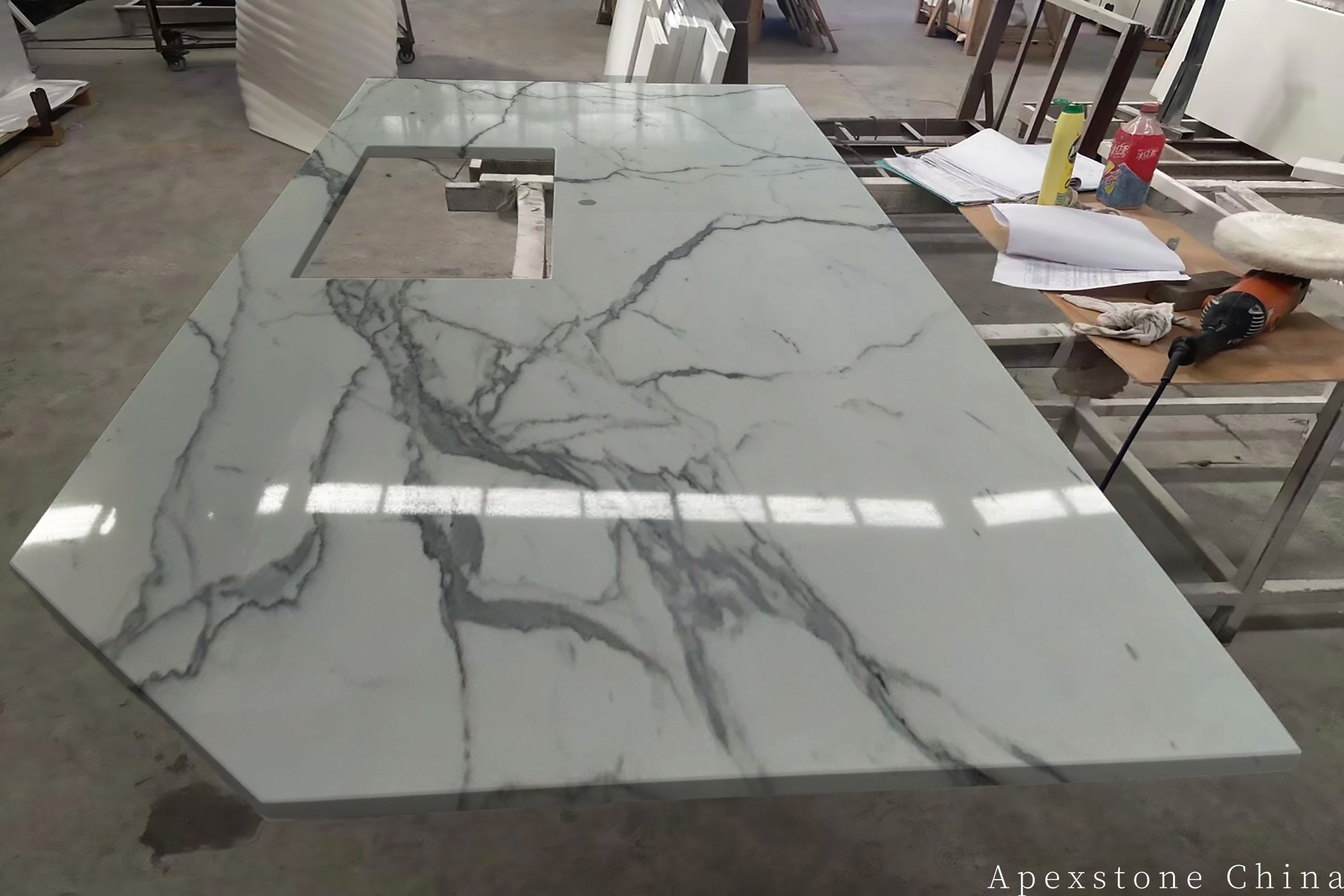
A penetrating sealer is a liquid that enters the pore structure below the surface and lines those pores, so water, wine and oil bead up and take longer to absorb. That is the whole job: time. The longer a spill sits on top of the stone rather than inside it, the easier it is to wipe away before it becomes a stain.
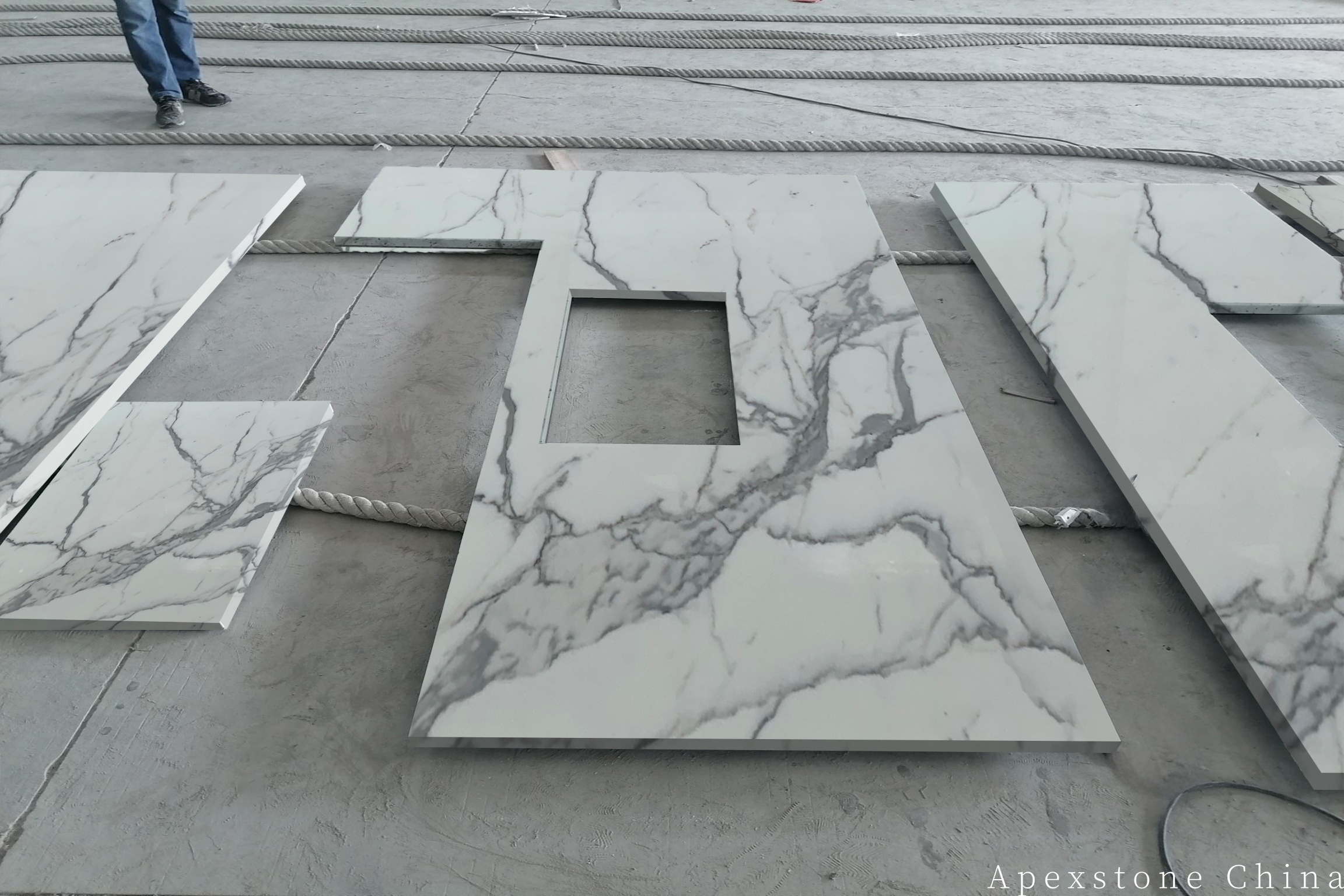
What sealing cannot do is protect the polish from acid. Calacatta White is an Italian natural calcite marble — a snow-white base with light-grey random veining — and calcite reacts with acid on contact. A lemon wedge, a splash of vinegar, a descaler or a bathroom cleaner with an acidic base will dull the gloss where it lands. That dulled spot is etched, not stained and not a hole. It is a change in surface polish, which is why it belongs to a different repair path than a stain does.
This distinction is where most after-sales conversations go wrong. A buyer who sealed the top correctly, then sees a ring under a wine glass that was actually citrus, concludes the sealer failed. It did not. It was never in scope. Sellers who explain this before delivery save themselves the argument later.
Decide the finish from how the surface will be used
Polished and honed Calacatta White weather acid exposure differently, and that difference should drive the choice more than a showroom sample does.
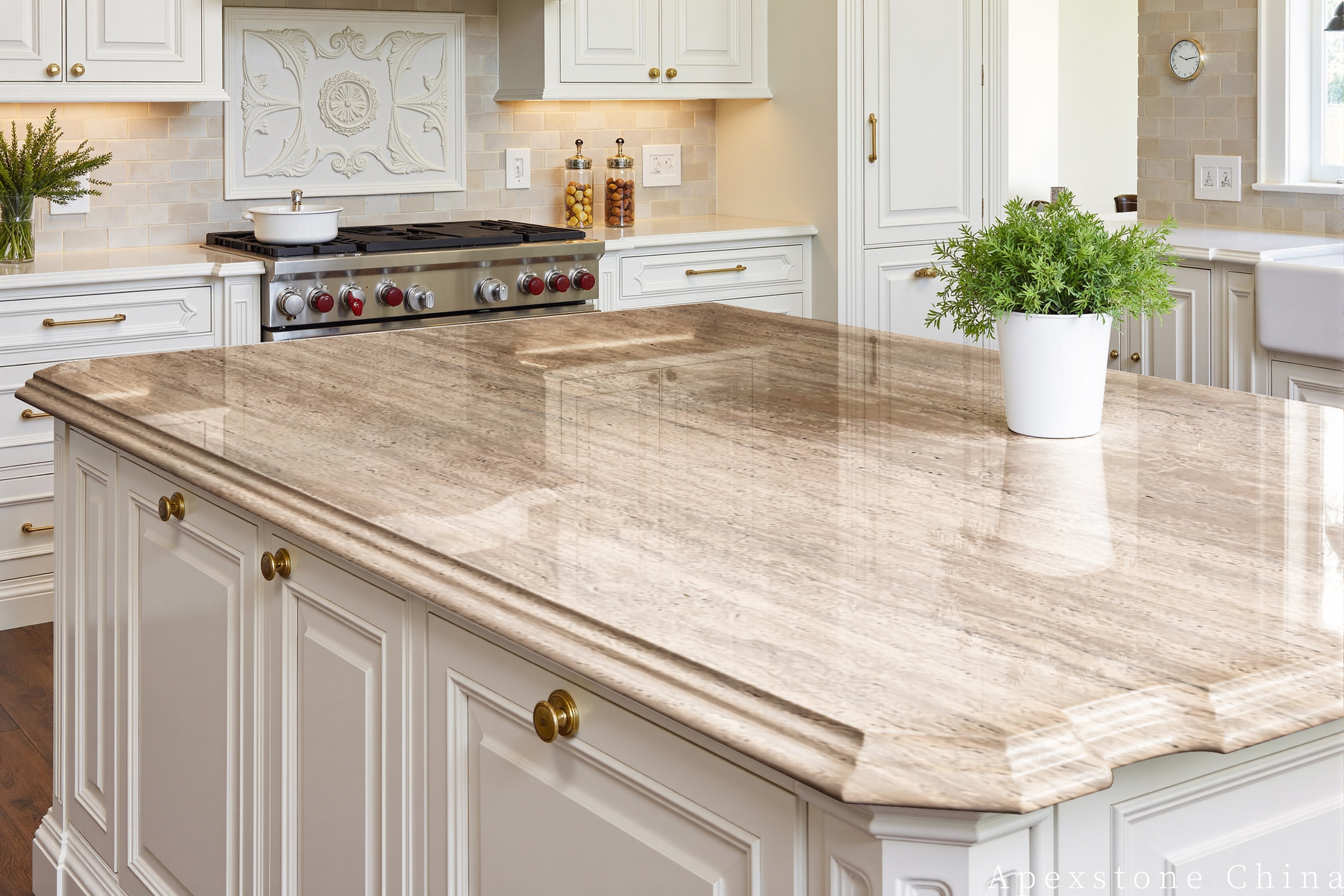
A polished finish takes a superb gloss — it is the finish this stone is known for. It is also the finish where an etch reads most clearly, because the contrast between gloss and dull is sharp. A honed surface is flatter and softer in appearance; where an acid dulls a small area, it is far less visible against a matte ground. Neither finish is sealed against acid. The question is whether you want the etch to be obvious.
| Behaviour | Polished Calacatta White | Honed Calacatta White |
|---|---|---|
| Gloss | High, mirror-like | Matte |
| What an acid marks look like | Visible dull spot against the gloss | Faint change in sheen, easier to live with |
| Sealer's role | Buys wipe-up time, not acid resistance | Buys wipe-up time, not acid resistance |
| Typical choice | Statement islands, low-acid kitchens | Busy cooking zones, daily-use tops |
For a kitchen where citrus, vinegar dressings and hot pans are constant, honed is often the practical answer in calcite marble. For a surface that is looked at more than it is cooked on, polished earns its upkeep.
The water-drop test beats an invented reseal calendar
You will read reseal intervals quoted in months or years. Those numbers are guesses about your kitchen, not facts about your stone, and they vary with the sealer used, the finish, and how hard the top is worked. A better method is to test the surface and follow the sealer manufacturer's guidance for the product actually on the counter.
Put a few drops of water on an unremarkable part of the top and leave them for a few minutes. If the drops still stand as beads, the sealer is doing its job. If the water has spread flat and darkened the stone, the surface is drinking again and it is time to reseal.
- Run the test in a few places — around the sink, the prep zone, the edge — because wear is uneven.
- Re-test after resealing, once the sealer has cured per its own instructions.
- Record the date you sealed and the date the beads stopped forming. That record, not a shop rule of thumb, tells you your real interval.
Sealing is not a one-time event that finishes the job. It is periodic work, and the test is how you know when the work is due.
Daily care that keeps sealing meaningful
Protecting a marble top is mostly a set of small habits, done consistently, rather than a product decision.
- Wipe spills — wine, oil, coffee, juice — promptly. Sealing buys you minutes, so use them.
- Keep a cutting board under lemon, lime and vinegar. Acids are the main enemy of the polish, not of the sealer.
- Use a trivet for hot pans; thermal shock is a separate risk from staining.
- Clean with a pH-neutral stone cleaner. Vinegar-based and descaler-type products are exactly what etch calcite.
- Avoid leaving standing water at the sink edge; drying the stone removes one long-term stain source.
Done this way, polishing and protecting work together: the sealer holds back what a wipe can remove, and the habits keep the acid off entirely. A buyer who only buys the sealer and skips the habits will still see etches.
When an etch appears: re-honing, not resealing
An etch mark is not a stain, so resealing will not fix it, and scrubbing at it makes it worse. Etching removes a trace of polished surface; the repair is to put polish back. Re-honing and re-polishing the affected area is the honest route, and a fabricator can usually do it on site for a small mark. That is worth saying plainly to a homeowner before delivery, because the person who knows the repair exists is far less likely to feel misled by a dull spot.
Stains, by contrast, come from liquids that got into the pores — oil, wine, coloured juice. Those improve with poultice treatment and time. Etched and stained are two different problems with two different solutions, and mixing them up is what turns a small mark into a complaint.
If acid resistance matters more than marble's look
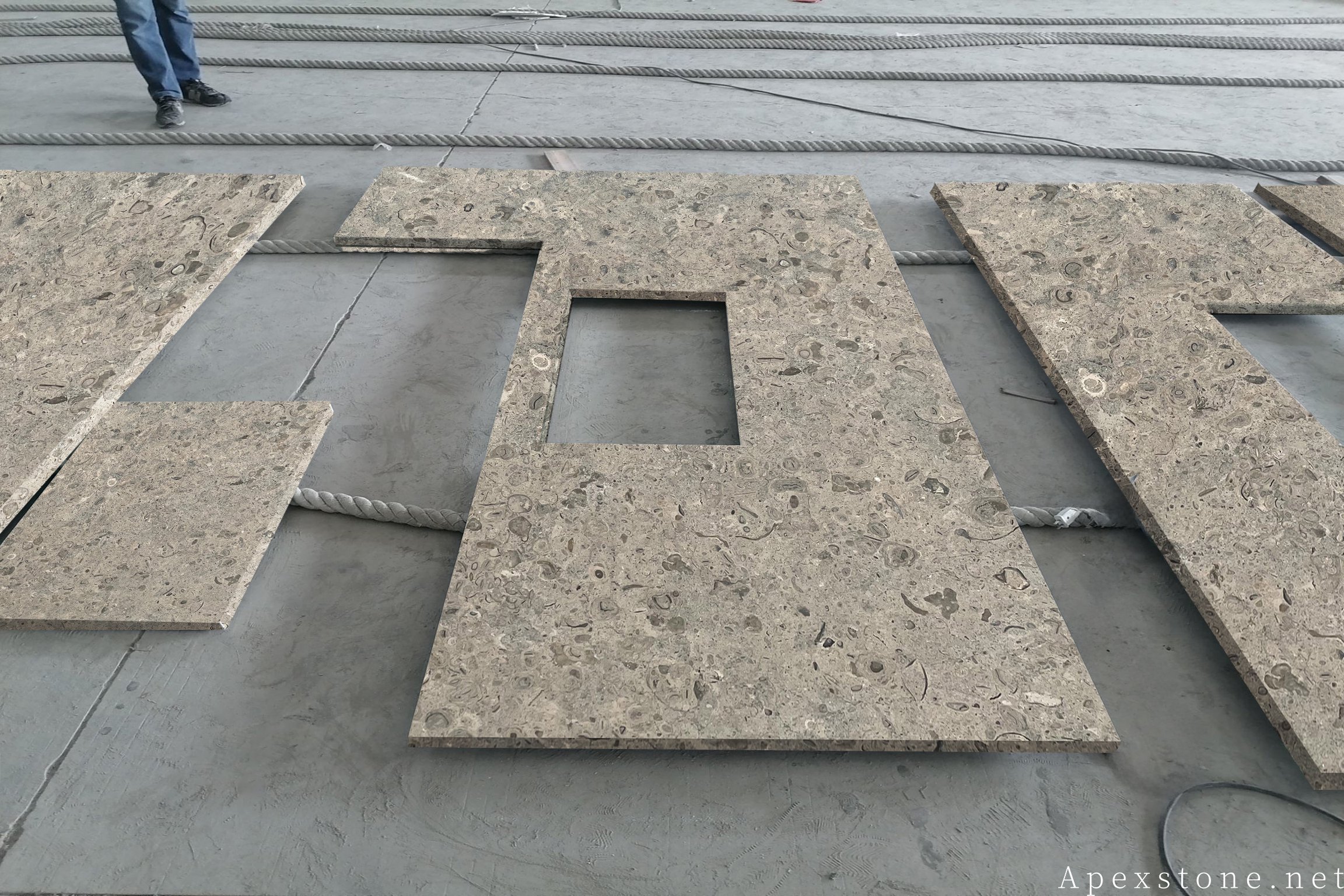
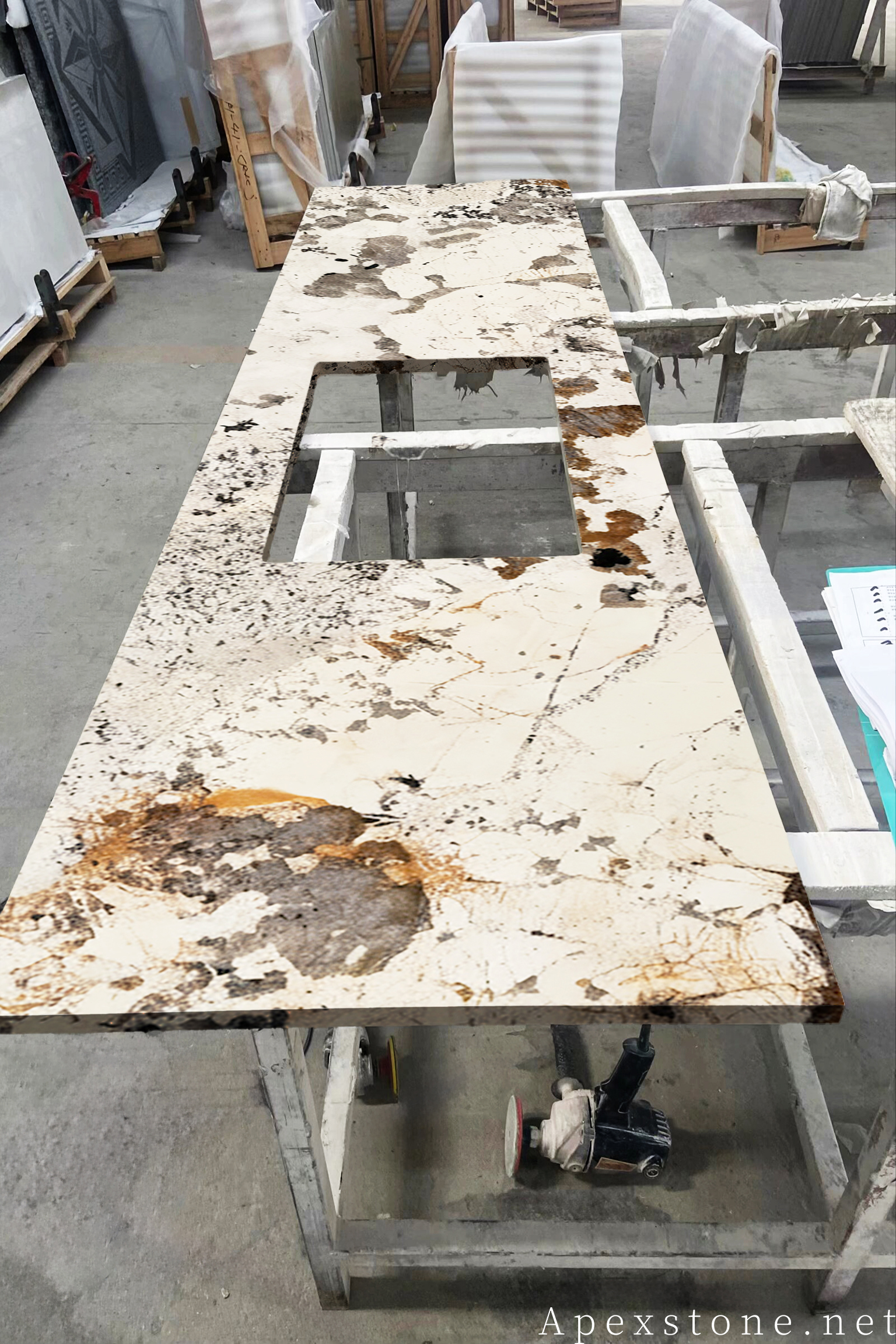
Some kitchens should not have calcite marble on the counter at all, and that is a legitimate answer. Pandora quartzite from Brazil — a cream ground with brown floral movement — will not etch from an overnight lemon slice. It is still natural stone: trivets for long simmers and prompt wiping of wine and oil still apply, and it should be sealed at installation and resealed occasionally per the sealer's guidance. But for a buyer whose main worry is acid, that difference in chemistry is the point.
Reference thickness for counters in the series is 20 mm (about 3/4 in) or 30 mm (about 1-1/4 in). Thickness affects the edge profile and the slab's visual weight; it does not change what sealing or acid does to the surface.
What to expect from a supplier
Sealing questions usually arrive as after-sales questions, so the quality of the handover matters. Countertop orders are inspected piece by piece before packing, single-piece orders are accepted, and care guidance travels with the shipment. That last item is the one that prevents the most complaints: a homeowner who has the water-drop test, the acid list and the re-honing route in writing does not need to guess. If you want to match a stone to your kitchen's habits, the Calacatta White marble countertops and islands or Pandora quartzite kitchen countertops and islands pages are the place to compare finishes and movement.
The short version
- Sealing slows absorption and buys wipe-up time. It does not prevent acid from etching polished calcite.
- Use the water-drop test for timing, and follow the sealer manufacturer's guidance. There is no universal reseal interval.
- Polished shows etches clearly; honed hides them. Choose by use, not by gloss alone.
- An etch is a polish issue — re-hone it. A stain is a pore issue — poultice it.
Frequently asked questions
Does sealing make marble waterproof?
No. It makes the surface slower to absorb liquids. Spills still need prompt wiping, and the sealer's effect fades with wear.
Will a sealer stop lemon juice from dulling the countertop?
No. Calcite marble reacts with acid on contact. A sealer covers the pores, not the chemistry. Keeping citrus, vinegar and descalers off the surface is the only reliable protection.
How often should I reseal?
Test instead of guessing. When the water drops stop beading and start spreading flat, it is time. Use the sealer manufacturer's instructions for the product you have.
Is an etch a hole in the stone?
No. It is a dulled spot in the polish, repaired by re-honing and re-polishing. It does not weaken the slab.
Sealing is a useful step and a limited one. Plan it around the water-drop test, keep acids off a polished calcite surface, and treat any etch as polish to be restored. If you are choosing between finishes or comparing a marble and a quartzite for a busy kitchen, our team can walk through how each one behaves day to day.