Apexstone
Travertine Romano Countertops, Islands & Vanity Tops
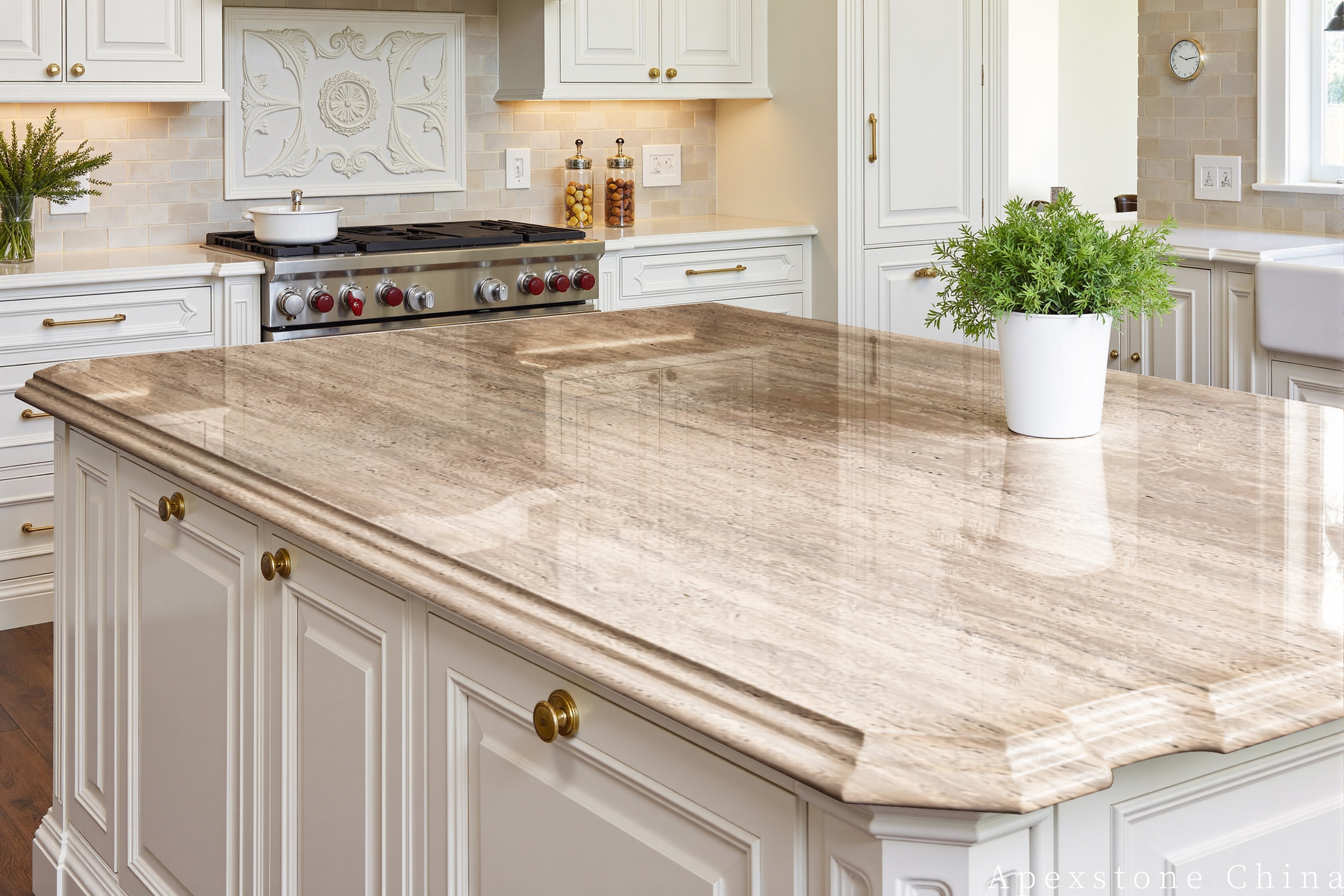
Italian Travertine Romano (意大利罗马洞) kitchen countertops, island tops, and bathroom vanity tops with warm beige base and natural voids. Filled honed, filled polished, unfilled brushed finishes. CNC precision cutting, custom edges, sink cutouts. Travertine countertop supplier Apexstone - 42+ countries since 2002.
Highlights
- Warm beige Italian travertine countertops with natural voids and classical linear grain
- Kitchen countertops, island tops, and bathroom vanity tops
- 18 mm (3/4 inch), 20 mm (3/4 inch), and 30 mm (1-1/4 inch) thickness options
- Filled honed, filled polished, and unfilled brushed finishes
- CAD-based cutting, sink and appliance cutouts, custom edge profiles
Specifications
| Stone Type | Travertine |
|---|---|
| Commercial Name | Travertine Classico Roma (意大利罗马洞) |
| Origin | Italy |
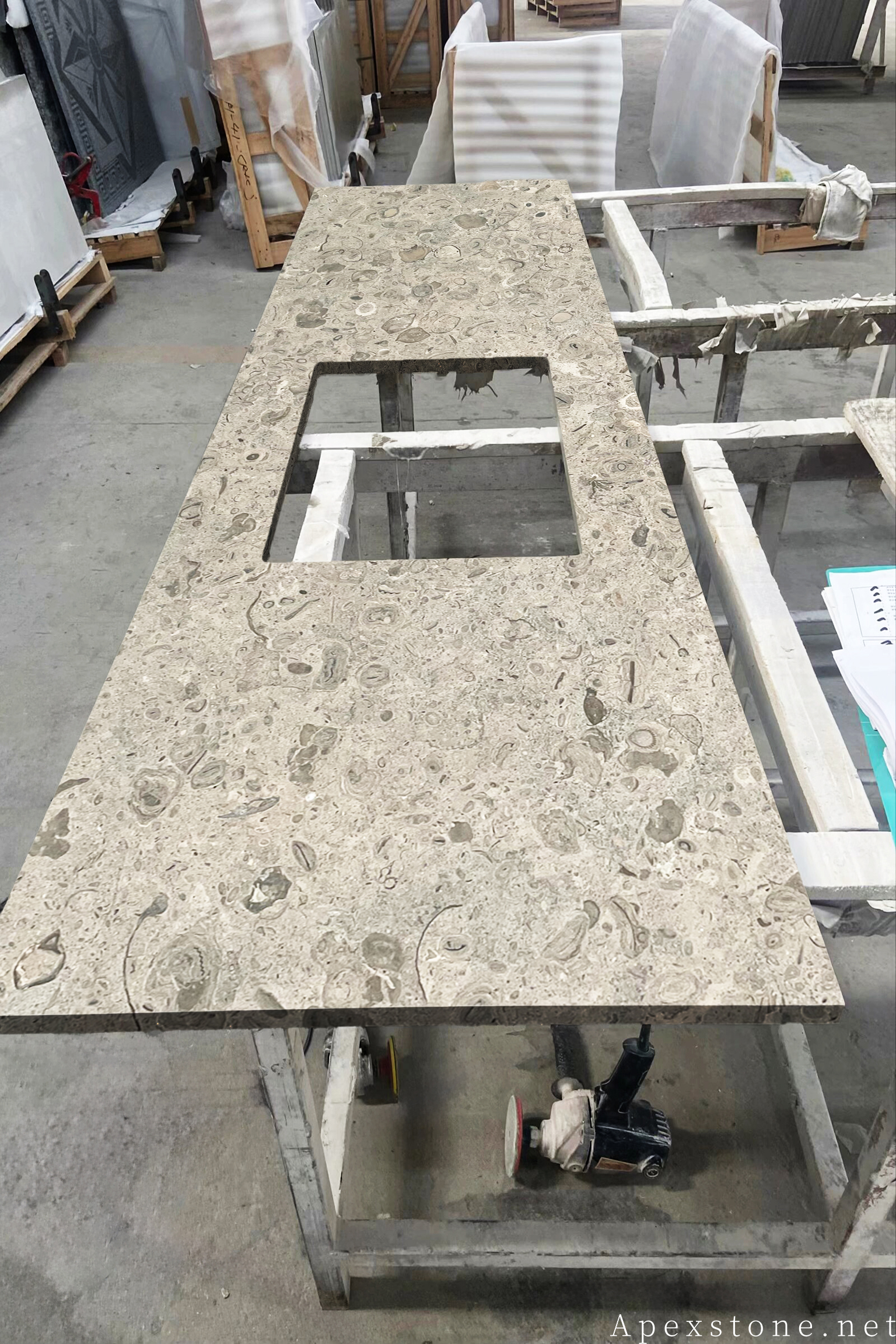
| Base Color | Warm Beige |
| Natural Feature | Natural voids and pores characteristic of travertine |
| Thickness Options | 18 mm (3/4 inch), 20 mm (3/4 inch), 30 mm (1-1/4 inch) |
| Available Finishes | Filled honed, filled polished, unfilled brushed |
| Edge Profiles | Eased, beveled, bullnose, waterfall, ogee, custom |
| Cutouts | Single/double bowl, faucet holes, cooktop, custom |
| MOQ | From 10 m² |
| Lead Time | 25-35 days from drawing approval |
Product Detail
The Countertop Pain Point: CAD Drawings That Lose Their Way Between Email and Fabrication
Every kitchen countertop programme in a natural stone like Travertine Romano (Travertine Classico Roma, 意大利罗马洞) lives or dies on one handover: the moment your CAD drawing — sink position, cooktop cutout, faucet drilling, waterfall edge, island overhang — is converted into cuts on a slab three thousand kilometres away. When that conversion is loose, you get a cooktop opening that misses its recommended clearance, a waterfall edge mitred from a slab whose grain runs the wrong way, or an island fabricated to the drawing's outer rectangle while ignoring the overhang profile your cabinetmaker needs. Travertine's warm beige field and natural voids make errors even harder to hide: a filler patch or a re-cut edge is visible the moment light rakes across the surface.
What a Loose Drawing Conversion Costs a B2B Buyer
A countertop that misses its cutout positions is not a discount conversation — it is a dead asset. You cannot re-cut an island top down to save a misplaced cooktop opening, and travertine cannot be locally patched without a visible tone break. Practically, a failed kitchen package means: a replacement fabrication cycle of 25–35 days plus freight, your installer standing idle, your client's kitchen fit-out slipping behind the cabinet schedule, and a claim conversation that consumes weeks of your project management capacity. For a stone importer, two failed kitchens in one season can erase the margin of the ten that went right.
Our Solution: CAD-Based Fabrication With Cutouts Planned Before the First Cut
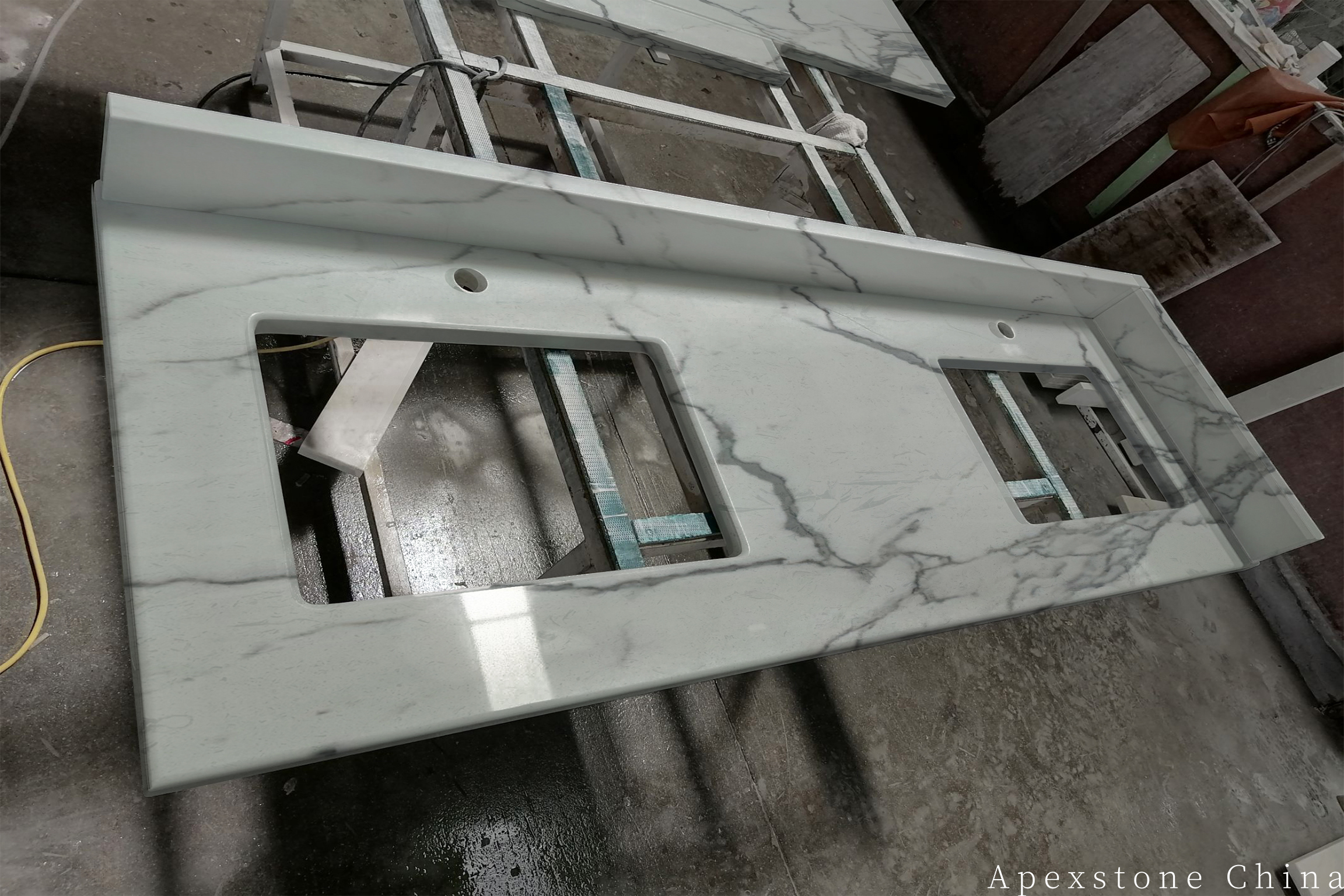
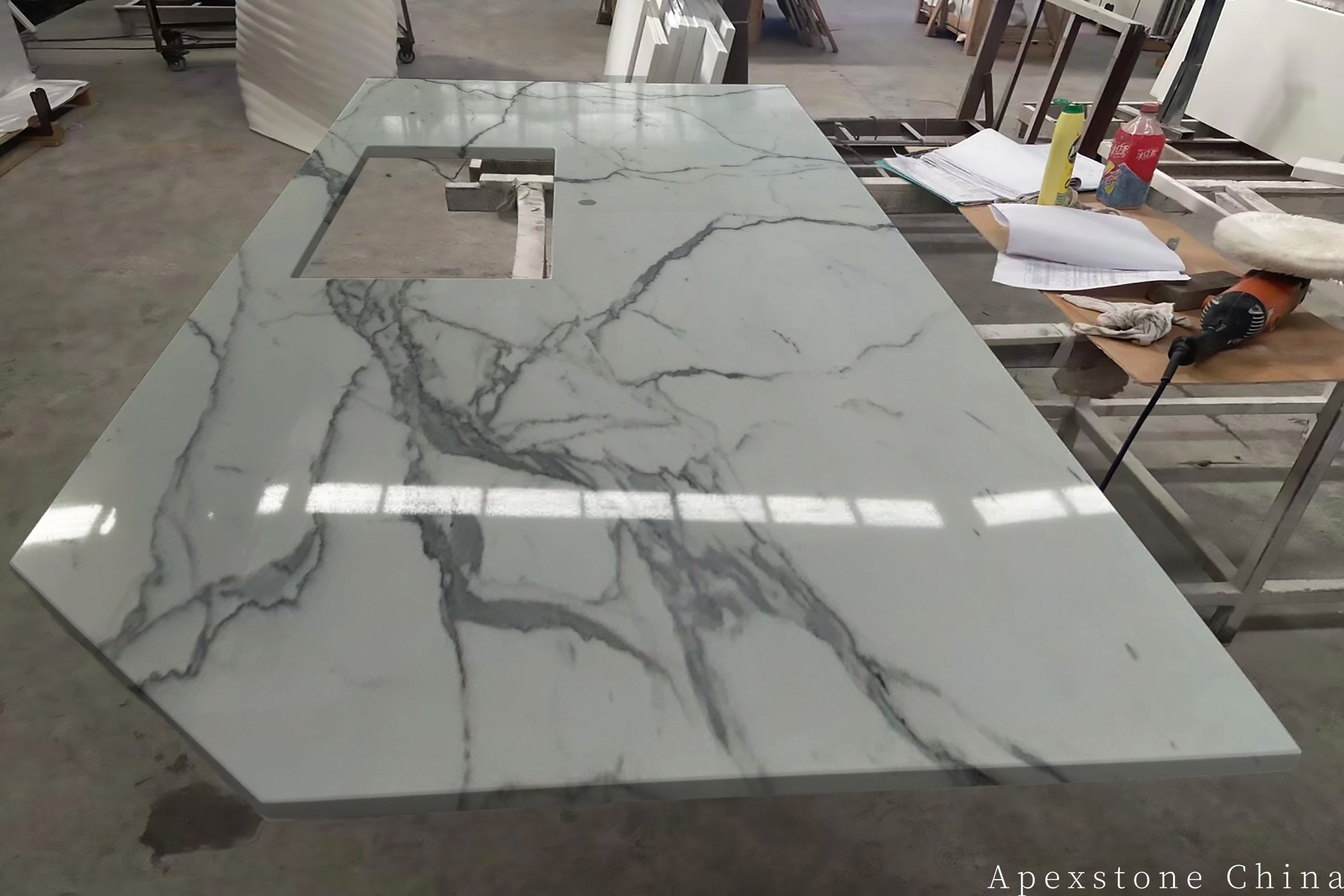
Apexstone fabricates every Travertine Romano kitchen countertop, island top, and vanity top against the approved CAD drawing, with sink, cooktop, and faucet openings planned in the cutting layout before fabrication begins. Nothing is cut speculatively and corrected later — the cutout positions are locked to your drawing, and edge profiles are chosen with you, not for you.
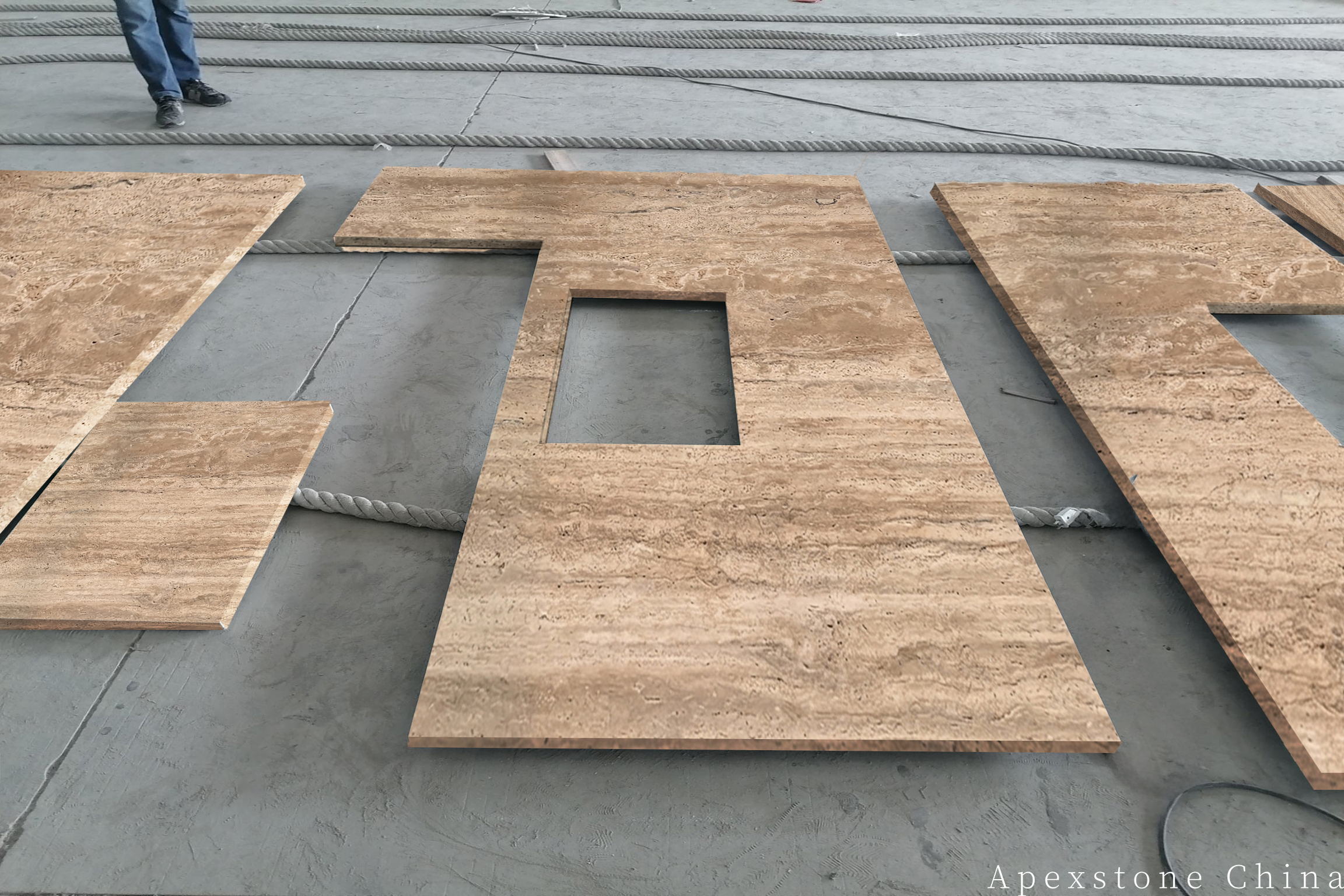
- CAD-based cutout planning: sink, cooktop, and faucet openings are positioned in the fabrication layout from your drawing, then CNC-machined to position.
- Full edge profile range: eased, beveled, bullnose, waterfall, and ogee profiles are milled on CNC routers — including solid waterfall edges for island fronts.
- Three thickness platforms: 18 mm (3/4 inch), 20 mm (3/4 inch), and 30 mm (1-1/4 inch), with calibrated thickness for consistent reveals against cabinetry.
- Finish matched to use: filled honed for everyday kitchens, filled polished for formal hospitality settings, unfilled brushed where a rustic, tactile surface is wanted.
Technology and Process: How the Drawing Survives to the Finished Top
- Step 1 — Drawing approval: you share drawings, quantities, edge profiles, and finish requirements; slab planning and quotation follow the confirmed drawing.
- Step 2 — Slab allocation: Italian quarry blocks are selected and slabs allocated to your order so tone and void character stay consistent across one kitchen or one project.
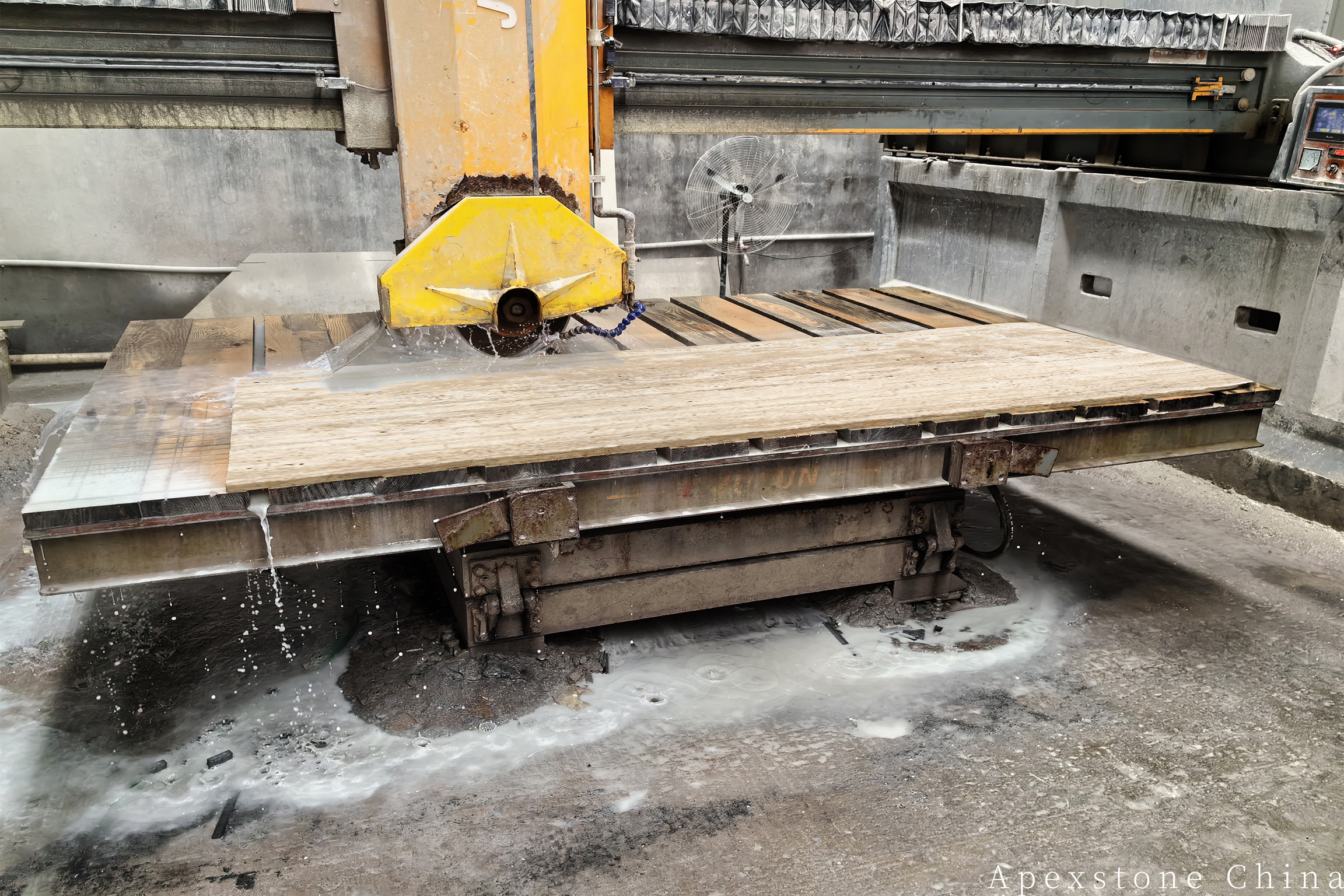
- Step 3 — CNC bridge saw cutting: tops are cut to CAD dimensions with calibrated thickness; cutout positions come from the drawing, not from shop-floor estimation.
- Step 4 — CNC cutouts and edge milling: sink, cooktop, and faucet openings and the specified edge profile are machined on CNC routers.
- Step 5 — Sealing, inspection, packing: every countertop is sealed with a penetrating stone sealer and passes final dimensional inspection matched to the approved drawings before packing.
The material itself supports this precision: Travertine Classico Roma cuts cleanly on CNC equipment, and its density of 2.3–2.7 g/cm³ gives fabricated tops the structural body needed for standard kitchen support detailing.
Procurement Value: A Schedule You Can Quote Against
For an importer or kitchen dealer, the value of drawing-locked fabrication shows up in three places. First, your install programme holds: tops arrive matching the approved drawings, so cabinet installation and countertop fitting sequence without remedial visits. Second, your quotation is honest: with MOQ from 10 m² (108 sq ft) and lead time 25–35 days from drawing approval, you can put real dates and volumes in front of your client. Third, your brand carries a differentiated material: warm beige Italian travertine with classical linear grain is a look that quartz cannot replicate, and that differentiation is what lets you compete on design rather than price.
Countertop Specifications
| Parameter | Detail |
|---|---|
| Material | Travertine Classico Roma (意大利罗马洞), Italian travertine |
| Colour | Warm beige with natural voids and classical linear grain |
| Products | Kitchen countertops, island tops, bathroom vanity tops |
| Thickness | 18 mm (3/4 inch), 20 mm (3/4 inch), 30 mm (1-1/4 inch) |
| Finishes | Filled honed, filled polished, unfilled brushed |
| Cutouts | Sink, cooktop, and faucet openings per CAD drawing |
| Edge profiles | Eased, beveled, bullnose, waterfall, ogee |
| Density | 2.3–2.7 g/cm³ |
| Sealing | Penetrating stone sealer applied before packing |
| MOQ | From 10 m² (108 sq ft) |
| Lead time | 25–35 days from drawing approval |
Purchasing FAQ
- Can you fabricate a waterfall-edge island from Travertine Romano?
- Yes. Waterfall is one of the standard edge profiles we mill on CNC routers; the mitre is planned with the slab's grain direction in mind.
- How are cutout positions controlled?
- Sink, cooktop, and faucet openings are planned from your approved CAD drawing and CNC-machined to position; final inspection is matched to the approved drawings before packing.
- Which finish should I choose for a family kitchen?
- Filled honed is the standard choice — a smooth matte surface with voids filled by colour-matched epoxy. Filled polished suits formal hospitality settings.
- What information should I send for a quotation?
- Share drawings, quantities, edge profiles, and finish requirements for slab planning and a project quotation.
Request a Travertine Romano Countertop Quotation
Send your kitchen drawings, cutout schedule, edge profiles, thickness, and finish requirements. We will confirm slab allocation, the CNC cutting plan, and lead time for your project. MOQ from 10 m²; lead time 25–35 days from drawing approval.
Request Countertop Details