A due-diligence checklist for buyers considering limestone coping stones around a pool. We cut these stones in our own facility, so this guide sets out the five checks that decide whether limestone is right for your edge: block density and absorption, thickness, wet grip finish, sealing, and batch consistency.
Buyer's due-diligence guide
Limestone coping stones are one of the few edge materials that look better after a few summers of bare feet than they do in a sample box. The colour is soft, the surface stays cool in light tones, and it does not have the hard glamour of polished granite — which is exactly why some pool owners want it. The honest caveat is that limestone is generally softer and more absorbent than granite, so it rewards a buyer who checks the material properly before signing, and punishes one who buys on a photograph.
We cut limestone in our own facility, including the blocks this article is written around. That does not make every limestone suitable for a pool edge. It does mean the questions below are the ones we would ask a block ourselves, and the ones we would expect a serious buyer to put to us.
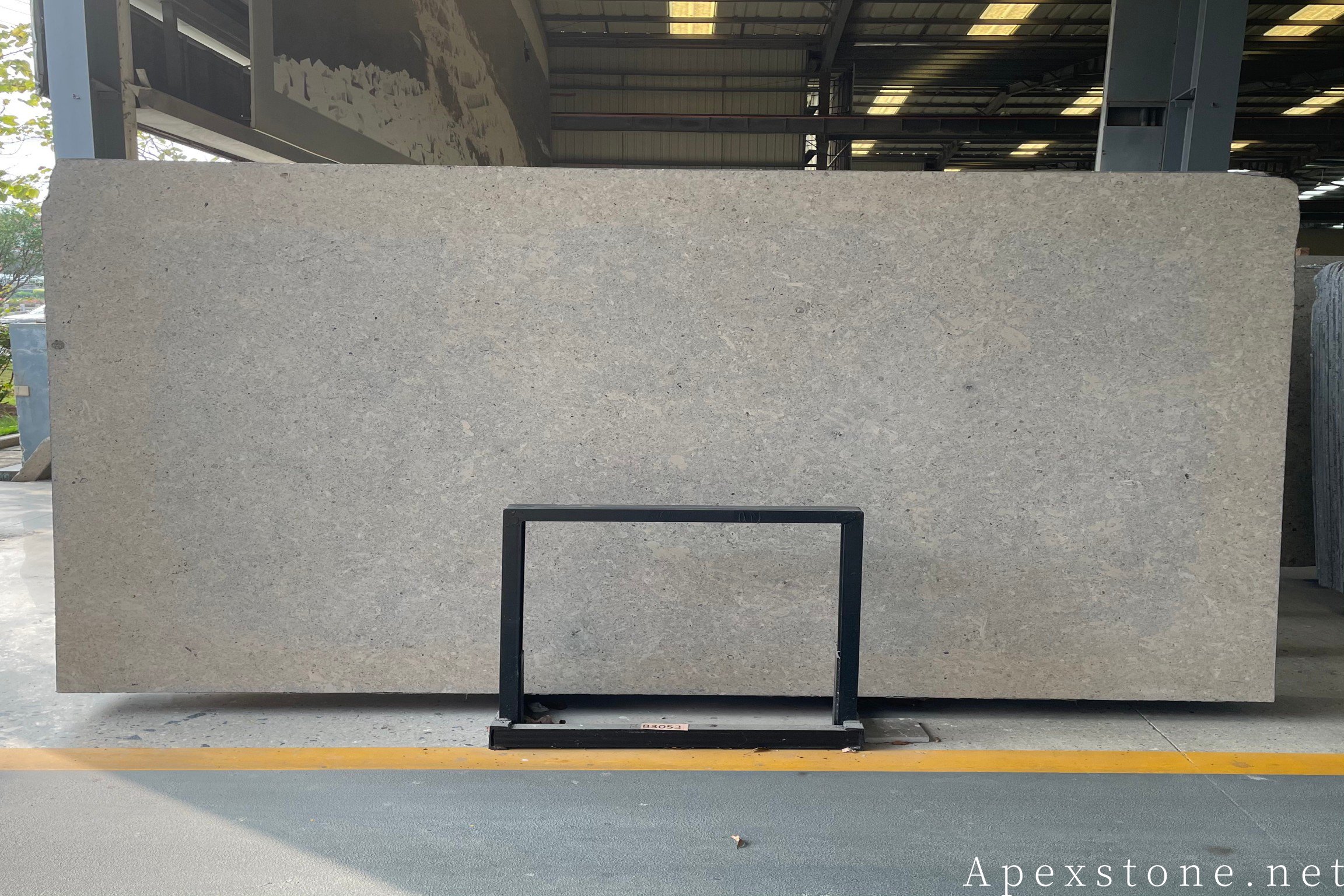
What limestone coping stones are cut from
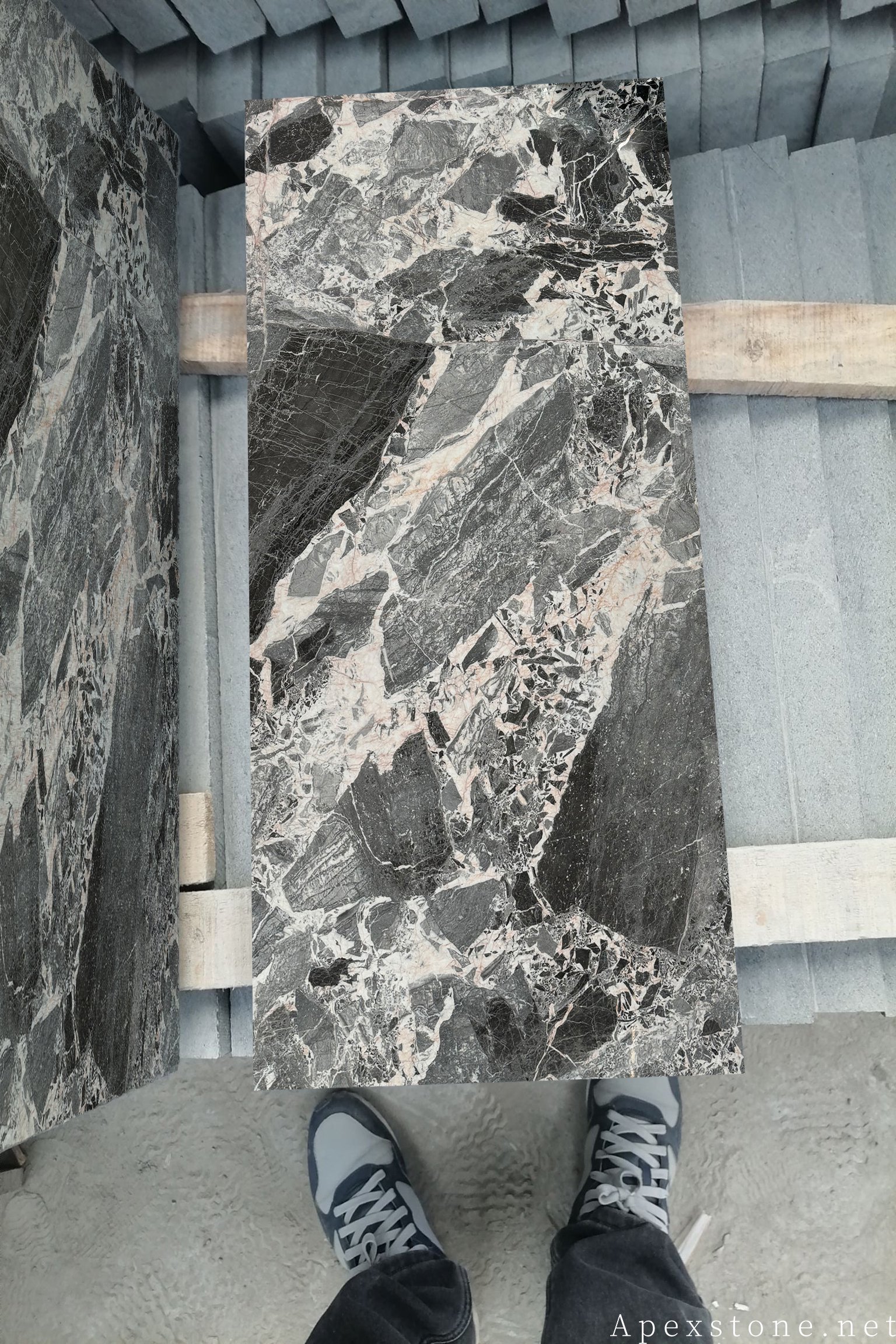
The material referenced throughout this guide is Portuguese Grey limestone (stone code 240501): a warm grey base with cold-grey floral veins and visible fossil shell deposits running through the face. Density is typically 2.4–2.7 g/cm³, water absorption reaches up to 3%, Mohs hardness sits at 3–4, and compressive strength is in the 60–170 MPa range. It is available honed, polished or brushed. Blocks are hand-selected at the quarry, gang-saw cut into slabs, and inspected before packing.
Those density, absorption and compressive strength figures are stated to ASTM C97 for density and absorption and ASTM C170 for compressive strength, or to whichever equivalent standard your own specification names — so ask for the test report and confirm the standard and the tested block before you rely on a number. More importantly, they describe the material class, not a guarantee for the next block on the saw. Density and absorption move within that band from block to block, and the fossil shell content that gives Portuguese Grey its character is also the part most likely to pit or weather over years in a wet zone. Coping stones are cut from slabs like these, which is why it makes sense to ask for the data of the specific block rather than the average of a catalogue.
The five checks before you order
1. Density and absorption of the actual block
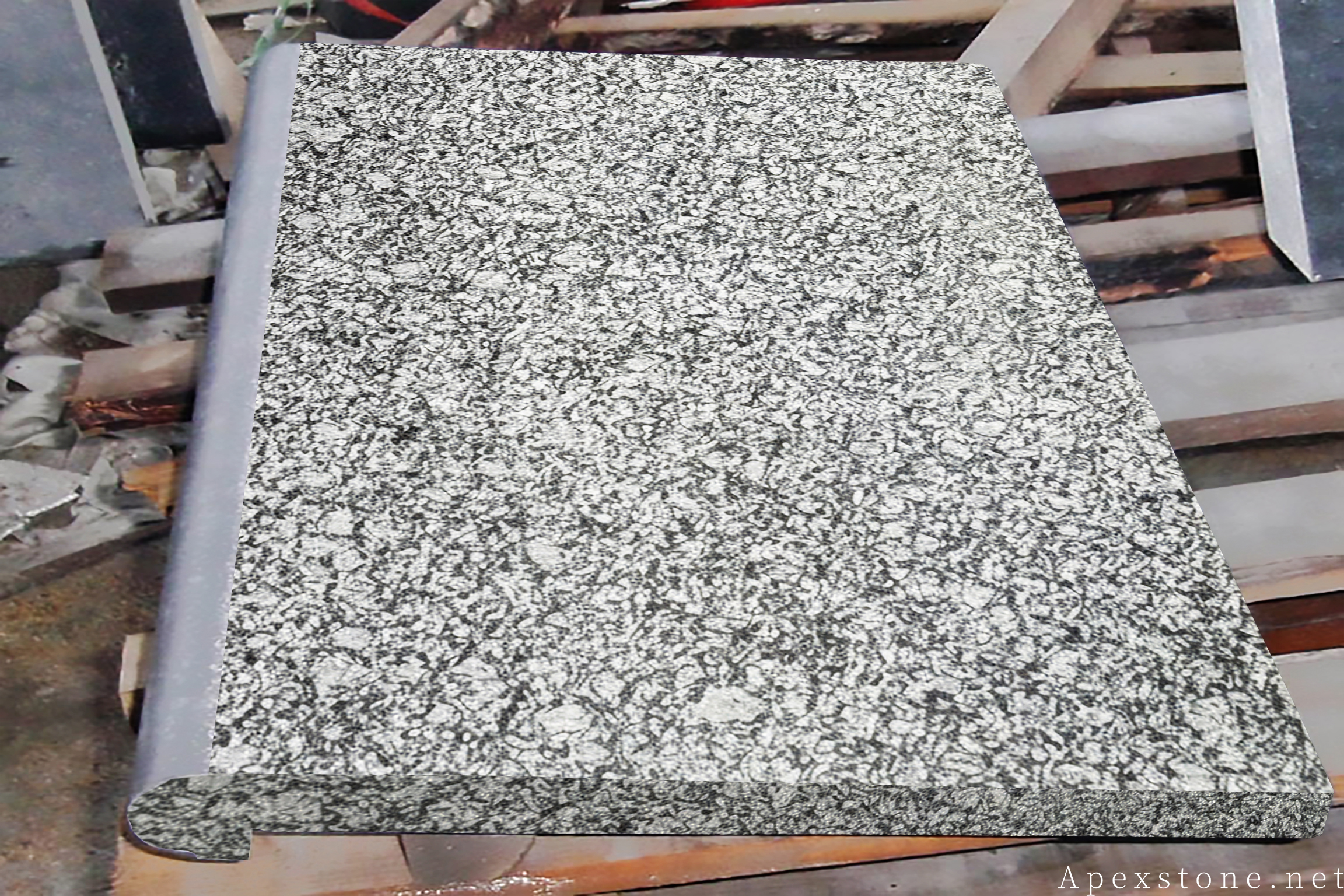
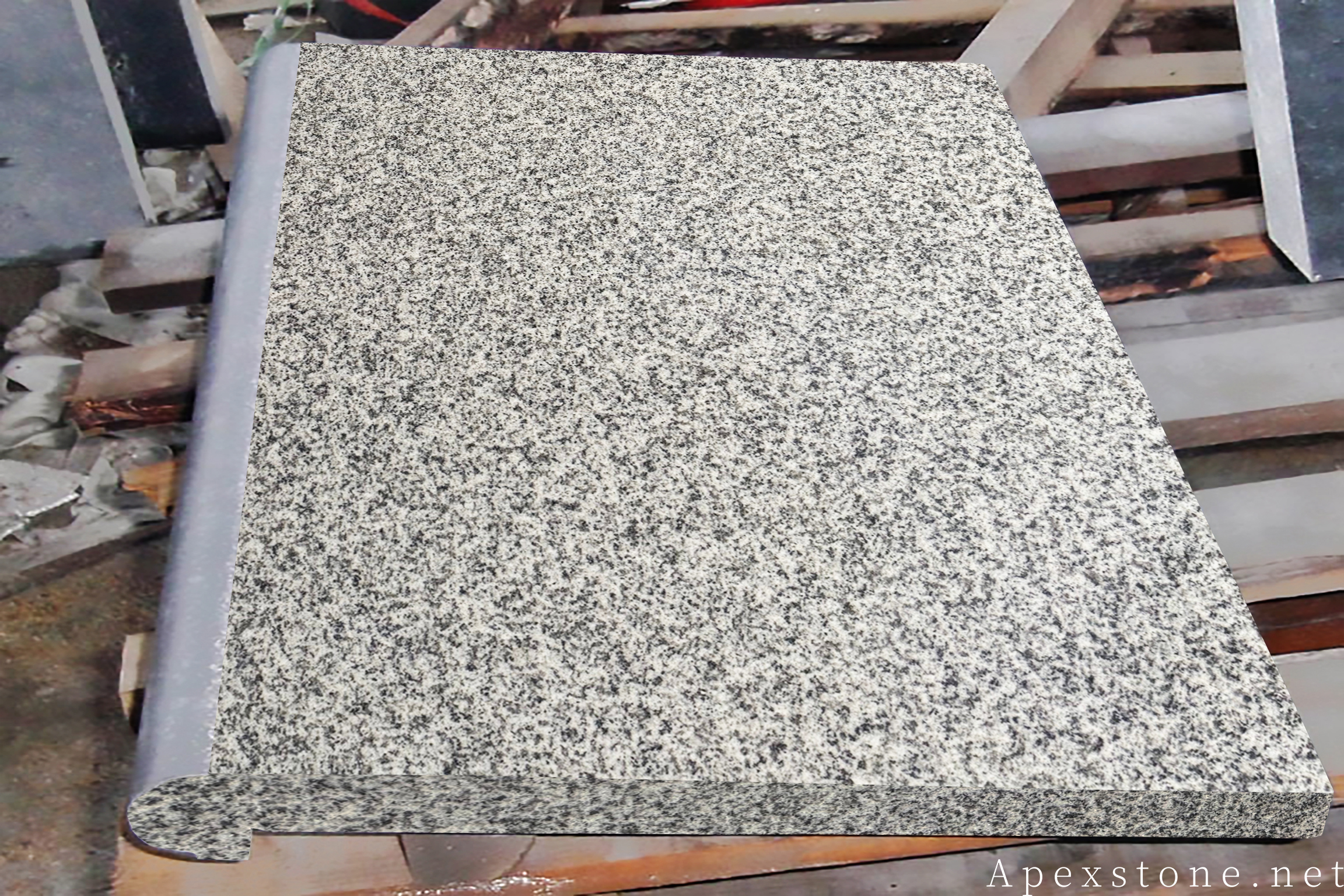
Ask for the measured density and water absorption of the block your order will be cut from, not just the general range, and ask which standard the figure was tested to. In practice, absorption of up to 3% is roughly six times the figure a tight granite can offer — Sea Wave granite, for comparison, absorbs below 0.5%. That difference is what makes sealing a real maintenance commitment on limestone rather than a one-off courtesy. If your supplier cannot produce a block-specific figure, treat that as an open question, not a detail. We provide full technical datasheets and third-party testing reports on request, so the absorption and density figures you take into a specification or regulatory approval can be documented against tested material rather than quoted from a catalogue.
2. Thickness for the edge detail
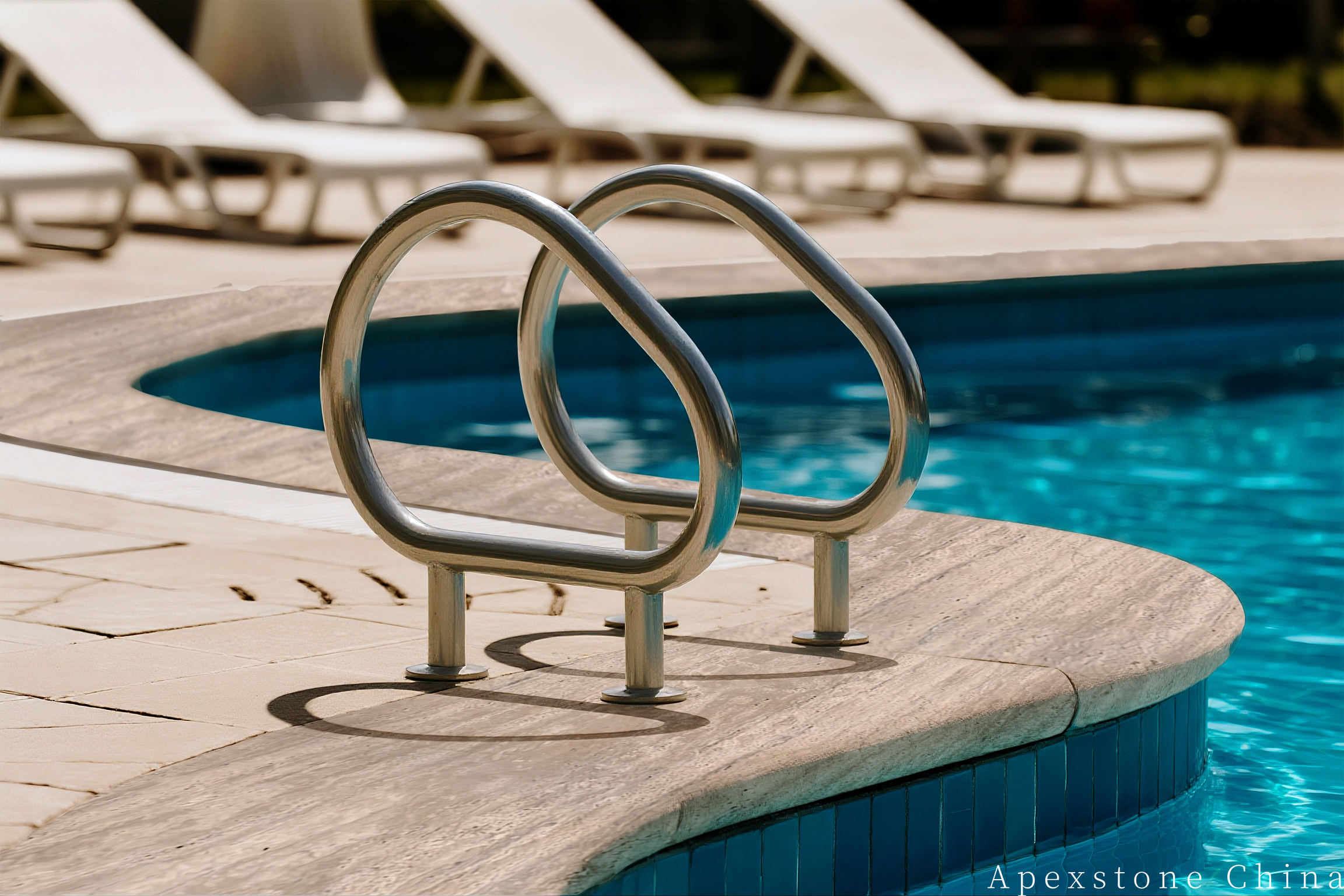
Coping thickness needs to follow the edge profile you have specified, not the other way round. A bullnose or layered edge leaves less margin than a simple square drop, and softer stone needs more mass behind it where feet, chairs and cleaning equipment meet the edge. Settle the profile first, then set thickness to suit it. In our limestone program, coping starts at 30 mm (1-1/4 in), and moves to 40–50 mm (1-1/2–2 in) where the edge carries heavier loading or spans a wider bond beam. Our guide to stone coping for pools covers the common profiles and how they interact with thickness, if you have not fixed that yet.
3. Finish for wet grip
Polished limestone around a pool looks superb in a showroom and is the wrong starting point for bare wet feet. We would normally steer pool-edge work toward honed or brushed finishes and confirm the grip expectation with you in writing. Be careful with slip ratings quoted by any supplier: we do not publish a slip code for this material, and any number you are given should be traceable to a test on the finish you are actually buying.
4. Sealing commitment
Plan the sealer into the order, not into the first summer. Absorbent stone around a pool takes splash, chlorinated or saline water, sunscreen and general debris. A penetrating sealer applied to a defined schedule slows that uptake; skipping it accelerates staining and surface deterioration. Decide who applies it, which product is compatible with the finish, and how often it will be renewed. This is a discipline question as much as a material question.
5. Batch consistency and fossil/pit tolerance
Portuguese Grey gets much of its warmth from fossil shell deposits. Those same deposits can pit over time in wet zones. Before ordering, agree how much variation and shell pitting is acceptable in a delivered batch, and whether your project wants a single-block quantity so the coping matches across the whole edge. On larger jobs, split batches are where mismatched tone and uneven shell density cause complaints.
The short version
Limestone coping stones can work around a pool when the block is dense and low-absorbing for its class, the thickness suits the edge, the finish is grip-oriented rather than polished, sealing is planned and repeated, and the batch is controlled. Remove any one of those and granite or travertine becomes the safer specification. Our travertine vs granite vs limestone comparison sets out the trade-offs in more detail.
How limestone compares with granite and travertine for pool edges
| Consideration | Portuguese Grey limestone | Granite (e.g. Sea Wave) | Travertine |
|---|---|---|---|
| Absorption | Up to 3% | Below 0.5% | Variable by grade; confirm per block |
| Hardness | Mohs 3–4; softer than granite | Harder and more abrasion-resistant | Softer than granite too |
| Feel underfoot | Cool in light colours; genuinely pleasant | Can feel harder, more neutral | Warm-toned, grippy when honed |
| Visual character | Warm grey with cold-grey veins and fossil shells | Consistent, mineral-speckled | Open pores and banding |
| Maintenance | Sealing is a repeat commitment | Lowest maintenance burden | Sealing and pore filling matter |
| Suits a pool edge when… | Block is checked, thickness is right, finish grips, sealing is planned | You want minimal upkeep and higher durability | You accept sealing and check the grade |
None of these rows makes one stone the winner. Limestone earns its place where the colour and coolness are the design brief, and where the buyer accepts that a softer, more absorbent stone needs a sealing routine. If that routine will not happen, granite is the more forgiving answer.
What to send us for a limestone coping quote
A quote is only as good as the brief behind it. To price and specify limestone coping stones accurately, send us:
- Drawings or a sketch of the edge detail — profile shape, internal and external corners, and any step-downs.
- Total linear metres and a piece count, with the longest single length called out.
- Preferred finish (honed, polished or brushed) and where grip matters most.
- Colour expectation and whether the whole edge must come from one block.
- Delivery destination and access constraints, so packing and handling can be planned.
- Sealing plan — whether you will seal on site or want to discuss options.
Minimum order quantity and lead time on limestone are quoted per project against your drawings and quantity, because block selection and profile fabrication both start from the drawing rather than from a stock list.
Where the limestone edge is being planned together with the deck paving and the step sets, the case for keeping all three on one production lot is stronger on a porous stone than on a tight one — pool pavers and coping planned as one order sets out what changes.
Our limestone coping supply program explains how we handle block selection, cutting and inspection, and the Portuguese Grey limestone page carries the material details shown above.
FAQ
Is limestone good for pool coping?
It can be, under conditions. Limestone is softer and more absorbent than granite, so it suits a pool edge only when the specific block's density and absorption have been confirmed, the thickness matches the edge profile, a grip-oriented finish is specified, sealing is planned and repeated, and the batch is controlled for consistency. Where those conditions cannot be met, granite is the safer choice.
Does limestone coping need sealing?
Yes, and more than once. With absorption up to 3%, limestone will take in water and staining agents far more readily than a tight granite. A penetrating sealer slows that uptake but does not make the stone impermeable, so the sealer needs renewal on a defined schedule. Treat sealing as part of the maintenance plan, not an optional extra.
Which limestone colours hide debris best?
Mid-tone warm greys generally hide pool debris, footprints and light staining better than very pale whites, which show every mark. Portuguese Grey's warm grey base with cold-grey veining sits in that practical middle ground. On dark stones, by contrast, salts and light mineral deposits tend to stand out.
If you are weighing limestone against another material for a specific edge, send the drawing and the destination, and we will tell you honestly where the specification needs more work.