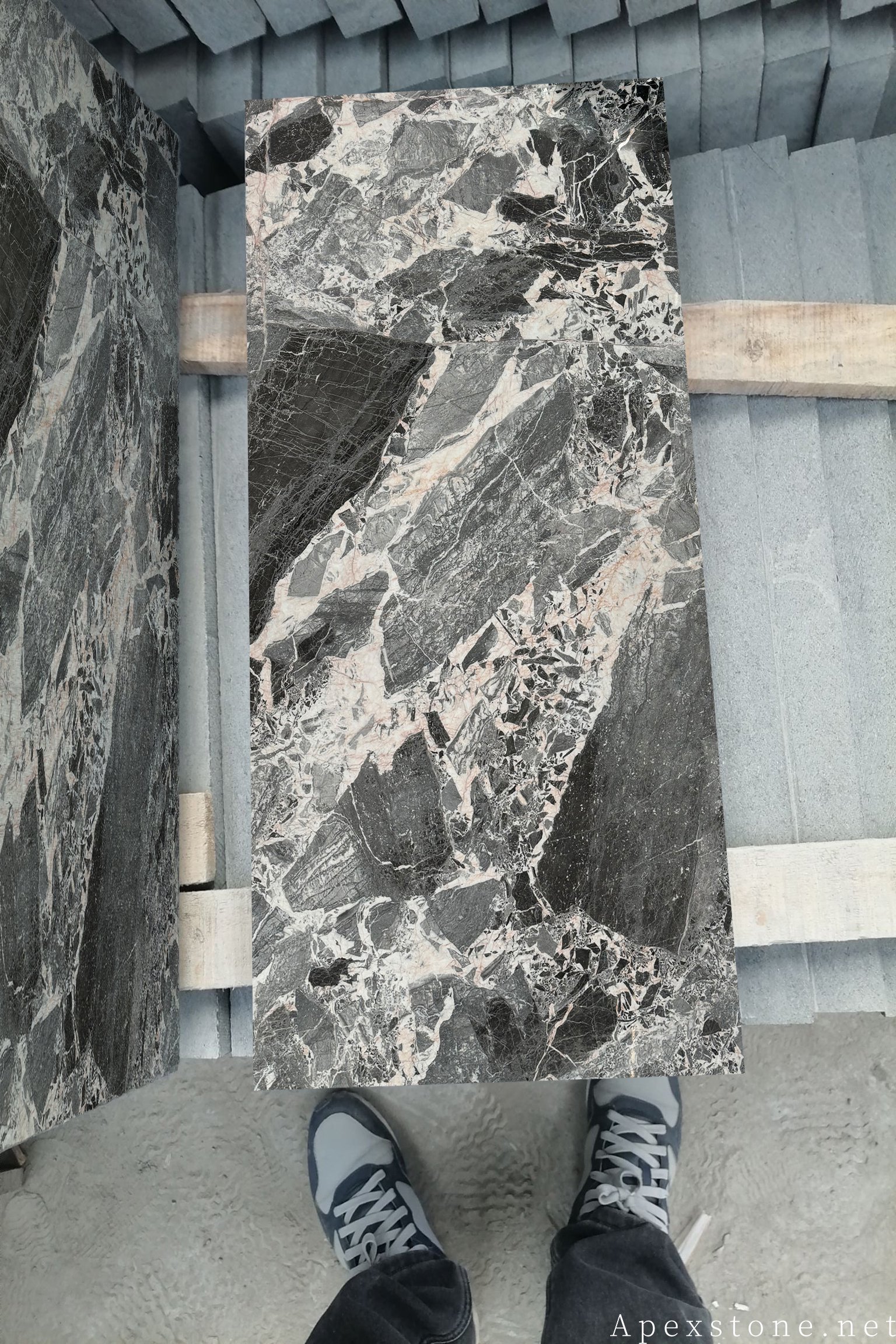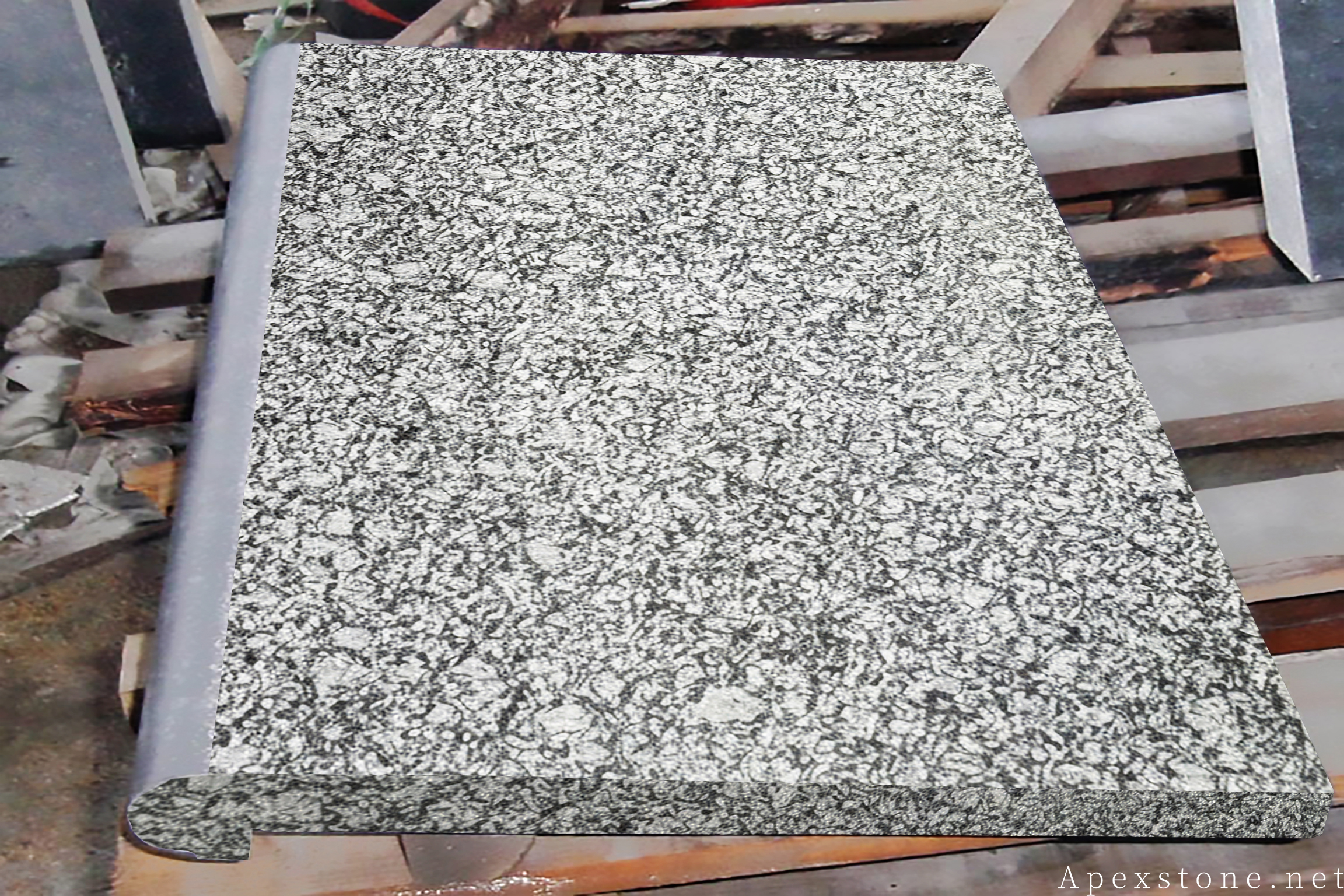
A same-condition comparison of travertine, granite and limestone pool coping on heat underfoot, slip texture, water and chemical exposure, with edge profile and thickness guidance for inground pools.
Which Stone Works Best for Pool Coping? Materials, Edge Profiles and Sizes
Pool coping takes more abuse than any other paved surface on the property. It sits in full sun, catches splash-out from chlorinated or saline water, and gets walked on barefoot. The material you choose and the way it is cut matter more than the color trend of the season. This article compares travertine, granite and limestone on the conditions that actually decide performance—heat underfoot, slip texture, water and chemical exposure—and closes with the edge profile and thickness checklist for inground pool coping.
- Travertine and granite both have a track record in pool edge coping; limestone is the softer, more porous option and needs the right finish.
- Surface texture matters as much as stone type: brushed, tumbled, flamed and sandblasted finishes change how the coping feels underfoot.
- For inground pool coping, thickness from 30 mm (1-1/4 inches) upward covers most residential profiles; 50 mm (2 inches) is the heavy end for granite.
- Match coping and decking from the same stone family so the whole pool surround reads as one installation.
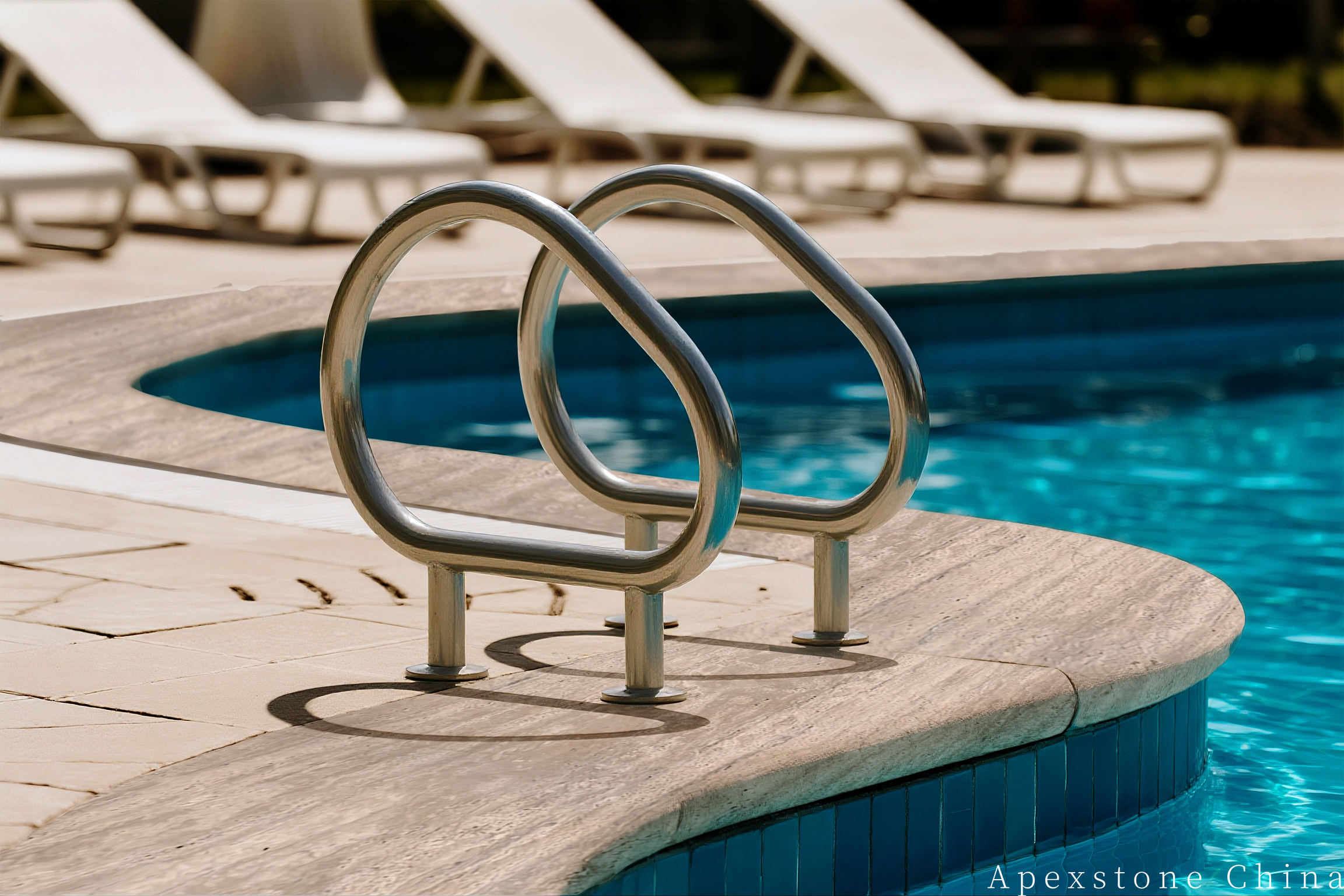
Travertine coping around pool with a natural, unfilled surface.
Why the Stone Choice Matters for Pool Edge Coping
Pool edge coping is a functional edge, not a decorative border. It caps the pool wall, hides the shell-to-deck joint, and gives swimmers a handhold. Any stone used here has to handle three things at once: solar heat, wet feet, and continuous exposure to pool chemistry. A stone that looks right in a showroom can fail on all three if the finish is wrong.
The three materials buyers ask about most are travertine, granite and limestone. They behave differently on each of those conditions, and the differences are predictable enough to compare side by side.
Heat Underfoot: Which Coping Material Stays Cooler?
Bare feet on a summer afternoon are the deciding test for many pool owners. In general, lighter-colored stones reflect more solar radiation and feel cooler than dark stones, and a textured surface feels cooler than a polished one because less surface area contacts the foot. Stone density also plays a role: denser stones conduct heat differently than porous ones.
Travertine, limestone and light grey granite all fall into the lighter color range. A silver travertine pool coping or a white-grey granite will stay more comfortable underfoot than a dark granite or a black limestone. A honed or filled surface can feel warmer than a brushed or tumbled surface on the same stone, because the smooth face contacts more of the foot.
Where the pool is in full sun all day, choose the lightest stone in the range and keep a textured finish. Where the pool is shaded part of the day, the difference between materials narrows.
Slip Texture: Matching Finish to Wet Feet
Wet stone is where slip texture matters. Three finishes do most of the work in pool coping:
- Brushed: a wire-brushed surface that opens the grain slightly and gives a consistent, fine texture. Works well on travertine and granite.
- Tumbled: an aged, rounded surface with softened edges. The most forgiving underfoot among these finishes, and the most natural-looking on travertine.
- Flamed or sandblasted: a roughened surface produced by heat or abrasive blasting. Common on granite pool deck tiles and coping where slip resistance is the priority.
Limestone pool coping sits differently. Limestone is generally softer and more porous than granite, so a honed or polished finish on limestone can become slick when wet. A brushed or bush-hammered finish keeps the texture open and is the safer choice for a pool edge. If the limestone is very dense and fine-grained, a honed finish may be acceptable, but confirm the intended finish with the supplier before specifying it.
For a travertine coping around pool, the natural surface voids typical of travertine are part of the texture. Unfilled travertine leaves those voids open, which gives grip underfoot and a more natural look. Filled travertine gives a smoother face and is easier to clean, but the trade-off is a slightly slicker surface when wet.
Water and Pool-Chemical Exposure
Pool coping is wet, then dry, then wet again, often many times a day. Chlorinated and saline water both leave residue behind, and stone that absorbs water can stain, spall or grow efflorescence over time.
Granite is generally the most water-resistant of the three by absorption. Sea Wave grey granite coping has water absorption under 0.5 percent, which means very little water penetrates the surface. That low absorption is why granite is often chosen where the pool sees heavy use or where the coping is exposed to constant splash-out.
Travertine sits in the middle. It is porous by nature, and unfilled travertine leaves those pores open. That is not a defect—it is the character of the stone—but it means the coping should be sealed and maintained. For pool owners who want a natural, non-slip surface and are prepared to reseal periodically, travertine works well. For those who want minimal maintenance, granite is the lower-effort choice.
Limestone is typically the most porous of the three and needs the most care. Dense limestones perform better than soft ones, but any limestone coping should be sealed and kept clean of pool-chemical residue. In freeze-thaw climates, limestone and travertine both need a properly drained setting bed so water does not sit under the stone.
Comparing the Three Materials at a Glance
| Condition | Travertine | Granite | Limestone |
|---|---|---|---|
| Heat underfoot | Light colors stay comfortable; textured finish helps | Light grey stays comfortable; dark colors absorb more heat | Light colors stay comfortable; honed surface can feel warmer |
| Slip texture | Brushed or tumbled; unfilled voids add grip | Flamed, sandblasted or brushed; very good grip | Brushed or bush-hammered; honed can be slick when wet |
| Water absorption | Porous; seal and maintain | Under 0.5 percent on Sea Wave grey | Most porous; seal and maintain |
| Edge profiles available | Bullnose, eased, tumbled | Bullnose, half-bullnose, flat (eased) | Bullnose, eased, brushed |
| Best for | Natural look, moderate maintenance | Low maintenance, heavy use, salt water | Projects able to commit to regular sealing and maintenance |
Edge Profiles for Inground Pool Coping
The edge profile is the shape of the coping's pool-side face. It affects swimmer comfort, water return, and how the coping meets the pool wall.
- Bullnose: a fully rounded edge. The most comfortable to grip and the most forgiving if a swimmer brushes against it. Common on granite and travertine.
- Half-bullnose: a rounded top edge with a flatter underside. A middle ground between comfort and a tighter, more modern line.
- Flat (eased): a square edge with the sharp corner lightly eased. The cleanest look, often used with a rectangular pool and a contemporary deck.
Sea Wave grey granite coping is available with bullnose, half-bullnose and flat (eased) profiles, so the same stone can be specified for a traditional or a modern pool. Travertine coping is typically supplied with a bullnose or eased edge and a brushed or tumbled finish. The profile you choose should match the pool's interior finish and the deck material—a bullnose coping with a tumbled finish suits a natural stone deck, while an eased edge with a flamed finish suits a more architectural layout.
Sizes and Thickness: A Checklist for Inground Pool Coping
Coping dimensions are driven by the pool wall thickness, the deck height and the look you want. The following checklist covers the sizes available in the three materials discussed.
Travertine Pool Coping
- Italian Classico Romano travertine, supplied unfilled with brushed or tumbled finish.
- Pavers about 24x24 inches (600x600 mm).
- Driveway-grade thickness 30 mm and 40 mm.
- Natural surface voids are typical and should be expected.
See the Romano travertine outdoor paving and pool coping range for the full specification.
Granite Pool Coping
- Sea Wave grey granite coping squares roughly 12-24 inches (300-600 mm).
- Thickness 1-1/4 to 2 inches (30-50 mm).
- Bullnose, half-bullnose and flat (eased) edge profiles.
- Water absorption under 0.5 percent.
Details are on the Sea Wave granite pool coping and surround page.
Granite Deck and Coping Sets
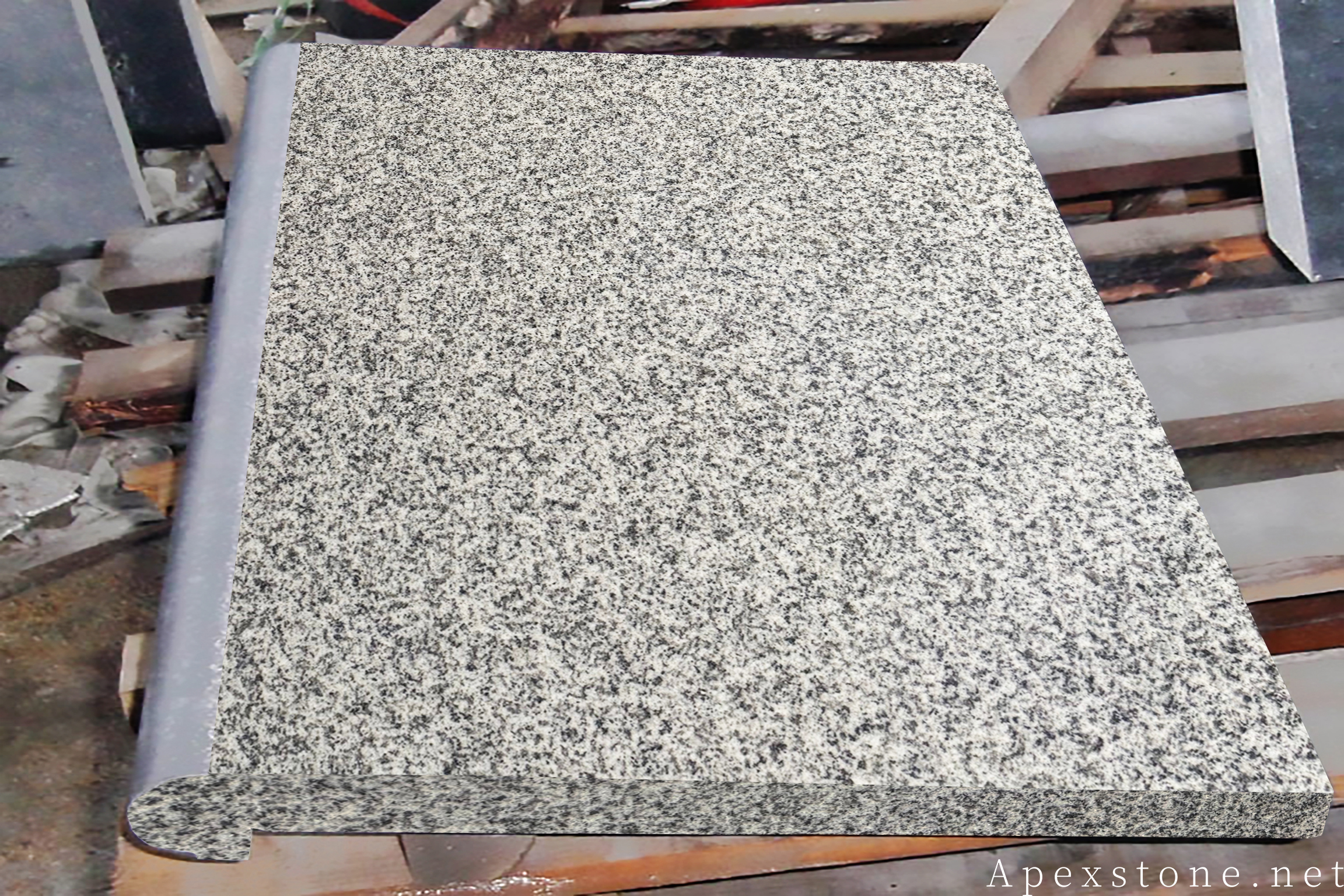
- Bianco Crystal white-grey granite (Hubei 603) flamed or sandblasted pool deck tiles.
- Deck tile sizes: 12x24, 16x24 and 24x36 inches, plus 600x300 mm and 600x600 mm.
- Thickness 1-1/4 to 2 inches (30-50 mm).
- Coping and deck tiles supplied as a matched set for one pool.
The Bianco Crystal granite pool coping and decking set keeps coping and deck in the same stone and finish.
- 30 mm (1-1/4 inches): standard residential coping on a concrete bond beam.
- 40 mm: heavier coping where the deck meets a raised edge or where a thicker look is wanted.
- 50 mm (2 inches): the heavy end of the granite range, often used where the coping also acts as a seat wall cap.
Putting It Together: A Practical Decision Path
Start with the pool environment. Full sun and bare feet point to a light-colored, textured stone—brushed travertine or flamed granite. Heavy use or salt water points to granite, where water absorption under 0.5 percent reduces the maintenance load. Where the natural look matters more than a low-maintenance surface, limestone can work, provided the finish is brushed or bush-hammered and the stone is sealed on a regular schedule. Then choose the edge profile: bullnose for comfort, eased for a clean line. Finally, confirm thickness against the pool wall and deck detail, and order coping and decking from the same stone family so the installation reads as one design.
FAQ
Which coping material stays cooler underfoot?
Light-colored stones stay cooler than dark ones. Travertine, limestone and light grey granite all fall into the lighter range. A textured finish—brushed, tumbled, flamed or sandblasted—also feels cooler than a honed or polished surface on the same stone, because less of the foot contacts the surface.
What thickness suits inground pool coping?
For residential inground pools, 30 mm (1-1/4 inches) is the standard starting point. Granite coping is available from 30 mm to 50 mm (1-1/4 to 2 inches), and travertine pavers are supplied in 30 mm and 40 mm driveway-grade thickness. The right choice depends on the pool wall and deck detail—confirm with your installer.
Is travertine or granite better around a saltwater pool?
Granite has lower water absorption—under 0.5 percent on Sea Wave grey—so it takes in less water and pool-chemical residue. Travertine is porous and needs sealing and periodic maintenance. Both can work around a saltwater pool; the difference is the level of upkeep you are prepared for.