
A dining-surface maintenance guide covering food acids, wine rings, hot dishes and cutlery scratches, with placemat, trivet and prompt-blotting habits, plus an honest note on when quartzite tops suit a buyer who worries about etching.
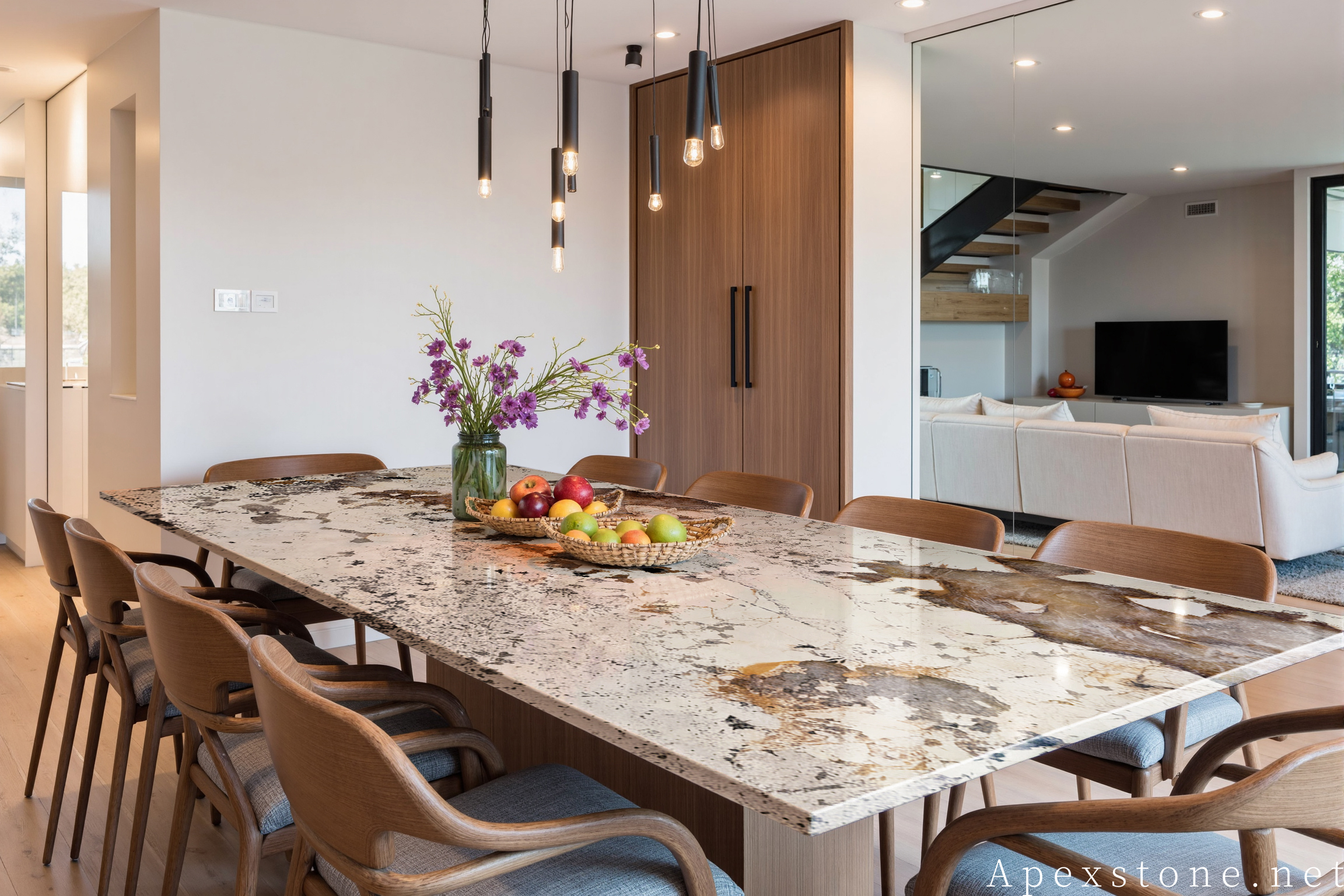
Dining table care
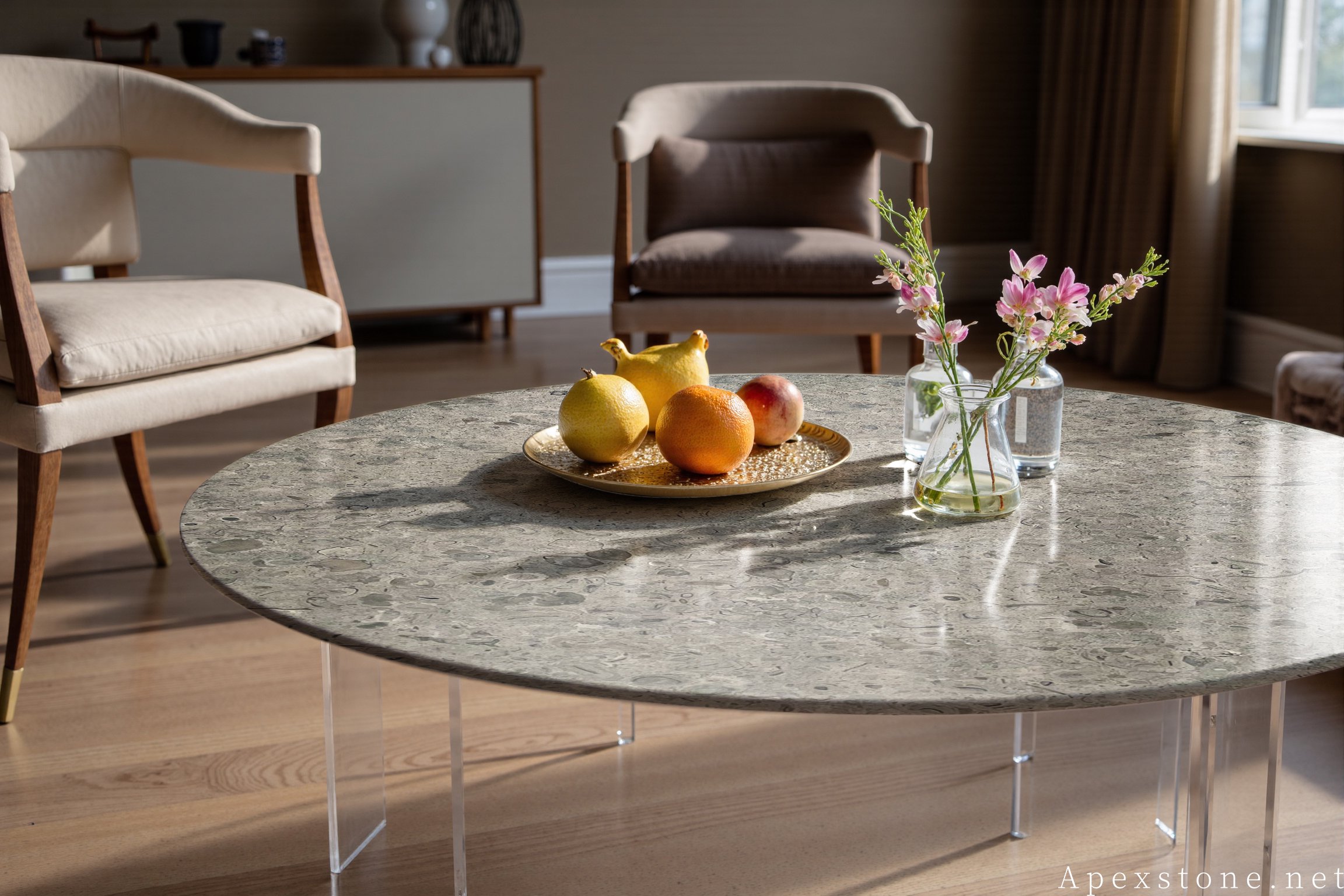
A marble dining table takes more wear than any other stone surface in a home. The point of learning how to clean marble dining table tops is not to find a stronger cleaner. It is to keep four everyday hazards — acids, wine, heat and cutlery — off the surface in the first place.
- Food acids and wine are the main cause of dull etch marks; blot immediately rather than wiping later.
- Hot dishes and cutlery score or shock the top; trivets, boards and placemats prevent most marks cheaply.
- Water rather than chemistry does most cleaning; a pH-neutral cleaner and soft cloth are enough for routine care.
- Quartzite resists etching better than calcite marble, so buyers who love the stone look but worry about care have a practical alternative.
What actually damages a marble dining surface
Calcite marble is a soft stone by nature. At a dining table it is exposed to four specific things that few other stone surfaces see:
- Food acids. Lemon juice, vinegar, tomato, wine and some fruits can dull a polished marble top on contact. The mark is an etch, not a stain — a shallow dull patch in the polish rather than a colour difference.
- Wine and oil rings. Red wine and oil leave rings when they sit; the longer they stay, the deeper they work into the surface.
- Hot dishes. A pot straight from the hob or a hot casserole dish can shock the stone. Thermal shock is a risk on natural stone tops, and the damage can be structural rather than cosmetic.
- Cutlery and crockery. Knife tips, serving forks and heavy plates scratch and chip polished marble more easily than they would a wooden or quartz surface.
None of these needs a specialist product to prevent. They need habits that cost a few seconds per meal.
Habits that do more than any cleaner
1. Blot, don't wipe
When something spills, blot with a soft cloth or paper towel first. Wiping pushes acids and pigments sideways and can spread a ring. Blot until the surface is dry, then clean the area with a pH-neutral cleaner and a soft cloth.
2. Use coasters for every glass
Red wine, citrus drinks and vinegar-based dressings are the common causes of etch marks on dining tables. A coaster removes the risk at zero cost. Keep a small tray of coasters on the table so they are always within reach.
3. Placemats under every setting
Placemats catch cutlery scratches, food acids and small spills. They also reduce the number of times the top needs cleaning at all. Choose a style that covers the full dinner plate rim so the plate does not sit directly on the stone.
4. Trivets for anything hot
A trivet under a hot casserole dish or a pot used for a long simmer protects the top from thermal shock. Keep two or three trivets in the same drawer as the table linen so there is never a reason to set a hot dish down directly.
5. A board for chopping
Chopping directly on a marble top blunts knives and scratches the polish. A board costs little and protects both the knife and the table.
How to clean a marble dining table after a meal
Routine cleaning is short. Start with a dry soft cloth to lift crumbs. Then wipe with a pH-neutral cleaner and a soft cloth, and dry the surface immediately with a second cloth so no water sits on the stone.
For a spill that may be acidic — wine, lemon juice, vinegar — blot first, then clean the area with a pH-neutral cleaner and a soft cloth. If a dull etch mark has already formed, the mark is in the polish, not the stone. Re-polishing is a job to discuss with the supplier or a stone specialist rather than a chemical to apply at home. It is not a problem to solve by trying a stronger cleaner.
When a marble dining table is not the right top
Some buyers love the look of stone but worry about the care. That is a sensible concern, and it is worth knowing the honest material difference.
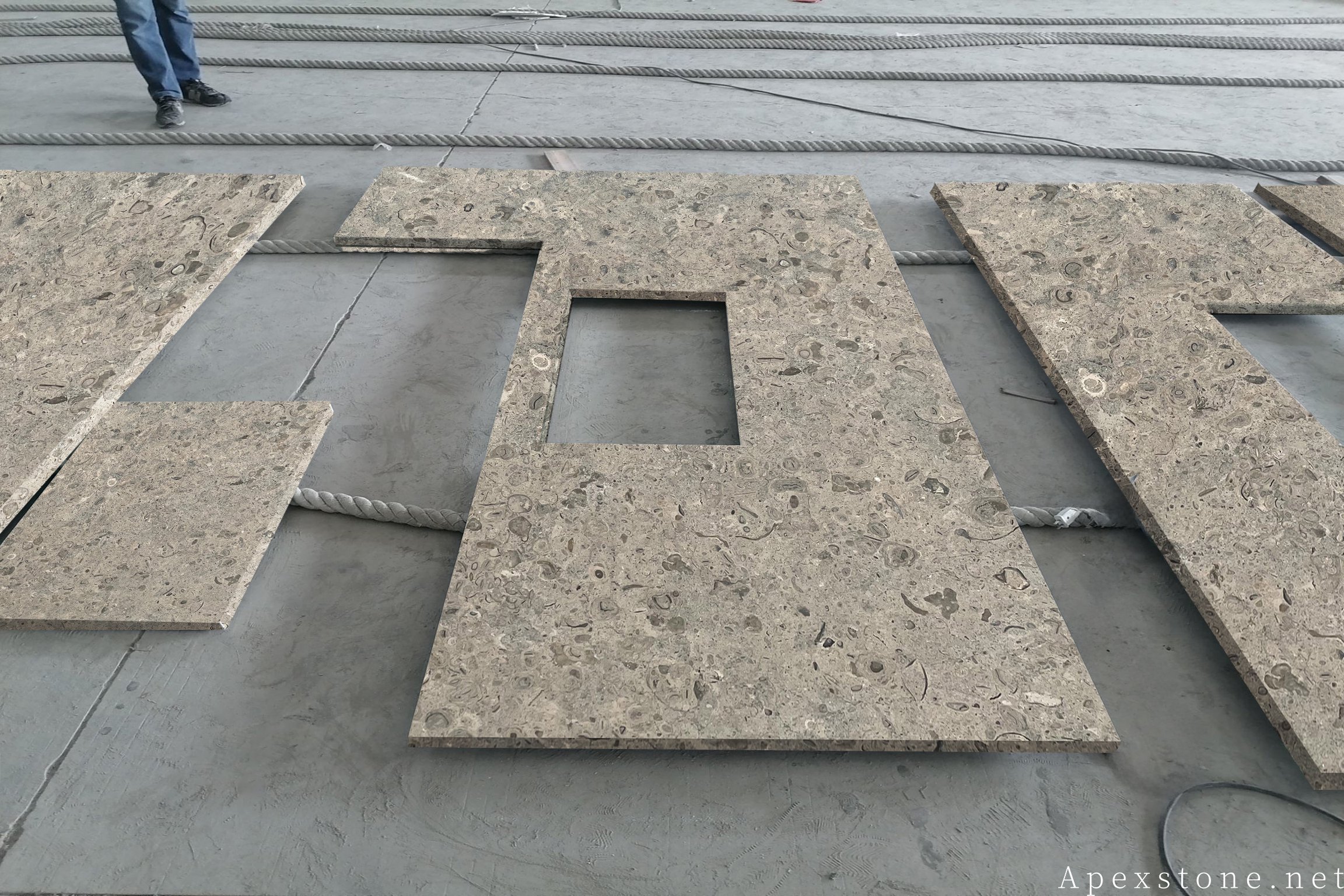
Quartzite tops resist etching better than calcite marble. A cream-ground quartzite such as Pandora is unlikely to etch from short contact such as an overnight lemon slice, though long exposure to strong acids should still be avoided, and it needs only a pH-neutral cleaner and a soft cloth for routine care. Trivets for long simmers and boards for chopping still apply to all natural stone, so the habits remain the same — but the risk from acids is lower.
For a buyer weighing the care burden, the choice is often about which behaviour matters more at the table: the deep veining of a marble top, or the lower daily anxiety of a quartzite surface.
Surface and construction checklist for buyers
The top is only part of the care story. The table underneath it needs to suit the room and the way it will be used.
| Item | Options and notes |
|---|---|
| Top material | Marble, travertine or quartzite. Quartzite resists etching better than marble; travertine is available in warm beige filled honed or filled polished. |
| Thickness | 18 mm or 20 mm (3/4 in nominal), or 30 mm (1-1/4 in nominal). |
| Cut and match | Stone table tops are CNC-cut with ±0.5 mm tolerance from vein-matched slabs in the same batch. |
| Daily protection | Coasters, placemats, trivets and a chopping board remain the first line of defence on every natural stone top. |
| Routine cleaning | pH-neutral cleaner and a soft cloth; dry the surface after wiping. |
For a rectangular dining table with a wood base, travertine tops in filled honed or filled polished finishes are one option; explore the travertine Romano stone dining, coffee, console and side tables. If the lower etching risk matters more, the Pandora quartzite dining tables use a cream ground with brown floral movement that resists etching better than marble.
FAQ
Can I use vinegar or lemon on a marble dining table?
No. Acids can etch a calcite marble top. Use a pH-neutral cleaner instead.
What should I do with a fresh wine spill?
Blot it immediately with a soft cloth. Do not wipe it sideways, and do not let it sit. Then clean the area with a pH-neutral cleaner and dry the surface.
Can a hot dish go straight on the table?
No. Use a trivet for hot dishes and long simmers. Thermal shock is a real risk on natural stone.
Do I still need placemats and a chopping board on quartzite?
Yes. Quartzite resists etching better than marble, but trivets and boards still apply to all natural stone.
Routine care keeps a marble top reading new: blot spills, use coasters and placemats, keep trivets for hot dishes, and clean with a pH-neutral product and a soft cloth. Buyers who want the stone look with less daily acid worry can ask their supplier about quartzite.