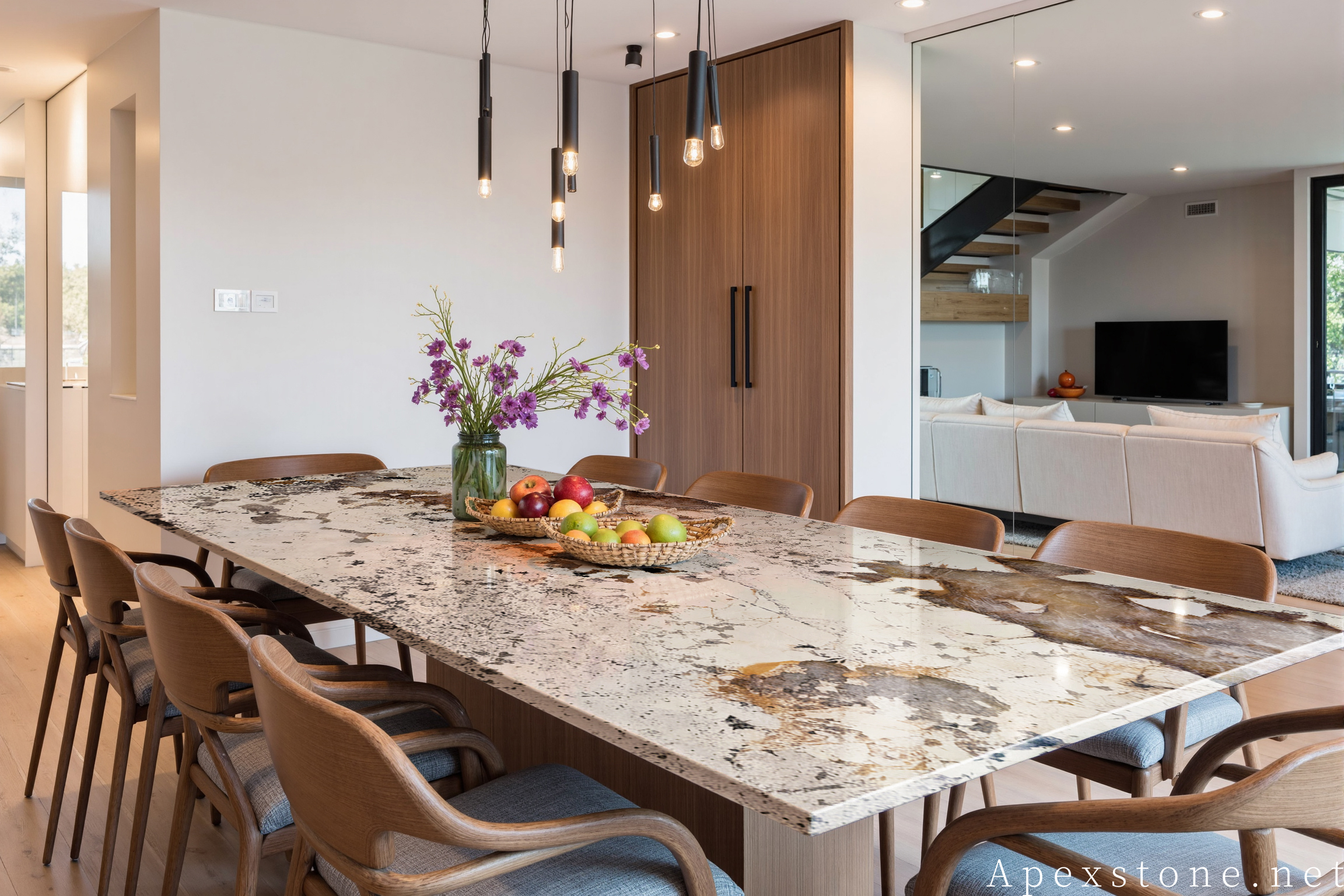
Pandora Quartzite Dining Tables
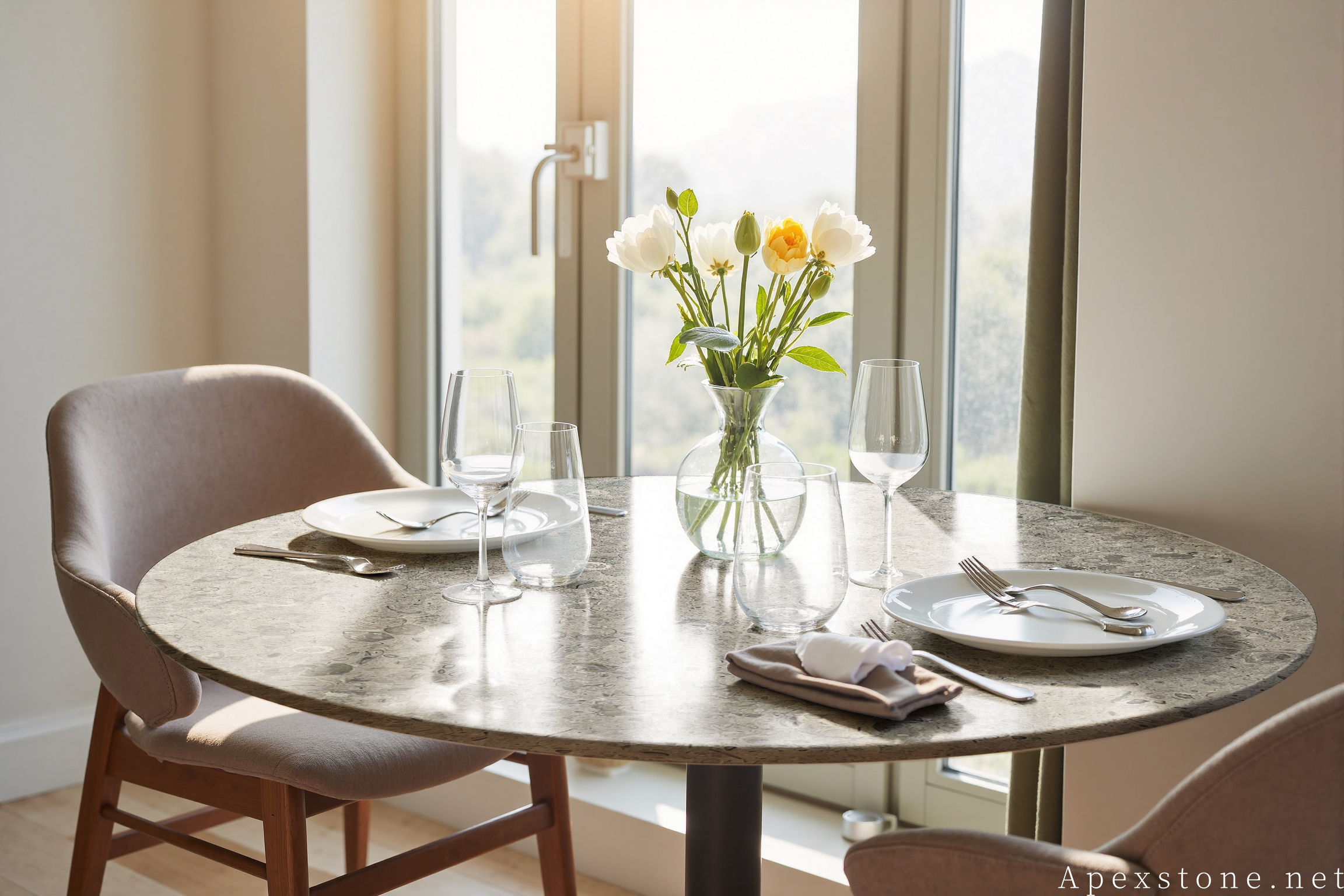
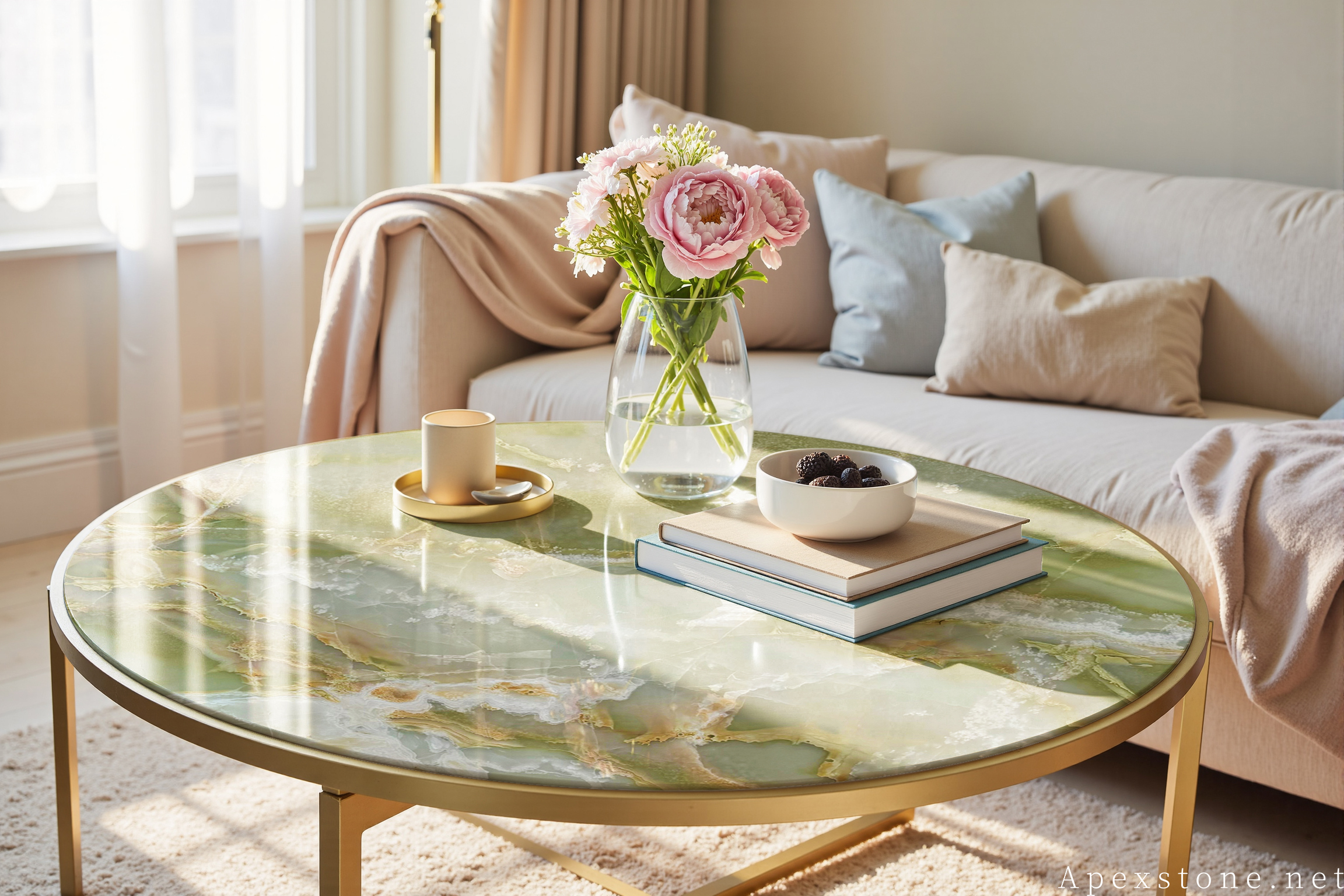
Pandora quartzite dining tables from Brazil: cream ground with large brown floral movement and natural crystal sparkle. Round, square and rectangular tops in 36, 48, 60 and 72 inch formats, with pedestal, brass, wood or iron bases.
Highlights
- Round, square and rectangular tops in 36, 48, 60 and 72 inch formats
- Pattern placement approved on actual-slab images before cutting
- Pedestal, brass, wood and iron base options
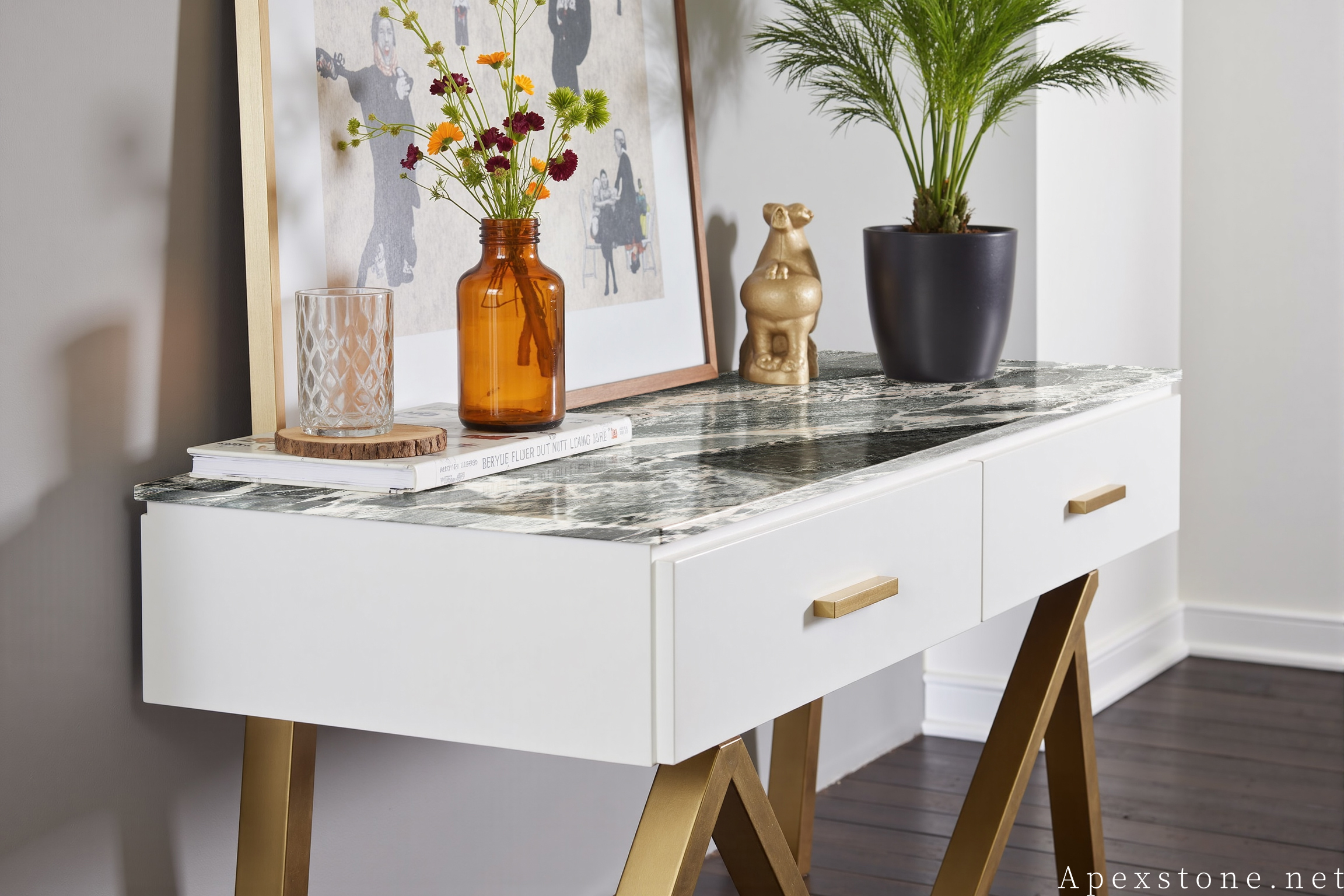
- Matching console and side tables cut from the same slabs on request
- Single-piece orders accepted; tops face-protected for container shipping
Specifications
| Material | Brazilian Pandora natural quartzite top |
|---|---|
| Round Tops | 36 in, 48 in, 60 in diameter |
| Rectangular Tops | 60 in, 72 in long; custom lengths by drawing |
| Square Tops | 36 in, 48 in |
| Top Thickness | 2 cm (3/4 in) standard; mitred build-up to 1-1/2 in or 2 in edge |
| Base Options | Pedestal, brass/gold, solid wood, iron; per project design |
| Edge Profiles | Eased, bullnose, small ogee or custom profile |
| Finish | Polished; honed by request |
| Documents | Slab images, placement drawing and piece schedule |
Product Detail
Apexstone material brief
Pandora Quartzite Dining Tables
The pain point: pattern placement left to chance on the most visible surface you sell
A stone dining table is judged from a seated position, at close range, every day — and on Pandora, the difference between a table that looks composed and one that looks accidental is entirely a matter of where the brown floral movement falls. The furniture trade knows the failure mode well: an importer orders a round top from a photo, the factory cuts whatever slab is on the saw bed that morning, and the container opens on a top where the largest bloom is sliced by the edge, or runs off-centre on a 48 in round, or collides with the pedestal mounting on a 60 in. The sample that won the order had a centred bloom; the shipment has something else. The customer sees a different product from the one they bought — and on furniture margins, a returned or discounted table is rarely recoverable.
The problem compounds across a set. A dining table ordered alongside console and side tables from separate batches reads as three unrelated stones, and the set premium that justified the sale quietly disappears.
The fix is cheap in process and priceless in outcome: decide the pattern placement on the image of the actual slab, get it approved, and only then cut. That is how every Pandora dining table is produced.
How placement is locked before the first cut
Every Pandora top is planned on the image of the actual slab before cutting. On a round top, the largest bloom is centred or deliberately offset; on a rectangular 72 in top, the movement is run lengthwise so the table reads longer; on square tops, the placement keeps the bloom clear of the base contact zone. The order comes back to you as a placement drawing showing exactly where the movement falls on your top — approved before the first cut. What the client signs is what is made, and what is made is what ships: every piece is inspected against the approved drawing before the container closes.
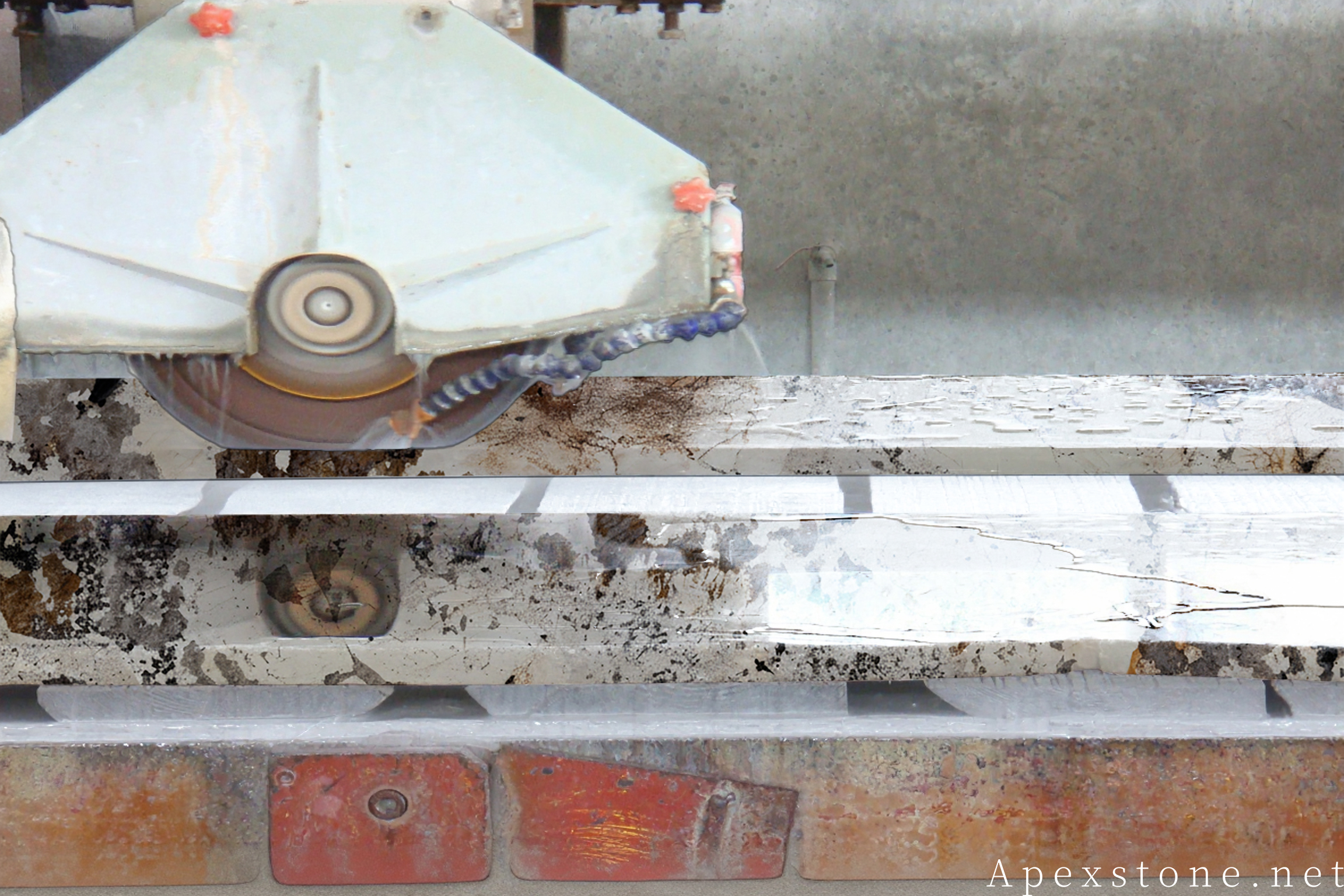
Tops are cut on CNC equipment and finished to the specified profile — eased, bullnose or a small ogee for traditional rooms — and polished until the crystal structure catches light. When a dining set is ordered together, console and side tables are cut from the same slabs, keeping the movement consistent across the dining room — the detail furniture brands use to justify premium pricing on the whole set rather than one piece.
Formats, bases and the mechanics of a durable top
Dining tables live on a short list of sizes, and Pandora is cut to all of them: round tops in 36 in and 48 in for four to six seats, a 60 in round or rectangular for six, and 72 in rectangular tops for eight; square tops in 36 in and 48 in for compact rooms and breakfast areas. Top thickness runs 2 cm (3/4 in) as standard, with a mitred build-up to a 1-1/2 in or 2 in visual edge when the design wants a heavier read — the build-up joint sits on the edge return, invisible from above.
Bases are chosen per project: a central pedestal keeps legroom open on round and square tops; brass and gold-finished bases warm the cream-and-brown palette; solid wood bases suit French country and farmhouse rooms; slim iron frames give a modern, architectural stance. Because the top is the visual event, the base stays quiet — a pairing rule we apply when advising, and one that keeps Pandora tables looking designed rather than assembled.
Why the material holds up at the table
Dining surfaces take real abuse: hot dishes, dropped cutlery, citrus, wine. Quartzite handles this better than marble — it will not etch from an overnight lemon slice, and it shrugs off knife tips that would scar a calcite surface. It is still natural stone: trivets for long simmers, boards for chopping, and prompt wiping of wine and oil keep the top flawless. Sealed at installation and resealed occasionally, a Pandora dining top needs nothing more than a pH-neutral cleaner and a soft cloth — a care story that holds up in the after-sales conversation with end clients.
Buyer value in one line: the table your customer approves on the placement drawing is the table in the container — no pattern surprises, no discounted shipments, and sets that match because they were cut from the same slabs.
Specification
| Item | Detail |
|---|---|
| Material | Brazilian Pandora natural quartzite top |
| Round tops | 36 in, 48 in, 60 in diameter |
| Rectangular tops | 60 in, 72 in long; custom lengths by drawing |
| Square tops | 36 in, 48 in |
| Top thickness | 2 cm (3/4 in) standard; mitred build-up to 1-1/2 in or 2 in edge |
| Base options | Pedestal, brass/gold, solid wood, iron; per project design |
| Edge profiles | Eased, bullnose, small ogee or custom profile |
| Finish | Polished; honed by request |
| Documents | Slab images, placement drawing and piece schedule |
Frequently asked by trade buyers
Can we approve the pattern before you cut? Yes — that is the standard process. Each order returns slab images and a placement drawing showing where the movement falls on your top; cutting starts only after you approve it.
Can dining and console tables match as a set? Yes. When ordered together, console and side tables are cut from the same slabs, keeping the movement consistent across the dining room.
What about single-piece orders? Single-piece orders are accepted for showrooms and replacements, with the same placement drawing and inspection discipline as set orders.
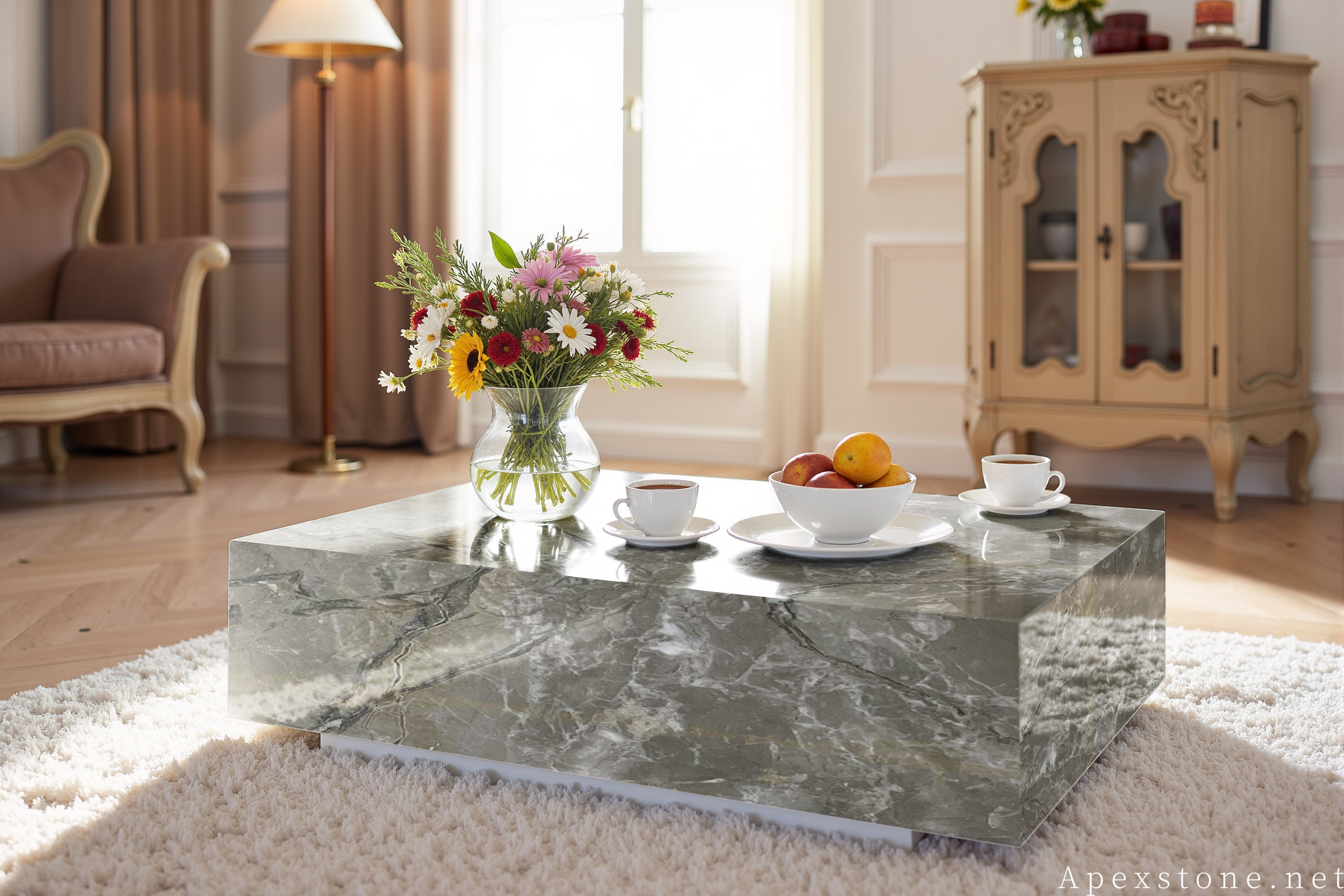
How are tables packed? Mixed containers of dining and coffee tables are packed with tops face-protected and bases crated separately, and every piece is inspected against the approved drawing before the container closes.
Send the size and shape — approve the bloom before it is cut
Send the top size and shape, base preference, edge profile and destination port. Your order comes back with slab images and a placement drawing showing exactly where the movement falls — approved before the first cut. Single-piece orders are accepted.
Request Pandora dining table options