A practical guide for buyers on the factors that drive marble countertop quotes—from stone rarity and slab yield to edge profiles and logistics. Learn what to specify and what to send a supplier for an accurate, comparable quote.
How Much Does Marble Countertops Cost: Price Drivers That Move the Quote
If you are sourcing marble countertops for a residential or commercial project, you already know the how much does marble countertops cost question rarely has a single answer. Quotes from different suppliers can vary widely—not because one is overcharging, but because the scope behind each quote is different. Stone grade, slab utilization, thickness, edge work, cutouts, finish, order size, and logistics all move the final number.
This guide breaks down the factors that actually drive a marble countertop quote. It is not a price list; it is a checklist to help you compare quotes fairly and ask the right questions before you commit.
Key Takeaways
- Stone rarity and grade set the baseline—Calacatta sits at the top of the marble range.
- Slab size and usable yield determine how much stone you pay for versus how much you waste.
- Thickness, edge profiles, cutouts, and finish add fabrication cost.
- Order size and logistics influence unit pricing and total landed cost.
- Quotes vary by market; always request an itemised quotation to compare apples to apples.
1. Stone Rarity and Grade
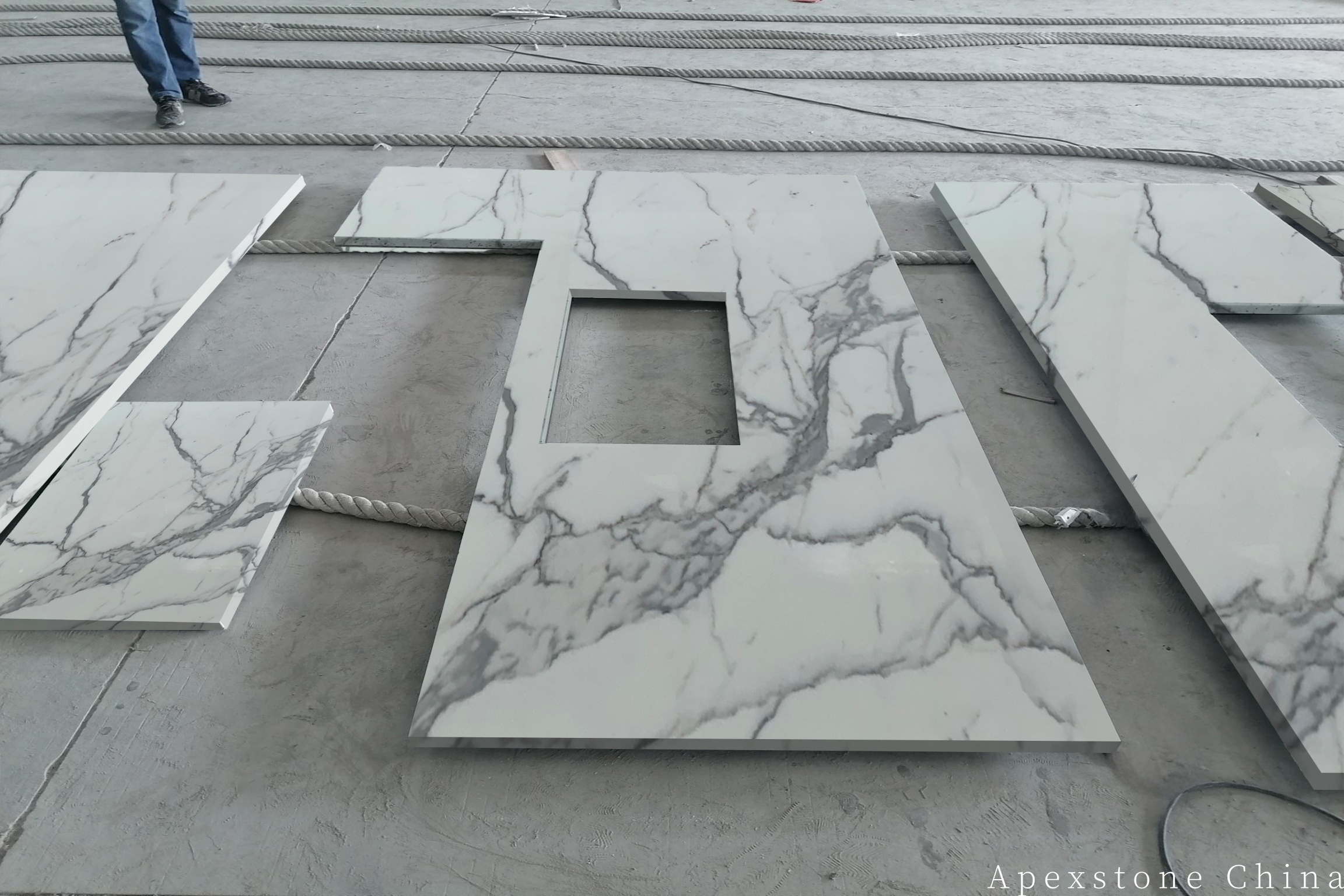
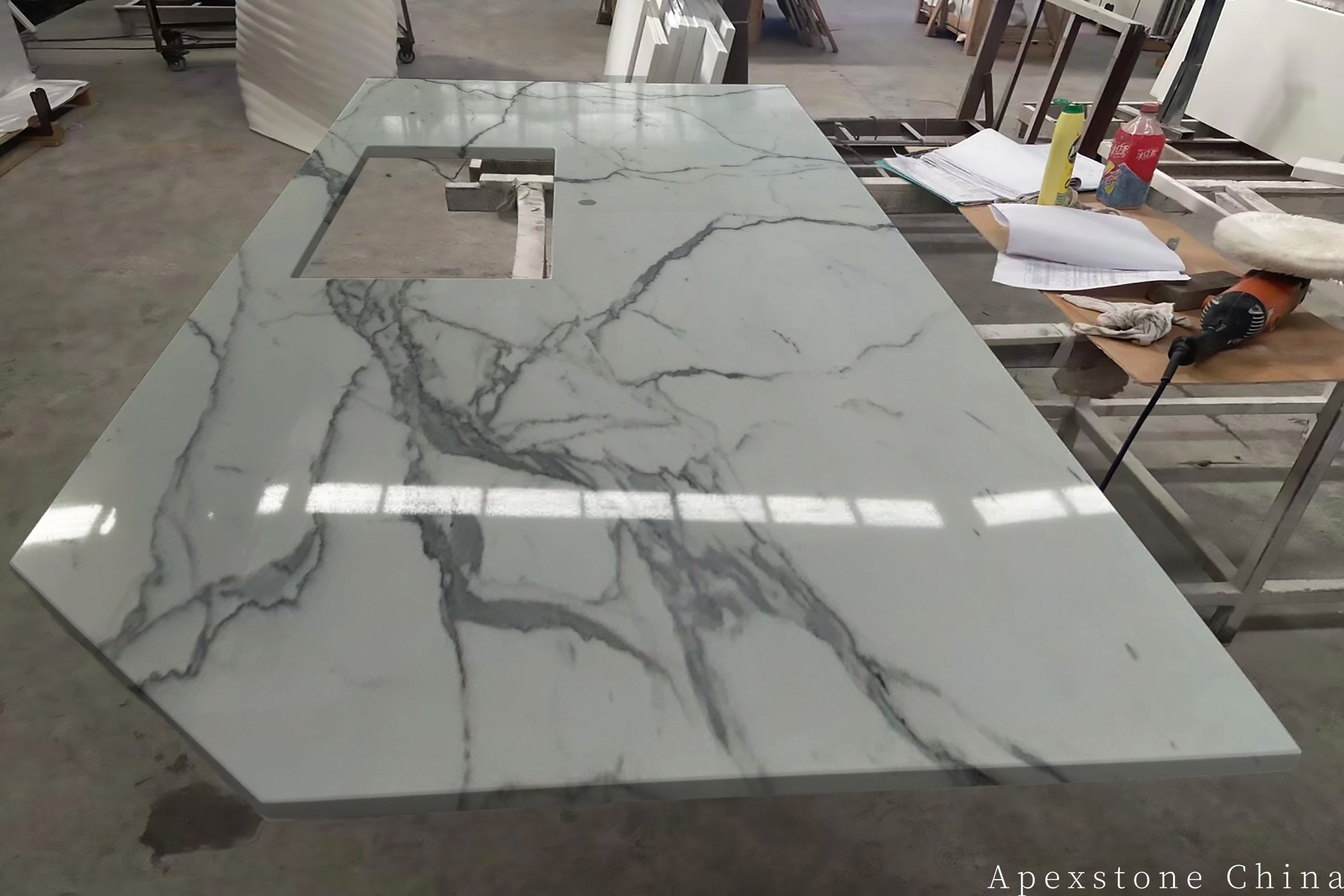
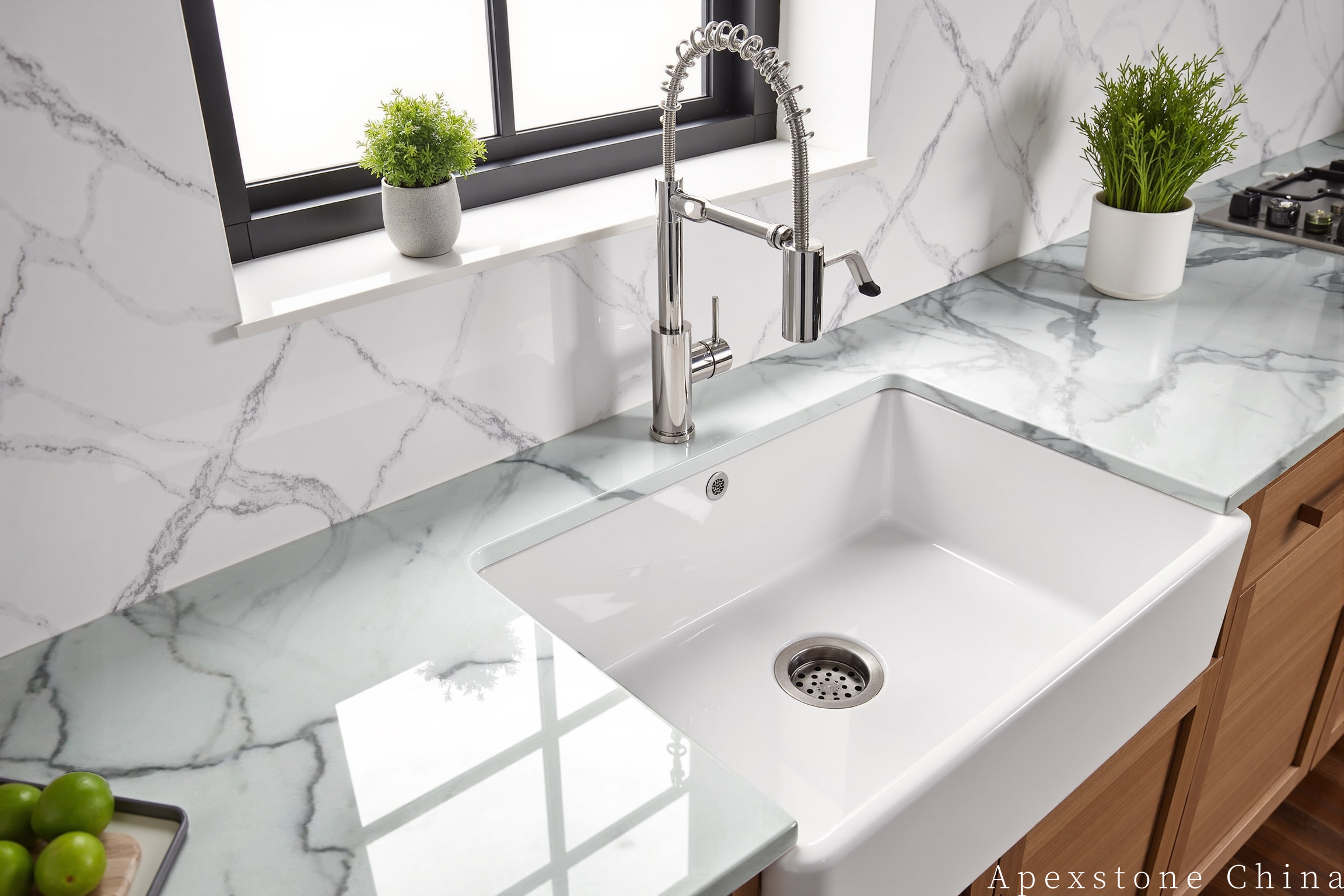
Not all marble is priced alike. At the top of the range is Calacatta White, an Italian natural marble with a snow-white ground and light-grey random veining. Its dramatic, unpredictable pattern and limited supply make it one of the most sought-after—and most expensive—choices. Other marbles, such as Carrara or Crema Marfil, typically sit lower on the price spectrum because they are more abundant and have a more uniform appearance.
Within a single stone type, grade also matters. Suppliers sort blocks and slabs by vein consistency, background color, and absence of flaws. A higher grade means fewer defects and more uniform slabs—and a higher price. When you request a quote, ask the supplier to specify the grade or selection level so you know what you are comparing.
2. Slab Size and Usable Yield
Marble is sold by the slab, and the slab dimensions affect both the material cost and how efficiently you can cut your countertops. A larger slab may cost more upfront, but if it yields more usable pieces with less waste, the effective cost per square foot can be lower.
Yield depends on your layout. For island tops, common planned sizes are 96, 72, 48, and 36 inches. The way these pieces nest on a slab determines waste. A supplier who plans the cutting layout carefully can often reduce waste—and therefore cost. Ask for a cutting plan or yield estimate with your quote.
3. Thickness Choice
Countertop thickness directly affects material consumption. Standard options are 20 mm (3/4 in) and 30 mm (1-1/4 in). A 30 mm top uses more stone per square foot and is heavier, which can also increase handling and shipping costs. For many residential kitchens, 20 mm with a built-up edge is sufficient; for a more substantial look or commercial applications, 30 mm may be preferred. Specify the thickness clearly in your inquiry—ambiguity here is a common source of quote variance.
4. Edge Profiles
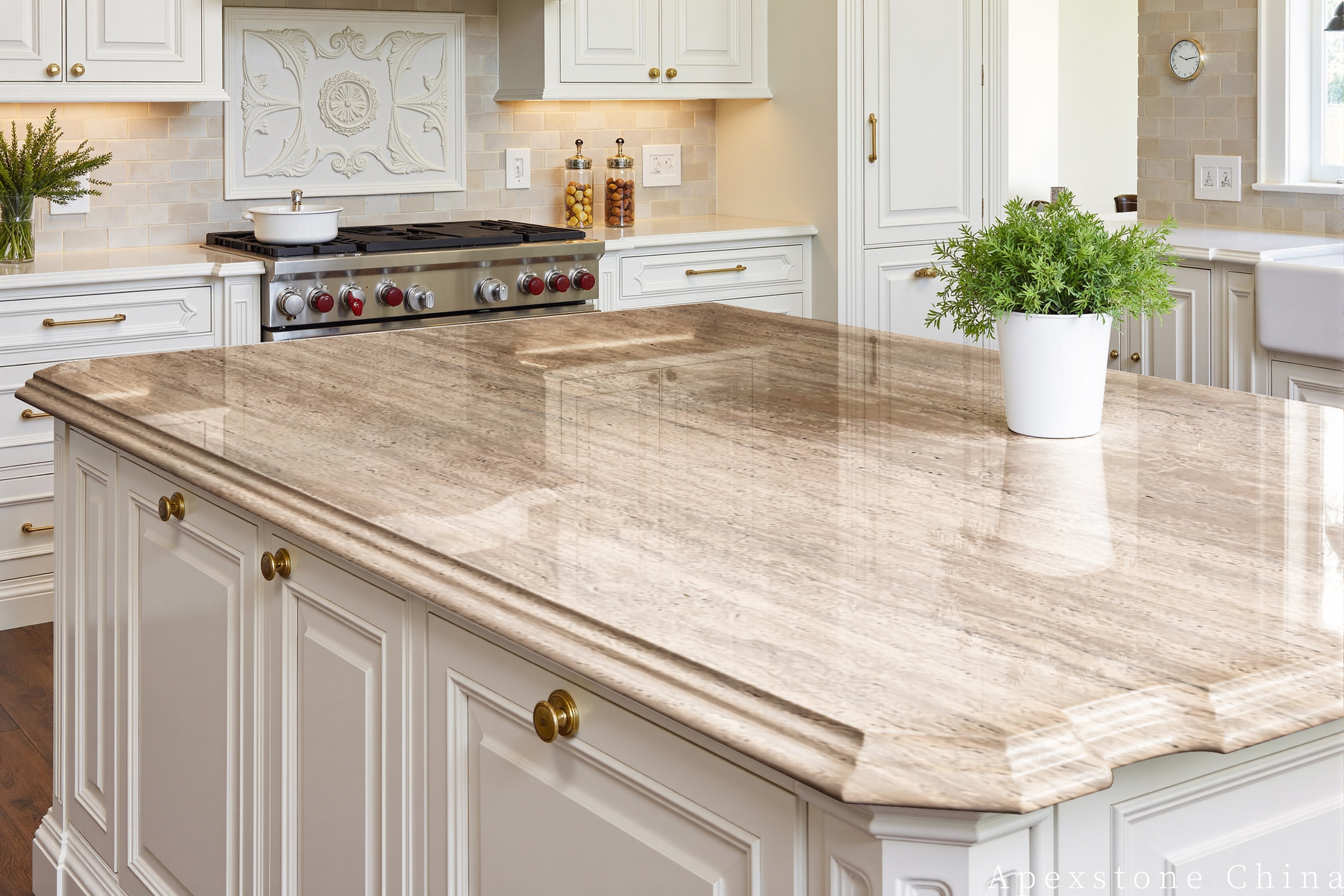
The edge profile is a visible design detail and a labor cost. Simple edges like a straight polish take less time; more complex profiles such as bullnose, ogee, or a waterfall edge require additional cutting, shaping, and polishing. Waterfall edges, in particular, involve mitering and seaming, which add fabrication time and material.
When comparing quotes, check that the edge profile is specified. A quote for an eased edge is not comparable to one for a waterfall edge.
5. Cutouts and Fabrication Details
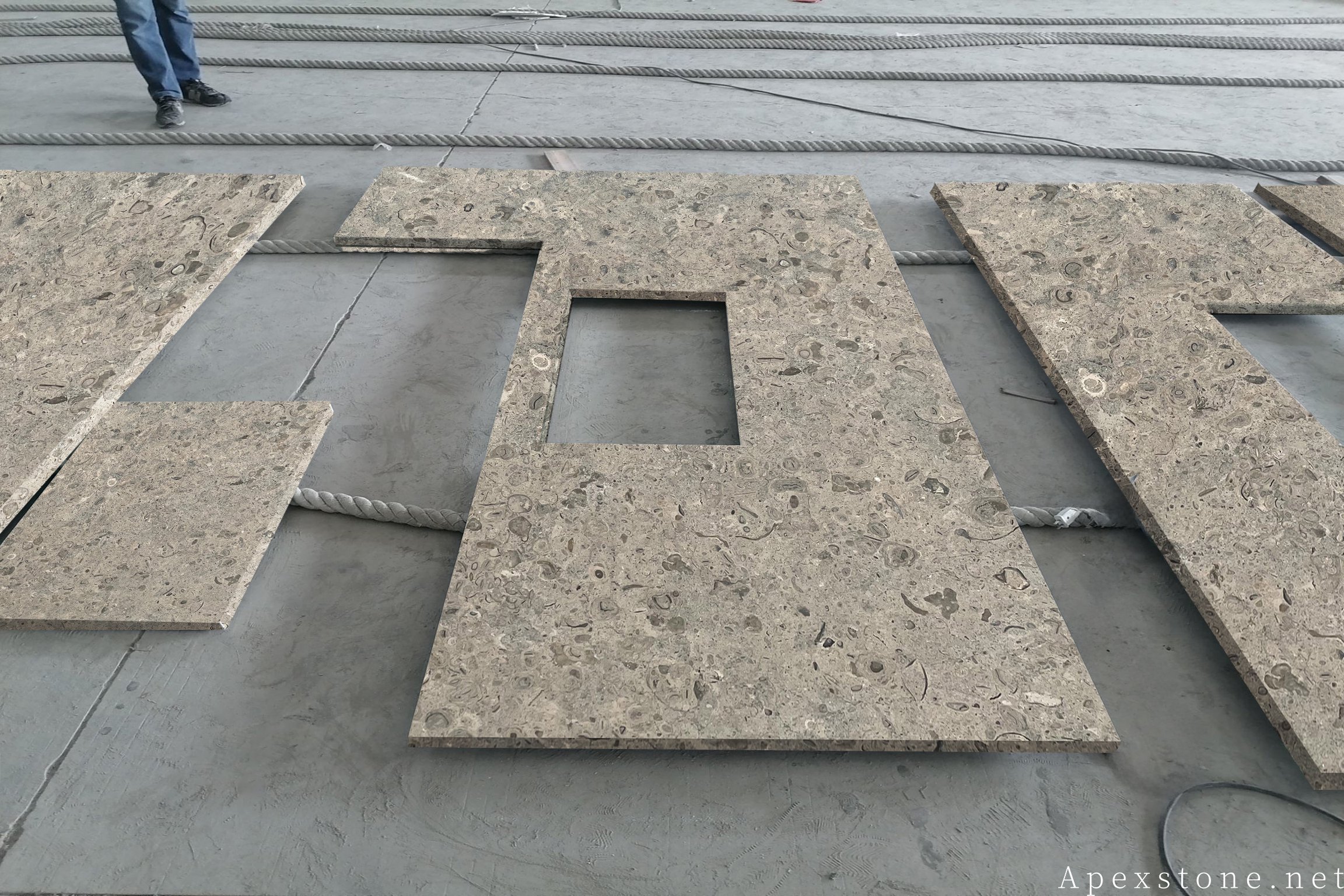
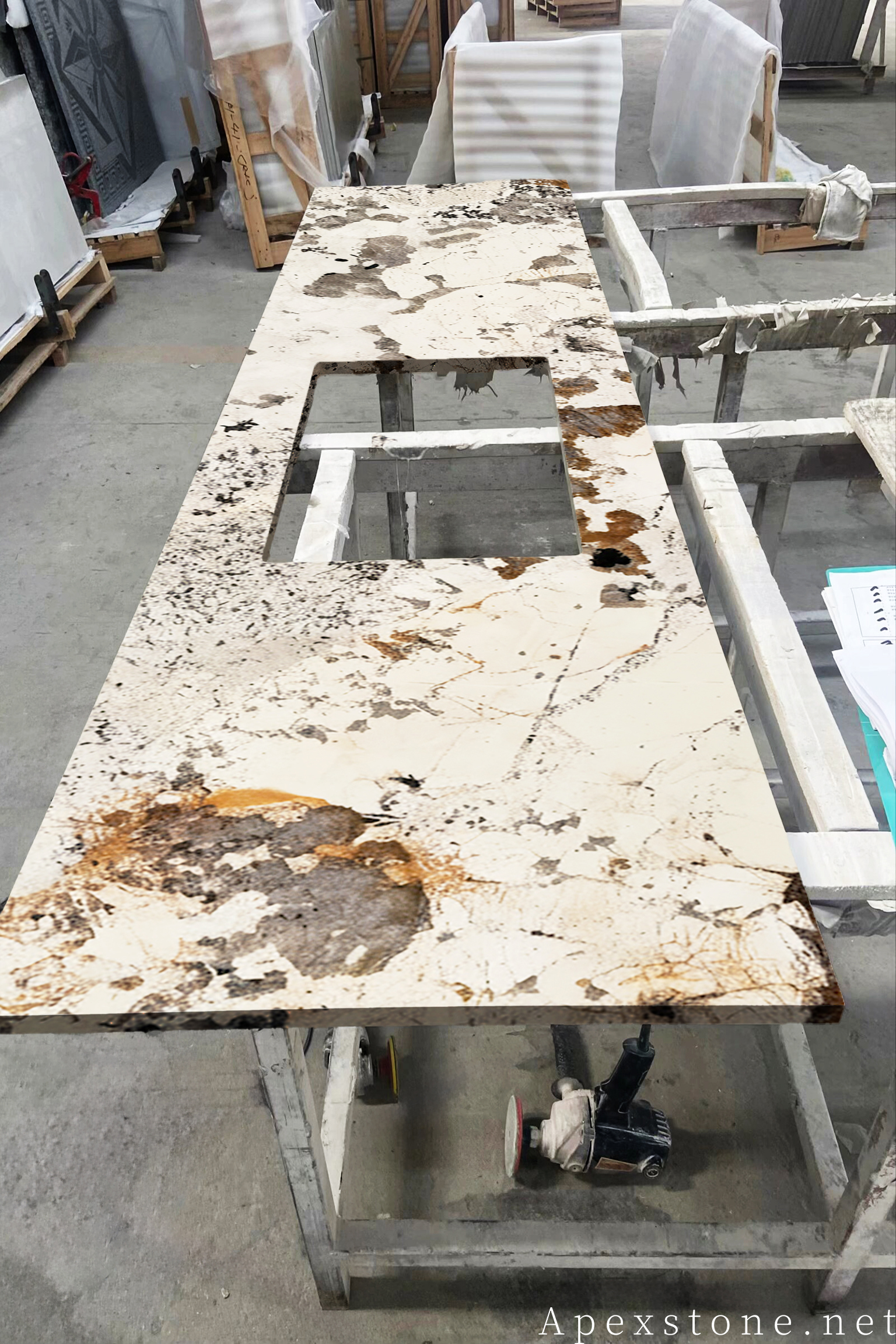
Sink and faucet cutouts are typically CNC-machined from approved drawings. This ensures accuracy and a clean finish, but it also adds fabrication cost. The number and complexity of cutouts—undermount sink, faucet holes, soap dispenser, cooktop—all affect the final price.
Provide detailed drawings or templates for any cutouts. Some suppliers can return shop drawings quickly—for standard layouts, sometimes within one working day—so errors are caught early and rework avoided. Turnaround depends on order size and drawing complexity, so confirm the actual timing with each supplier when you inquire.
6. Finish
Marble can be finished in several ways: polished, honed, brushed, or custom. A polished finish is the most common and often the standard; honed or brushed finishes may require additional processing and can add to the cost. The finish also affects the stone’s appearance and maintenance, so choose based on design intent, not just price.
7. Order Size and Logistics
Order size influences unit pricing. Larger orders can benefit from economies of scale in fabrication and shipping, while small orders—especially single-slab orders—may carry a higher per-unit cost. Many suppliers accept single-slab orders, which is convenient for small projects or samples.
Logistics is another major driver. Marble is heavy and fragile; shipping costs depend on distance, packaging, and handling. Every piece should be inspected before packing—covering surface condition, dimensions, edge quality and colour consistency against the approved slabs—to reduce the risk of damage or discrepancy in transit. Ask the supplier how they pack and whether they provide inspection photos or reports of the packed crates before shipment.
What to Send a Supplier for a Comparable Quote
To get quotes you can actually compare, provide the same information to every supplier. Here is a checklist:
- Stone type and grade: e.g., Calacatta White, grade A or equivalent. Include a reference image if possible.
- Dimensions and layout: Countertop lengths, widths, and island sizes (e.g., 96 in, 72 in). A simple sketch or CAD file helps.
- Thickness: 20 mm or 30 mm.
- Edge profile: Bullnose, ogee, waterfall, or straight.
- Cutouts: Sink, faucet, cooktop, with dimensions or templates.
- Finish: Polished, honed, etc.
- Order quantity: Number of pieces or slabs.
- Delivery location and terms: Incoterms, port, or address.
- Any special requirements: Book-matching, seam placement, certification needs.
Suppliers who can return shop drawings quickly and accept single-slab orders make the process smoother—confirm both capabilities and their conditions when you request the quote. For Calacatta White marble countertops and islands, you can view specifications and request a quote at StoneCube’s product page.
Frequently Asked Questions
Why do marble countertop quotes vary so much between suppliers?
Quotes vary because the scope differs: stone grade, slab yield, thickness, edge work, cutouts, finish, order size, and logistics all affect the price. Always request an itemised quotation so you can compare line by line.
Is Calacatta always more expensive than other marbles?
Calacatta is generally at the top of the marble range due to its rarity and dramatic veining, but price also depends on grade and slab quality. Other marbles may cost less, but always compare like for like.
Can I order just one slab?
Many suppliers accept single-slab orders, which is useful for small projects or to approve a sample before a larger order. Confirm with your supplier.
How can I reduce waste and cost?
Optimize your layout to fit standard slab sizes and ask for a cutting plan. Choosing a smaller thickness or simpler edge profile can also reduce cost.
Ready to get a precise quote? Send your project details—stone type, dimensions, thickness, edge profile, cutouts, and delivery location—to suppliers and ask for an itemised quotation. This will help you compare offers accurately and avoid surprises.