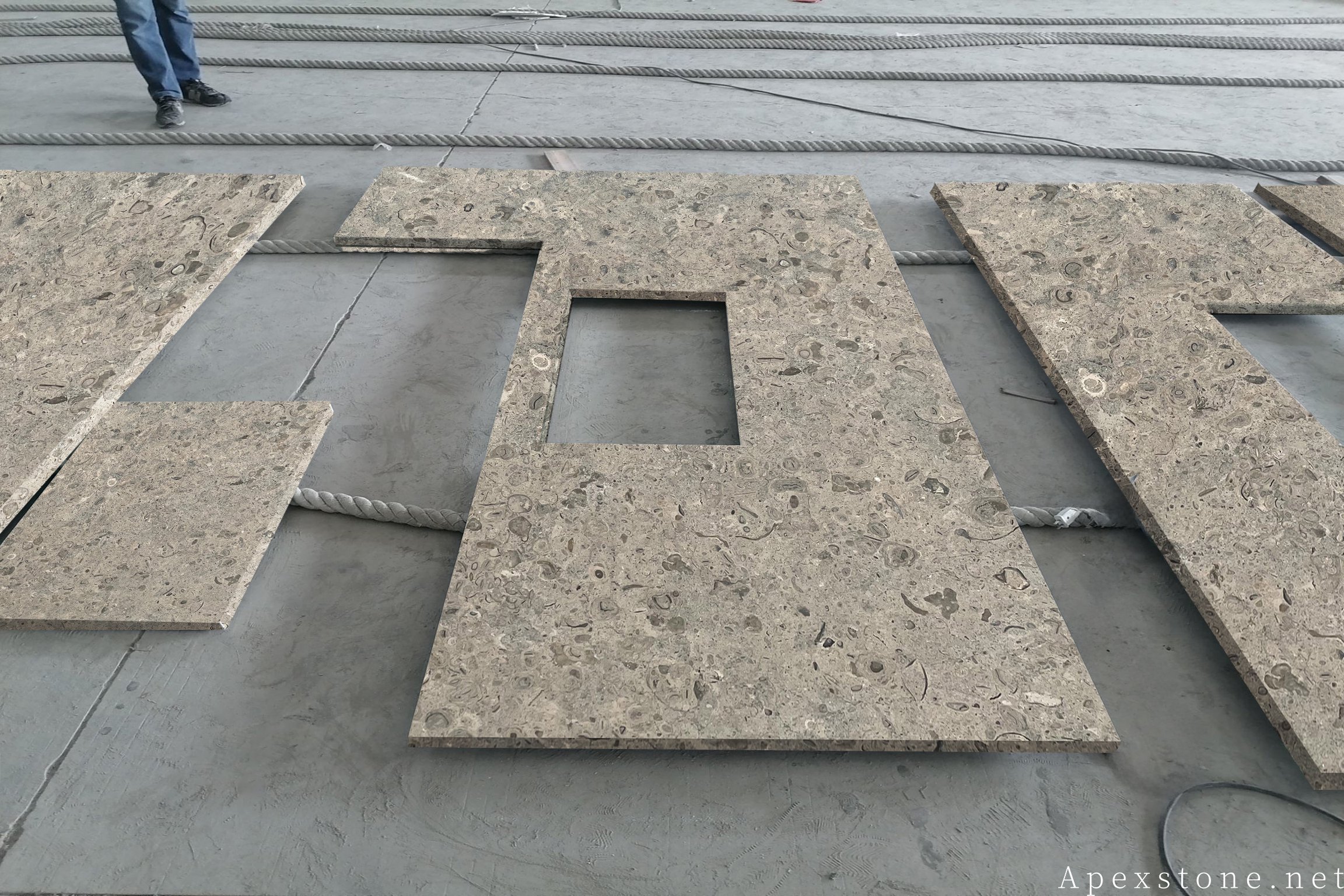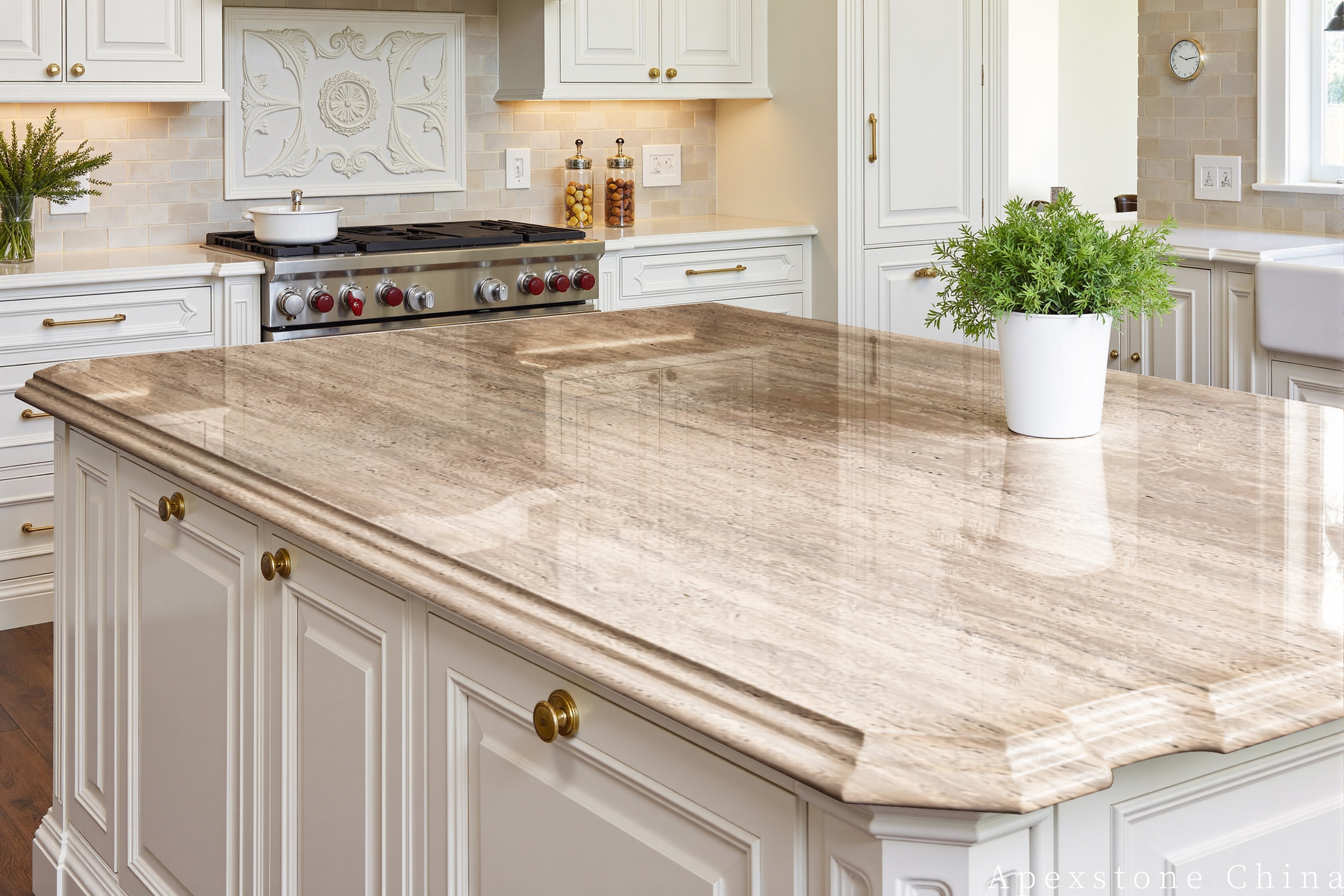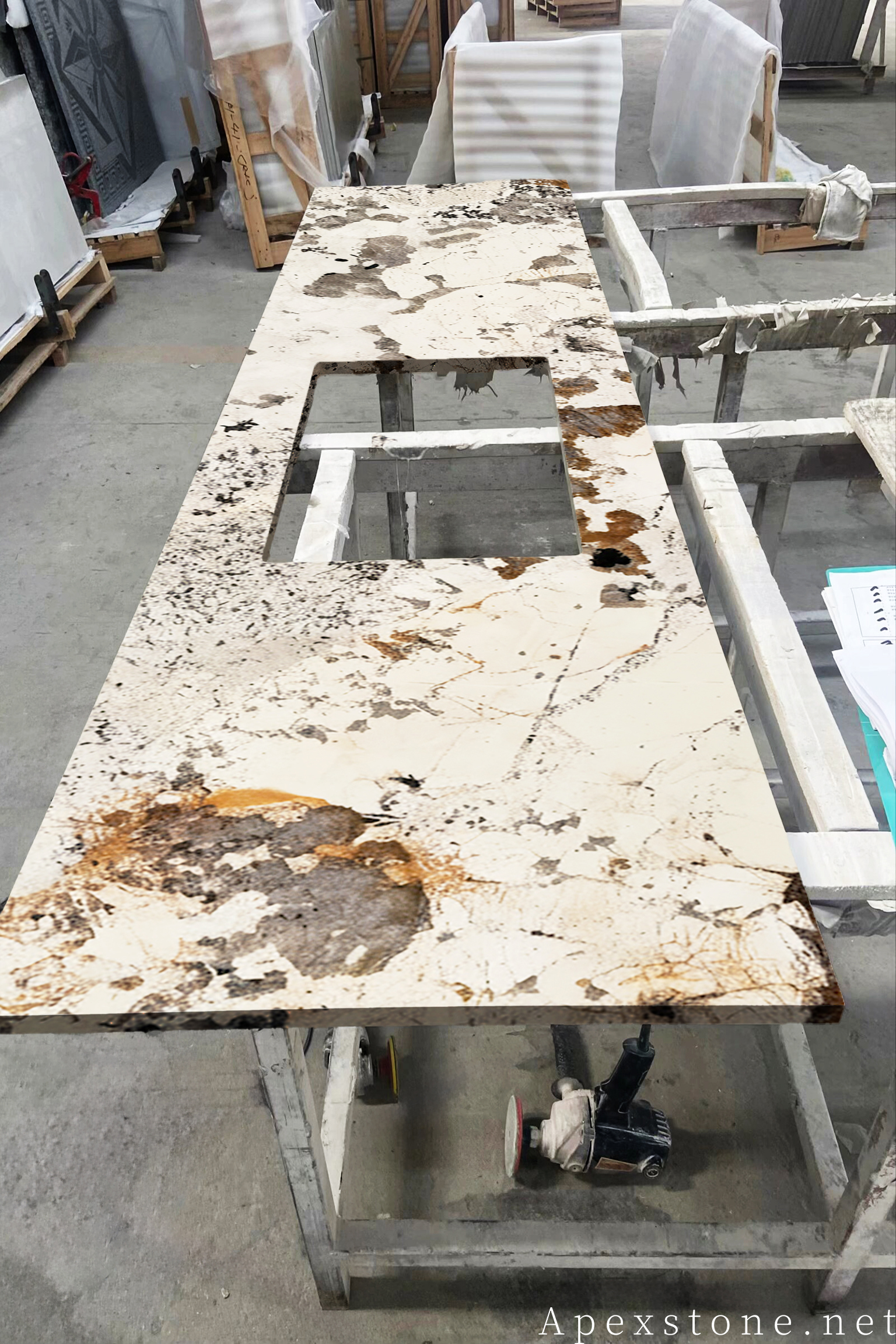
A per-square-foot marble rate hides more than it shows. This guide breaks down what the number actually bundles — slab yield, thickness, fabrication, finish and logistics — and why two quotes at the same rate can deliver different real value, using 96, 72, 48 and 36 inch islands as examples.
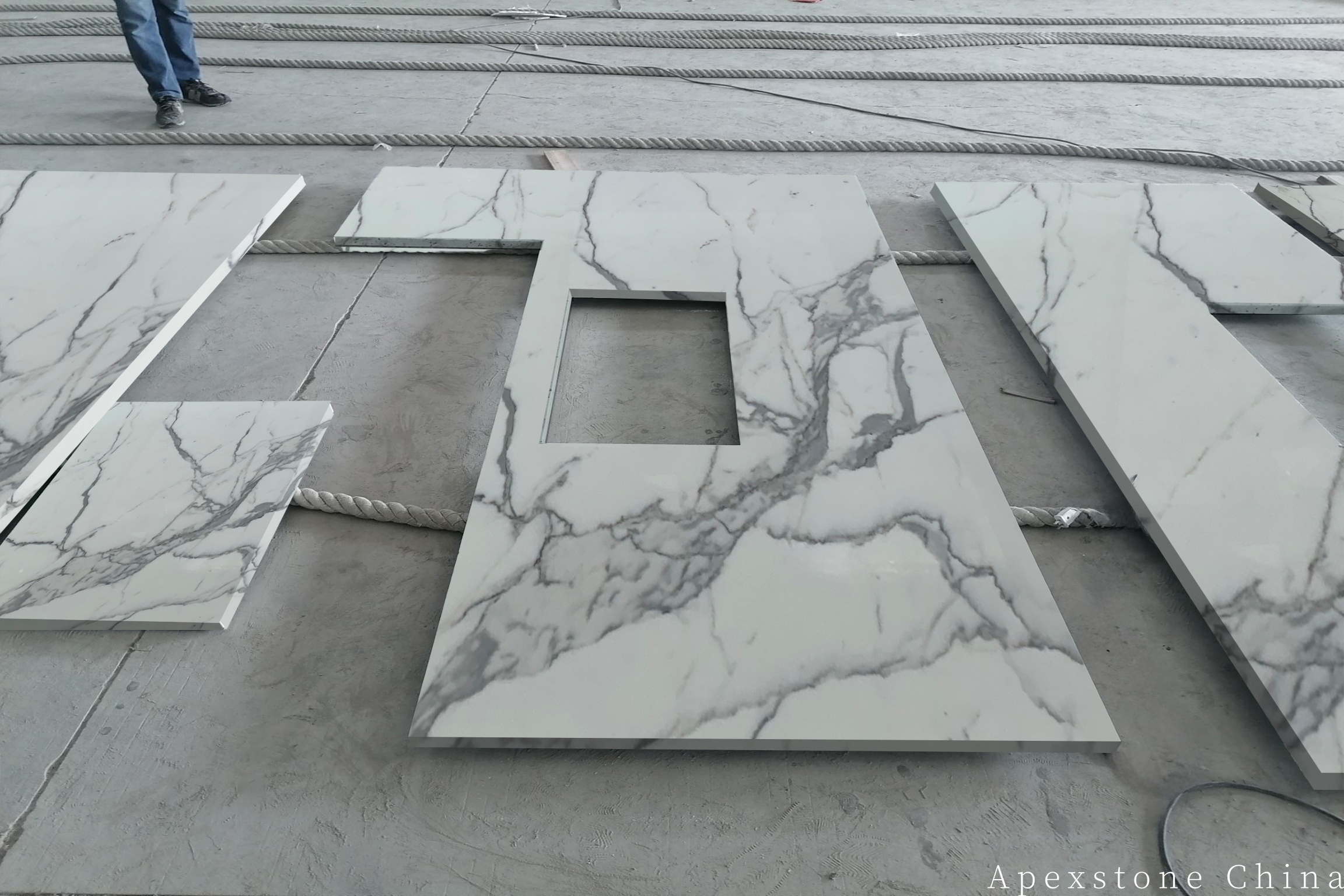
Two suppliers can quote the same marble rate per square foot and still hand you very different results — one covers a clean countertop with the edges you asked for, the other leaves the sink cutout, the waterfall return and freight to a second invoice. That is why asking how much does marble countertop cost per square foot rarely ends with a single number. The rate is a starting point; the value sits in what the rate is built from.
This guide explains what a per-square-foot marble rate actually bundles: how slab area becomes usable countertop, why thickness changes the scope, what fabrication and finish add, and how island dimensions of 96, 72, 48 and 36 inches push the final figure in different directions.
Key takeaways
- A per-square-foot rate is an average, not a line item. Slab yield, thickness, fabrication scope, finish and logistics each move the real cost inside that average.
- Usable area is always lower than slab area. The gap between them is where quotes quietly diverge.
- Calacatta White marble is offered at 20 mm (3/4 in) and 30 mm (1-1/4 in) thickness; the choice affects both material volume and how edges and returns are built.
- Fabrication — edge profiles, waterfall returns, CNC sink and faucet cutouts — is labour and machine time, and it scales with the geometry of the piece.
- Islands at 96, 72, 48 and 36 inches sit in different yield bands, so the same rate can produce different totals for the same project.
In this guide
Slab area vs usable area: the yield question
A marble slab is sold as a whole piece of stone, not as a measured rectangle of countertop. Between the two sits yield: the portion of a slab that survives cutting around vein movement, fissures, edge chipping and the layout of your pieces. A countertop that needs one continuous run across a 96-inch island may only fit on a slab in one orientation, leaving offcuts that cannot be used elsewhere in the project.
Yield is why square footage alone is a weak comparison. If one fabricator nests your pieces tightly and another does not, or if one accepts a single slab for a small order while another only sells full bundles, the effective area you pay for per finished square foot changes. Buyers comparing quotes should ask two questions directly: how many slabs does this job consume, and how much of each slab ends up in the finished piece?
Small orders make this visible. A 36-inch island or a short vanity top may use under half a slab. Suppliers that accept single-slab orders let you buy only the stone your project needs, which is often more economical than committing to a multi-slab bundle for one countertop.
Thickness: 2 cm vs 3 cm
Calacatta White marble countertops are typically supplied at 20 mm (3/4 in) or 30 mm (1-1/4 in). The thickness line on a quote looks like a small detail; it changes the scope in three ways.
- Material volume per square foot. A 30 mm slab contains half again the stone of a 20 mm slab over the same footprint. More stone per square foot is part of why nominal rates differ between the two.
- Edge construction. A 20 mm top is often built up at the edge to reach the visual weight of a thicker profile, which adds lamination labour. A 30 mm top can carry many edge profiles directly from the slab.
- Support and handling. Thicker stone weighs more and affects substrate and transport planning, particularly for long island runs.
Neither thickness is inherently better. A 20 mm top with a built-up edge suits designs that want a slimmer substrate; a 30 mm top suits projects where the edge should read as solid stone. The decision changes the rate, so the rate should name the thickness it assumes.
Fabrication: edges, returns, cutouts
Fabrication is where per-square-foot comparisons most often break down, because two quotes at the same rate can bundle completely different scopes of work.
Edge profiles
Edge profiles including bullnose, ogee and waterfall are shaped by machine and finished by hand. A simple eased edge takes minutes; an ogee or a bullnose run needs profiling passes and hand polishing along the full perimeter. On an island, the perimeter is longer than the top suggests — a 96-inch island typically has edges on all four sides, and the four sides are where the labour lives.
Waterfall returns
A waterfall return carries the stone down the end of the island to the floor, which turns a horizontal top into a vertical panel that must match vein direction and joint cleanly at the corner. Waterfall ends add stone, cutting, mitring and dry-fit time. They are one of the clearest examples of why a square-foot rate cannot fully describe a piece: the return uses area, but the cost driver is the joint and the alignment.
Sink and faucet cutouts
CNC sink and faucet cutouts are produced from approved drawings, which means the cutout geometry is defined before fabrication rather than improvised on the shop floor. A cutout that is properly drawn and approved the first time avoids rework; a change after cutting wastes stone. Buyers should expect shop drawings returned same day for complete drawings submitted on a working day, so the review loop does not stall the schedule — and should review them carefully, because the cutout drawing is the last cheap moment to change your mind.
Finish
Finishes differ in the number of passes and the skill they demand. Honed and polished surfaces both need consistent work across the full face, and on a veined white marble like Calacatta White the finish must be even enough that the surface reads the same from one end of a long island to the other. Finish selection also interacts with the edge: a polished edge on a honed top is a deliberate combination that should be stated in the quote, not discovered at installation.
Logistics
Stone is heavy, fragile at corners and vulnerable to point loads. Logistics in a marble quote includes packing, protection at edges and corners, and the transport arrangement for pieces that may not fit standard handling assumptions — a 96-inch island top is a long, thin, brittle object. It also includes the inspection step before packing: piece-by-piece inspection catches chips and vein mismatches in the workshop, where they can be fixed, rather than on site, where they cannot.
When comparing quotes, confirm whether packing and inspection are inside the quoted scope or billed separately. A rate that excludes them is not cheaper; it is incomplete.
Islands at 96, 72, 48 and 36 inches
Piece geometry drives the final number more than most buyers expect. Islands are commonly planned at 96, 72, 48 and 36 inches, and each size sits in a different relationship to slab yield and fabrication time.
| Island length | Typical planning context | What drives its share of cost |
|---|---|---|
| 96 in | Large kitchen or open-plan island | Longest continuous run; usually dictates slab orientation, often needs a waterfall return, and consumes a large portion of a slab with limited reuse of offcuts. |
| 72 in | Mid-size island with seating | Fits more slab layouts; perimeter edge work still significant; waterfall is optional and changes scope noticeably. |
| 48 in | Compact island or peninsula | Moderate yield; cutouts and edge profile are a larger proportion of total work than raw area. |
| 36 in | Small island, bar top or auxiliary surface | Uses well under a slab; per-square-foot rate is most sensitive to minimum order and slab selection. |
Read the table as a set of planning bands, not a price list. A 36-inch island and a 96-inch island can both be quoted at the same per-square-foot rate, but the 96-inch island consumes far more of a single slab, is more likely to require a waterfall return, and carries a longer edge perimeter. The 36-inch island is dominated by fixed costs — slab choice and setup — rather than by area.
Why the same rate gives different value
Take two quotes for the same 72-inch Calacatta White island at the same per-square-foot rate. Quote A assumes a 20 mm top with an eased edge, one sink cutout and standard packing. Quote B assumes a 30 mm top, an ogee edge, a waterfall end, CNC faucet and sink cutouts from approved drawings, same-day shop drawings, single-slab purchase and piece-by-piece inspection before packing. Both rates are real. Only one describes the countertop the buyer thinks they ordered.
To compare fees on equal terms, ask each supplier to state, in writing:
- The slab thickness assumed (20 mm or 30 mm);
- How many slabs the job consumes and the expected yield per piece;
- Whether edge profiles are included, and which ones;
- Whether waterfall returns, sink and faucet cutouts are in scope;
- The finish, and whether edge and face finish match;
- Whether packing, protection and inspection are included;
- Whether shop drawings are issued for approval before cutting.
With those seven answers, two quotes become comparable. Without them, a per-square-foot rate is a headline, not a cost. You can review a representative Calacatta White specification, including thickness options, on the Calacatta White marble countertops and islands product page.
FAQ
Does a higher per-square-foot rate always mean a more expensive project?
No. A higher rate that includes thicker stone, waterfall returns, CNC cutouts, same-day drawings and inspection can cost less overall than a lower rate with fabrication and logistics added later. Compare scope, not the headline number.
How much does marble countertop cost per square foot change between 20 mm and 30 mm?
A 30 mm slab holds roughly 50% more stone than a 20 mm slab over the same footprint, so the material share of the rate rises accordingly, while edge construction can add lamination labour on a 20 mm top. Ask each supplier to quote both thicknesses against the same drawing so the comparison is like for like.
Is a 36-inch island cheaper per square foot than a 96-inch island?
Not necessarily. The smaller island uses less stone, but fixed costs — slab selection, setup and minimum order — are spread over fewer square feet. The larger island uses more material and typically more edge work, so its cost is driven by yield and fabrication.
Can I order stone for one island only?
Single-slab orders are accepted subject to slab availability, which suits small islands and single-piece projects. Confirm the slab you receive and how the layout will be nested before cutting.
Next step: prepare a simple drawing of each piece — dimensions, thickness, edge profile, cutout positions and whether a waterfall return is wanted — and ask for a breakdown that maps each line to the scope items above.
The Calacatta White marble countertop and island range lists thickness options and fabrication scope to use as a reference when you request quotes.