Apexstone
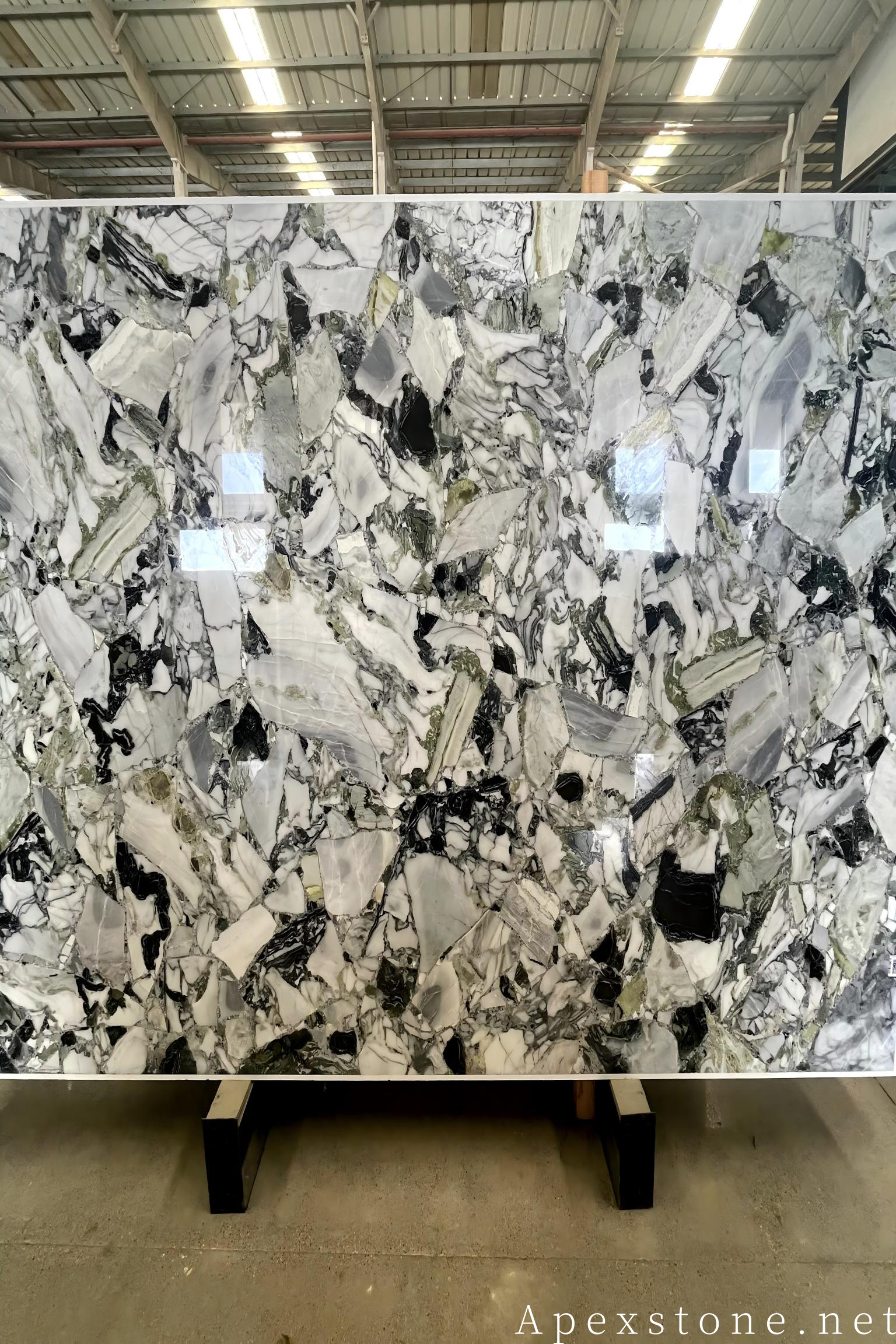
Primavera Marble Slab - Emerald Green Natural Stone
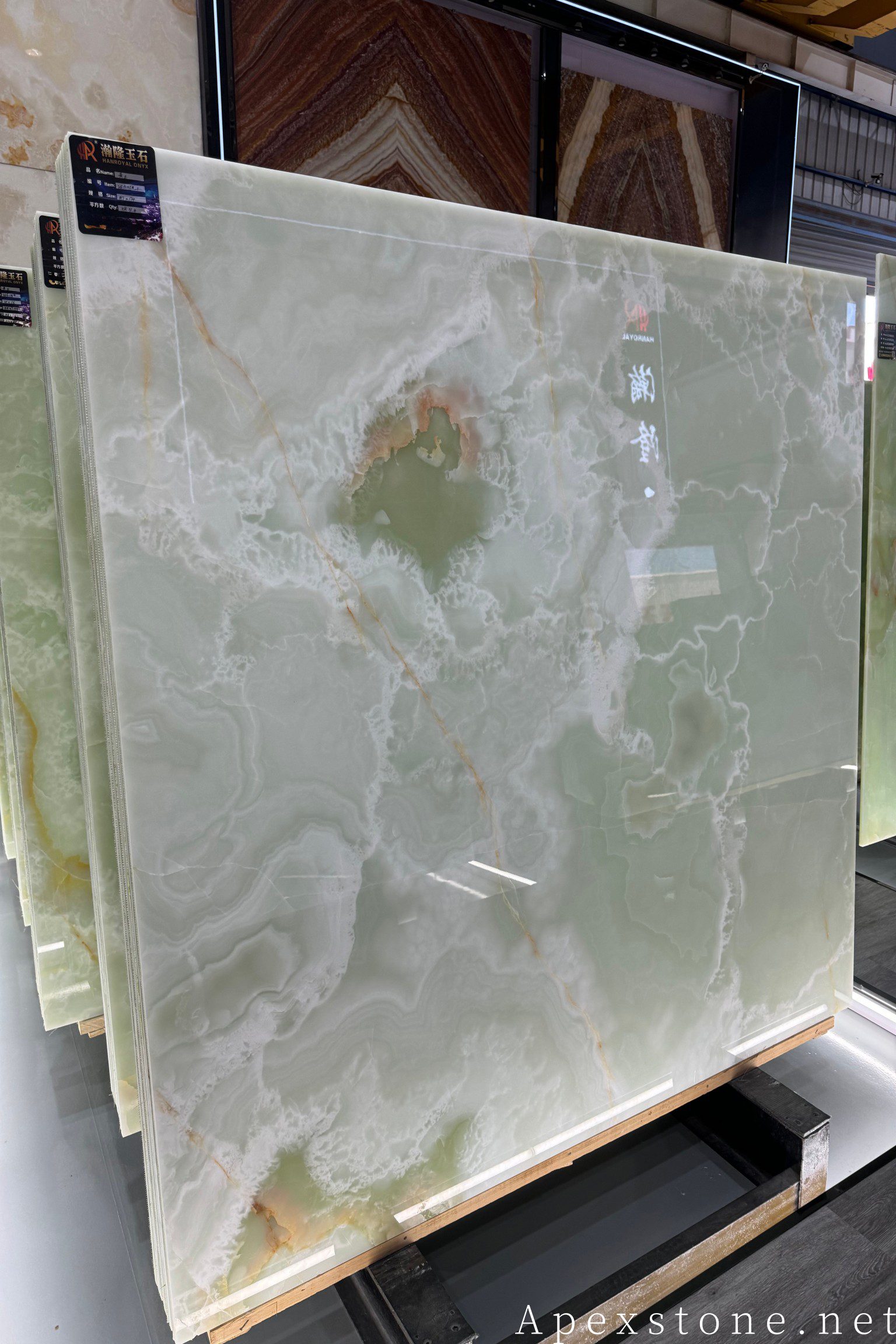
Primavera (冷翡翠) marble slabs with emerald green base and light veining from China. Jade-like depth from chromium-rich mineral composition. Grade A/B/C slab grading system. Premium natural stone for feature walls, vanity tops, floor tiles, and stone tables. Polished, honed, brushed finishes. Emerald green marble slab supplier Apexstone - 42+ countries since 2002.
Highlights
- Natural emerald green marble quarried in China - Primavera (冷翡翠)
- Jade-like depth from chromium-rich mineral composition - reads as jade, not stone
- Density 2.6-2.8 g/cm³, water absorption ≤0.5%, Mohs 3-4, compressive strength 90-150 MPa
- Grade A/B/C slab grading system based on colour saturation, vein distribution, and structural integrity
- Suitable for feature walls, vanity tops, floor tiles, stone tables, and wall cladding
- Available in polished, honed, and brushed finishes with custom edge profiling
Specifications
| Stone Type | Marble |
|---|---|
| Commercial Name | Primavera (冷翡翠) |
| Origin | China |
| Base Color | Emerald Green |
| Veining | Light-coloured organic vein movement |
| Colour Source | Chromium and serpentine minerals in calcite matrix |
| Backlit | No |
| Density | 2.6-2.8 g/cm³ |
| Water Absorption | ≤0.5% |
| Mohs Hardness | 3-4 |
| Compressive Strength | 90-150 MPa |
| Reference Thickness | 10 mm (3/8 inch), 18 mm (3/4 inch), 20 mm (3/4 inch), 30 mm (1-1/4 inch) |
| Max Slab Size | Up to 3000 x 1800 mm (118 x 71 inch) |
| Available Finishes | Polished, honed, brushed |
| Edge Profiles | Eased, beveled, bullnose, ogee, waterfall, custom |
| Slab Grades | Grade A (Premium), Grade B (Commercial), Grade C (Utility) |
| Recommended Styles | Transitional, Eastern-Inspired, Contemporary, Luxury |
| Applications | Feature walls, vanity tops, floor tiles, stone tables, wall cladding |
| MOQ | From 50 m² |
| Lead Time | 25-35 days from drawing approval |
Product Detail
The Pain Point: Bold Stone, Bigger Consequences — When Container Two Doesn't Match Container One
Primavera marble is not a shy material. An emerald-green base crossed by strong light veining means every slab announces itself — and every difference between slabs gets announced just as loudly. Buyers who order this stone in volume for hotel lobbies, branded retail or residential developments keep hitting the same problem: samples approved from one batch, then container two arrives with a greener base, whiter veins, or a busier pattern — and a wall designed as one composition turns into a fight between slabs.
With quiet stones, a mismatch hides in the joint. With Primavera, the mismatch is the loudest thing on the wall. And the commercial damage is amplified by a second, quieter failure: grading. Many suppliers sell "Primavera" with no grade definition at all, so A-grade focal material and C-grade repair stock can be mixed in the same crate, and you discover the difference when your installer sets the first panel.
What This Costs You as a Buyer
- Design intent lost: a feature wall specified as a bookmatched or rhythmic composition cannot be built from tonally random slabs; the design either degrades or the material goes back.
- Cost of mixing grades unknowingly: A-grade material priced and shipped as commercial stock erodes your margin invisibly; C-grade material installed on a focal wall creates claims.
- Program delays: multi-phase projects (lobby now, suites next quarter) drift apart when the second phase is sourced without reference to the first batch.
- Sample-to-goods gaps: without batch-linked slab photography, approval of a showroom sample provides no protection for the actual shipment.
Our Solution: A/B/C Grading, Batch Allocation and Photo Approval — Before You Commit
Apexstone sells Primavera with a written grade system, so the conversation about quality happens before production, not during installation. Every order is allocated at batch level: slabs for your project are selected from defined blocks, graded, numbered and photographed, and you approve the actual goods before loading. Phase-two quantities are planned against the recorded batch of phase one, which is how a two-stage project keeps one visual identity from groundbreaking to handover.
The Grading System — What Each Grade Means
| Grade | Definition | Intended Use |
|---|---|---|
| A | Uniform color and veining, free of cracks | Feature walls, bookmatched compositions and other focal surfaces where slab-to-slab consistency is judged directly |
| B | Commercial grade: natural variation in color or figure | Floors, secondary walls and large areas where variation reads as natural character |
| C | Repaired slabs: resin-filled natural defects | Small formats and cut-to-size pieces where the repair falls outside the visible field |
The grades are a procurement tool, not a marketing tier: they let you buy A-grade only where the design actually needs it and release budget on floors and secondary areas with B and C — the opposite of paying one blended price for an ungraded crate.
The Process Behind It
- Block selection: blocks are chosen against your approved reference for base tone, vein intensity and structure before the cutting schedule is set.
- Sequential gang-saw production: slabs are cut block by block with sequence preserved, so tonal drift stays within one allocation instead of accumulating across runs.
- Grading and numbering: each slab is graded A/B/C against the definitions above and numbered; grade and slab number are recorded against your order.
- Surface finishing under control: polished and honed finishes are applied batch by batch, so gloss level does not drift between slabs of the same allocation.
- CNC cut-to-size: tiles, vanity tops, tabletop and cladding formats are cut only from the slabs allocated to your project.
- Photo approval and loading plan: slab photography is submitted for your approval before loading, and the container loading order follows your installation sequence.
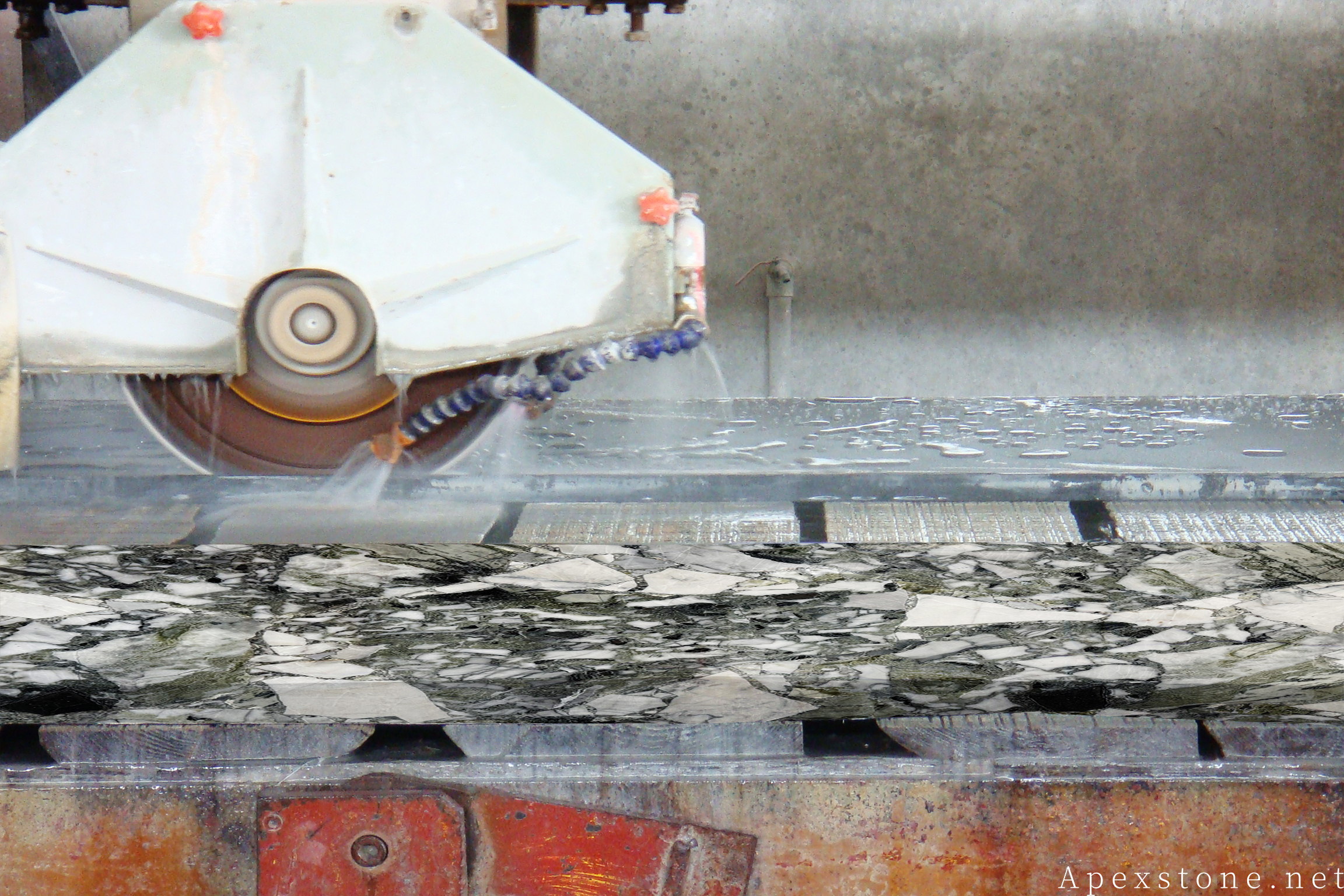
Primavera Marble Slab Specifications
| Item | Detail |
|---|---|
| Stone | Natural marble, Chinese origin |
| Commercial name | Primavera (emerald green base with light organic veining) |
| Coloration | Chromite and serpentine minerals |
| SKU | APX-PM-SLB |
| Max slab size | 3000 x 1800 mm (118 x 71 inch) |
| Standard slab size | 2400 x 1600 mm (94 x 63 inch) |
| Thickness options | 10 mm / 18 mm / 20 mm / 30 mm |
| Density | 2.6–2.8 g/cm³ |
| Water absorption | ≤ 0.5% |
| Mohs hardness | 3–4 |
| Compressive strength | 90–150 MPa |
| Grading | A / B / C as defined above |
| MOQ | 50 m² |
Sizing and Yield: What the Format Decision Actually Buys You
- Large-format slabs (3000 x 1800 mm / 118 x 71 inch): minimize visible joints on feature walls and large island tops. Higher cost per m², but fewer seams mean a cleaner composition and less joint-maintenance risk — usually the right call where the wall is the design.
- Standard slabs (2400 x 1600 mm / 94 x 63 inch): the practical middle ground for most residential projects — single-panel vanity tops, standard kitchen benchtops and feature wall panels.
- Cut-to-size tiles (600 x 600 mm / 24 x 24 inch, 800 x 800 mm / 32 x 32 inch): the economical choice for floors and wall tiling. Specify that all tiles for a single room are cut from the same slab batch — a request our allocation system is built to honor.
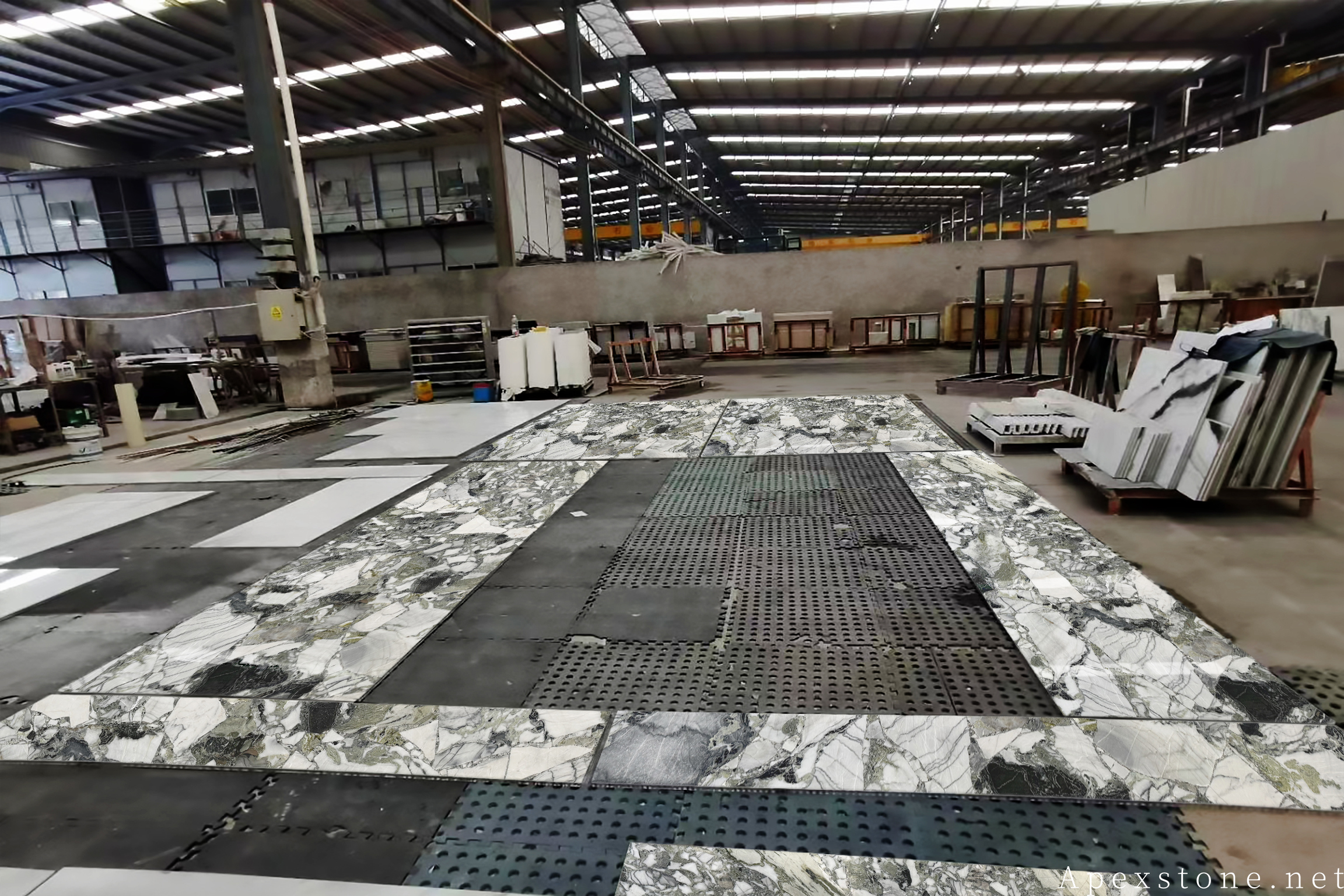
Applications Buyers Specify in Primavera
The stone's green depth and organic veining make it a recurring choice for hotel lobby feature walls, brand-flagship retail interiors, bathroom vanity tops and wall cladding, and living-space flooring where the floor itself becomes part of the palette. Because the chromite and serpentine coloration is mineral-deep rather than surface-deep, polished surfaces keep their saturation; honed finishes soften the visual intensity for large floor fields. Whatever the application, the grade mix is a design decision we plan with you: A on the focal wall, B across the floor, C inside small formats — consistency where it is seen, economy where it is not.
Frequently Asked Questions
Can I buy A-grade only?
Yes — grades are specified per order. Tell us which surfaces are focal and which are field areas; we quote the grade mix accordingly and record it on the allocation plan, so what ships matches what you specified.
How do I make sure container two matches container one?
Batch allocation plus recorded slab numbers. Phase-two quantities are selected against the recorded batch of phase one, and slab photography is re-submitted for approval before the second loading.
Is C-grade material visibly repaired?
C-grade slabs contain resin-filled natural defects. In small formats and cut-to-size pieces the repair typically falls outside the visible field; we flag repair positions on the slab photos so the decision is yours, made with the actual slab in view.
What is the MOQ and lead time?
MOQ is 50 m². Lead time depends on block availability and the cutting schedule; we confirm the production window with your allocation plan and hold it once slabs are reserved.
Can slabs be supplied bookmatched?
Yes — bookmatching pairs are planned at allocation, cut sequentially and numbered as pairs. A-grade is the usual grade for bookmatched compositions because the mirror effect judges consistency directly.
Which finish should I choose?
Polished maximizes the depth of the green base and is standard for feature walls and vanity tops; honed reduces glare and visual intensity, which suits large floor fields. Both are produced in controlled batches so gloss stays consistent across your allocation.
Request Primavera Slab Availability & Grade Plan
Send us your areas and applications, the grade split you want (A on focal surfaces, B/C on field areas), and target thickness — we will return a batch allocation with real slab photos and grading notes for your approval before you commit.
Request product details