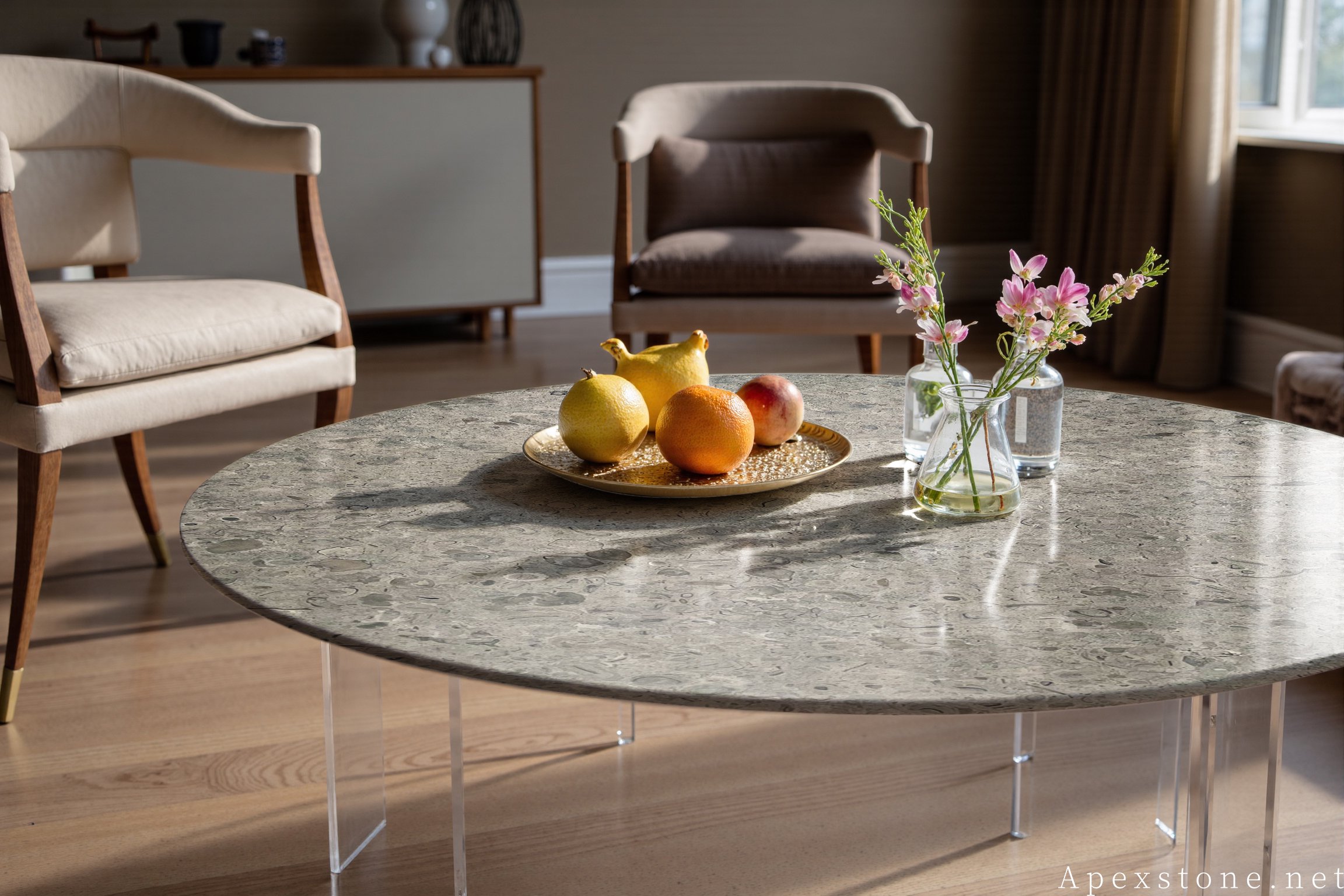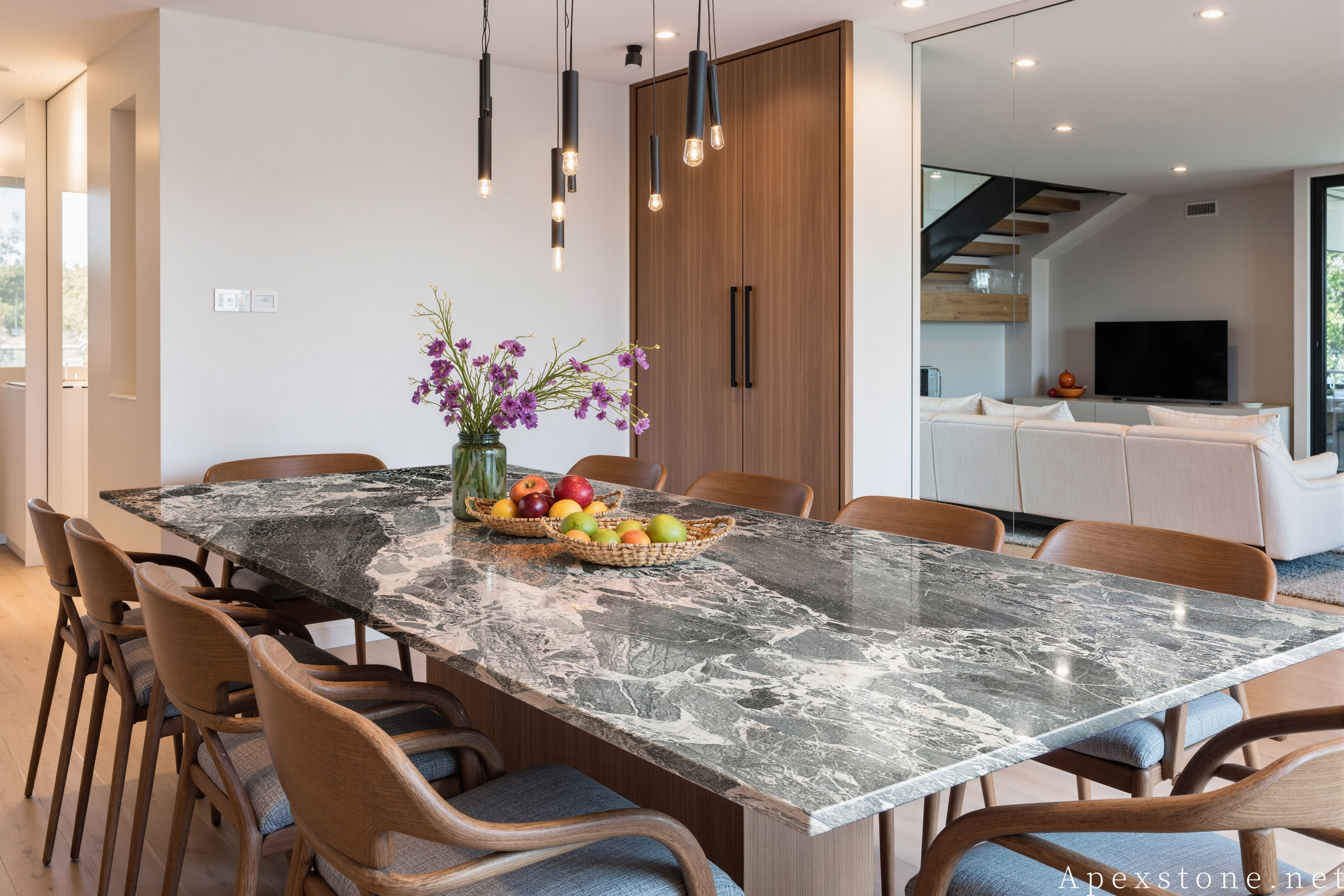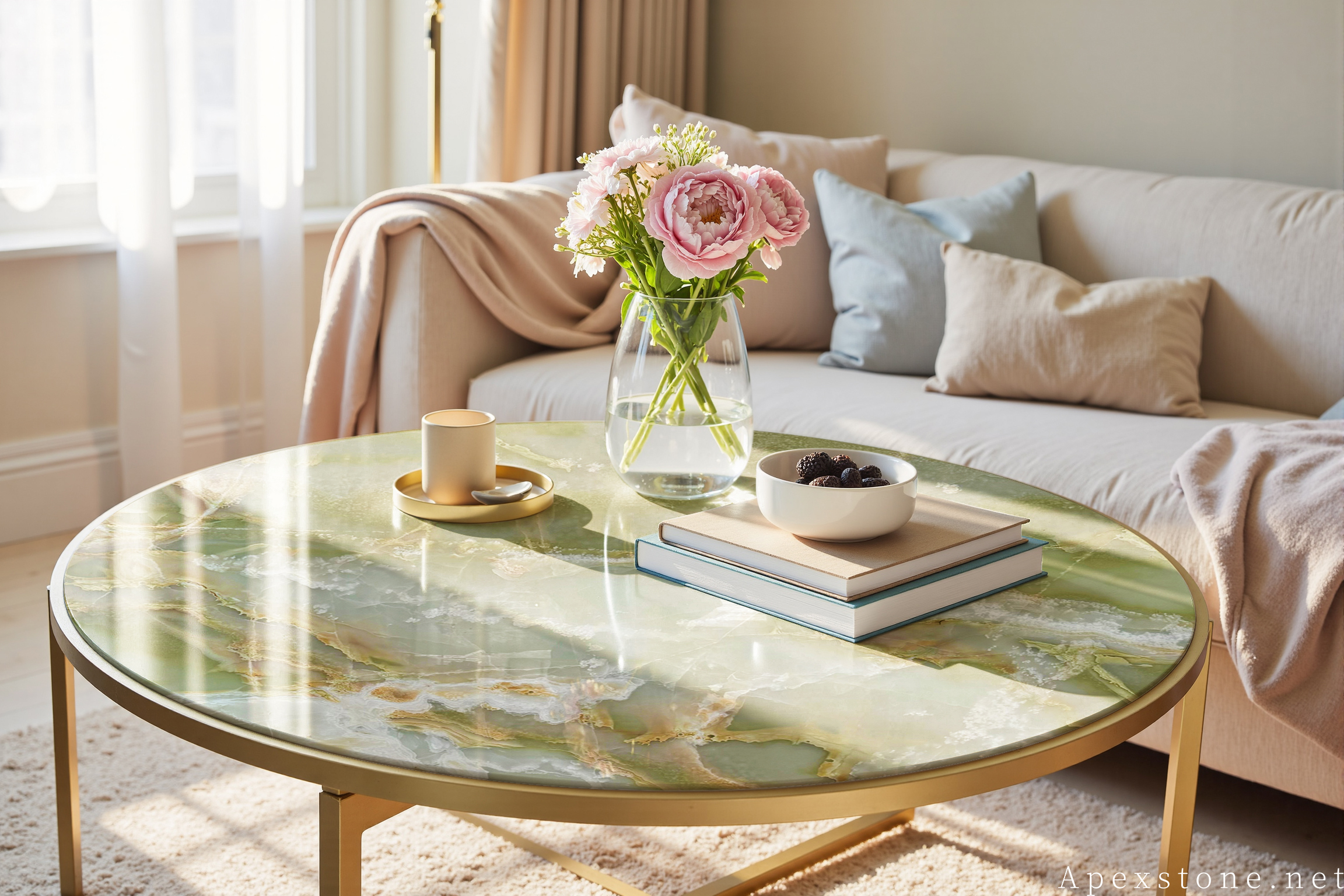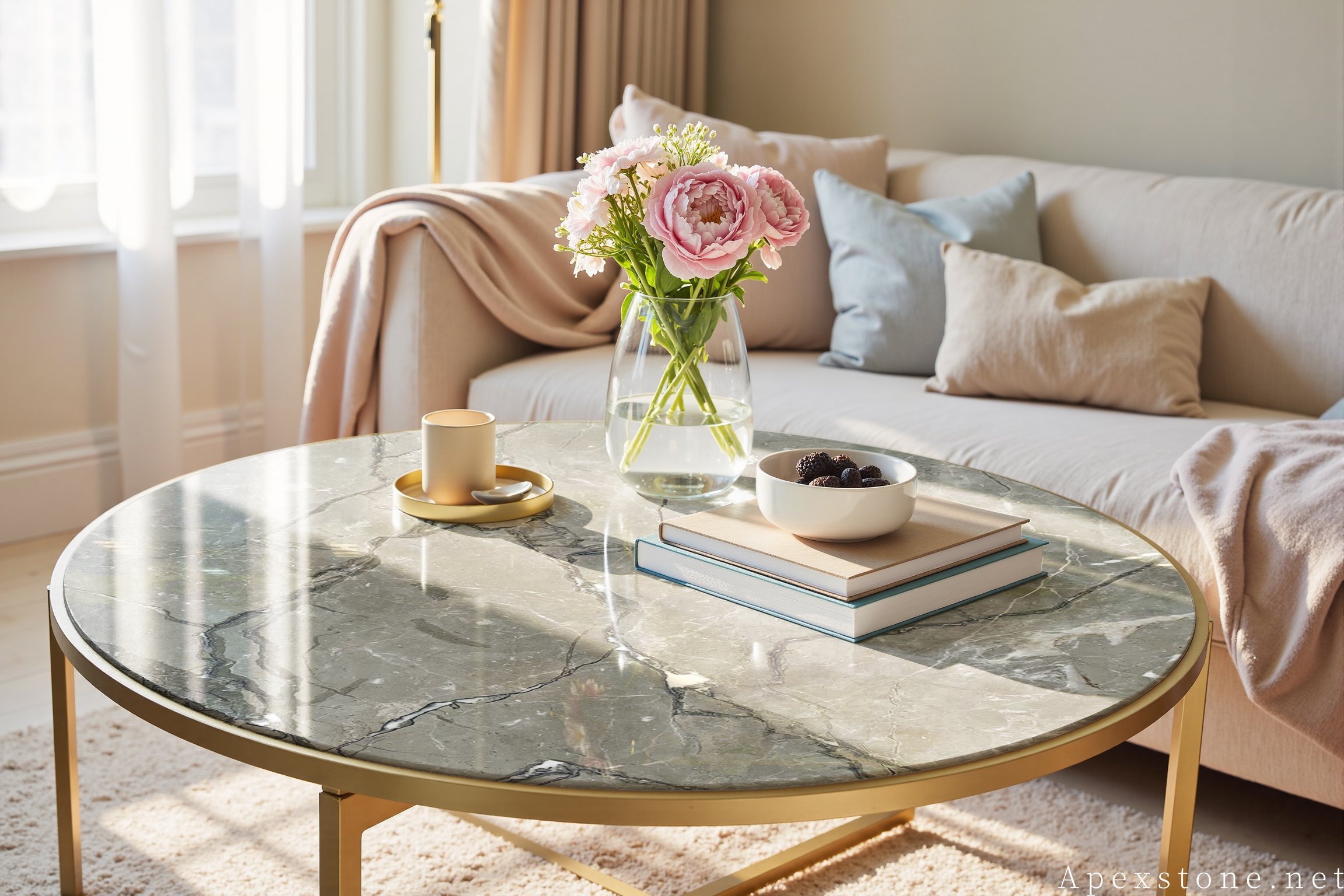
A practical buying guide to stone dining tables: match top size to seating, choose a material that suits your use (calcite marble etches, quartzite doesn't), and lock in slab approval before cutting. Plus why single-piece orders matter for showrooms and replacements.
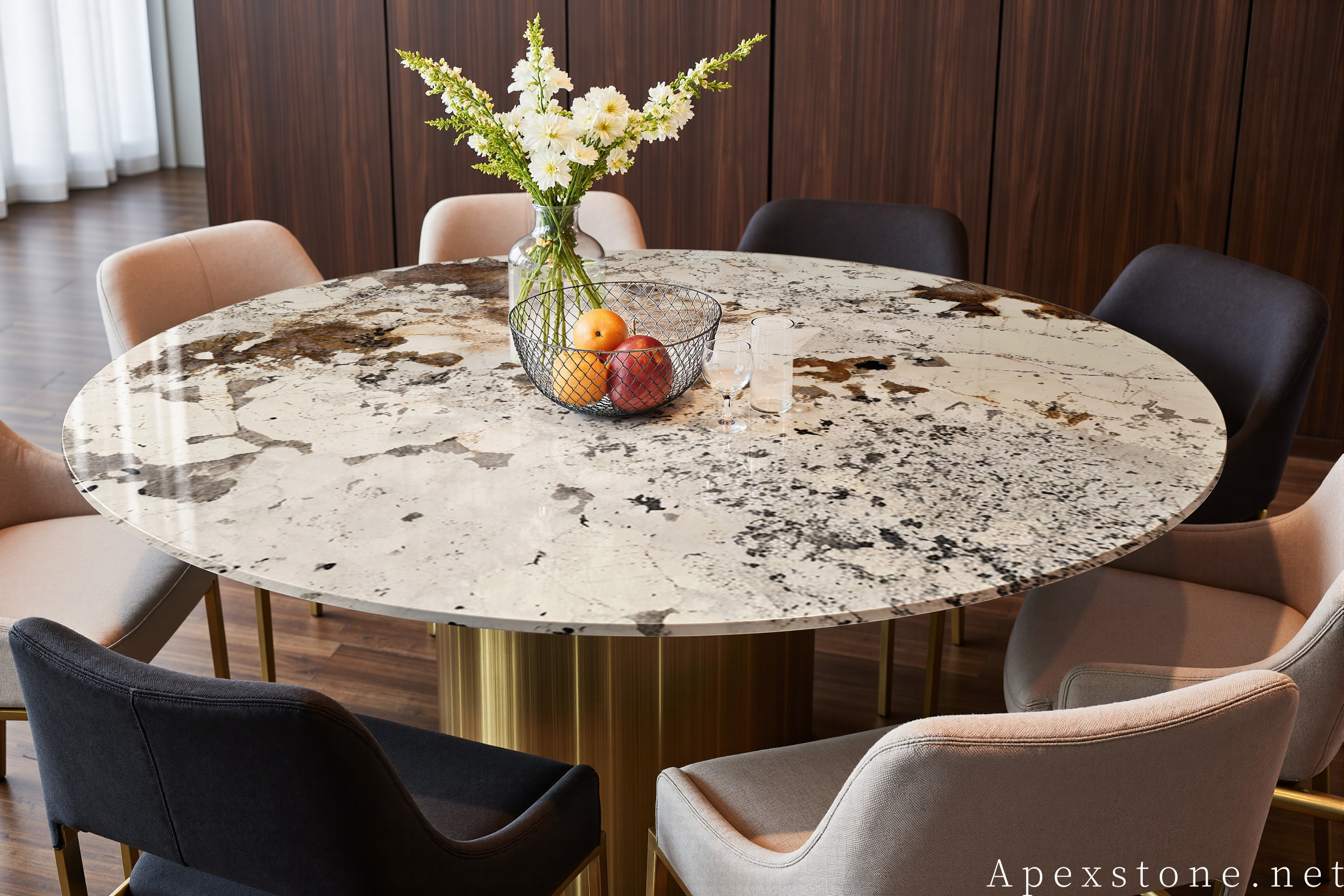
- Match top size to seating: round 36″, 48″, or 60″; square 36″ or 48″; rectangular 60″ or 72″.
- Calcite marble etches with acids; quartzite is far more acid-resistant and does not etch in the same way. Choose based on how the table will be used.
- Approve the actual slab image and placement drawing before the first cut.
- Single-piece orders keep showroom models consistent and make replacements straightforward, subject to slab availability.
Size by seating: the three-shape rule
When you are deciding where to buy marble dining table sets for a showroom, hotel, or residential project, the first decision is not the stone—it is the size that fits the room and the seating plan. A stone top is heavy and expensive to replace, so getting dimensions right up front saves rework.
Use the seating count to narrow the shape and dimension. The table below gives standard top sizes that work for common configurations.
| Shape | Available top sizes | Typical seating |
|---|---|---|
| Round | 36″ (91 cm), 48″ (122 cm), 60″ (152 cm) | 36″: 2–3; 48″: 4; 60″: 6 |
| Square | 36″ (91 cm), 48″ (122 cm) | 36″: 2–4; 48″: 4 |
| Rectangular | 60″ (152 cm), 72″ (183 cm) | 60″: 4–6; 72″: 6–8 |
Seating counts assume standard dining chairs with some elbow room; confirm chair dimensions and aisle clearance against your floor plan.
Round tops are space-efficient in tight rooms and work well with pedestal bases. Square tops suit corner banquettes or small meeting tables. Rectangular tops fit formal dining rooms and conference-style seating. For a stone top, thickness also matters: 2 cm (3/4 in) is standard, often built up to a mitred edge of 1-1/2 in or 2 in for a substantial look. Bases can be pedestal, brass/gold, solid wood, or iron—choose one that matches the top size and the room’s style.
Material trade-off: calcite marble vs quartzite
The second decision is material. Both are natural stone, but they behave differently in daily use. Calcite marble—the classic white or cream stone with veining—is softer and reacts to acids. A spilled glass of wine, lemon juice, or vinegar can leave an etch mark on a polished calcite surface. Quartzite is harder and far more acid-resistant; it does not etch in the same way, which makes it a practical choice for dining tables that see regular use without coasters.
That difference drives the buying decision. In a low-traffic formal dining room, calcite marble’s look may be worth the care. In a hotel breakfast room, a busy family home, or a showroom that must stay presentable, quartzite reduces maintenance risk.
Pandora quartzite, for example, has a cream ground with large brown floral movement and is quarried in Brazil. It is available in the standard round, square, and rectangular sizes above, so the size decision and material decision can be made together. If you want the look of travertine for console or side tables, that is a separate stone with its own characteristics—keep the material choice consistent with how each piece will be used.
Pattern approval: the step that prevents surprises
Natural stone varies from slab to slab. The veining or floral pattern on the slab you approve is the pattern you will receive—if you approve it correctly. The discipline is simple: approve the actual slab image and the placement drawing before the first cut.
Here is what that means in practice:
- Slab image approval: You see a photograph of the actual slab, not a generic sample. Mark any areas you want centered or avoided.
- Placement drawing: The fabricator shows where the table top will be cut from the slab, including the edge profile and any vein matching across seams if applicable.
- Written sign-off: Both documents are approved in writing before cutting begins. Once the saw starts, the pattern is fixed.
This step is especially important for quartzite with dramatic movement like Pandora. A large brown floral pattern can look very different depending on where the cut falls. Approving the actual slab image and placement drawing is the only way to control the outcome.
Why single-piece ordering matters
Stone dining tables are often bought in sets, but single-piece orders have real value. For showrooms, a single-piece order lets you display one table that represents the line without committing to multiple units. If a table is damaged or a client wants an exact replacement, a single-piece order from the same material and size keeps consistency—provided the slab or lot is still available. Suppliers that accept single-piece orders make it easier to maintain a display or replace a piece without over-ordering.
If you need matching console or side tables, ask whether they can be cut from the same slabs as the dining top. This is often possible on request and keeps the grain and color consistent across pieces in the same room.
Pandora quartzite dining tables
Pandora quartzite tops are available in round 36, 48, and 60 inch; rectangular 60 and 72 inch; and square 36 and 48 inch. Standard top thickness is 2 cm (3/4 in) with mitred build-up to a 1-1/2 in or 2 in edge. Bases include pedestal, brass/gold, solid wood, and iron. Pattern placement is approved on actual-slab images before the first cut. Single-piece orders are accepted, and matching console and side tables can be cut from the same slabs on request.
To enquire, use the product pages above to send your size, shape and base preference. You will receive actual-slab images and a placement drawing for approval, and the order is confirmed in writing before the first cut.
For a closer look at the Pandora range, see the Pandora quartzite dining tables page. If you are considering travertine for coordinating pieces, the Travertine Romano stone tables page shows the available dining, coffee, console, and side tables.
FAQ
Can I order a single table for a showroom display?
Yes, single-piece orders are accepted. This is common for showrooms that need one representative piece.
What thickness are the tops?
Standard is 2 cm (3/4 in), with mitred build-up to a 1-1/2 in or 2 in edge.
How do I approve the pattern?
You approve the actual slab image and the placement drawing before cutting. Both are provided for your sign-off.
Can I get matching side tables?
Matching console and side tables can be cut from the same slabs on request, subject to slab availability.
When you are researching where to buy marble dining table options, keep these three decisions in order: size by seating, material by use, and pattern approval by actual slab. That sequence reduces the risk of a costly mistake and gives you a table that fits both the room and the way it will be used.