Two replacement jobs that sound identical can quote very differently. As a manufacturer that supplies replacement coping packages, we explain the seven things that actually move the number — material family, profile fabrication, thickness, run length and corners, removal and disposal, matching aged or discontinued stone, and freight — plus what to send us for an accurate quote.
Two pool owners ask the same question — what will replacing pool coping cost? — and describe what sounds like the same job. One gets a straightforward package quote; the other comes back with a list of questions and a higher figure. The difference is rarely the stone alone.
We are a stone manufacturer and exporter. We cut and ship replacement coping packages; we do not remove old coping and we do not install. That means we see the quote evolve from the inside: the section drawing, the quantity, the crates, the second shipment when something was left out. Below is what actually moves the number, in the order it tends to move it.
Key takeaways
- Material family sets the baseline, but profile fabrication and run length usually swing the quote more.
- Standard bullnose versus a custom or rebated section is a tooling decision, not a cosmetic one.
- Partial replacement only wins when the new stone can be blended into the old edge; otherwise full re-coping often lands better once removal and freight are counted.
- Minimum order quantity and lead time are quoted per project against your drawings and quantity — they are not a single published figure — and samples are approved before production.
The seven drivers of a replacement quote
1. Material family
The four families we quote behave differently, and the quote reflects that.
| Family | What we quote | Where it fits |
|---|---|---|
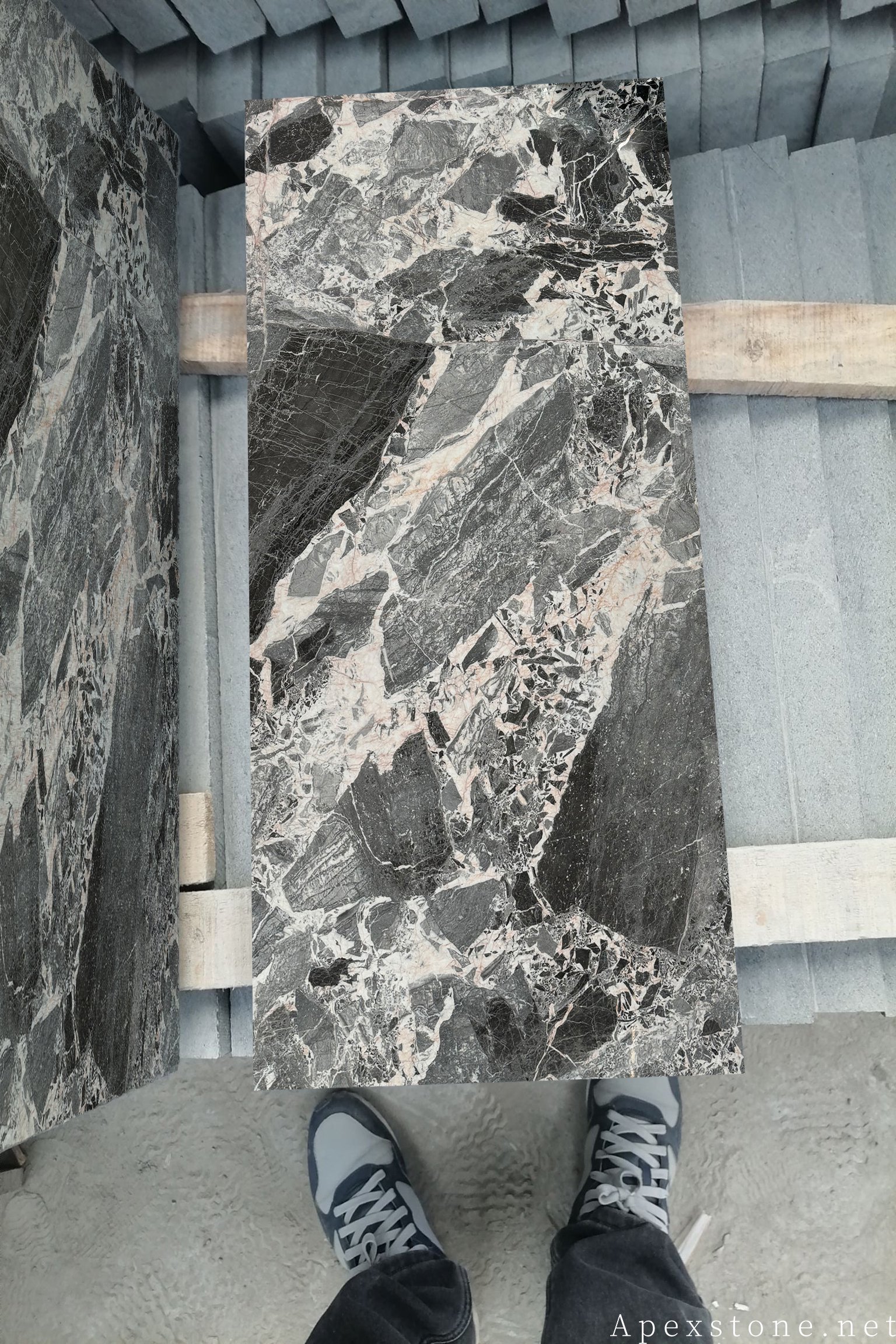
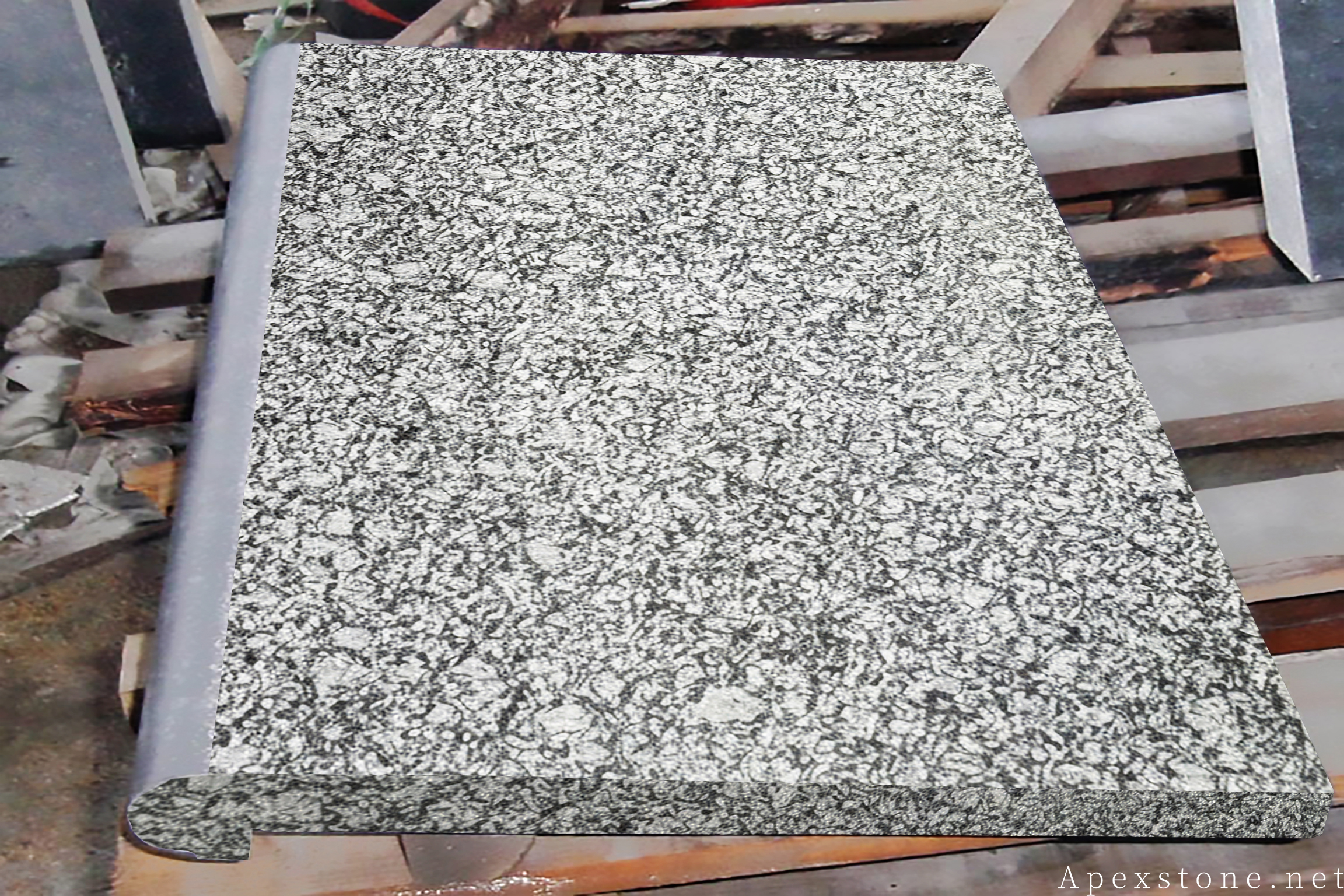
| Granite | Highest hardness and lowest absorption of the four; Sea Wave, for example, sits below 0.5% absorption, which is the most measurable anchor in the table | Exposed edges, heavy traffic, freezing wet lines |
| Travertine | 30 mm (1-1/4 inch) coping, unfilled brushed or tumbled, cool underfoot | Barefoot decks and warm climates |
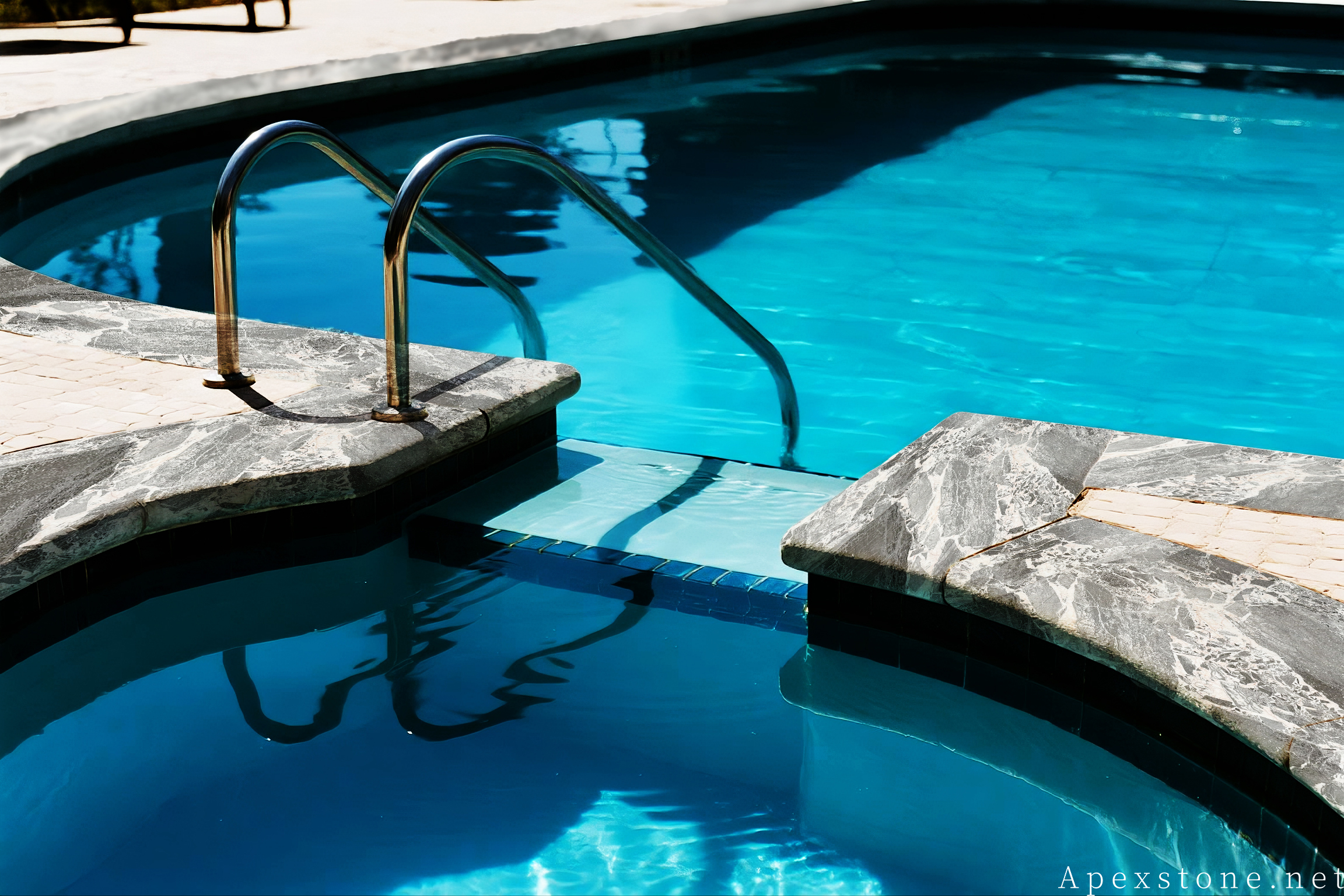
| Marble | Honed, flamed or brushed finishes; sealing lowers surface absorption and reduces freeze-thaw risk (Chanel Grey, for example) | Formal pools where a uniform surface matters |
| Limestone | Softer and higher absorption than granite — check density before specifying | Traditional edges with a matte look |
Granite and travertine ship often because the material matches what owners are trying to reproduce. Limestone requests need a density conversation first: a soft, absorbent stone on a wet pool edge is a specification question, not a price question.
2. Profile and fabrication
This is where quotes for the same stone diverge most. A standard bullnose runs on existing tooling. A rebated edge, a bullnose with a drip groove, a bullnose with a channel under the lip — each of those is cut to a section drawing, and the first run carries the cost of setting up the profile. Once the tooling is set, repeat pieces on the same profile are cheaper per metre than the first ones. Samples of custom finishes or edge profiles are provided free of charge with bulk orders, so the profile can be approved on real stone before tooling is set.
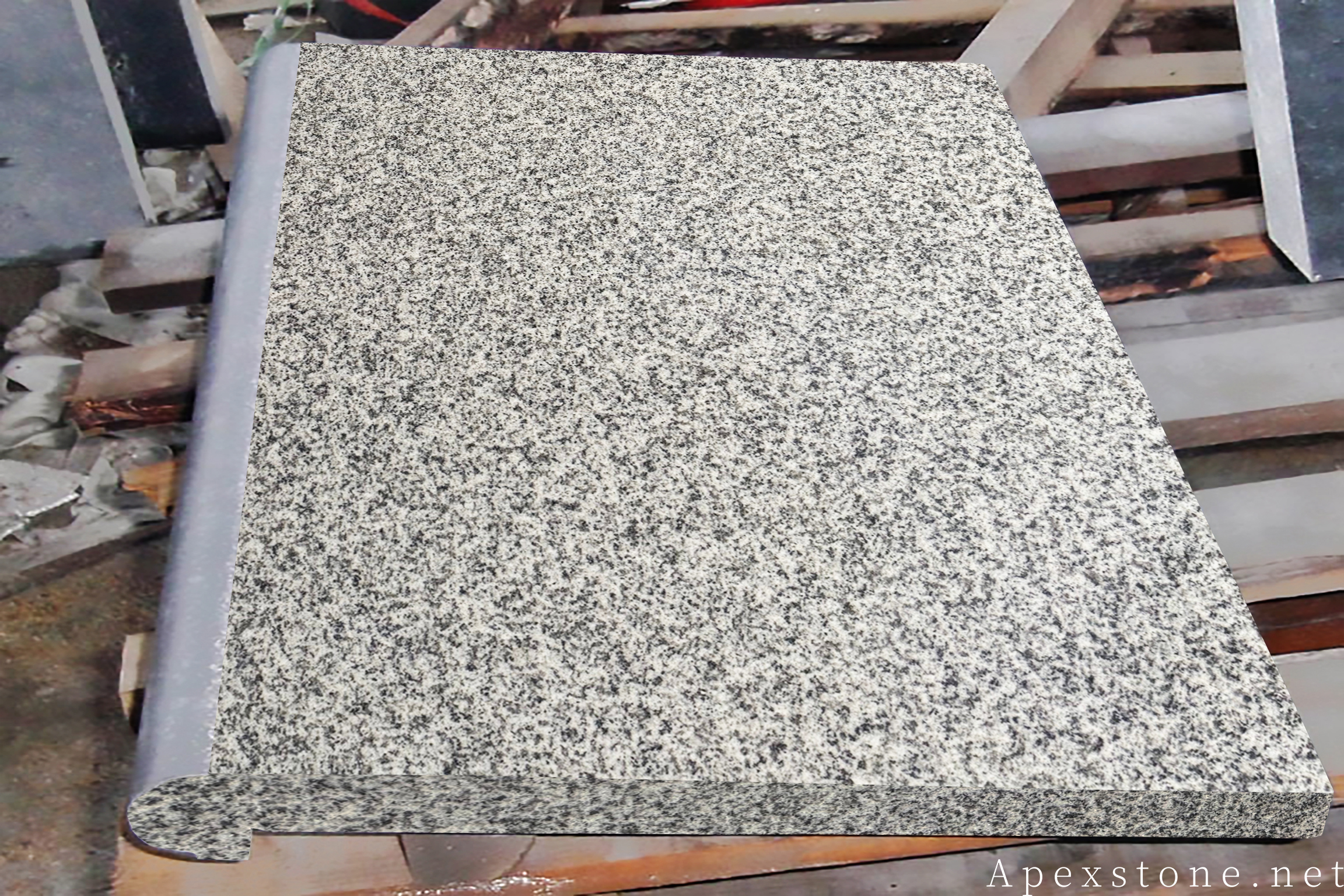
If you are replacing an edge that was profiled twenty years ago, we need the section, not a photo from standing height. A cross-section sketch with dimensions — thickness, nose radius, return depth — is enough to quote. Profiles are fabricated to your section drawing; the same page shows what a finished coping profile looks like in practice: profiles fabricated to your section drawing.
3. Thickness and edge detail
Standard coping sits around 30 mm (1-1/4 inch). Where the coping spans a bond beam that needs more cover, or where the existing edge has a deep return, we fabricate coping up to 2 inch thick. Thicker sections consume more block per linear metre and take longer on the saw, so the quote tracks the thickness you actually need — not the thickness of whatever was there before, if the bond beam has changed.
4. Run length, corners and curves
Length is the obvious driver. The less obvious one is geometry. Straight runs cut fast. Every 90° corner, every radius, every step return is a separate piece with its own cut and its own position in the crate. A rectangular pool with four corners quotes very differently from a kidney shape with continuous curve — same stone, same thickness, different fabrication time and different packing. Count your corners and note any curves on the sketch before you request a quote; it is the single fastest way to avoid a revised figure later.
5. Removal and disposal
We do not demolish, so this part of the cost sits with your contractor — but it changes how the replacement package should be specified. Thin-bed coping set on adhesive comes away faster than coping bedded in thick mortar, which is closer to demolition and often takes the top of the bond beam with it. Access matters too: a pool surrounded by deck, planting or a fence line means material leaves the site slowly, and the contractor prices that time.
One practical knock-on: if removal reveals a bond beam that is not straight or not at a consistent height, the replacement coping needs enough thickness and a profile that can absorb the variation. Telling us the removal method up front helps us propose a section that tolerates the substrate you will actually find.
6. Matching aged or discontinued stone
This is the hardest driver to price honestly, because it depends on what the existing edge has done in the sun and the water. A travertine edge that has been down for years has shifted in tone; new travertine from the same quarry will not match it out of the crate. Options, in rough order of cost: blend new pieces into the aged run and accept a visible transition, choose a stone family close enough in tone that the difference reads as patina, or re-cope the whole edge so the surface is uniform.
For a discontinued stone, the question becomes whether we can match by sample — send a piece, not a photograph. Colour in photos drifts with light and phone camera processing. Our travertine coping replacement packages are quoted against an approved sample for exactly this reason.
7. Freight and phasing
Coping is heavy and bulky for its value, so freight is a real line, not a rounding error. Two things push it up: shipping below a sensible container fill, and shipping twice. The second shipment is the expensive one — a handful of pieces forgotten from the original count, a corner that was measured wrong, a run that needed two more metres after the contractor started. Those pieces still carry a full freight cycle and a full set of export documents.
Sealer and fixings are quoted as separate line items rather than folded into a per-metre figure, so you can see what you are buying. Minimum order quantity is set per project against the drawings and the total quantity in the package rather than by a single blanket figure, and small patch jobs that do not support an export order are usually better handled through a local fabricator.
How a package quote is actually built: one worked example
It is easier to see why two quotes differ once you look at how the lines are assembled. Take a plain replacement job: 12 m of coping around a rectangle, four 90° corners, a straight eased edge profile, 30 mm thick, one stone family.
- By the linear metre: the straight runs. Our section and stone family are fixed, so the per-metre figure is set by the section, the finish and the total metres on the order.
- By the piece: the four corners. Each 90° angle is cut and finished separately rather than snapped off a straight run, and each one has a fixed gauge in the crate, so they are quoted as units, not as extra metres.
- Tooling and first run: if the eased section is a standard profile on existing tooling, there is nothing new to set up. A custom radius or a rebated return moves this into a setup cost that is charged once per order, not per piece.
- By the square metre: the overall order volume, which is what usually sets the freight band and what the minimum order quantity is measured against.
- Separately: sealer, fixings, crates and freight. None of these are folded into the metre rate, because they change with the shipment rather than with the length of the edge.
Change one input and the shape of the quote moves: 12 m becomes 18 m and the per-metre line and the freight band both rise; a kidney shape replaces the four corners and the per-piece lines vanish into curved fabrication time; 50 mm instead of 30 mm adds block per metre across the whole run. That is why we do not publish a single rate for “pool coping replacement” — the arithmetic is done per drawing. Send the drawings and the quantity, and each of those lines becomes a number you can check.
When partial replacement works and when re-coping the whole edge is cheaper in the end
Partial replacement makes sense when the damaged section is small, the existing stone is still available or closely matchable, and the joint lines can be hidden at a natural break — a corner, a step, a skimmer lid.
It stops making sense when three or more of these are true:
- The existing stone is discontinued and no close match can be approved by sample.
- The aged edge has drifted far enough in tone that new pieces read as patches from the deck.
- Removal will disturb neighbouring stones, so the “small” repair keeps growing.
- The job is already close to the package size that makes an export order sensible, so the freight is being paid anyway.
- A second freight cycle for forgotten pieces is likely.
In those cases, re-coping the whole edge usually quotes better once removal, blending risk and freight are counted together. It also removes the matching problem entirely, which is the part owners underestimate.
If you are still deciding on profile and sizing, the overview of stone coping for pools covers the standard sections and how they are specified. If the edge is travertine, specifying travertine coping tiles for pool edges sets thickness, profile, finish and calibration as separate line items, which is what makes a per-metre figure checkable. Where a standard paver is being considered as the edge unit instead of a purpose-made coping stone, coping pavers versus pool coping stones explains what that changes in the cost base.
What to send us for an accurate quote
A quote is only as good as the input. Four things get you a firm figure instead of a range:
- Edge run length. Total linear metres, measured along the pool edge. Note separately any steps and spa edges.
- Profile photo or section. A cross-section sketch with dimensions is best. A close photo of the existing edge is a useful backup.
- Stone family or a sample. Tell us granite, travertine, marble or limestone, or send a piece of the existing coping for matching.
- Quantity. Square metres for the package, plus a count of corners and any curved pieces.
With those four, we can confirm the section, propose a stone, and give you a package quote. Samples are approved before production, and lead time is quoted per project from drawing approval. Full technical datasheets and third-party testing reports are available on request if your regulatory approval needs documented performance data.
FAQ
- How much does pool coping cost to replace?
- It depends on the drivers above — material family, whether the profile is standard or custom, thickness, run length and geometry, removal conditions, how well the new stone matches the old, and freight. We do not publish flat rates because two jobs that sound identical can differ on three or four of those points. Send the four-item checklist above and we will quote your actual package.
- Can you replace just a few coping stones?
- Yes, with caveats. A small patch is only worth it if the new stone can be blended into the aged edge, or if the existing stone is still in production and matches by approved sample. For a patch so small that it does not support an export order, a local fabricator is usually the more economical route.
- How long does ordering replacement coping take?
- Lead time is quoted per project from drawing approval, and the figure depends on the quantity, the profile and the finish in your package. That clock starts once the section is confirmed and the sample is approved, not when the enquiry arrives — so the profile drawing is the critical path. Removal and installation timing sit with your contractor and run separately from our production schedule.
Apexstone quotes and supplies replacement stone coping packages. We do not perform demolition or installation.