There is no single best vanity top material—the right choice depends on how you use the bathroom, how much upkeep you accept, and whether you prioritize natural veining or low maintenance. This guide walks through five natural stones and explains where engineered and cultured marble fit in, so you can match a material to your conditions instead of chasing a universal winner.
Buyer's guide
If you search for the best bathroom vanity top material, you will find lists that crown one winner and dismiss the rest. That approach rarely survives contact with a real bathroom. A family bathroom used twice a day by children, a guest powder room, and a master suite with a freestanding tub create different conditions. The honest answer is that the best material is the one whose trade-offs you can live with in your specific room.
This guide covers the five natural stones we actually supply, explains where engineered and cultured marble fit in, and ends with a choose-by-condition summary so you can match a material to how you live rather than to a ranking.
What actually decides the best material for your vanity
Four conditions separate one material from another in daily use: how often the top gets wet, how likely a spill is to sit unattended, how much visible veining you want, and how much maintenance you accept. Before comparing stones, write down your answers.
- Moisture exposure. A guest bath used occasionally is different from a family bath where the counter is wet every morning.
- Spill habits. Toothpaste, mouthwash, hair dye, perfume, and descalers are acidic or staining. If they sit, they can affect some stones and not others.
- Visual priority. Natural veining is one-of-a-kind; manufactured surfaces are consistent.
- Maintenance tolerance. Sealing cycles and prompt wiping are small tasks, but they are tasks.
Vanity width also shapes what is practical. Standard widths run from 25.5 to 72 inches, with 31, 37, and 60 inches common; double-sink layouts need more room. If you are still sizing the cabinet, our vanity top size guide covers the common dimensions.
The five natural stones, with honest limits
Calacatta White marble (Italy)
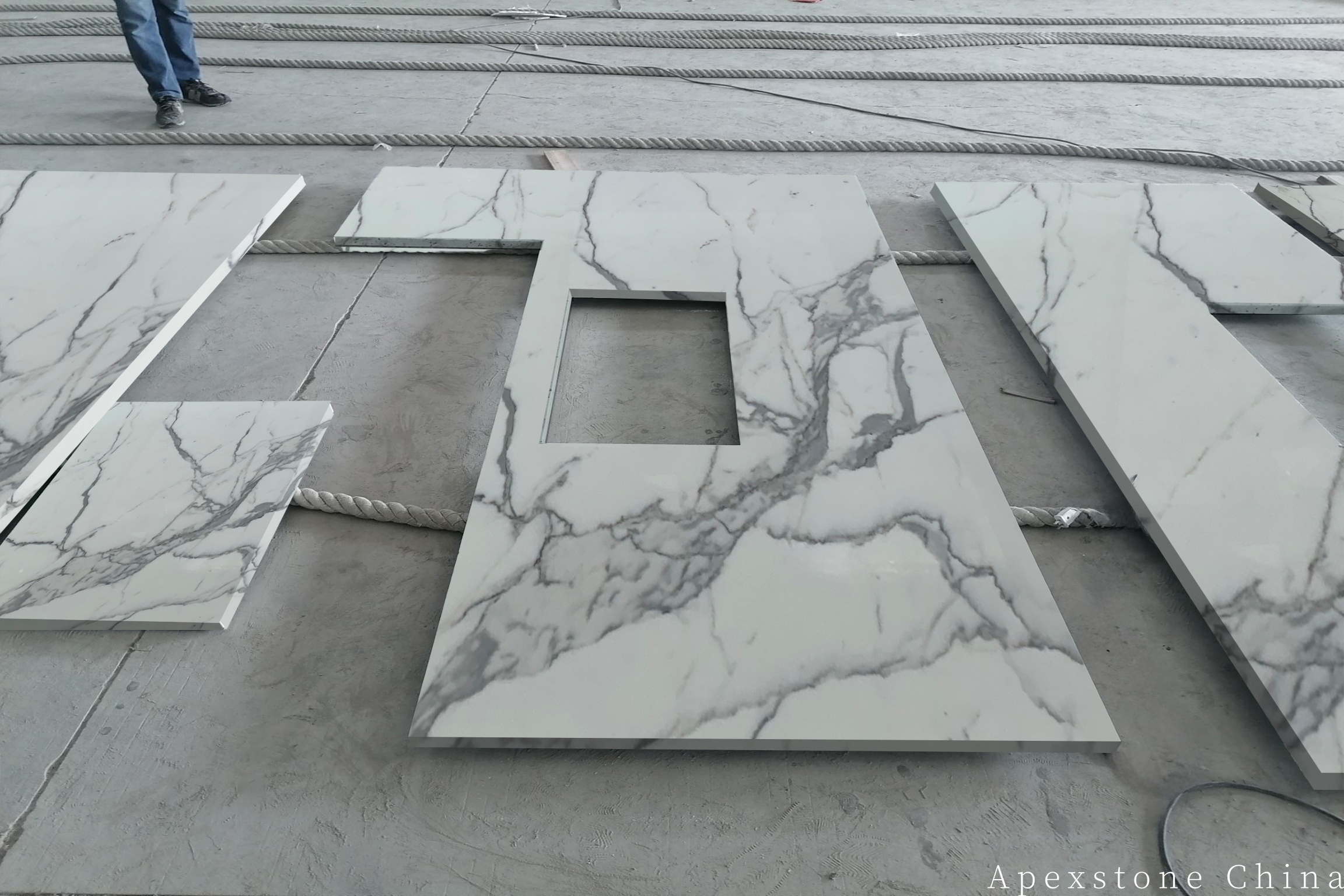
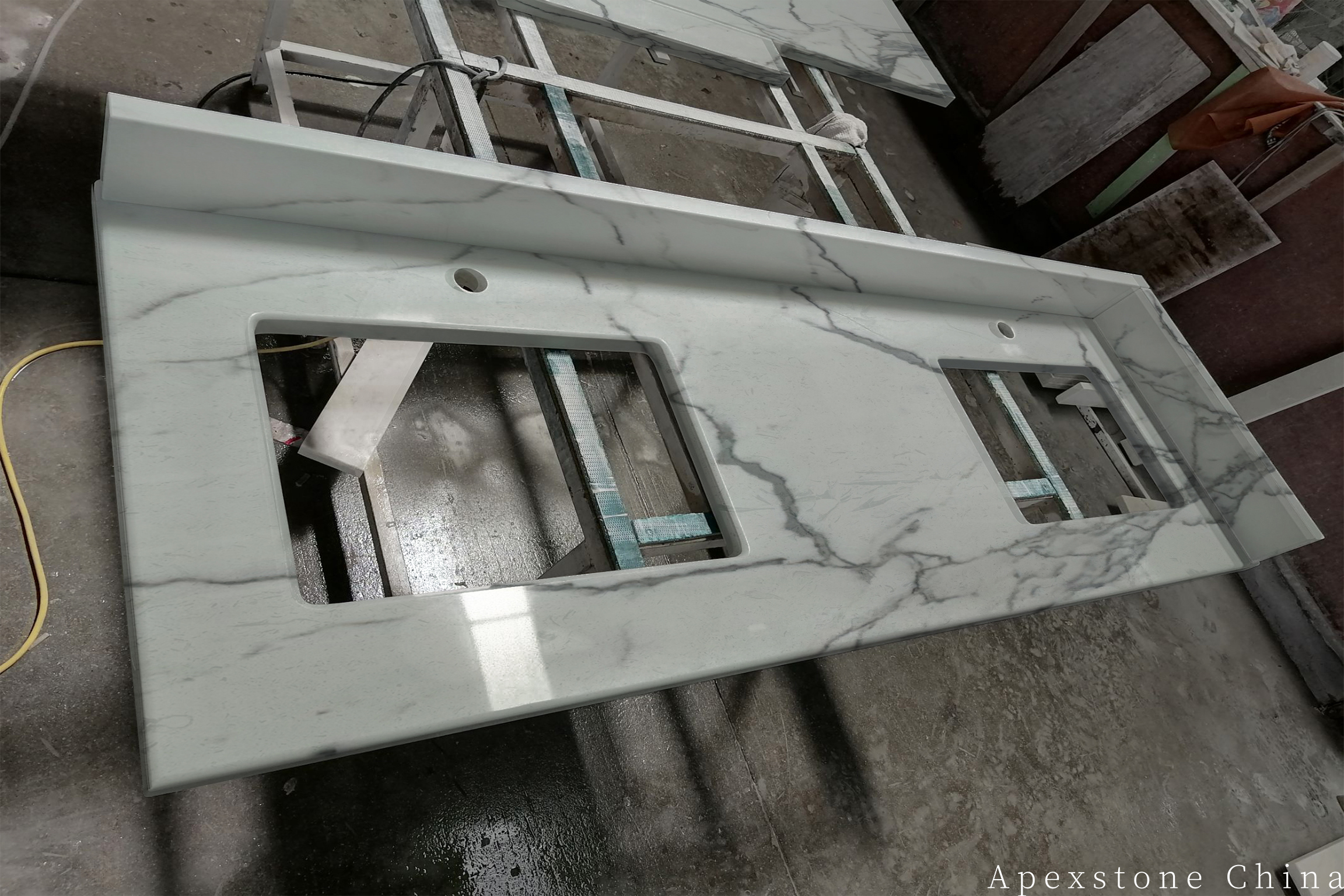
A snow-white ground with light-grey random veining. Calacatta is a calcite marble, which means it is chemically not inert. Acidic products such as whitening toothpaste, hair products, perfume, and descalers can dull a polished patch if left to sit. The advantage is repairability: an etched marble surface can be re-honed or re-polished on site, a path resin-based surfaces do not offer. A honed finish hides daily marks better; a polished finish gives deeper contrast. Reference thickness is 20 mm (3/4 in) or 30 mm (1-1/4 in). See the Calacatta White marble vanity tops for the material range.
Pandora quartzite (Brazil)
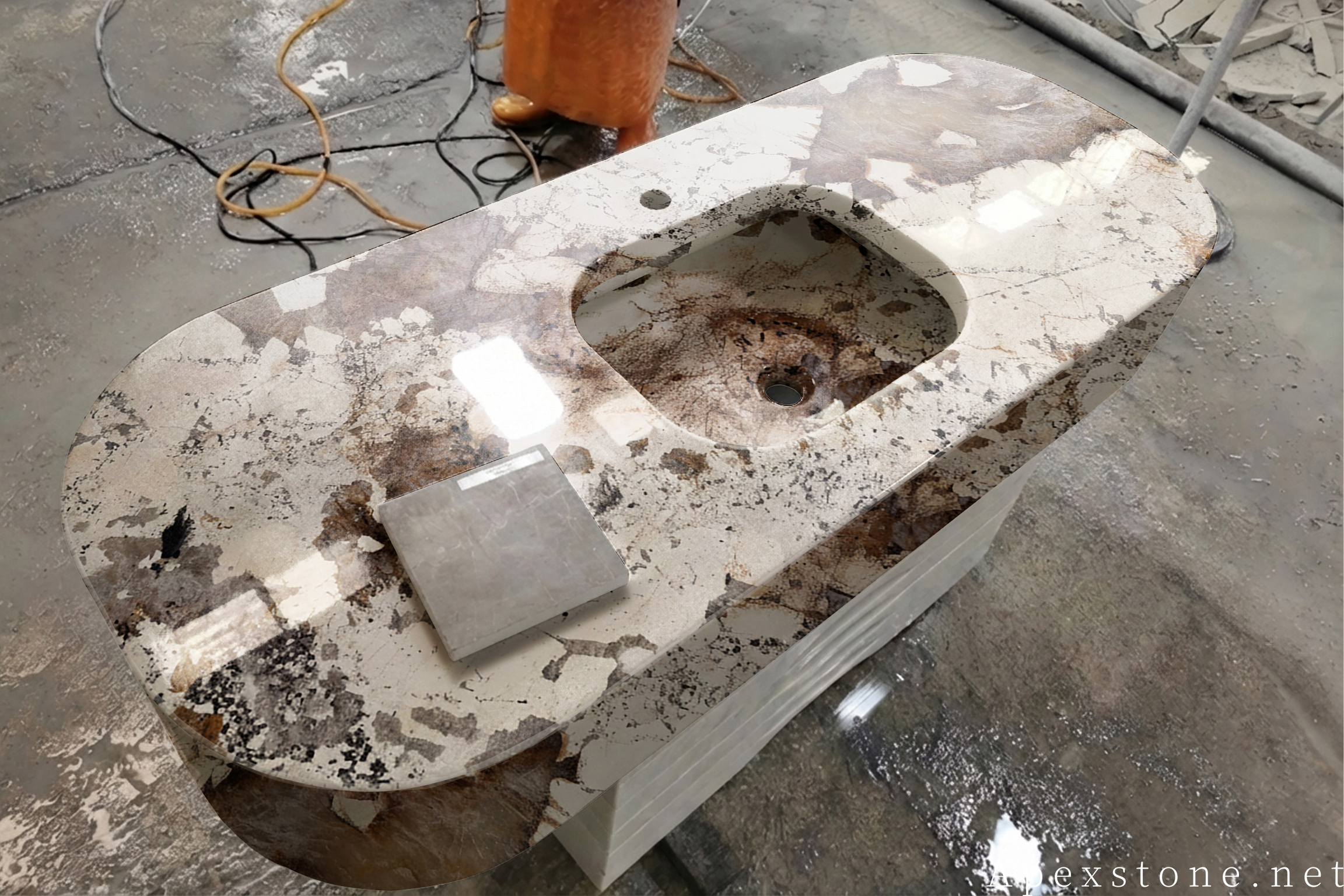
A cream ground with brown floral movement and natural crystal sparkle. Unlike calcite marble, quartzite resists etching far better: everyday splashes like mouthwash are much less of a worry, though strong acids left to sit can still affect the surface. Daily care is a pH-neutral cleaner and prompt wiping of hair dye or strong cosmetics, with sealing as a cycle. Available in polished, honed, or leathered finishes at a standard 2 cm (3/4 in) thickness. The Pandora quartzite vanity tops page shows the palette.
Travertine Romano (Italy)
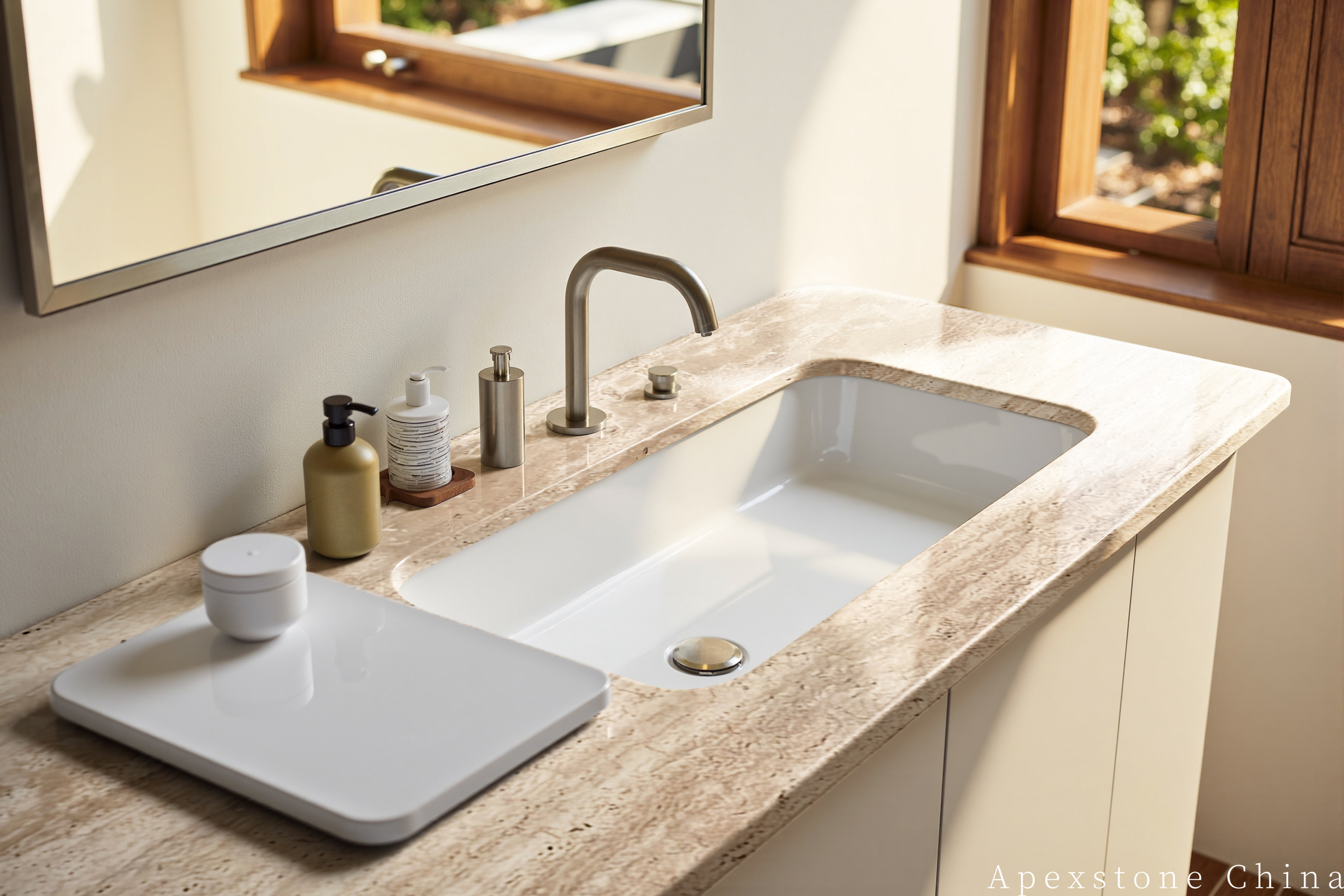
A warm beige with natural voids and a classical linear grain. For bathrooms, the filled honed finish is the standard for wet areas: voids are filled with color-matched epoxy, giving a smooth, slip-resistant surface. Sealing is required—a penetrating sealer before and after installation. Water absorption is 1–3% and Mohs hardness 4–5. The Travertine Romano vanity tops page describes the finish options.
Portuguese Grey limestone (Portugal)
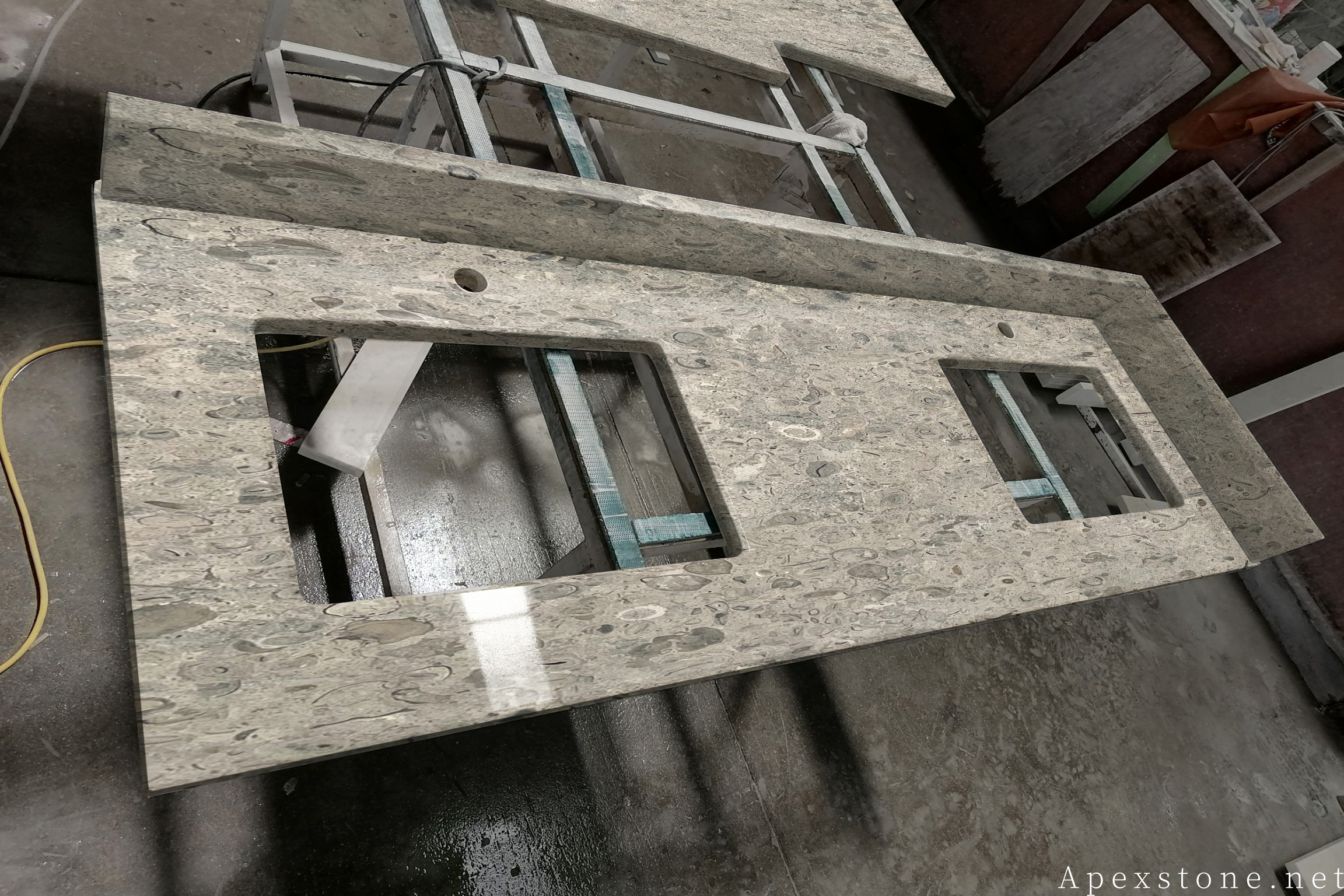
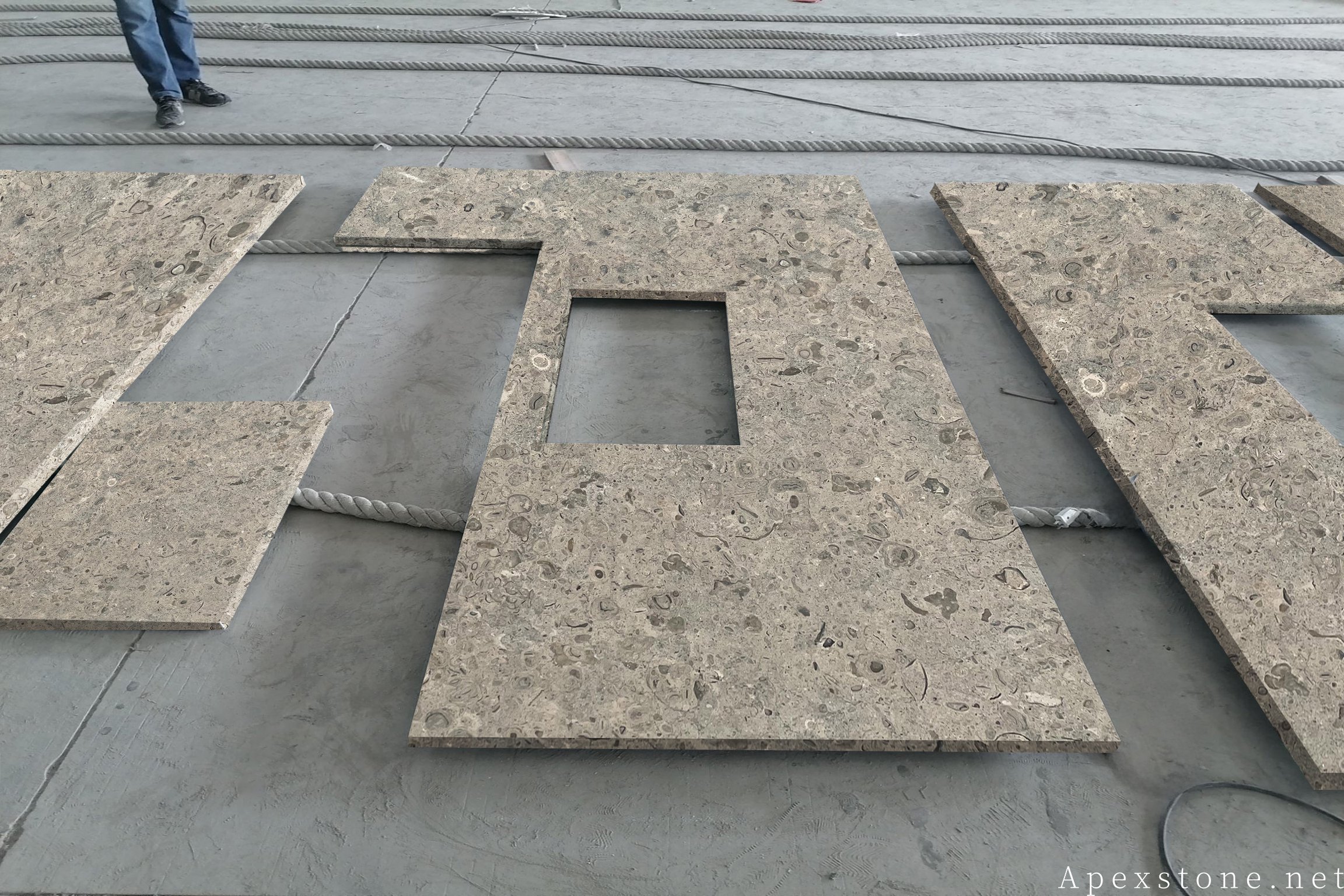
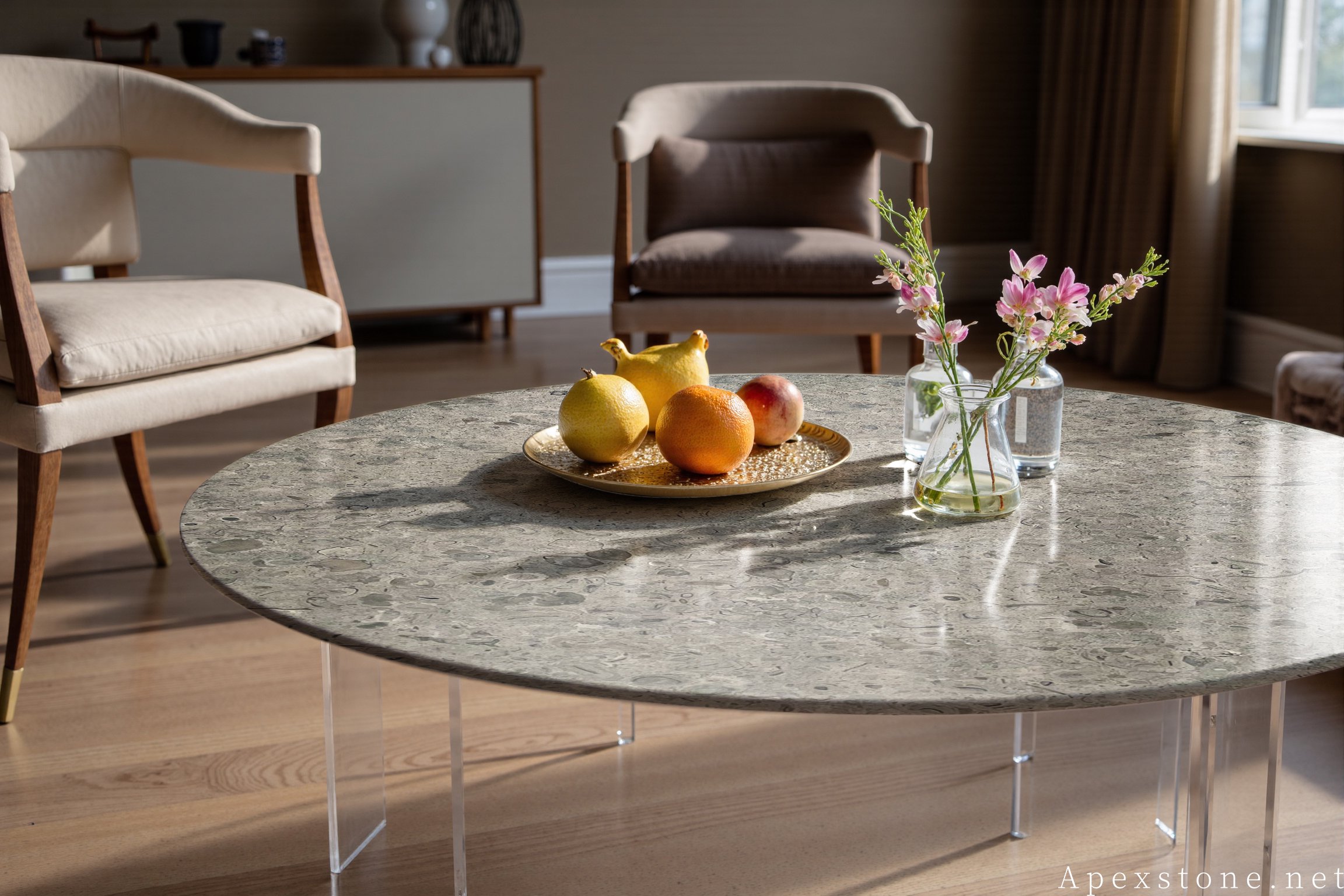
A warm grey base with visible fossil shell detail. A honed finish is recommended for wet-area projects to reduce slipperiness. Water absorption is ≤3% and Mohs hardness 3–4. It reads as authentic stone rather than an engineered imitation, which suits period or rustic bathrooms. See the Portuguese Grey limestone vanity tops.
Aqua Grey marble (China)
A blue-grey base with lighter fluid, water-like vein bands. A honed finish is recommended for wet areas, and it is available in honed, polished, or brushed finishes. It suits buyers who want a grey or toned look instead of white. The Aqua Grey marble vanity tops page shows the veining.
Natural stone comparison at a glance
| Material | Look | Acid sensitivity | Finish notes | Specs worth knowing |
|---|---|---|---|---|
| Calacatta White marble | Snow-white, grey random veining | Etches; repair by re-honing or re-polishing | Honed hides marks; polished for contrast | 20 mm (3/4 in) or 30 mm (1-1/4 in) |
| Pandora quartzite | Cream with brown floral, crystal sparkle | Very high etch resistance; better than calcite marble, not immune to strong acids | Polished, honed, or leathered | 2 cm (3/4 in) |
| Travertine Romano | Warm beige, linear grain, filled voids | Sealing required | Filled honed standard for wet areas | Water absorption 1–3%; Mohs 4–5 |
| Portuguese Grey limestone | Warm grey, fossil shell detail | Sealing recommended | Honed for wet areas | Water absorption ≤3%; Mohs 3–4 |
| Aqua Grey marble | Blue-grey, fluid vein bands | Etches like marble | Honed for wet areas; polished or brushed also | — |
Granite is also a familiar vanity material with strong stain and scratch resistance, but it is outside the range we supply here, so treat it as a comparison point when you shop elsewhere.
What is engineered marble? What is cultured marble?
Both terms describe manufactured surfaces, not quarried stone. Cultured marble is crushed marble dust bound in resin, cast in moulds, often with a gel-coat surface. Engineered marble is similar resin-bound crushed marble produced in slabs. They are cousins, and the differences between brands matter less than the category difference from natural stone.
The strengths are consistent look and lower cost. The trade-off is behavior: a scratched or etched resin surface generally cannot be re-honed the way natural marble can, and the material does not offer natural stone's one-of-a-kind veining. If you want a uniform white or cream top and accept that damage may mean replacement rather than repair, engineered or cultured marble can be a sensible choice. If repairability and natural movement matter more, choose stone.
Marble care and cleaning FAQ
- How do you clean a marble vanity top?
- Use a pH-neutral cleaner and a soft cloth. Wipe acidic spills—toothpaste, mouthwash, perfume, hair products, descalers—promptly rather than letting them sit. Avoid acidic or abrasive cleaners.
- Does marble need sealing?
- Yes, a penetrating sealer is part of normal care, applied before and after installation and renewed as a cycle. Our guide to marble sealing explains the limits honestly.
- What if marble etches?
- An etched patch can be re-honed or re-polished on site, which is a repair path resin-based surfaces do not offer.
- Is honed or polished better for a bathroom?
- Honed hides daily marks better and is often recommended for wet areas; polished gives deeper contrast. For travertine and limestone, honed is the standard wet-area finish.
Choose by condition
Use this summary to narrow the field before you fall for a color.
- Humid bathroom, frequent use: Honed travertine or limestone with a penetrating sealer, or honed marble. Honed finishes reduce slipperiness and hide marks.
- Low-maintenance priority: Pandora quartzite. It resists etching far better than calcite marble, and daily care is a pH-neutral cleaner and prompt wiping of hair dye or strong cosmetics.
- Natural veining priority: Calacatta White or Aqua Grey marble. Accept that acidic spills need prompt attention, and plan for occasional re-honing.
- Budget priority: Engineered or cultured marble offers a consistent look at lower cost, with the caveat that damage generally means replacement rather than repair. Among natural stones, get quotes on standard sizes — 31 or 37 in singles and 60 or 72 in doubles — and compare per-piece pricing with your fabricator.
Vanity tops are cut to approved drawings, so the final check is always a template or drawing review with your supplier before fabrication. A practical next step: shortlist two or three stones from this guide, open their product pages for sizes and finishes, then send your drawings for a quote.