There is no single best bathroom vanity top material. This comparison maps Calacatta White marble, filled honed Travertine Romano and quartzite onto the criteria that actually decide bathroom performance — wet-area behaviour, acid and cosmetic resistance, cutout precision, size availability and maintenance expectations — so buyers can choose by priority rather than by reputation.
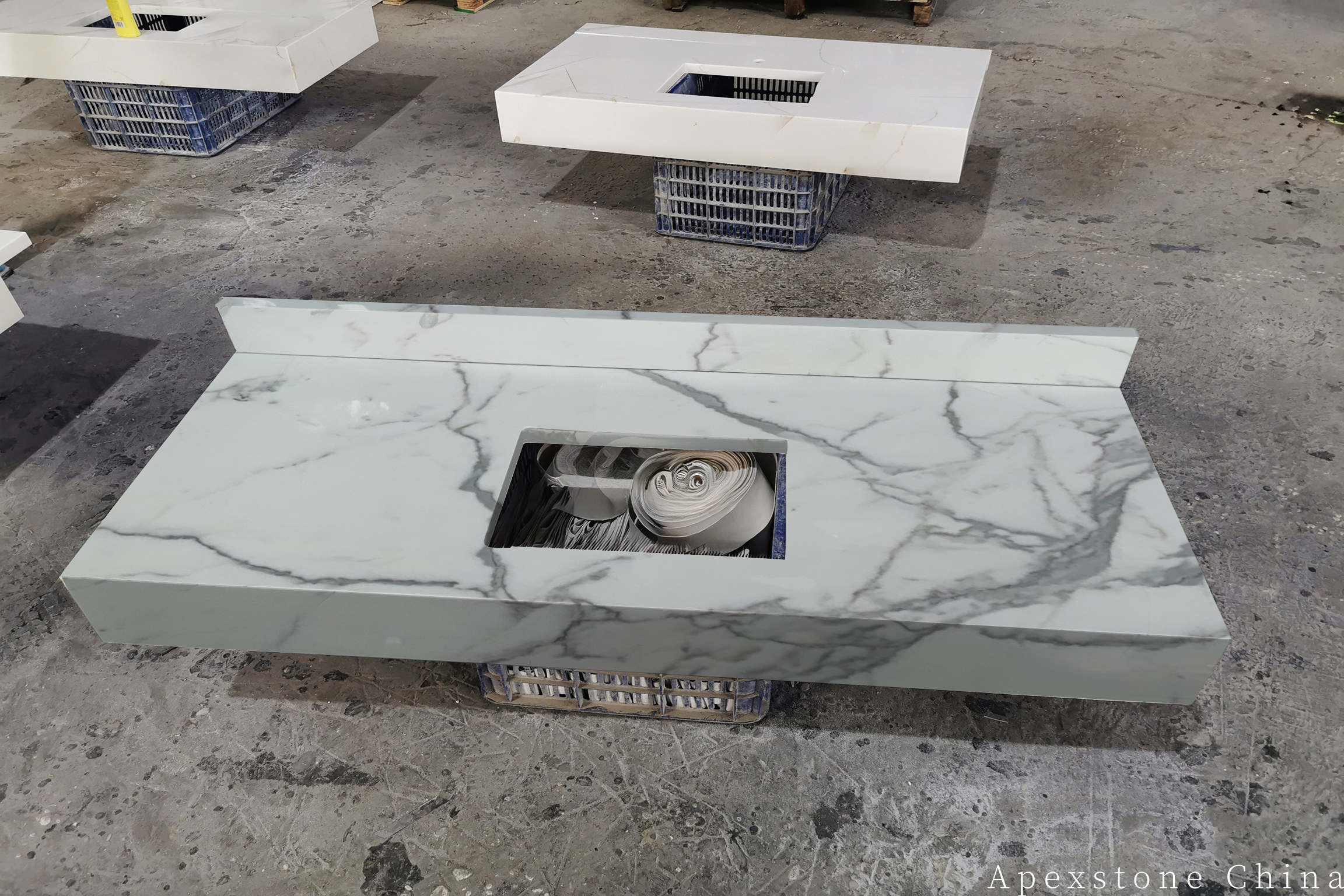
Material selection · Trade level
Buyers asking what is the best bathroom vanity top material usually expect one name in return. In practice there is no single answer, because the material that wins on appearance rarely wins on acid resistance, and the material that wins on size availability may not be the one you want next to a shower. A more useful approach is to fix the criteria first — wet-area behaviour, acid and cosmetic resistance, cutout precision, size availability, maintenance expectations — and then place each candidate against them.
This comparison covers three natural stone options that appear in the same enquiries: Calacatta White marble, filled honed Travertine Romano and quartzite. Each is mapped onto the same five criteria, so the choice follows the project's priorities rather than the stone's reputation.
In this comparison
- The five criteria that actually decide performance
- Calacatta White marble against the criteria
- Filled honed Travertine Romano against the criteria
- Quartzite against the criteria
- Side-by-side summary
- Choosing by priority
Key takeaways
- Every natural stone vanity top in this comparison needs a penetrating sealer before and after installation; sealing discipline matters more than the stone label.
- Calacatta White marble is a size-driven choice: 25.5, 31 and 37 inch single-bowl widths and 60 and 72 inch double-bowl widths, 21–22 inch depth, 20 or 30 mm thick.
- Travertine Romano is offered in a filled honed finish as the wet-area standard, from 600–1800 mm (24–71 inch) wide and 500–600 mm (20–24 inch) deep.
- Quartzite sits between the two on acid resistance but is not a sealer-free material.
- Cutout precision is a fabrication question, not a material question — CNC sink cutouts and faucet drilling are what you specify.
The five criteria that actually decide performance
Before comparing stones, it helps to separate what the material does from what the fabricator and the installer do. Three of the five criteria below are decided mainly at the factory and on site, which is why two projects using the same stone can perform very differently.
1. Wet-area behaviour
A vanity top is a wet surface. Water sits around the bowl, runs down the backsplash line and pools under soap dishes. For natural stone, the deciding factor is the sealer cycle: a penetrating sealer applied before installation and reapplied afterwards. Slip resistance is a separate consideration and depends on the surface finish — a honed surface behaves differently from a polished one, and this is worth stating explicitly in the specification rather than assuming.
2. Acid and cosmetic resistance
Bathroom counters meet toothpaste, hair dye, perfume, citrus-based cleaners and the occasional spilled cosmetic. Acid sensitivity varies by stone family: marble is the most acid-sensitive of the three, quartzite the least, with travertine sitting in a middle position that depends on filling and finish. Cosmetic staining — oils, pigments, dyes — is a separate sensitivity, and sealing addresses it more than it addresses acid etching.
3. Cutout precision
An undermount bowl cutout and a faucet drilling are fabrication operations. CNC cutting and drilling produce repeatable openings; hand work does not. When comparing quotations, the useful question is not "is this stone precise" but "who cuts the opening, to what drawing, and is the edge profile finished to the same tolerance as the top surface."
4. Size availability
A material only solves a project if it arrives at the right width. Standard vanity widths differ by market — inch-based single and double bowl sizes in North America, metric ranges in Europe and the Middle East. Confirm that the slab or pre-fabricated top is available at your width before you fall in love with the veining.
5. Maintenance expectations
Maintenance is a commitment, not a footnote. Sealer reapplication frequency, the cleaners that must be avoided, and how visible etching or staining will be on the chosen finish all belong in the handover documentation. Buyers who specify stone for rental or hospitality projects should weigh this more heavily than a residential buyer will.
Calacatta White marble against the criteria
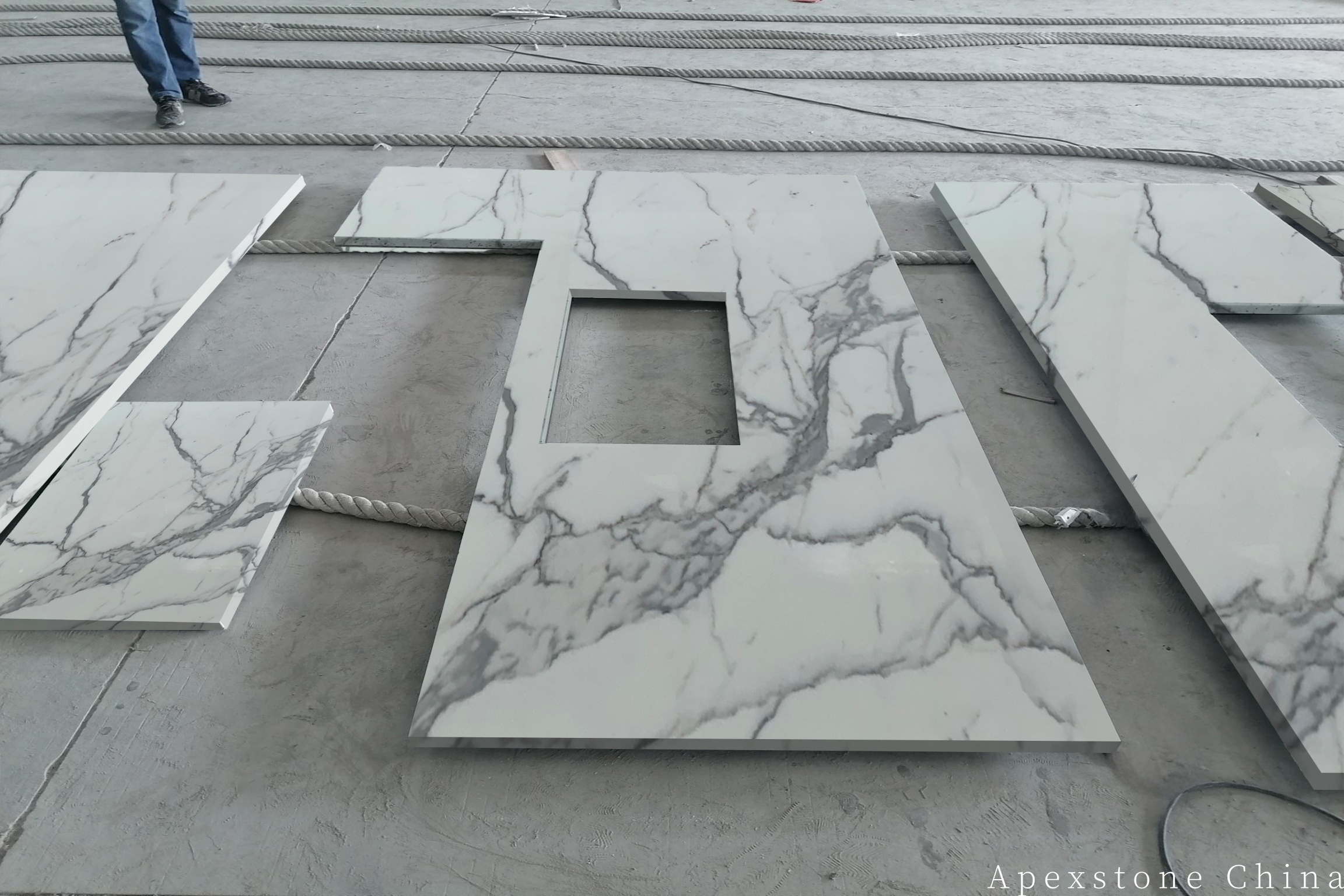
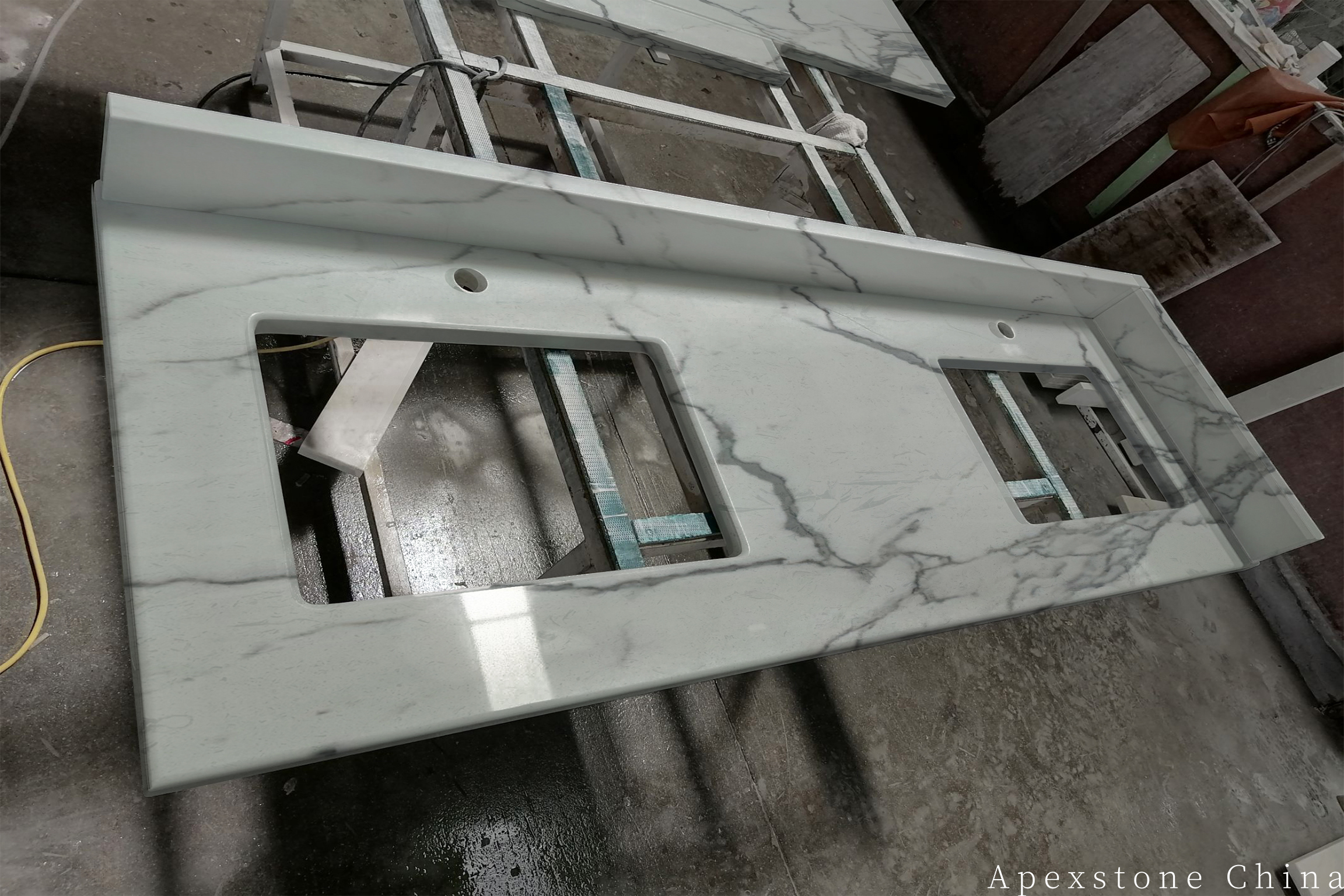
Calacatta White is chosen for its veining and its availability in standard vanity widths. On the five criteria it is a strong performer on size and appearance, and a demanding performer on acid and maintenance.
- Wet-area behaviour: requires a penetrating sealer before and after installation; white marble shows water marks and ring stains more readily than darker stones, so the sealing schedule should be documented.
- Acid and cosmetic resistance: the lowest of the three. Acidic cleaners and citrus spills can etch the polished surface. Specify pH-neutral bathroom cleaners in the handover.
- Cutout precision: cutouts are CNC-formed to drawing, including faucet drilling; confirm the edge profile at quotation stage.
- Size availability: broad. Single-bowl widths of 25.5, 31 and 37 inch and double-bowl widths of 60 and 72 inch, at 21–22 inch depth, in 20 or 30 mm thickness.
- Maintenance: periodic resealing and careful cleaner selection. The 30 mm thickness gives a more substantial edge for exposed installations.
The full specification set is published on the Calacatta White marble bathroom vanity tops page.
Filled honed Travertine Romano against the criteria
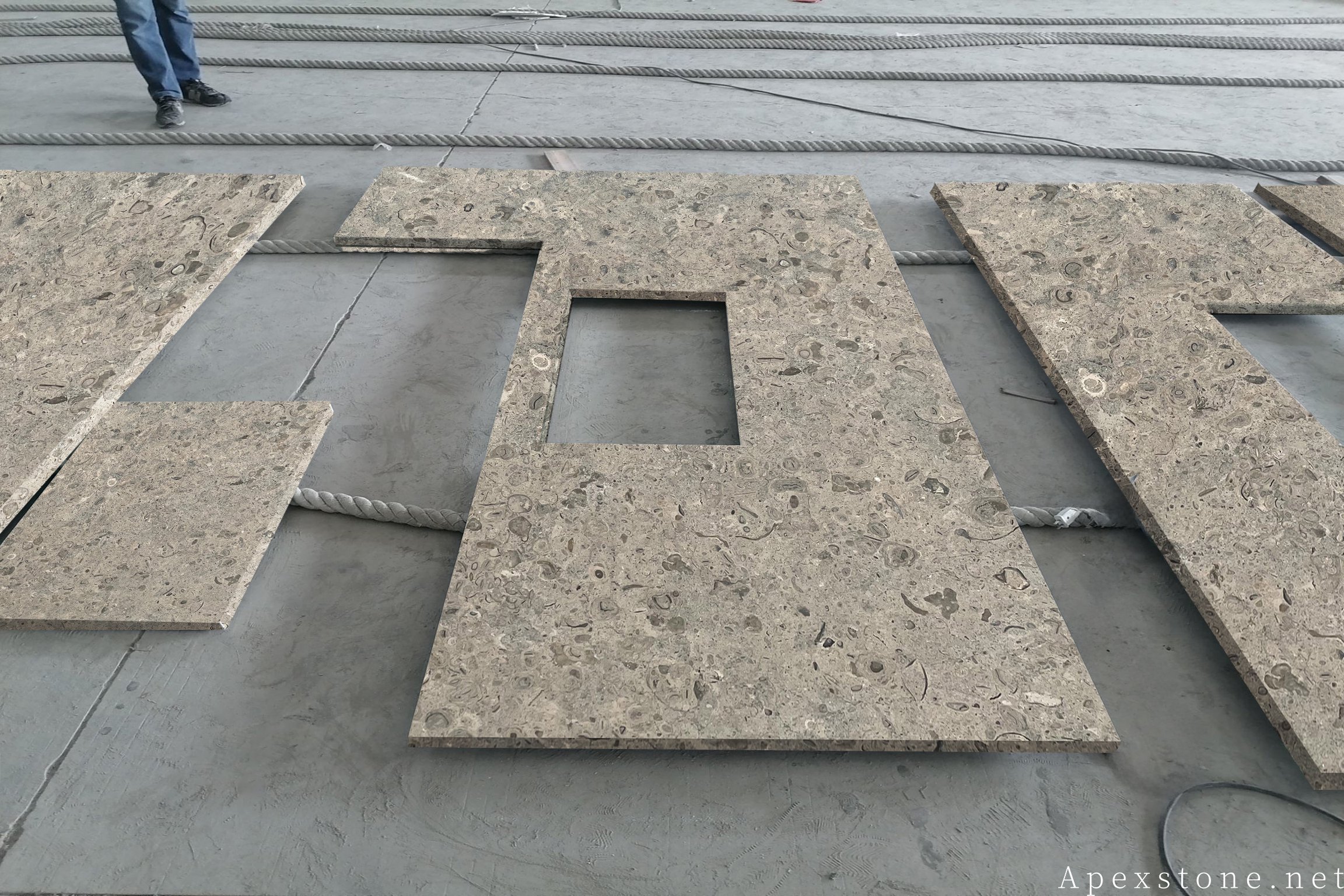
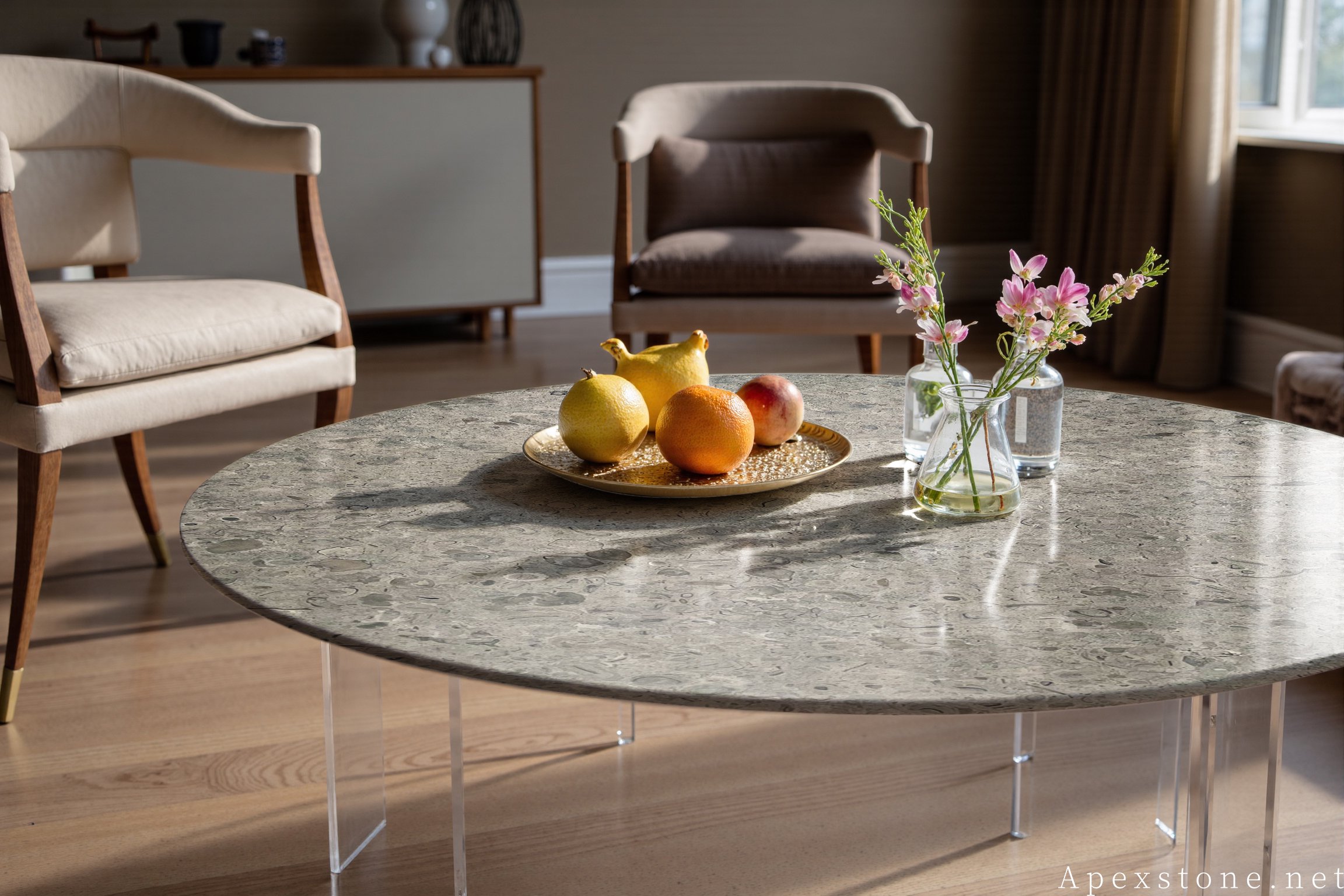
Travertine Romano in a filled honed finish is the version normally specified for wet areas. "Filled" means the natural pores are filled; "honed" means the surface is matte rather than polished. Those two words do more to determine bathroom performance than the stone name alone.
- Wet-area behaviour: filled honed is the wet-area standard for this stone. The honed finish reduces the mirror-like surface that shows water spotting on polished material.
- Acid and cosmetic resistance: moderate. Sealing is still required before and after installation, and acidic cleaners should still be avoided.
- Cutout precision: supplied with CNC sink cutouts and faucet drilling, plus an integrated backsplash cut from the same slab — which keeps the colour and movement continuous up the wall.
- Size availability: 600–1800 mm (24–71 inch) widths and 500–600 mm (20–24 inch) depths, in 18, 20 or 30 mm thickness. The metric range suits European and Middle Eastern projects; the inch equivalents cover most North American vanity openings.
- Maintenance: comparable to marble in sealing terms, but the honed finish and filled surface hide day-to-day marks better.
Dimensions and finish details are listed on the Travertine Romano bathroom vanity tops page.
Quartzite against the criteria
Quartzite is a natural stone, not to be confused with quartz surfacing. It is harder and denser than marble or travertine, which affects how it behaves on two of the five criteria.
- Wet-area behaviour: still a natural stone and still sealed with a penetrating sealer before and after installation. Density reduces absorption but does not remove the sealing requirement.
- Acid and cosmetic resistance: generally the strongest of the three, which is why it is often proposed where staining risk is high.
- Cutout precision: the same fabrication question applies — CNC cutouts and drilling to drawing.
- Size availability: varies by source and is the criterion to verify first; width and thickness options are not uniform across suppliers.
- Maintenance: resealing at a longer interval is the usual expectation, but confirm the recommended cycle for the specific slab rather than assuming.
Quartzite is included here as a comparison point. The two products with published specification pages in this article are Calacatta White marble and Travertine Romano.
Side-by-side summary
| Criterion | Calacatta White marble | Travertine Romano (filled honed) | Quartzite |
|---|---|---|---|
| Sealing | Penetrating sealer before and after installation | Penetrating sealer before and after installation | Penetrating sealer before and after installation |
| Acid resistance | Lowest — avoid acidic cleaners | Moderate — avoid acidic cleaners | Highest of the three |
| Cosmetic staining | Visible on white polished surfaces | Masked by honed, filled finish | Lower risk, finish dependent |
| Cutouts | CNC to drawing, faucet drilling | CNC sink cutouts, faucet drilling, integrated backsplash | CNC to drawing |
| Widths | 25.5 / 31 / 37 in single; 60 / 72 in double | 600–1800 mm (24–71 in) | Verify per source |
| Depth | 21–22 in | 500–600 mm (20–24 in) | Verify per source |
| Thickness | 20 or 30 mm | 18 / 20 / 30 mm | Verify per source |
Choosing by priority
The answer to what is the best bathroom vanity top material depends on which criterion you cannot compromise. A few practical mappings:
If the priority is a defined width and a finished look
Calacatta White marble in the 60 or 72 inch double-bowl size, or the 25.5 to 37 inch single-bowl range, removes the sizing question. Pair it with a documented neutral-cleaner policy for the end user.
If the priority is wet-area discipline and metric sizing
Filled honed Travertine Romano is specified for wet areas for a reason, and the 600–1800 mm width range with an integrated backsplash from the same slab simplifies installation in metric markets. The 18 mm option suits projects where top thickness is constrained.
If the priority is stain resistance
Quartzite has the strongest acid and cosmetic profile of the three, at the cost of a less predictable size range. Confirm dimensions and thickness before committing.
If the priority is low maintenance
None of the three is maintenance-free. The realistic comparison is sealer interval and cleaner discipline, and that should be written into the handover rather than left to the end user to discover.
What to confirm before ordering
Three items decide whether the delivered top fits and lasts: the exact cutout drawing, the sealer schedule, and the cleaner restrictions. Ask the supplier for the cutout drawing revision, confirm that penetrating sealer is applied before dispatch and again after installation, and request written cleaner guidance for the chosen finish. For stone with visible movement, ask whether the backsplash will be cut from the same slab.