Travertine pool coping is the stone cap that finishes the pool edge and keeps water out of the shell. This guide defines coping precisely and covers the specification details most articles skip: thickness by duty, unfilled open-texture grip, edge profiles, coordinated step sets, thermal comfort, and the sealing regime that decides freeze-thaw survival.
Key Spec Takeaways
- Pool coping is the capstone that finishes the pool edge and keeps water out of the shell — it is a distinct component from deck paving.
- Cut at 30 mm (1-1/4 inch) thickness; unfilled brushed or unfilled tumbled finishes give open-texture slip resistance for wet areas.
- Bullnose, eased or custom edge profiles are available; step treads, risers and matching coping are supplied as coordinated sets.
- Warm beige stone stays cool underfoot in direct sunlight; frost resistance depends on a water-repellent penetrating sealer applied before and after installation.
- MOQ from 50 m² (538 sq ft); field formats include 600x600 mm (24x24 inch) or French Pattern.
If you are sourcing stone for a pool project, you have probably asked: what is travertine pool coping? The short answer: it is the solid stone capstone that runs along the waterline, covers the pool shell, and creates the finished edge between water and deck. It is not the same as deck paving — coping is thicker, edge-profiled, and detailed to shed water away from the shell. This article defines the component precisely, then covers the specification details that most buying guides skip: thickness by duty, finish and grip, edge profiles, step sets, thermal behavior, and the sealing regime that decides whether the stone survives freeze-thaw cycling.
In this guide
What Pool Coping Actually Does
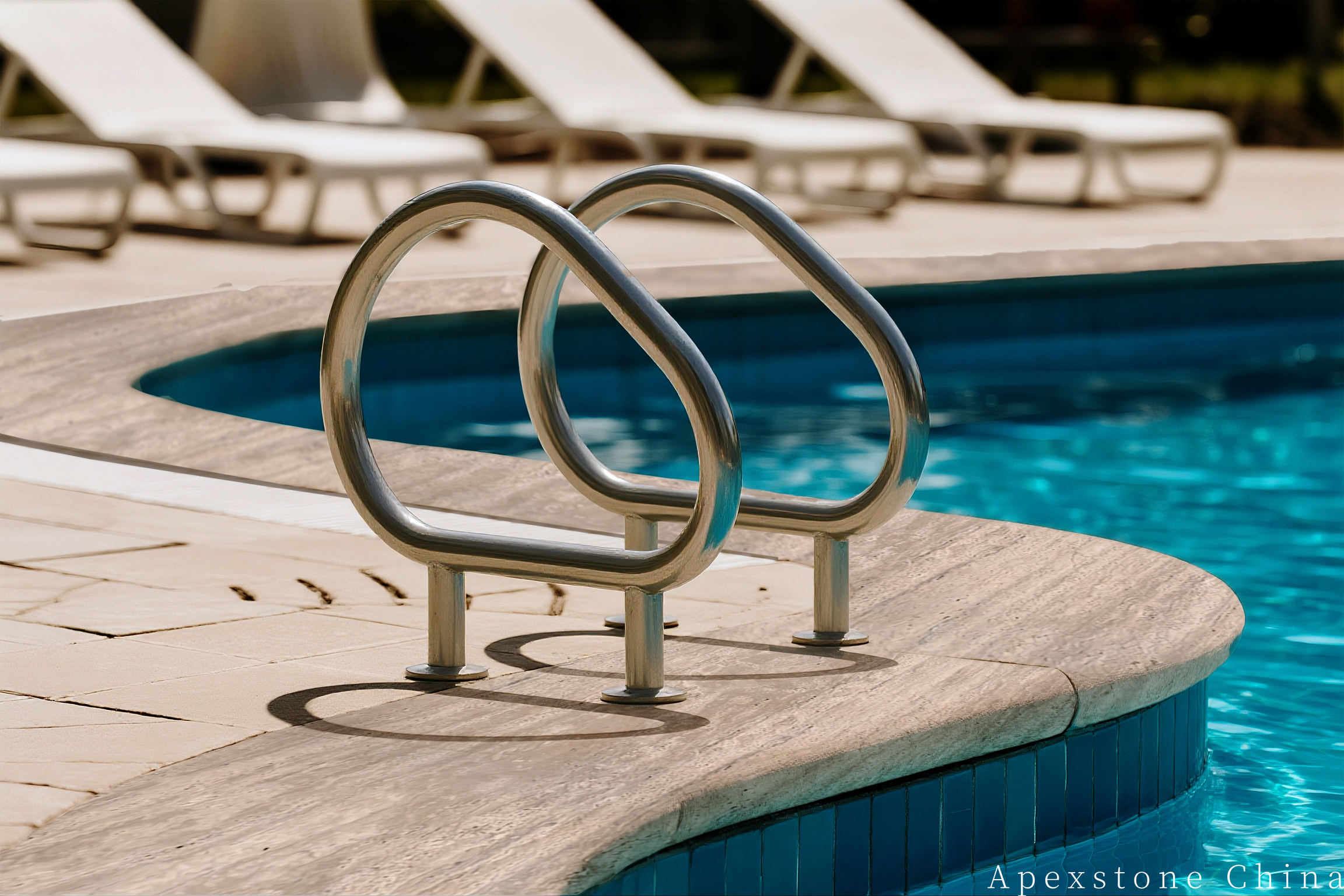
Coping is the capstone that finishes the pool edge and keeps water out of the shell. It sits on top of the pool wall, spans the bond beam, and typically overhangs the waterline slightly to create a drip edge. Its jobs are structural and hydraulic: it protects the shell from water intrusion, provides a durable walking surface at the water's edge, and gives the pool its finished visual line.
This is why coping is specified separately from deck paving. Deck pavers can be thinner and laid on a sand or mortar bed away from the waterline. Coping is thicker, edge-finished, and often fixed with adhesive or mortar directly to the bond beam. When someone asks what is travertine pool coping in a specification context, the answer should include: 30 mm thickness, an edge profile, an unfilled finish for grip, and a sealer schedule.
Thickness by Duty
Travertine pool coping is cut at 30 mm (1-1/4 inch) thickness. That is the baseline for residential and light commercial pool edges. Thickness matters because coping has to span the bond beam and resist point loads from foot traffic, furniture, and occasional impacts. A 30 mm capstone provides enough section to bridge minor variations in the substrate without cracking under normal use.
For heavy commercial pools or areas with vehicular traffic, thickness should be confirmed with the project engineer. The 30 mm standard is not a universal answer for every duty; it is the common specification for pool surrounds.
| Duty | Typical Thickness | Notes |
|---|---|---|
| Residential pool edge | 30 mm (1-1/4 inch) | Standard coping cut; suitable for foot traffic and furniture. |
| Light commercial | 30 mm (1-1/4 inch) | Confirm substrate and fixing method with installer. |
| Heavy commercial / vehicular | Confirm with engineer | Thickness may need to increase; not covered by standard 30 mm coping. |
Finish and Open-Texture Grip
Slip resistance at the pool edge is not about adding grit or coatings. It comes from the stone's surface texture. Unfilled brushed or unfilled tumbled finishes give open-texture slip resistance for wet areas. "Unfilled" means the natural pores and voids in the travertine are left open rather than filled with cement or resin. That open texture gives bare feet something to grip when the surface is wet.
Filled and honed finishes are smoother and can be more slippery at the waterline. For pool coping, specify unfilled brushed or unfilled tumbled. The brushed finish has a consistent, lightly textured surface; the tumbled finish has a softer, worn edge and face that suits traditional and Mediterranean designs.
Edge Profiles
The edge profile is the shape of the coping's exposed face — the part that overhangs the water. Three common options:
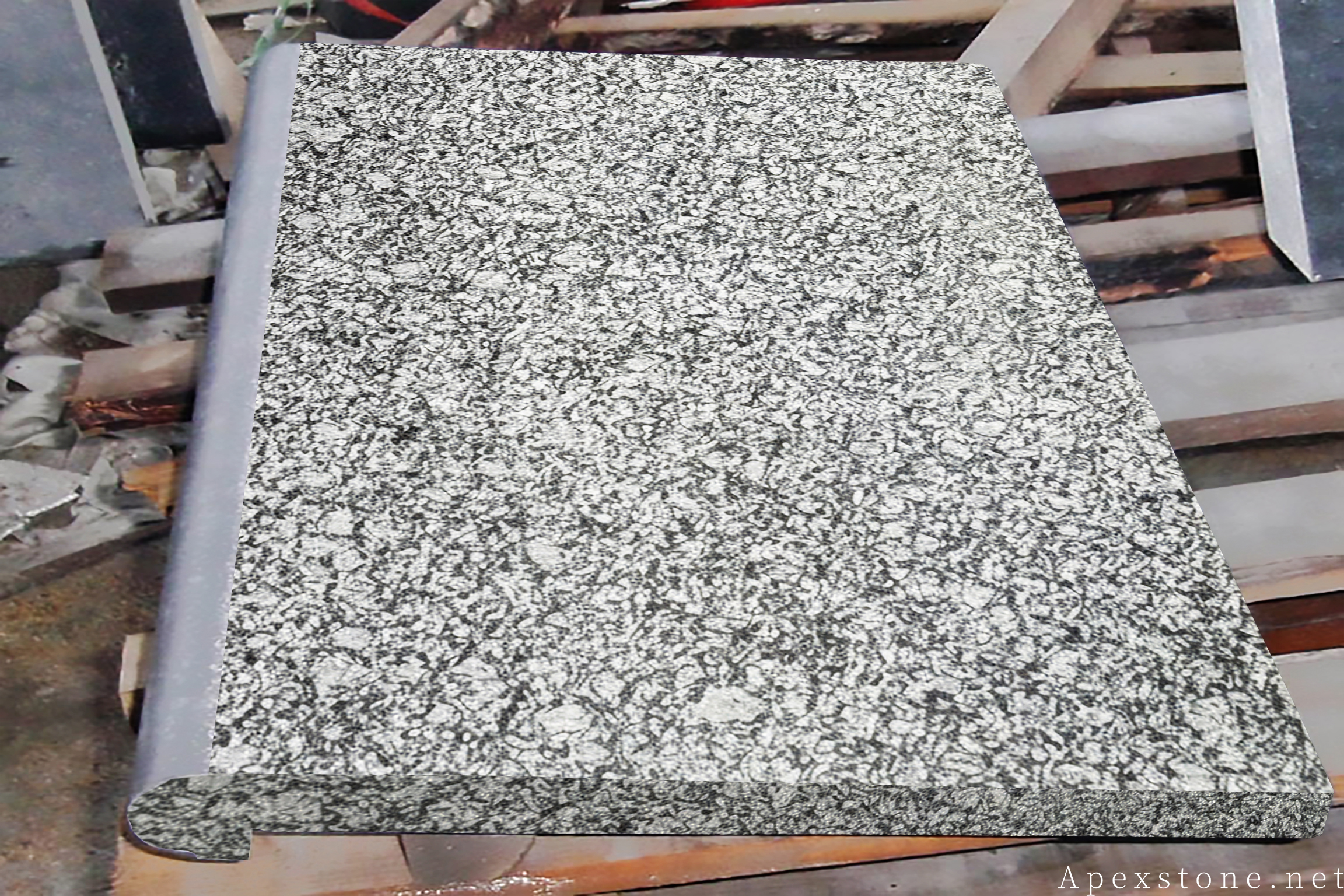
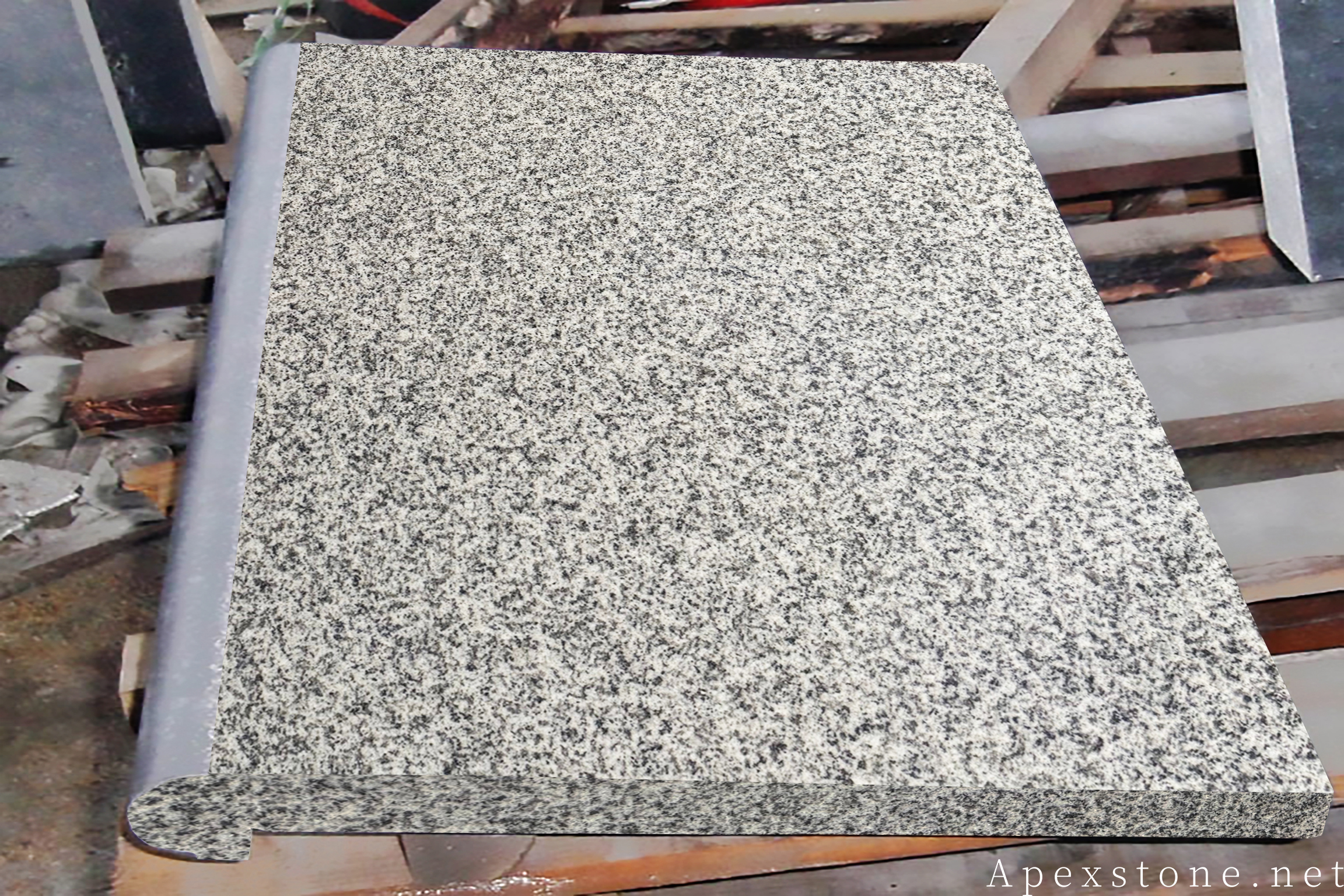
- Bullnose: a fully rounded edge that is comfortable on bare feet and sheds water cleanly.
- Eased: a lightly rounded or chamfered edge that softens the corner without the full round of a bullnose.
- Custom: profiles made to match a drawing or an existing pool detail.
Bullnose is the most common choice for residential pools because it removes the sharp arris that can chip and because it is comfortable to sit on. Eased edges are often used where a more contemporary, square look is wanted. Custom profiles should be confirmed with a sample before production.
Coordinated Step Sets
Pool steps are part of the coping specification, not an afterthought. Step treads, risers and matching coping are supplied as coordinated sets. That means the stone for the step treads, the step risers, and the pool edge come from the same production run, with matching thickness, finish, and color. Coordinated sets avoid the color and texture mismatch that happens when step material is ordered separately.
When specifying, provide the number of steps, the tread depth and riser height, and whether the steps are inside the pool or on the deck. The supplier can then cut the set to match the coping profile.
Thermal Comfort
Travertine is a natural stone with low thermal mass compared with darker stones and concrete. Warm beige stone stays cool underfoot in direct sunlight. That is a practical advantage at the pool edge, where bare feet are common and surface temperature matters. Darker stones and some concretes absorb more solar heat and can become uncomfortable in summer. The warm beige tones of travertine also hide water spots and dust better than very light or very dark surfaces.
Sealing Regime for Freeze-Thaw Survival
Travertine pool coping is frost-resistant when properly sealed with a water-repellent penetrating sealer before and after installation. The sealing regime is the detail that decides whether the stone survives freeze-thaw cycling. Water that enters the open pores and freezes can spall the surface. A penetrating sealer lines the pores and reduces water absorption without changing the appearance or the grip of the unfilled finish.
Specify two applications: one before installation (on the back and edges as well as the face) and one after installation and curing. Reapply according to the sealer manufacturer's schedule. Do not use a film-forming sealer on pool coping; it can trap moisture and reduce slip resistance.
Field Formats and MOQ
While coping is the edge component, the surrounding deck is usually specified in the same stone. Field formats include 600x600 mm (24x24 inch) or French Pattern. French Pattern mixes several sizes in a repeating layout and suits traditional pool surrounds. The 600x600 mm format gives a more contemporary, grid-like deck.
MOQ from 50 m² (538 sq ft). That covers coping and deck together for many residential pools. For smaller projects, confirm with the supplier whether a lower quantity is possible.
For a matching travertine Romano pool coping and paving set, see the product page: Travertine Romano Outdoor Paving & Pool Coping.
FAQ
What is travertine pool coping used for?
It is the capstone that finishes the pool edge and keeps water out of the shell. It covers the bond beam, provides a durable walking surface at the waterline, and creates the finished edge between water and deck.
What thickness should I specify?
30 mm (1-1/4 inch) is the standard cut for residential and light commercial pool edges. For heavy commercial or vehicular traffic, confirm thickness with the project engineer.
Which finish is best for wet areas?
Unfilled brushed or unfilled tumbled finishes give open-texture slip resistance for wet areas. Avoid filled and honed finishes at the waterline.
How do I specify steps?
Order step treads, risers and matching coping as coordinated sets so the stone matches in thickness, finish and color. Provide the number of steps and dimensions when requesting a quote.
Is travertine pool coping frost-resistant?
It is frost-resistant when properly sealed with a water-repellent penetrating sealer before and after installation. Specify two applications and follow the sealer manufacturer's reapplication schedule.
What is the minimum order quantity?
MOQ from 50 m² (538 sq ft). Contact the supplier for smaller project requirements.