Marble vanity tops face specific threats from makeup, toothpaste, perfume, hairspray, and hard-water rings. This guide explains how to clean a marble vanity top safely, distinguishes etch marks from stains, and outlines a daily routine, protective habits, and resealing schedule to keep calcite-based surfaces intact.
Marble vanity tops fail in predictable ways. The damage rarely comes from a single spill; it builds from daily contact with toothpaste, foundation, perfume, hairspray, and the thin mineral film left by hard water. Each of these has a different effect on a calcite-based surface, and each needs a different response. This guide explains how to clean a marble vanity top without dulling or etching it, and it separates the two problems most often confused: stains that sit on the stone and etch marks that change the surface itself.
Key takeaways
- Marble is calcite-based: acids and abrasives attack the surface, not just the finish.
- Etch marks and stains are different problems with different treatments. Identify first, treat second.
- A daily soft-cloth wipe with pH-neutral soap prevents most buildup.
- Traps and coasters keep cosmetics, perfume, and hard water off the stone between cleanings.
- Resealing cadence depends on use and sealer type; check water beading as a practical cue.
In this guide
The vanity's specific enemies: makeup, toothpaste, perfume, hairspray, and hard water
A bathroom vanity sees more chemical variety than almost any other stone surface in a home. The list below maps each common enemy to what it does to marble and the safe response.
| Enemy | What it does to marble | Safe response |
|---|---|---|
| Liquid foundation, concealer, lipstick | Oily or pigmented residue sits on the surface and can seep into pores if left. | Blot, then wipe with a soft cloth and pH-neutral soap; avoid rubbing pigments deeper. |
| Toothpaste | Many toothpastes contain mild abrasives and additives that can dull a polished surface over time. | Rinse promptly with water and a soft cloth; do not let paste dry on the stone. |
| Perfume and cologne | Alcohol-based fragrances can dull or etch a polished calcite surface with repeated contact. | Apply away from the vanity; wipe any overspray immediately with a damp soft cloth. |
| Hairspray | Sticky film traps dust and can bond to the surface; some formulas carry solvents. | Damp-wipe the film before it hardens; avoid solvent-based cleaners. |
| Hard water | Calcium and magnesium leave rings and film that build up and can bond to the stone. | Wipe standing water after each use; use a pH-neutral routine and mechanical action rather than acid. |
The specific formulations of cosmetics and cleaning products vary, and the table above is a general guide. When in doubt, test any product on a small, inconspicuous area of the top first.
Etch marks vs. stains: what changes the surface chemistry vs. what sits on it
This is the distinction that determines whether a mark can be cleaned or needs to be repaired.
- Stain: a substance sits on or just inside the surface without changing the stone's chemistry. A stain may be removed by cleaning or by drawing the substance out.
- Etch mark: an acid has reacted with the calcium carbonate in the marble and changed the surface itself. The mark is usually lighter, duller, and slightly textured compared with the surrounding polish. Cleaning will not remove it; the surface has to be repolished or refinished by a stone professional.
In practice, a ring from a wet glass or a splash of lemon-scented cosmetic is more likely to etch than to stain. A smear of foundation is a stain. Before treating any mark, look at it under raking light: a change in reflection usually points to etching, while a color difference on an intact surface points to a stain.
Practical rule: if the mark changes how light reflects, treat it as an etch and stop cleaning. If the surface still reflects evenly but the color has changed, treat it as a stain.
The daily soft-cloth routine
The single most effective habit on a marble vanity is a quick wipe after each use. It takes less than a minute and prevents most of the problems described above from developing.
- Keep a soft microfiber cloth within reach. Fold it and store it in a drawer or on a hook near the sink.
- After washing hands or face, wipe the top dry. Move from the back edge toward the front so water does not pool around the sink cutout.
- Once a day, wipe with a damp cloth and a small amount of pH-neutral soap, then dry. This removes thin films of toothpaste, soap, and cosmetics before they bond.
- Do not let water stand. Standing water, especially hard water, is the most common cause of rings and film on a bathroom vanity top.
A pH-neutral routine is important because marble is calcite-based. Acidic cleaners, including vinegar-based and many bathroom-descaler products, can etch the surface. Abrasive powders and pads can dull a polished finish. The daily routine should rely on soft cloths, water, and a mild pH-neutral soap.
Safe responses for cosmetics, toothpaste, perfume, and hairspray
Makeup and foundation
Blot liquid foundation with a dry soft cloth first, then wipe with a damp cloth and a little pH-neutral soap. Avoid scrubbing pigments across the surface, which can push them into pores. If a pigmented product has dried, soften it with a damp cloth before wiping.
Toothpaste
Rinse the area with water and wipe with a soft cloth. Do not let toothpaste dry on the stone, and do not use a scrubbing pad to remove dried paste. Toothpaste is a daily contact, so the routine matters more than any single cleaning.
Perfume and cologne
Apply fragrance away from the vanity, or at least hold the bottle over a tray rather than the bare top. Wipe overspray immediately with a damp cloth. Repeated alcohol contact is one of the common causes of dull spots around a vanity.
Hairspray
Hairspray film is easier to remove before it hardens. Wipe the area with a damp cloth after styling, and keep the routine gentle. Solvent-based cleaners are not appropriate for a marble top.
Hard-water rings and film
Hard water leaves mineral deposits that appear as rings around the sink, the faucet base, and any spot where water stands. These deposits build up gradually and can bond to the surface. The response should be frequent, gentle removal rather than harsh treatment.
- Wipe standing water after each use.
- For light film, use a damp soft cloth with pH-neutral soap and a little patience; let the cloth sit on the area briefly to soften the deposit before wiping.
- Avoid acidic descalers and abrasive pads, which can etch or dull the stone while removing the mineral film.
- If a ring persists after gentle cleaning, treat it as a possible etch or deep deposit and have it assessed before using stronger methods.
Tray and coaster placement
Most vanity damage is a placement problem before it is a cleaning problem. A few simple habits reduce contact between the stone and the products that cause trouble.
- Use a tray for daily cosmetics and perfume. A tray catches drips and overspray and can be rinsed separately.
- Place a coaster under any bottle or container that can leave a ring. This includes perfume, mouthwash, and lotion.
- Keep the area around the faucet clear of standing water. A small squeegee or cloth kept nearby helps.
- Avoid storing wet items directly on the marble, including damp washcloths or sponges.
These habits matter because they reduce the frequency of the cleaning steps that carry the most risk. The less often a strong response is needed, the longer the finish lasts.
Resealing cadence
Penetrating sealer slows the absorption of liquids, but it does not make marble stain-proof, and it does not prevent etching. Resealing is part of maintenance, not a substitute for careful daily use.
For a marble vanity, check the sealer periodically by placing a few drops of water on the surface and observing whether they bead or soak in. If water no longer beads, it is a reasonable cue to reseal. The right interval depends on the sealer type, the amount of daily use, and the products used on the vanity, so the manufacturer's directions for the specific sealer should take precedence.
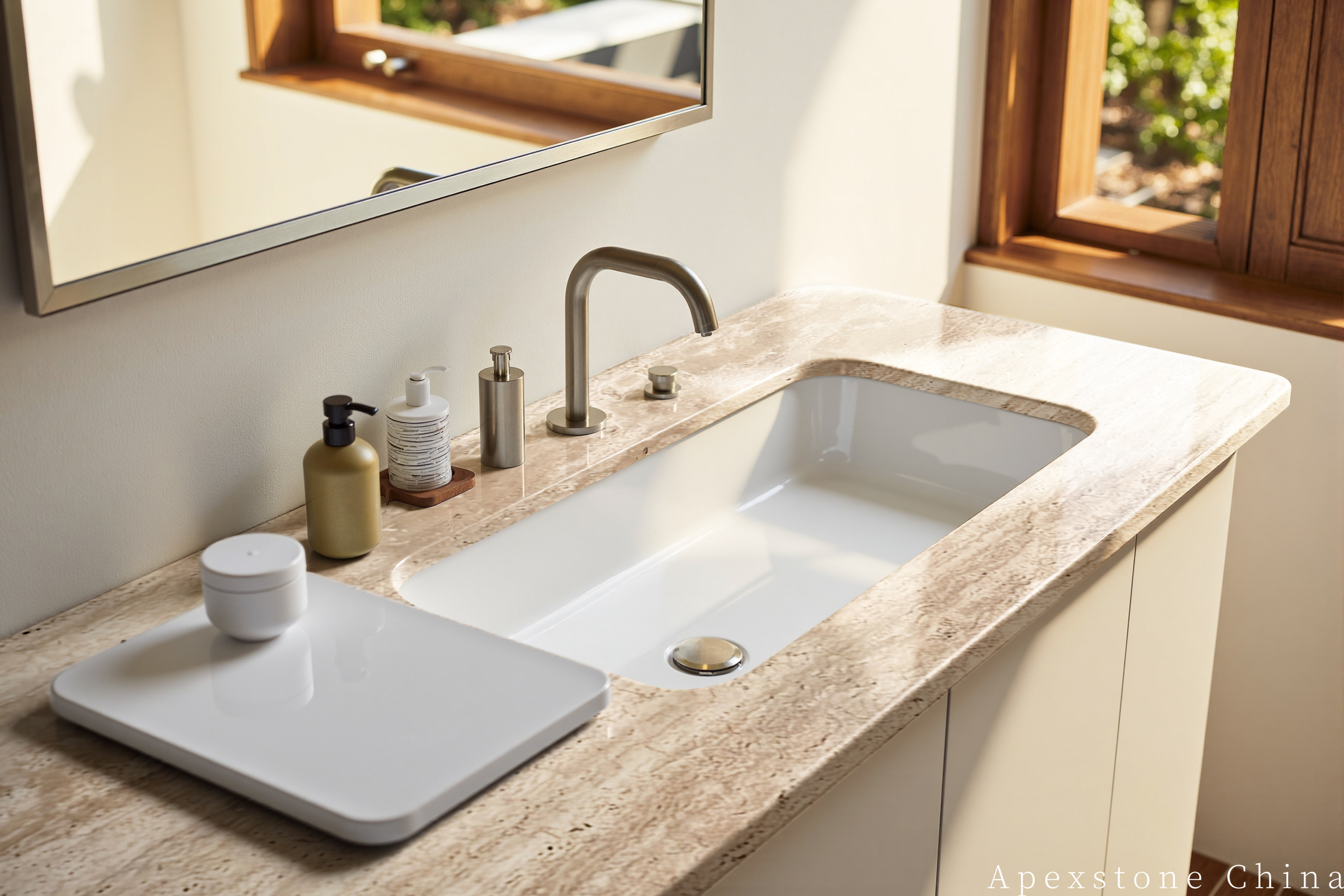
Travertine vanity tops, which are often specified in a filled and honed finish for wet areas, are typically sealed with a penetrating sealer before and after installation. The same principle applies: the sealer is part of the maintenance routine, and its condition should be checked rather than assumed.
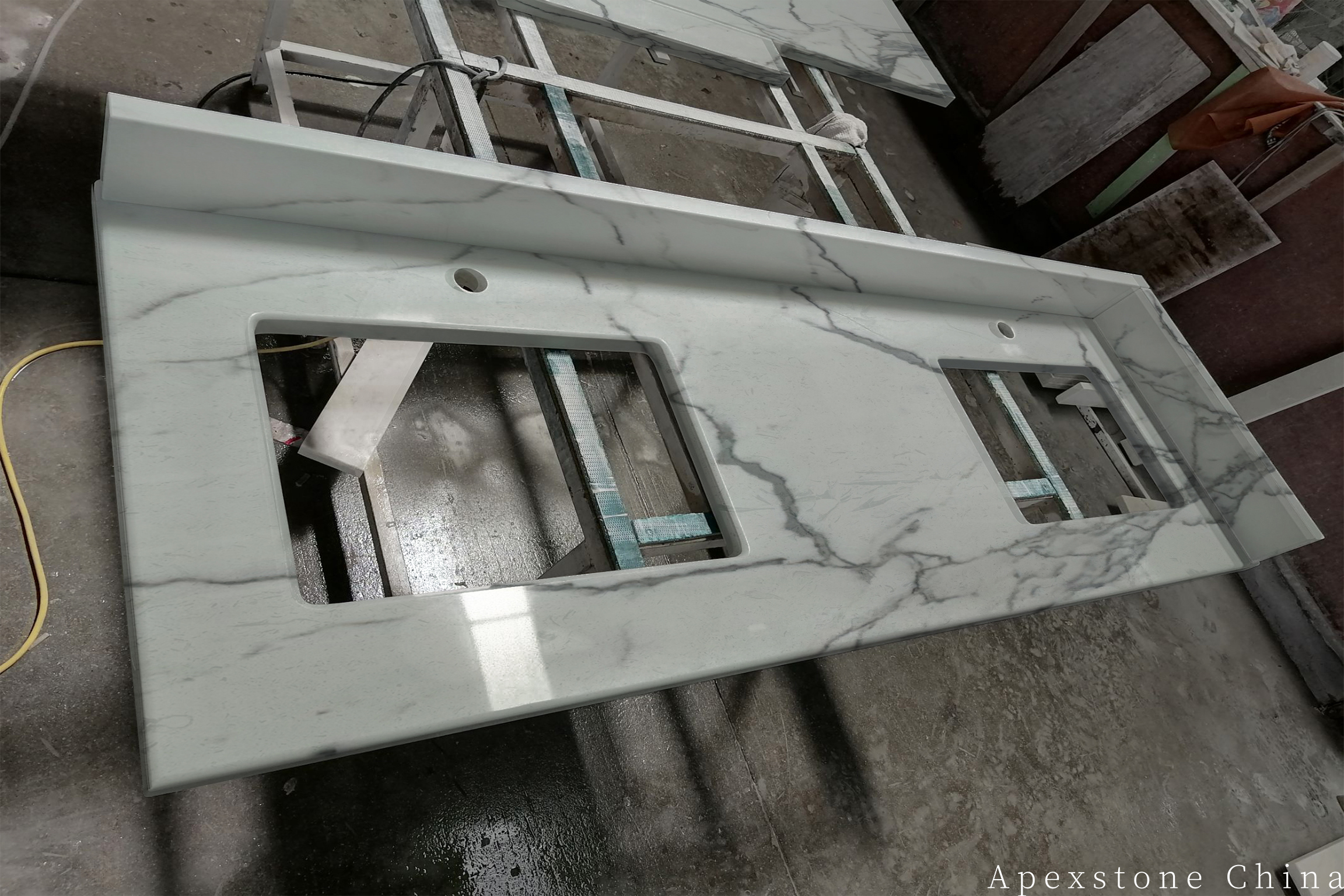
Note on surface selection: Calacatta White marble vanity tops are machined with sink and faucet cutouts from approved drawings and are available in single-bowl widths of 25.5, 31, and 37 inches and double-bowl widths of 60 and 72 inches, with depths of 21–22 inches and thicknesses of 20 or 30 mm. The care routine in this guide applies to these tops and to other calcite-based marble vanities.
FAQ
Can I use vinegar to remove hard-water rings on marble?
Vinegar is acidic and can etch calcite-based marble. It is not a safe routine cleaner for a marble vanity top. A pH-neutral soap and a soft cloth are the safer starting point.
How do I know if a mark is a stain or an etch?
Look at how light reflects. If the reflection is disrupted and the area looks dull or slightly textured, it is likely an etch. If the surface still reflects evenly and only the color has changed, it is likely a stain.
How often should a marble vanity top be resealed?
It depends on the sealer and the amount of use. A practical check is to see whether water still beads on the surface. Follow the sealer manufacturer's directions for the specific product.
Is it safe to use bathroom cleaning sprays on a marble vanity?
Many general bathroom cleaners are acidic or abrasive. Check the label and prefer pH-neutral products. Test any new product on a small, inconspicuous area first.
Does sealing prevent etching?
No. Penetrating sealer slows liquid absorption and helps with some stains, but it does not protect the calcium carbonate from acid reaction. Etch prevention comes from keeping acids off the stone.
Consistent, gentle care keeps a marble vanity top looking as it did when it was installed. The routine is simple: wipe daily with a soft cloth, keep cosmetics and hard water off the stone, identify marks before treating them, and reseal when the sealer stops beading. For specifiers and buyers, the same logic applies when selecting a top: the finish and the care routine should match the way the vanity will actually be used.