Apexstone
Red Sandalwood Marble Mosaic Tiles - 3D, Basketweave & Splitting Formats
Red Sandalwood (紫檀金沙) marble mosaic tiles in 3D, basketweave, cubic, and splitting face formats. Purple base with wood-grain diagonal stripe veining. Mesh-mounted sheets 300x300 mm for feature walls, kitchen backsplashes, bathroom accent panels, and decorative floor inlays. Mosaic tile supplier Apexstone - 42+ countries since 2002.
Highlights
- Natural purple marble with wood-grain diagonal stripe veining - Red Sandalwood (紫檀金沙)
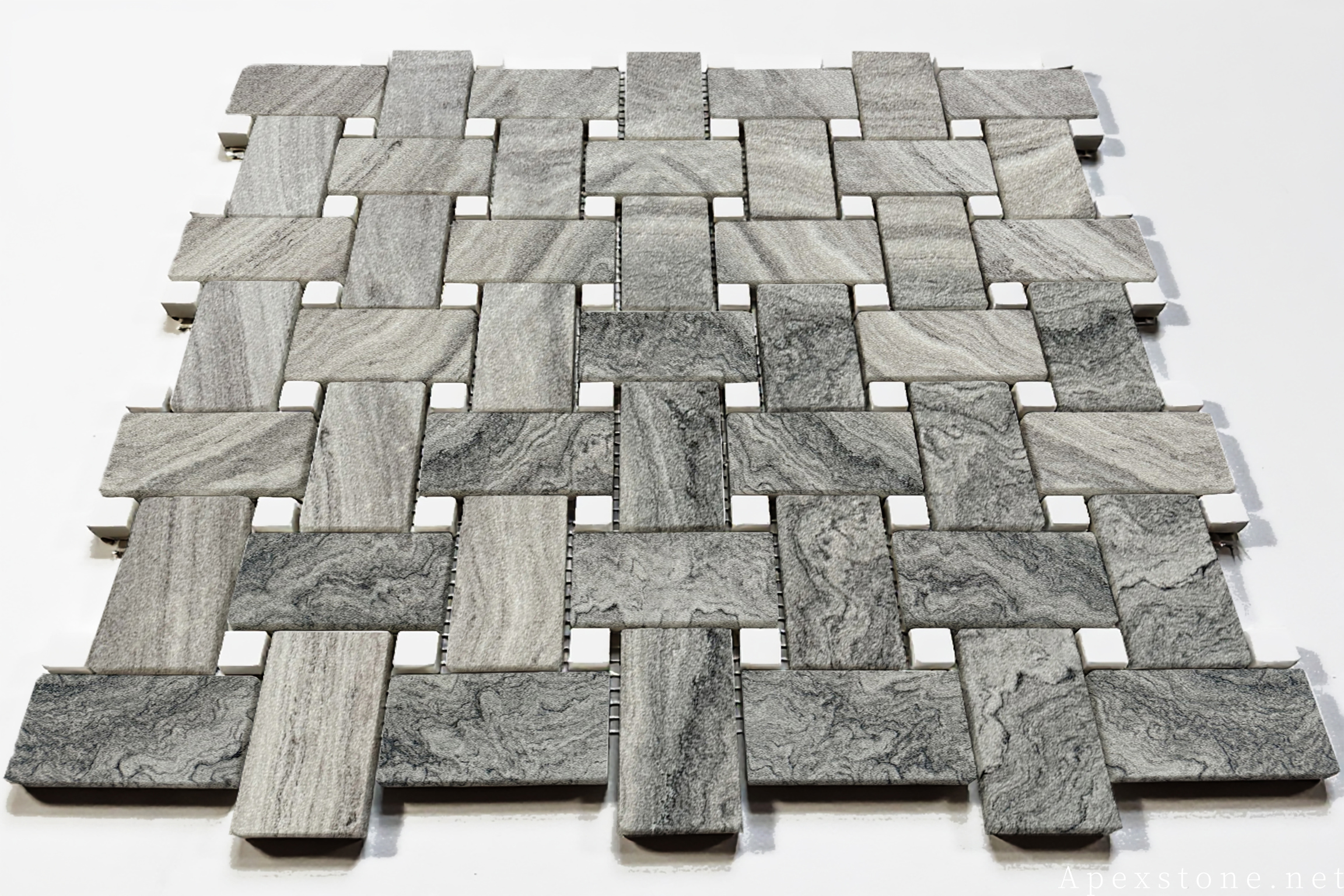
- 3D, basketweave, cubic, and splitting face mosaic formats on 300x300 mm mesh sheets
- Purple base with light grey stripe pattern creates warm, textured decorative surfaces
- Ideal for bathroom feature walls, kitchen backsplashes, shower niches, and floor inlays
- Density 2.6-2.8 g/cm³, Mohs 3-4, tesserae thickness 8-10 mm (5/16-3/8 inch)
- MOQ from 5 m² for mosaic tile supply
Specifications
| Stone Type | Marble |
|---|---|
| Commercial Name | Red Sandalwood (紫檀金沙) |
| Origin | China |
| Base Color | Blend of overlapping purple tones |
| Veining | Diagonal light grey bold stripe pattern resembling wood grain |
| Density | 2.6-2.8 g/cm³ |
| Water Absorption | ≤0.5% |
| Mohs Hardness | 3-4 |
| Available Formats | 3D, basketweave, cubic, splitting face |
| Mesh Sheet Size | 300 x 300 mm (12 x 12 inch) |
| Tesserae Size | 10-100 mm (3/8-4 inch) depending on format |
| Tesserae Thickness | 8-10 mm (5/16-3/8 inch) |
| Available Finishes | Polished (3D, basketweave, cubic), Splitting face (natural cleft) |
| Applications | Feature walls, kitchen backsplashes, bathroom accent panels, shower niches, floor inlays |
| Sealing Required | Yes - penetrating sealer before and after grouting |
| MOQ | From 5 m² (54 sq ft) |
| Lead Time | 25-35 days from drawing approval |
Product Detail
The Pain Point: Mosaic Walls That Never Look Like the Sample Sheet
Mosaic is the most unforgiving stone product to buy remotely, because the unit you approve (one 300 x 300 mm mesh-mounted sheet) is not the unit the client sees (an entire wall). Three failures ruin wood-grain mosaic installations again and again. First, sheet-to-sheet banding mismatch: sheets assembled from different production runs carry different tones of the wood-grain figure, so the finished wall shows a grid of subtly mismatched squares. Second, lippage: chips cut at inconsistent thickness sit proud of their neighbors, and every raking light across the wall turns the surface into a relief map. Third, the split-face trap: textured faces drink adhesive and grout, and an installer who has not been warned ends up with cement bleached across the stone — a defect that cannot be cleaned off textured stone.
None of these are installer errors at root. They are assembly and batching discipline failures at the factory — and they are exactly what our mosaic process is built to eliminate.
What This Costs You as a Buyer
- Failed visual approval: a patchwork wall means removing sheets that are already bonded — demolition on a finished wall, at your cost, with the schedule moving backwards.
- Re-polishing and rework: lippage on stone mosaic usually cannot be ground out in place without damaging the mesh bond; the wall comes off instead.
- Installer disputes: adhesive-bleed damage reads as "bad workmanship" to your client, while the installer blames the material; you hold the relationship and the loss either way.
- Wasted stock: sheets left over from a mismatched batch rarely match the replacement batch, so contingency stock becomes dead stock.
Our Solution: One-Batch Assembly With Numbered Sheets and a Sealing Protocol
Every Red Sandalwood mosaic order is assembled as one batch: chips for all sheets in your order are cut from the same production run, sorted for tone and figure direction, and mounted so adjacent sheets on the same wall come from the same tonal group. Sheets are numbered and boxed in wall-installation order, so the installer opens box one, not box twelve, for the first panel. And because wood-grain stone mosaic must be sealed, every order ships with a sealing protocol — seal before grouting, seal again after — specified on the packing documents so the requirement travels with the goods.
The Process Behind It
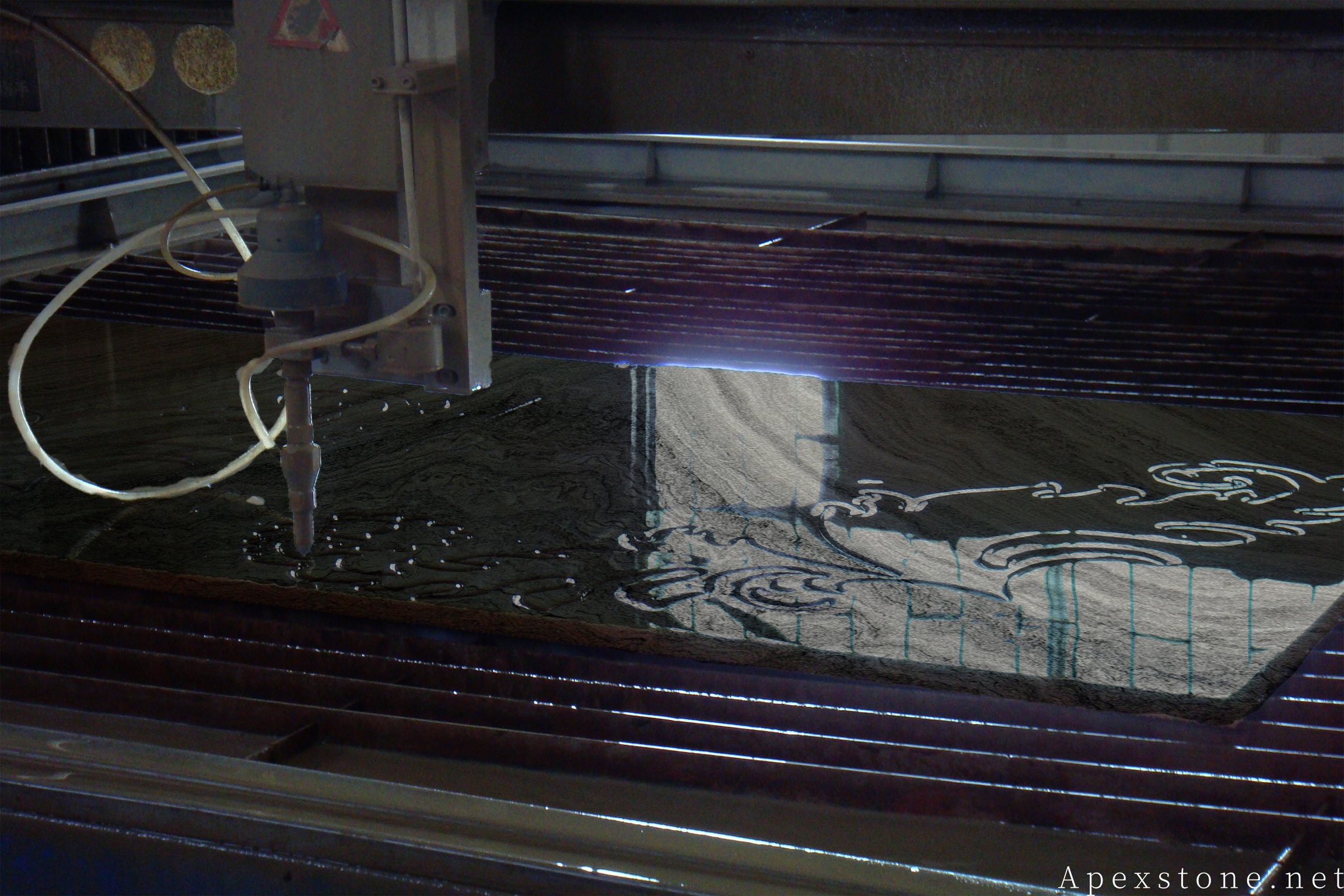
- Waterjet chip cutting: 3D and geometric formats are cut by waterjet, holding chip dimensions and angles consistent so joints read as design, not error.
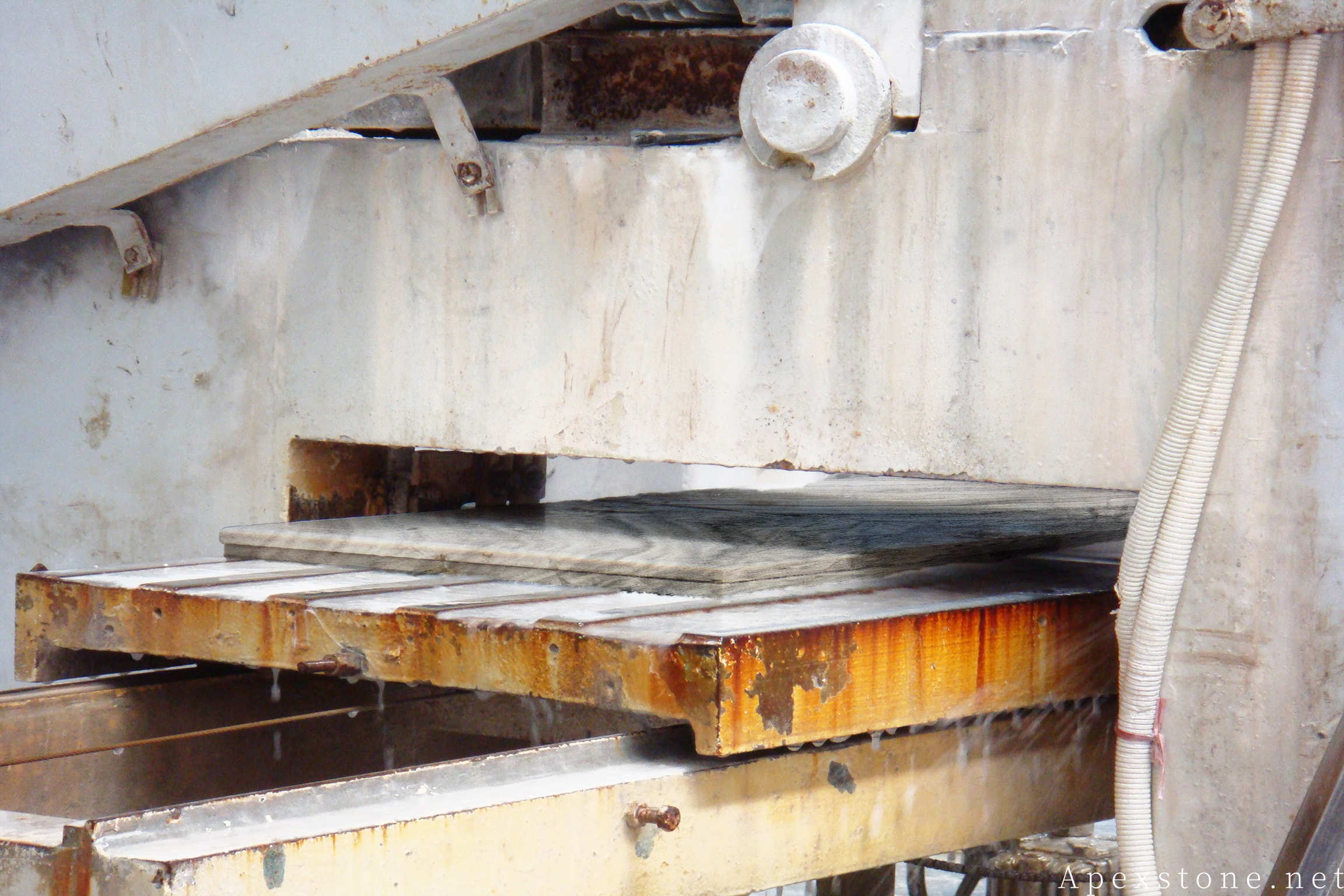
- Thickness control: chip thickness is held in the 8–10 mm band across the order; consistent thickness is what keeps the mounted sheet flat and lippage off your wall.
- Tone sorting and mapping: chips are grouped by tonal band and figure direction before mounting; large walls can be planned sheet-by-sheet against a layout drawing.
- Split-face processing: splitting-face formats are produced on controlled splitting equipment, then pre-sealed where specified, so the textured face arrives ready for the sealing protocol instead of drinking factory dust.
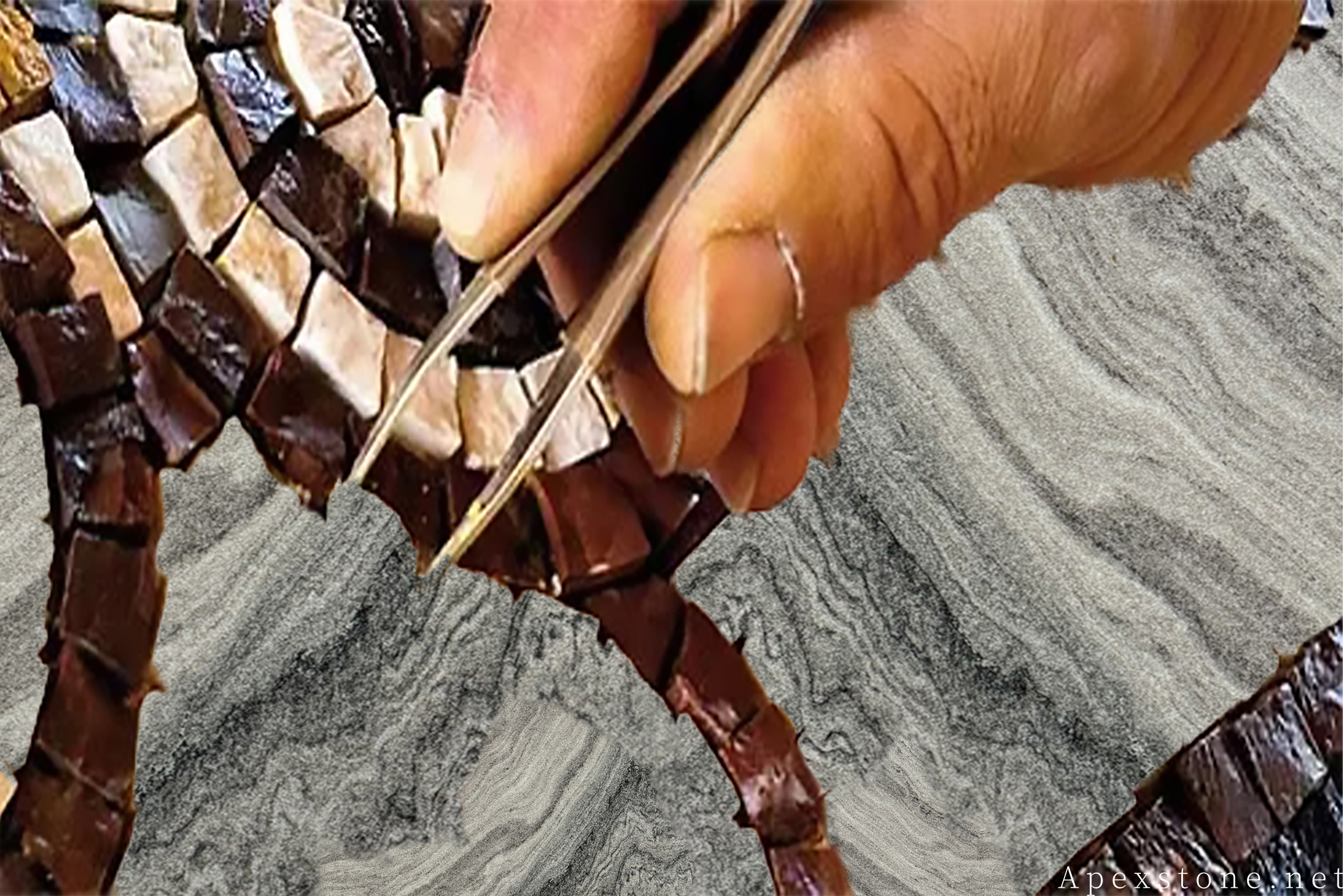
- Hand finishing of edges: chips are edge-trimmed by hand where the format requires it — visible on the finished wall as clean joints, not machine crush marks.
- Numbered packing: sheets are numbered and packed in installation sequence, with the batch number traceable to the production run for any future top-up order.
Red Sandalwood Marble Mosaic Specifications
| Item | Detail |
|---|---|
| Stone | Natural marble, Chinese origin |
| Commercial name | Red Sandalwood |
| SKU | APX-RS-MS |
| Formats | 3D mosaic, basketweave, cubic, splitting face |
| Sheet size | 300 x 300 mm, mesh-mounted |
| Chip thickness | 8–10 mm |
| Sealing | Required: seal before grouting and again after grouting |
| Packing | Numbered sheets boxed in installation sequence |
| MOQ | 5 m² |
Choosing Between the Four Formats
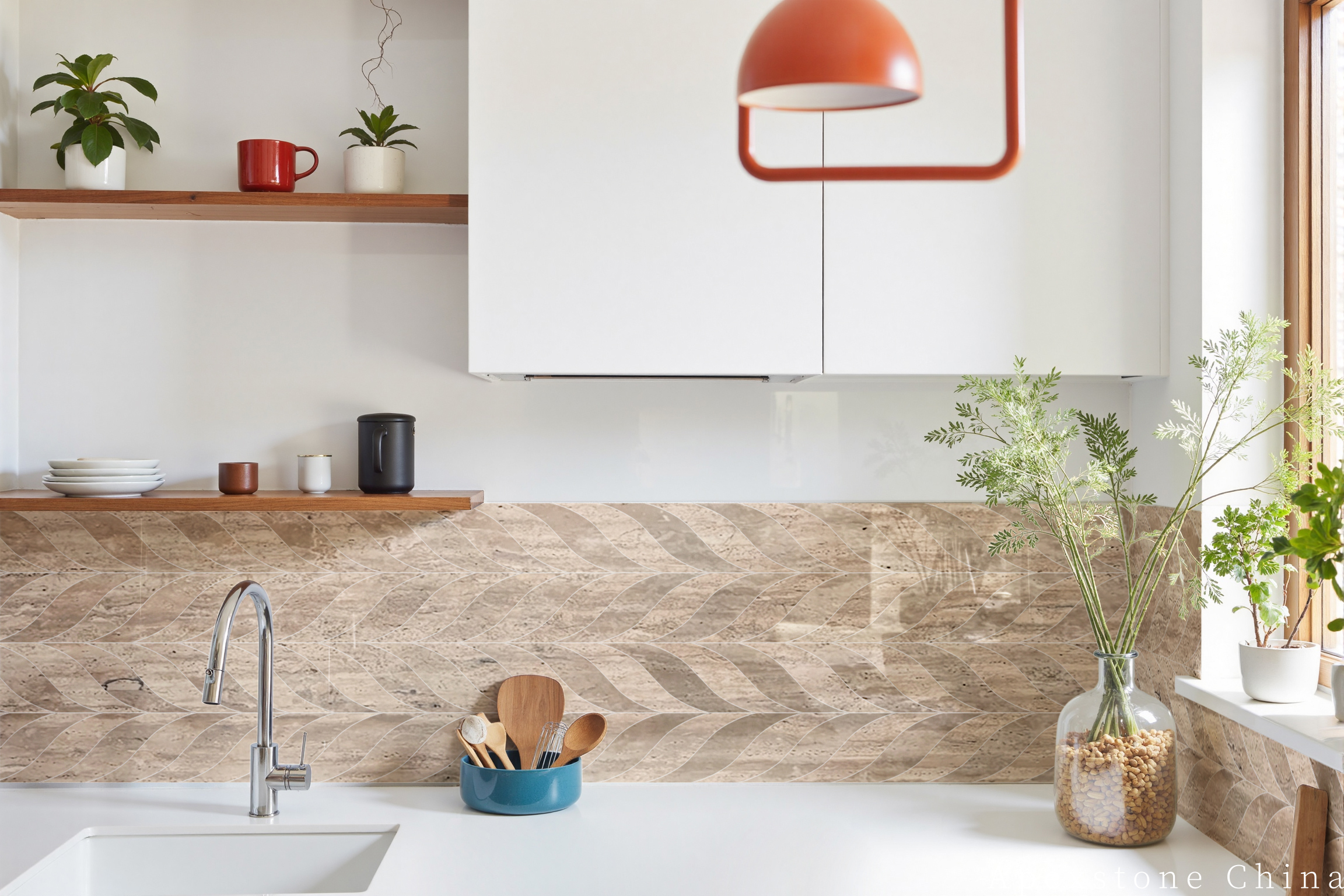
The four formats answer different design problems. Basketweave brings the wood-grain figure into a woven rhythm that suits bathroom floors, shower floors and feature niches; the interlocking pattern hides minor substrate movement better than large-format tiling. Cubic mosaics read as a precise grid and work well on kitchen splashbacks and bar fronts where the stone's banding should read in ordered repetition. 3D mosaics use angled chip geometry to catch light and shadow — a statement surface for lobby walls and reception areas where the wall itself is the fixture. Splitting face delivers a rough, natural texture for fireplace surrounds and outdoor-accent walls, at the cost of needing disciplined sealing — which the protocol in every shipment covers.
Whatever the format, the batching discipline is identical, because the risk is identical: the wall is judged as one surface, and the factory is the only party that can guarantee it was made as one batch.
Installation Notes We Send With Every Order
Because most mosaic failures happen at installation, our packing documents include the notes your tiling team actually needs: use a white, polymer-modified thin-set against this stone type; back-butter split-face chips on textured formats; keep joints aligned using the mounted grid rather than eyeballing; and follow the two-stage sealing protocol — after setting and before grouting, then again once grout has cured. For large walls, send us the elevation drawing before production and we will map sheets to zones, which removes the last source of tonal surprise: the factory decides which sheet goes where before the sheets ever leave the line.
Frequently Asked Questions
Will sheets in one order match each other?
Yes — chips for all sheets are cut in one production run and tone-sorted before mounting. For large walls, we plan sheets against your elevation drawing so tonal grouping follows the design, not chance.
Do I need to seal the mosaic?
Yes, twice: after setting and before grouting, then again after the grout cures. The protocol ships with the order. On split-face formats the pre-grouting seal is essential — it is what stops grout from staining the textured surface.
What sheet size and thickness do you supply?
Standard sheets are 300 x 300 mm on mesh, with chip thickness held in the 8–10 mm band. Custom chip sizes and sheet formats are possible per drawing — confirm with us at quotation.
Can splitting face be used around fireplaces?
Splitting face is a common choice for fireplace surrounds and accent walls thanks to its natural texture. Confirm the firebox clearances and heat exposure zones with your installer or fireplace manufacturer; we supply the material and the sealing protocol, not the heat-rating of your installation.
What is the MOQ?
MOQ is 5 m². Top-up orders reference the batch number of the original shipment, so we can match the production run rather than starting a new tonal group.
Request Red Sandalwood Mosaic Details
Tell us the format, wall area and application — and send the elevation drawing if the wall is large — and we will return batch planning, sheet mapping and a quotation with the sealing protocol included.
Request product details