A decision guide to marble tile modules and laying patterns—which sizes the market asks for, what subway, hexagon, herringbone, basketweave and chevron each do visually and practically, the grout trade-off of small formats, and the installation disciplines that make a field look planned.
Decision Guide
Marble tile is sold by the module and laid by the pattern. The size you order sets the rhythm of a room before a single tile is fixed; the pattern sets how much grout cuts through the stone, how flat the substrate must be, and how the veining reads across the field. This guide works through the modules buyers actually ask for, what each common pattern does visually and practically, and the installation checks that separate a planned field from a patchwork.
Key takeaways
- Market modules for Calacatta White marble tiles: 12x12, 12x24, 18x18, 24x24, and 24x48 inches (300x300, 300x600, 450x450, 600x600, and 600x1200 mm), plus cut-to-size.
- Small formats multiply grout lines; large formats demand a very flat substrate and experienced setters.
- Pattern choice should follow the room's traffic and wetness, not only the look.
- Lot blending, dry layout, and grout colour approval are the three disciplines that most affect the finished field.
Which marble tile sizes the market actually asks for
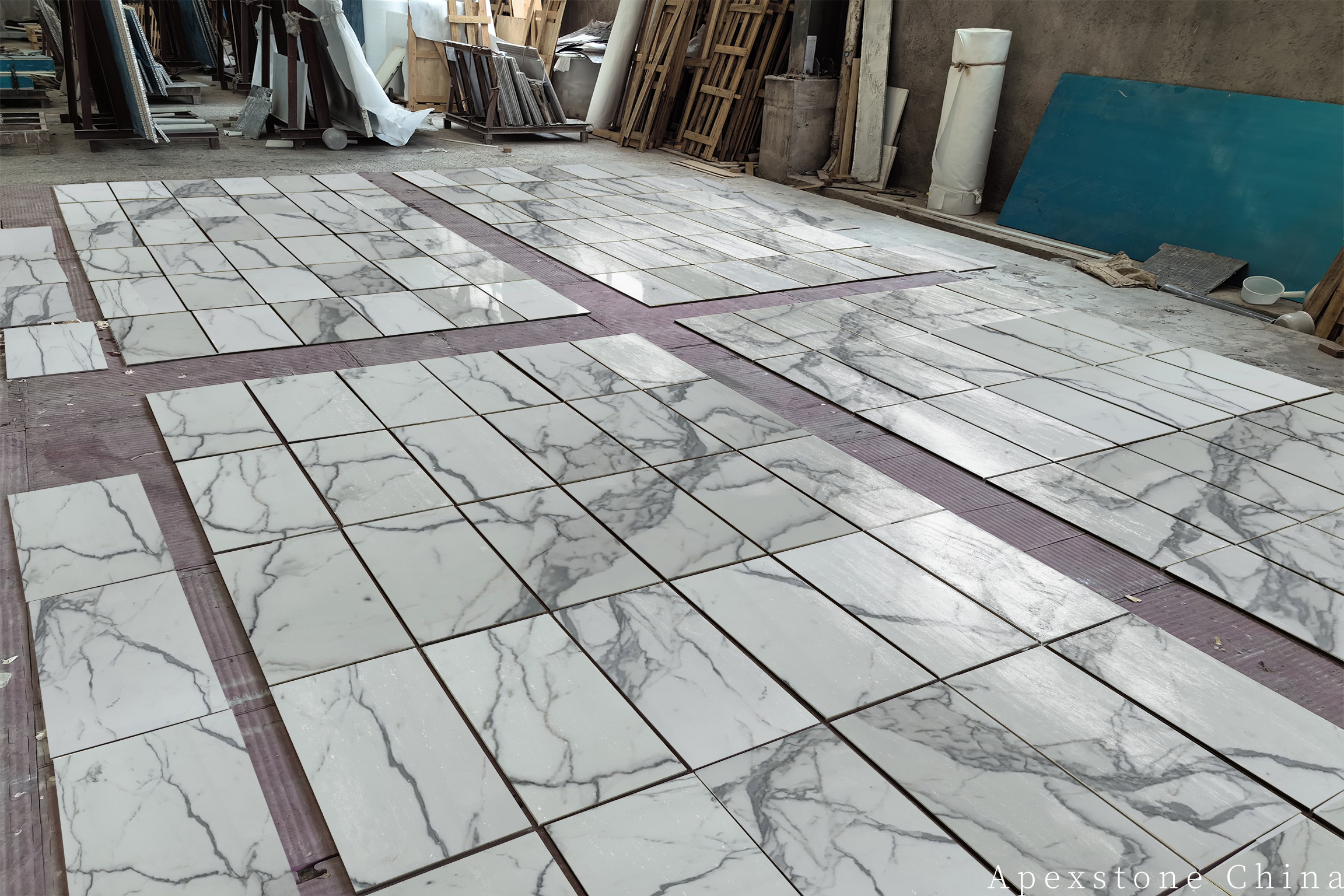
The core modules for Calacatta White marble tiles are 12x12 in (300x300 mm), 12x24 in (300x600 mm), 18x18 in (450x450 mm), 24x24 in (600x600 mm), and 24x48 in (600x1200 mm), with cut-to-size available for projects that need it. Reference thickness is 10 mm (3/8 in) for wall tile, 12 mm (1/2 in) for standard floor tile, and 20 mm (3/4 in) for steps and heavy-traffic areas.
Those modules cover most of the specification sheet, but they behave differently in a room. A 12x24 tile stretches a floor or wall visually and keeps grout lines relatively few. A 24x24 or 24x48 tile reads closer to a slab, which can make a small bathroom feel larger—provided the substrate is flat enough to avoid lipping at the joints. A 12x12 tile is the workhorse for smaller rooms and for patterns that need a square module.
Format facts for common patterns
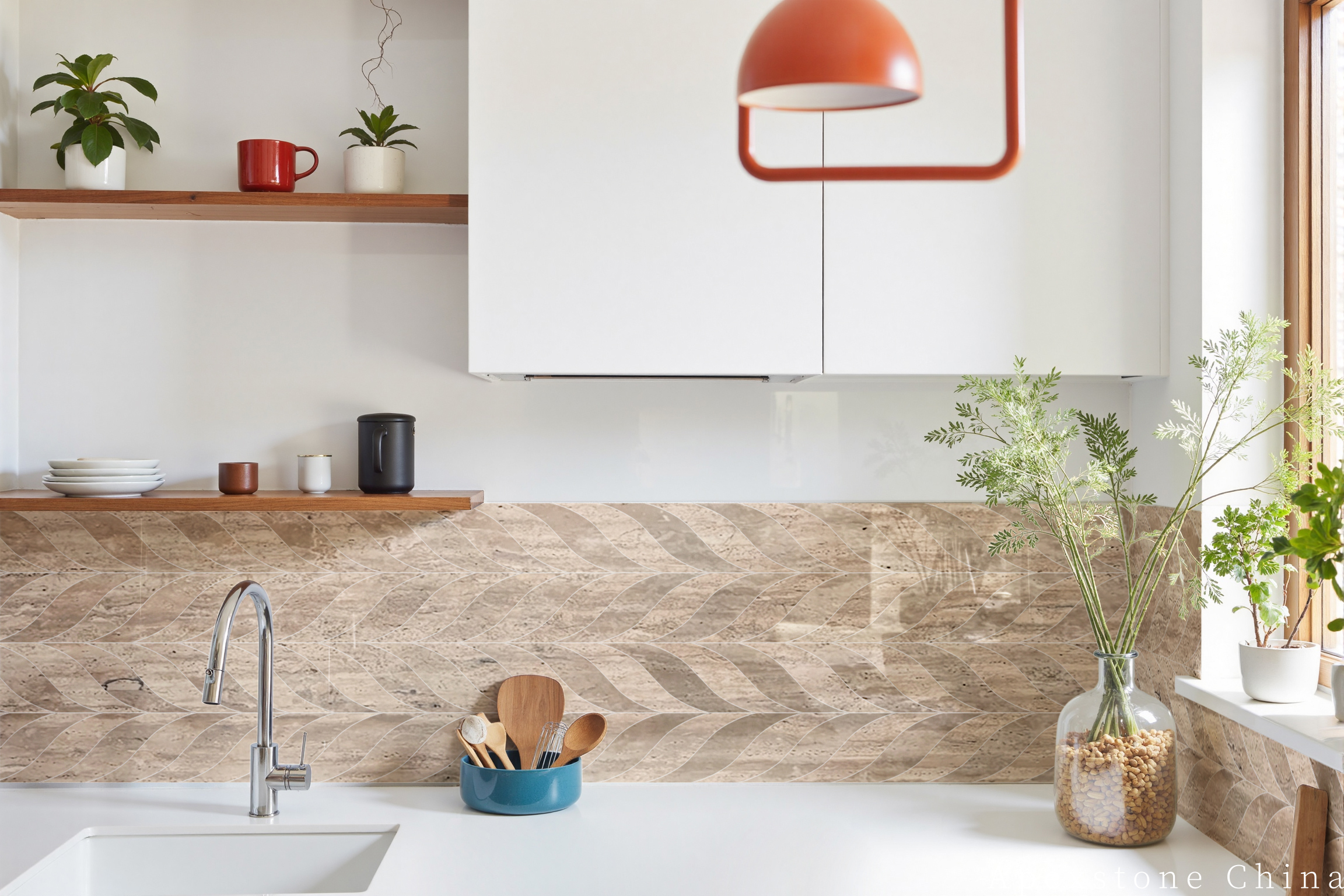
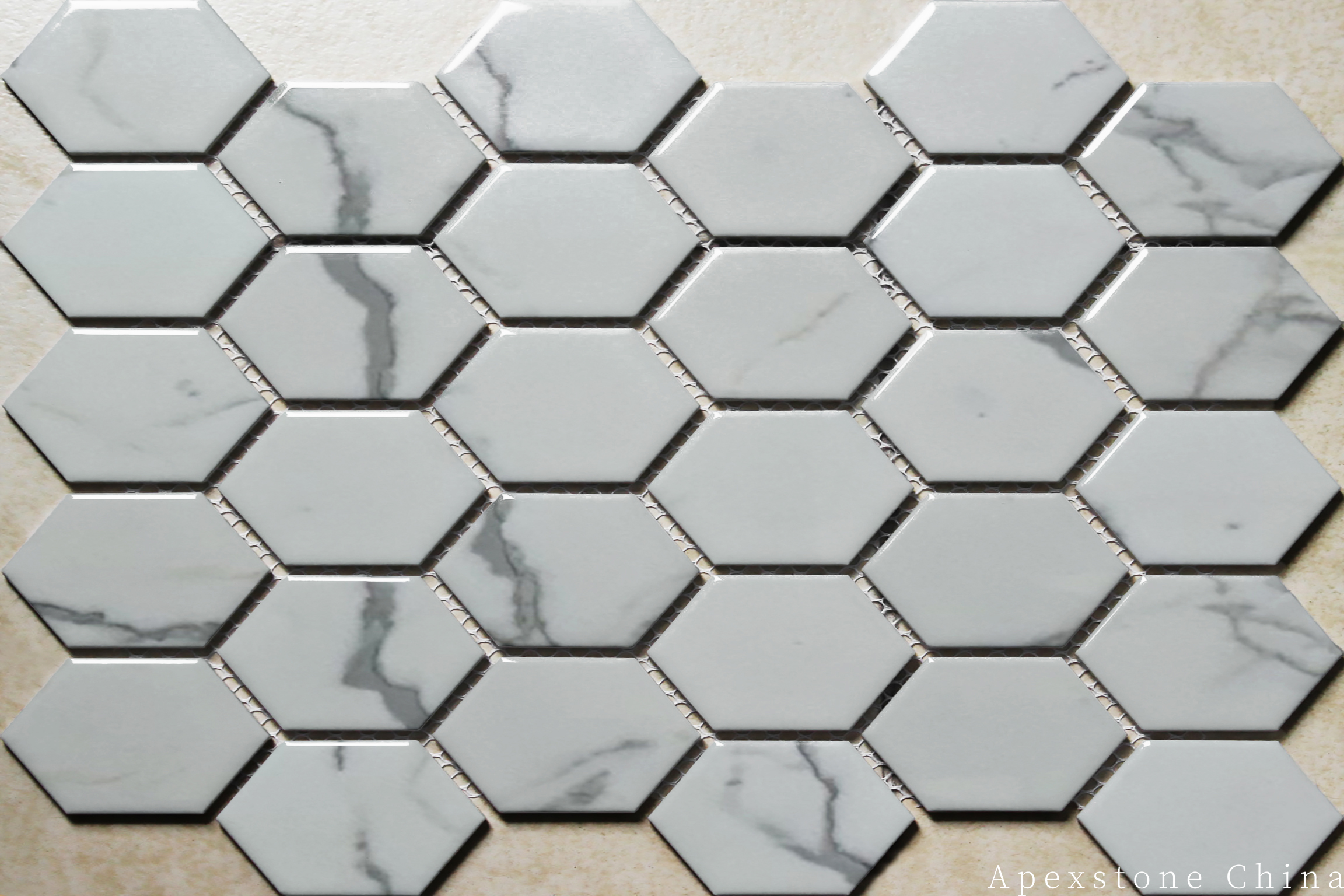
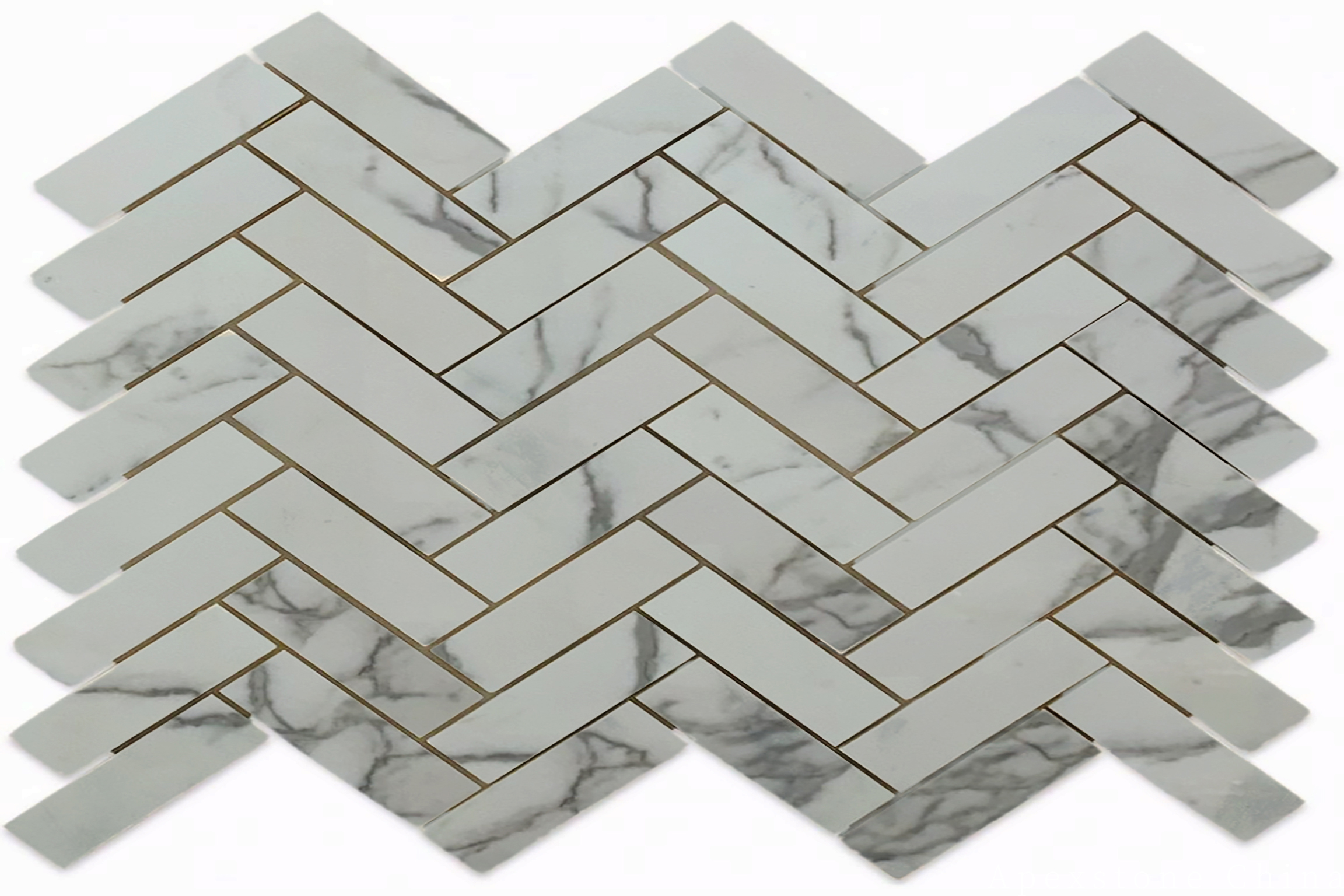
Some patterns are tied to specific modules in the trade. A 3x6 in (75x150 mm) subway tile breaks movement into short regular waves and is often used for splashbacks and shower niches. A 4x4 in (100x100 mm) hexagon suits bathroom floors and powder-room walls. A 4x12 in (100x300 mm) herringbone gives an entry floor direction. These are starting points, not rules—but they explain why certain sizes dominate certain rooms.
Subway, hexagon, herringbone: what each pattern does
Pattern changes both the visual read and the practical demands of an installation. The table below compares the common options for marble tile.
| Pattern | Typical module | Visual effect | Practical notes |
|---|---|---|---|
| Subway (running bond) | 3x6 in (75x150 mm) | Short regular waves; calm horizontal rhythm | Good for splashbacks and shower niches; more grout lines than a large-format field |
| Hexagon | 4x4 in (100x100 mm) | Honeycomb geometry; breaks up a floor | Suits bathroom floors and powder-room walls; small format means more grout |
| Herringbone | 4x12 in (100x300 mm) | Directional zigzag; adds movement | Gives entry floors direction; requires careful dry layout at edges |
| Basketweave | Mosaic or 12x12 with inserts | Woven squares; traditional look | Often used in mosaic sheets; grout-heavy |
| Chevron | Cut-to-size or specific modules | Continuous V-shape; sharper than herringbone | Needs precise cutting and a flat substrate |
Herringbone and chevron are often confused. Herringbone uses rectangular tiles set at 90 degrees to each other, creating a staggered zigzag; chevron uses tiles cut at an angle so the ends meet in a continuous point. The visual difference is subtle at a distance but obvious at the edges, where chevron demands more cutting accuracy.
Matching pattern to room
Bathroom floors and powder rooms
Small formats like hexagon and mosaic are common on bathroom floors for two reasons: more grout lines mean more grip underfoot, and small tiles follow the slope to a drain more easily than large ones. A 4x4 hexagon on a bathroom floor is a practical default; a 12x24 or 24x24 tile can work on a bathroom floor but usually needs a very flat substrate and a careful slip assessment. Honed finishes soften glare and offer better footing in wet areas than polished.
Kitchen floors and splashbacks
A 12x24 tile is a frequent choice for kitchen floors because it keeps grout lines relatively few and reads calm under cabinets. For splashbacks, a 3x6 subway tile in marble gives a classic look and keeps the field from competing with the countertop. If the kitchen floor is polished, remember that calcite marble etches from acids—a penetrating sealer slows staining but does not acid-proof the stone.
Entry floors
Herringbone in a 4x12 module gives an entry floor direction and a sense of arrival. It also exposes the quality of the setting: the zigzag pattern makes any lipping or misalignment more visible than a simple grid. That is not a reason to avoid it, but it is a reason to dry-lay a representative area before fixing.
The grout trade-off of small formats
Every grout line is a design decision and a maintenance consideration. A 3x6 subway field has far more joints than a 24x24 field; a hexagon mosaic has more still. More joints mean more grout to clean, more places for dirt to collect, and more visual noise across the stone. They also mean more grip and more flexibility in following irregular shapes.
The trade-off is not only aesthetic. Grout colour changes the perceived size of the tile: a grout a shade quieter than the vein tends to recede and let the stone read as a field, while a contrasting grout emphasises the pattern. Approve grout colour against real samples, not a screen, and check it under the lighting of the actual room.
Installation disciplines that make a field look planned
Pattern and module get the attention, but the finished look depends on what happens before the first tile is fixed. Four disciplines matter most.
- Crate sorting by vein strength. Marble veining varies from tile to tile. Sort crates before installation so strong veins are distributed evenly rather than clustered in one corner.
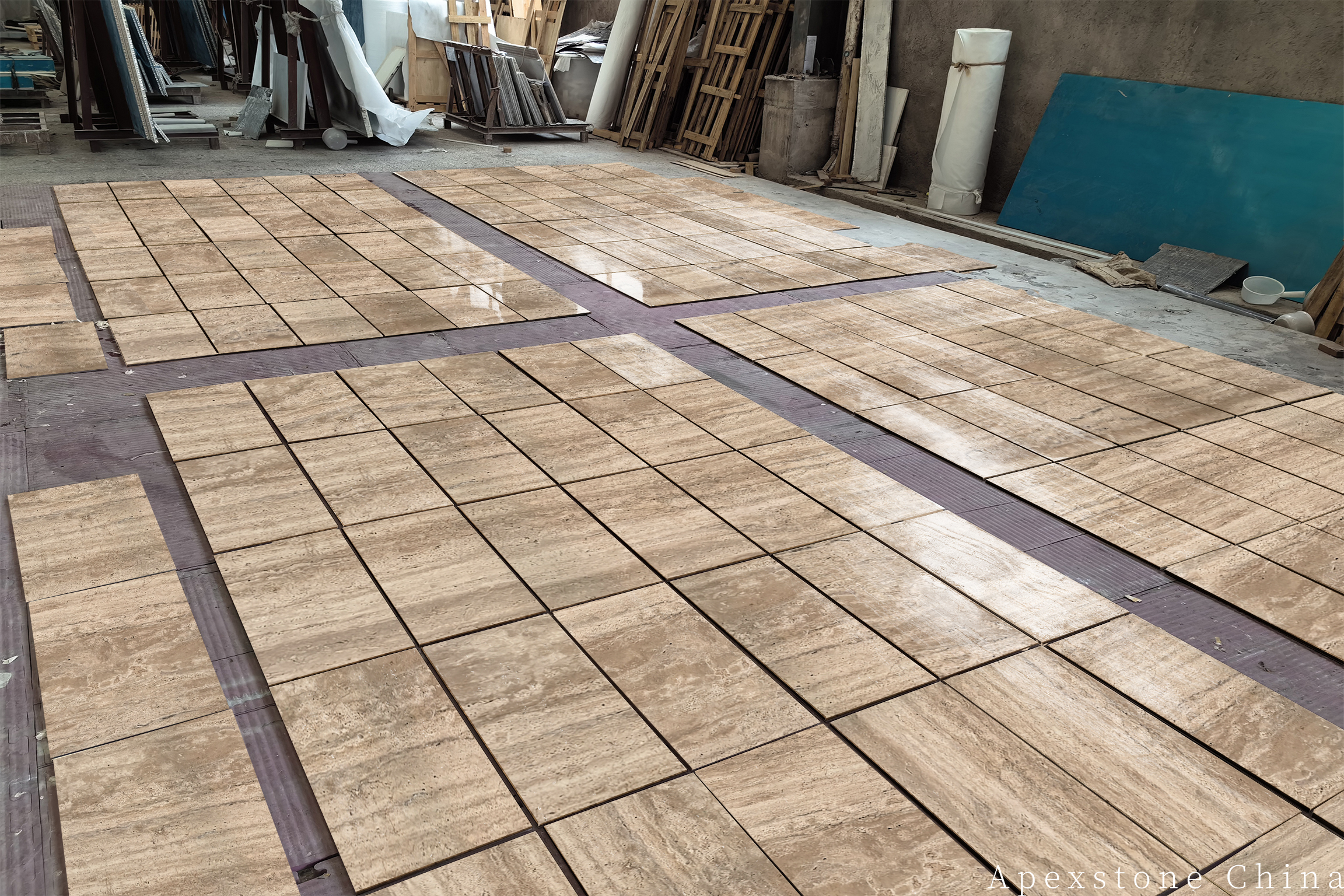
- Dry-lay a representative area. Lay out a section on the floor to check pattern flow, edge cuts, and colour balance. This is especially important for herringbone and chevron, where a small error repeats across the field.
- White adhesive for light stone. A white adhesive avoids shadowing through light marble; grey adhesive can dull the stone.
- Movement joints per substrate. Follow the substrate requirements for movement joints; skipping them invites cracking later.
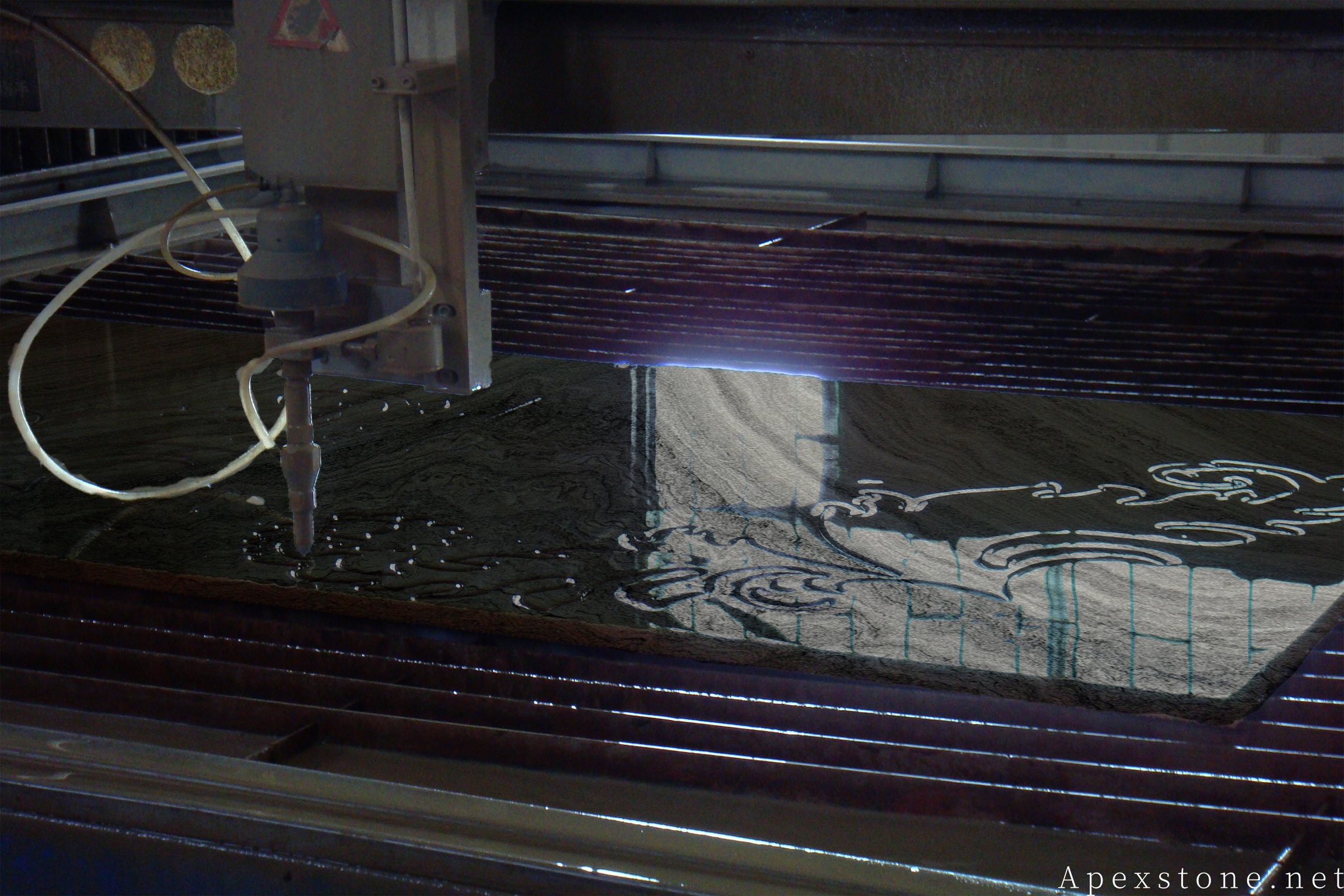
Calibration matters as much as pattern. Tiles cut on the same line and calibrated to a consistent thickness lay flatter and reduce lipping at the joints. That is a production discipline, not an installation trick—once the tiles are on site, the setter can only work with what was supplied.
A texture contrast worth one section: travertine mosaic
Not every patterned surface is marble. Travertine Romano mosaic tiles — small pieces mounted on mesh-backed sheets — offer a rougher, more matte texture that works well beside honed marble. Mosaics are usually used as accents or in wet areas where a change in texture is welcome.
What to confirm before ordering
Module and pattern decisions are the buyer's, but a few points are worth confirming with the supplier: the exact module and thickness for the intended use, the finish (polished or honed) and its suitability for wet areas, and how the supplier controls shade and calibration across the batch. For Calacatta White marble tiles, our Slabs & Tiles series applies strict shade and colour control inside every batch, with same-line cutting and calibration for flat installation. Lot samples and dry-lay photographs are available before release, so the approved field is the one that ships.
FAQ
Can I use 12x24 marble tile on a kitchen floor?
Yes, 12x24 is a common kitchen floor module. It keeps grout lines few and reads calm. Check that the substrate is flat enough for the tile size and choose a finish suited to the room's wetness; honed offers better footing than polished.
Is hexagon tile good for a bathroom floor?
Hexagon in a 4x4 module is a practical choice for bathroom floors: small formats follow slope to the drain and add grip through more grout lines. More grout also means more maintenance, so choose grout colour with that in mind.
What size tile works best for a herringbone entry?
A 4x12 in (100x300 mm) module is a common herringbone size for entries. It gives the floor direction. Because the pattern repeats, dry-lay a representative area first to check edge cuts and vein flow.
How do I choose between basketweave and chevron?
Basketweave uses square blocks with inserts and reads as a woven grid; chevron uses angled cuts to form continuous V-shapes. Basketweave is often available in mosaic sheets, while chevron demands more cutting precision. The choice depends on the room and the installer's experience.
For project-specific questions on modules, finishes, and pattern layouts, the next step is to share the room dimensions and intended use with the supplier so the module and thickness can be confirmed against the substrate and traffic.