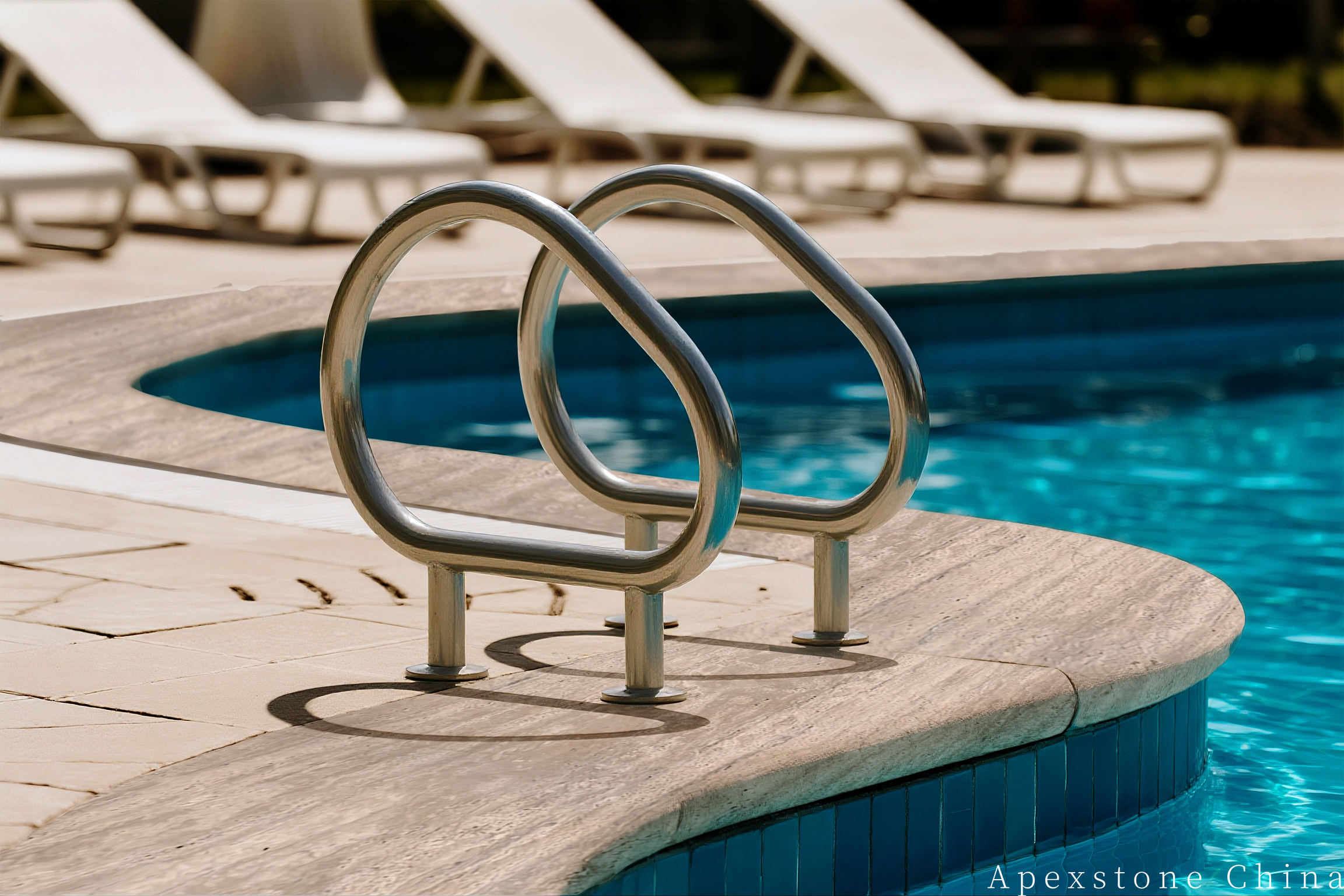
Outdoor travertine is usually unfilled brushed or tumbled, and that open texture traps leaves, pollen, and algae. This guide covers a season-by-season rinse cadence, leaf-tannin and algae control in shaded wet zones, low-pressure wide-fan rinsing instead of blasting, and a water-repellent sealer regime that also protects against freeze-thaw.
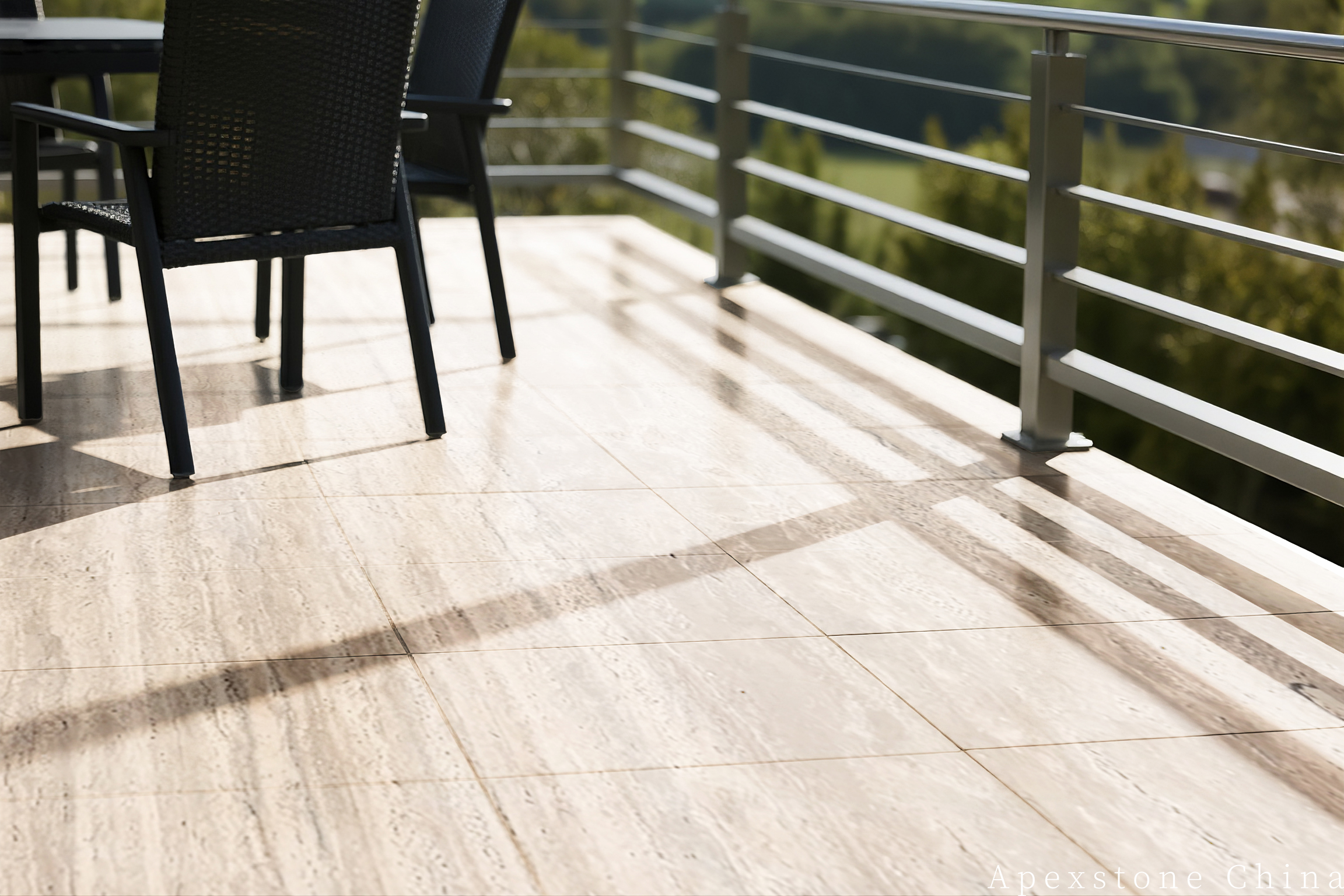
Unfilled brushed and tumbled travertine is a common choice for outdoor paving, but its open surface is also why leaves, pollen, and algae settle into the texture instead of rinsing away. Cleaning an outdoor travertine patio is less about scrubbing harder and more about rinsing on the right schedule, keeping shaded wet zones clear, and sealing before the first freeze.
What this guide covers
- Why outdoor travertine behaves differently from filled interior tile
- A season-by-season rinse and inspection cadence
- Leaf tannin and algae in shaded, wet zones
- Low-pressure, wide-fan rinsing instead of blasting
- Sealing that helps the stone through freeze-thaw
- FAQ
Why outdoor travertine needs its own cleaning routine
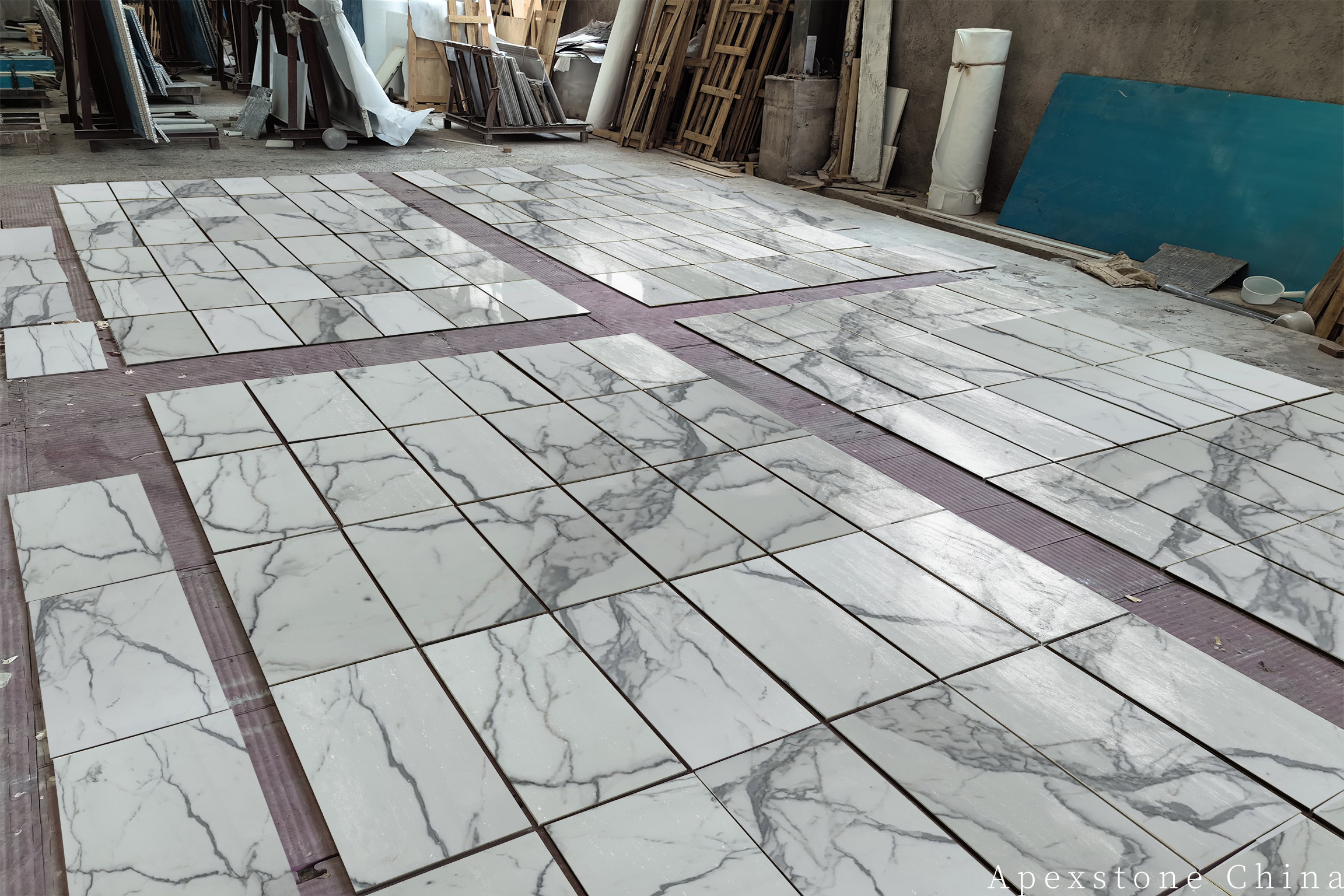
Most travertine used outdoors ships in formats such as 600x600 mm (24x24 inch) pavers or French Pattern sets, and in unfilled brushed or unfilled tumbled finishes. Those finishes leave the stone's natural voids open, and that open texture is exactly what gives the surface its slip resistance. It is also what traps fine organic debris. Fallen leaves, pollen, seed husks, and garden soil lodge in the pores; once wet, they break down into the dark staining that many owners mistake for dirt on top of the stone.
Thickness is matched to duty: 20 mm for paving, 30 mm for pool coping, and 40 mm for driveways. A pool surround sees the most water and the most shade, so it is the first place to watch for algae and tannin. The same stone also stays cool underfoot in direct sunlight, which is one reason it is common around pools and terraces.
Key point: Cleaning outdoor travertine is a rinse cadence problem before it is a scrubbing problem. Remove organic debris before it soaks in, and most staining never forms.
Season-by-season rinse cadence
The right frequency depends on your climate, tree cover, and how much shade the surface gets. Treat the schedule below as a starting point and adjust to what you actually see.
Spring: pollen and winter residue
Spring is the reset season. Rinse the full surface with a wide fan to lift pollen, grit, and any residue left by winter. Clear the joints, since trapped soil keeps moisture against the stone edges — rake out loose material to roughly the depth of the joint, top up any joint that has hollowed out, and check after a rinse that water still runs off the paving rather than standing in low spots. This is also the best time to check whether the previous sealer coat still beads water or has worn thin in high-traffic areas.
Summer: light, frequent rinsing
In summer, rinse more often but more lightly. A quick pass after mowing, after high winds, or after a storm removes debris before it works into the pores. Around pools, rinse the coping and the splash zone regularly so sunscreen, dust, and organic matter do not build up. Shaded sections under trees need more attention than open, sun-exposed paving.
Autumn: the critical leaf season
Autumn drives most tannin staining. Leaves left on damp stone release tannins that settle into the open texture, and the longer they sit, the deeper the mark. Sweep or blow leaves off before rain, not after. Rinse the shaded zones where leaves collect and dry slowly. If a leaf pile has sat through wet weather, rinse it promptly rather than waiting for the next scheduled clean.
Winter: freeze-thaw and salt caution
Travertine handles frost well when it is properly sealed and water drains away, but freeze-thaw still punishes stone that stays wet: water held in the open texture expands as it freezes, and stone that has lost its sealer takes up more of it before each freeze. Remove debris and standing water before hard freezes, and keep drainage paths clear so meltwater does not pool on the surface or in joints. Rinse away salt and grit residue when conditions allow, and avoid letting de-icing residue sit on the stone through repeated freeze cycles.
| Season | Main risk | Primary action |
|---|---|---|
| Spring | Pollen, winter residue | Full wide-fan rinse, clear joints, inspect sealer |
| Summer | Dust, sunscreen, debris | Light frequent rinsing, especially pool coping |
| Autumn | Leaf tannin staining | Remove leaves before rain, rinse shaded zones |
| Winter | Freeze-thaw, salt residue | Clear standing water and debris, rinse when possible |
Leaf tannin and algae in shaded, wet zones
Shaded, wet areas are where outdoor travertine ages fastest. Algae grows on damp, cool surfaces with organic film on them, and the open texture of unfilled brushed or tumbled stone gives it a place to hold on. The fix is not a stronger cleaner; it is removing the food source and letting the surface dry.
- Keep leaves and debris off shaded paving. The layer holds moisture and feeds algae and tannin stains.
- Improve airflow and drainage. Trim overhanging planting, clear joints, and make sure water runs off instead of pooling.
- Rinse shaded zones more often than sunny ones. Frequency matters more than force in these areas.
- Treat stains early. A fresh organic stain lifts far more easily than one that has dried and set.
For a persistent algae film, use a cleaner intended for natural stone and follow the product's directions rather than mixing your own. Avoid acidic products such as vinegar or citrus-based cleaners, and avoid strong bleach mixes, because they attack the calcium in travertine and the joint material. Test any cleaner on a small, less visible area first, agitate with a soft brush, rinse thoroughly so no residue stays in the texture, and let the surface dry completely before judging the result.
Rinse with a low-pressure, wide fan — do not blast
High-pressure blasting is the most common way to damage outdoor travertine. A narrow, concentrated jet can erode the surface, open the voids further, and drive water into joints and edges — which is the opposite of what you want before winter. Use a low-pressure setting with a wide fan tip, keep the nozzle at a shallow angle, and work in overlapping passes.
On unfilled brushed or tumbled finishes, the open texture needs a gentle lift of debris, not a scouring. Test a small, less visible area first to confirm the finish handles the setting without marking. Never hold the nozzle in one place.
Rule of thumb: If the water is pushing out sand or loosening joint material, the setting is too aggressive. Back off and use a wider fan.
Sealing: water repellency, application and freeze-thaw
Sealing is the part of how to clean travertine tile outdoor surfaces that keeps the rest of the routine manageable. A water-repellent penetrating sealer lines the pores rather than capping them, so the surface stays breathable and retains its slip resistance. On a project supply the first coat is normally applied at the factory before packing — confirm with the supplier whether it has been done and which product was used, because the site schedule depends on that answer.
The second coat goes on after installation, once the paving is clean and fully dry. A practical dryness check is that the surface no longer darkens when water is flicked onto an offcut or a hidden area. Apply thin, even coats with a lint-free applicator, wipe off any excess before it dries so it does not set as a film, and keep water and foot traffic off the surface for the curing time stated on the product data sheet. Coverage rate and recoat interval come from that data sheet rather than from a general rule — take both into the maintenance budget for a large pool deck or terrace.
Where freezing is part of the year, the sealer is what limits frost damage: it reduces how much water enters the stone before each freeze, and only stone that stays sealed and drains freely gets that benefit. Reseal when water stops beading on the surface, or when high-traffic and pool-edge areas look duller than the rest of the paving. Sealing is a maintained condition, not a one-off guarantee.
Choosing the right outdoor format
Cleaning gets easier when the stone is specified for its duty. The table below shows how the product range maps format and finish to use.
| Element | Typical format / finish | Where it fits |
|---|---|---|
| Paving | 600x600 mm or French Pattern; unfilled brushed or tumbled | Patios, terraces, walkways (20 mm) |
| Pool coping | Unfilled brushed or tumbled | Pool surrounds (30 mm) |
| Driveway | Heavier duty paving | Vehicle areas (40 mm) |
The Roman-style outdoor paving and pool coping range is available in these formats and finishes; see the Travertine Romano outdoor paving and pool coping page for the current specification set.
FAQ
How often should I rinse outdoor travertine?
It depends on climate, tree cover, and shade. Plan on a full rinse in spring, light regular rinsing through summer, frequent leaf removal in autumn, and debris and standing-water control through winter. Shaded, wet zones always need more attention.
Is a pressure washer safe on outdoor travertine?
Yes, if it is used carefully — low pressure and a wide fan, with the nozzle kept moving. Avoid a concentrated blast, which can erode the open texture and drive water into joints.
Why does unfilled travertine get algae more than filled tile?
The open texture of unfilled brushed and tumbled finishes holds organic film and moisture, which is exactly what algae needs. Keeping the surface clear and dry is more effective than repeatedly cleaning it.
Does sealing protect travertine in winter?
A water-repellent penetrating sealer reduces water absorption, and stone that stays sealed and drains freely comes through freeze-thaw better. It is not a permanent guarantee: once the sealer wears, absorption rises again, so check whether water still beads before the cold season and reseal if it does not.
Can I clean travertine with household mixes?
Use a cleaner intended for natural stone and follow the product's directions. Avoid acidic products such as vinegar or citrus-based cleaners and strong bleach mixes, since they can damage the finish or the joints.
The short version
Outdoor travertine cleaning works when you treat it as maintenance, not restoration: rinse on a seasonal cadence, remove leaves before they stain, keep shaded wet zones dry and clear, rinse with a low-pressure wide fan, and keep a water-repellent sealer on the stone through freeze-thaw. Do those four things and the open texture that gives the paving its grip stays clean instead of turning into a trap.