
Travertine's calcium carbonate matrix makes it sensitive to acids, and its pores behave differently depending on whether the tile is filled or unfilled and sealed or unsealed. This guide gives a surface-state-specific cleaning routine, explains etching versus staining, and sets a sealing cadence that protects the stone.
Stone Care Guide
Travertine is a calcium carbonate stone. That single fact explains most of what goes wrong when people ask how to clean travertine tile: acids dissolve the calcite, and the open pores hold whatever liquid reaches them. The surface texture changes what the pores do. A filled honed tile and an unfilled brushed tile need different handling, and a sealed floor buys you time that an unsealed one does not have.
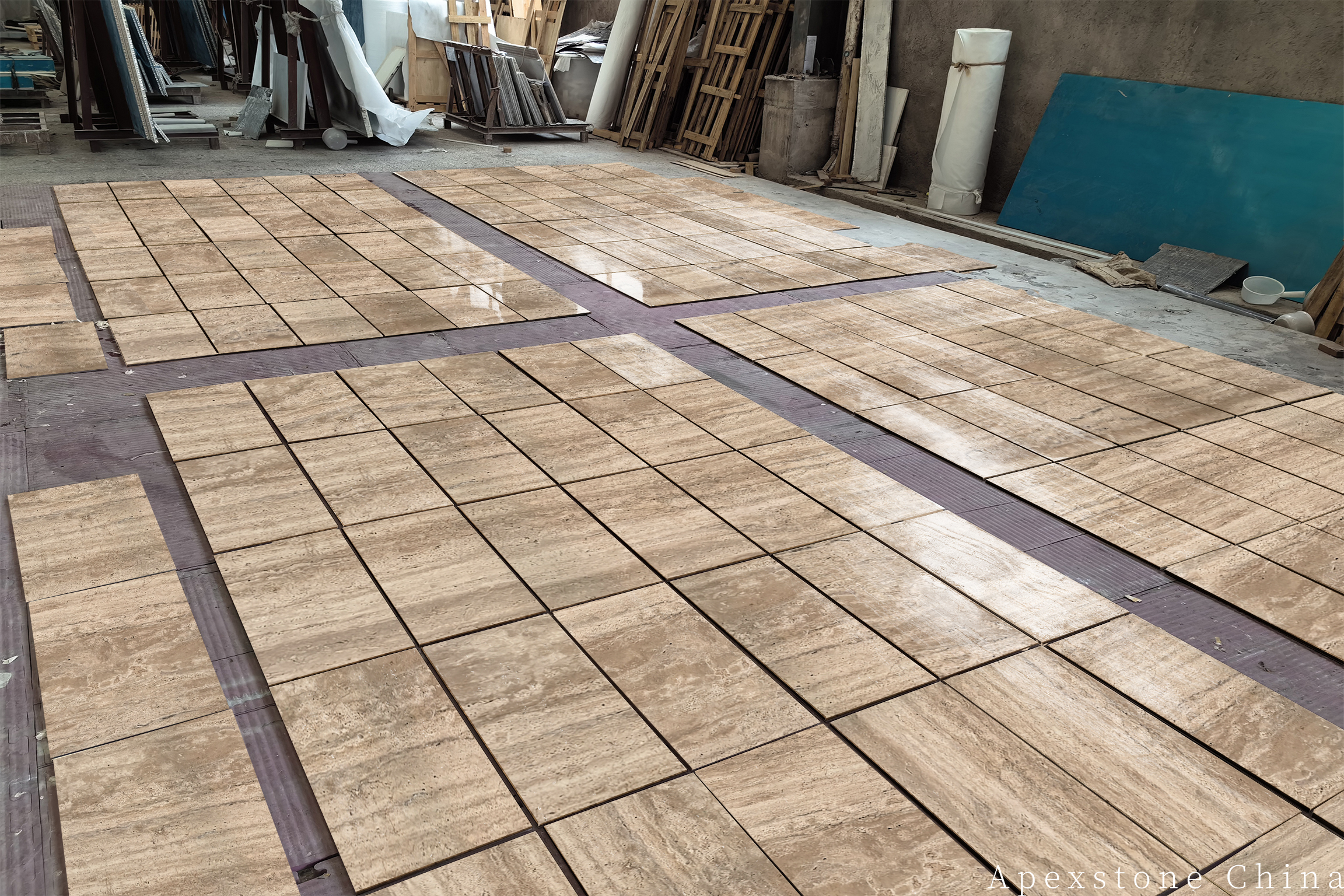
This routine is organized by those two variables. It uses the warm beige Italian travertine floor tiles shown in the cover photo as the working example — Travertine Classico Roma, supplied in filled honed, filled polished, unfilled brushed, and unfilled tumbled finishes, in 600×600 mm and 800×800 mm sizes calibrated to ±0.5 mm. Water absorption is 1–3% and hardness is Mohs 4–5. Those numbers matter for cleaning because they set the limits: the stone will take on some water, and it will scratch under grit that harder stones shrug off.
What this guide covers
Why acids harm calcite
Calcium carbonate reacts with acid. When an acidic liquid sits on travertine, it dissolves a thin layer of the stone surface rather than just sitting on top of it. The result is a dull, slightly rough patch that no amount of scrubbing will restore, because the polished or honed surface has been eaten away. This is why vinegar, lemon juice, and acidic descalers are the wrong tools for travertine, and why a spill of wine or citrus should be blotted promptly rather than wiped and left.
The 1–3% water absorption range adds a second layer of risk. Liquid that enters the pores can carry dissolved minerals and pigments deeper into the stone. On a filled tile, the fill limits how much open pore is exposed. On an unfilled tile, the voids are part of the look, and they are also where liquid collects.
Etching versus staining
These two problems are often confused, and the distinction determines whether cleaning will help.
| Problem | What it is | What it looks like | Does cleaning fix it? |
|---|---|---|---|
| Etching | Physical removal of surface material by acid | Dull, matte, or slightly pitted patch; texture change under the finger | No — the surface layer is gone and needs refinishing |
| Staining | Substance absorbed into pores or sitting on the surface | Color change without texture change; often follows a spill outline | Often — depends on how long the substance has been in the pore |
A practical test: if the mark feels different from the surrounding stone, suspect etching. If it feels the same but looks different, suspect staining. This matters because aggressive cleaning aimed at a stain will make an etch worse.
The routine by surface state
Before choosing a method, confirm which finish you have. A filled tile has the natural voids filled and the surface honed or polished. An unfilled tile leaves the voids open and the surface brushed or tumbled. The same routine does not suit both.
Filled, honed or polished travertine
This is the most forgiving state, and the one most interior floors use. Dirt tends to sit on the surface rather than drop into open voids.
- Dry-dust or vacuum with a soft brush head to remove grit before any wet cleaning. At Mohs 4–5, travertine scratches under tracked-in sand, so removing grit first protects the finish.
- Use a pH-neutral stone cleaner diluted per the label. Apply with a damp mop or cloth, not a soaking wet one.
- Work in small sections and rinse with clean water so no cleaner residue dries on the surface.
- Dry with a microfiber cloth or a dry mop. Standing water on a polished surface can leave mineral marks as it evaporates.
For a polished finish, avoid abrasive pads and gritty powders altogether — they dull the polish even when they remove the mark.
Unfilled, brushed or tumbled travertine
Here the voids are open by design. The cleaning goal is to lift dirt out of the pores without pushing it deeper or leaving cleaner behind in the voids.
- Dust and vacuum first, using a brush attachment rather than a hard nozzle.
- Use a pH-neutral cleaner at the label dilution. Apply with a soft brush and work gently along the surface, letting the cleaner dwell for the label-specified time rather than scrubbing hard.
- Rinse thoroughly. Residue trapped in open pores attracts dirt and can dry to a visible haze.
- Dry the surface and give the voids time to dry before foot traffic. Because absorption is 1–3%, the stone holds some moisture, and a sealed surface should be dry before use.
A soft brush reaches into the texture better than a flat mop on a brushed or tumbled finish. Avoid high-pressure washing, which can erode the fill or the surface itself.
Sealed versus unsealed stone
A penetrating sealer lines the pores rather than coating the surface, so it slows liquid uptake while leaving the stone looking natural. It does not make travertine waterproof, and it does not make acid safe. What it does change is the cleaning routine.
| Factor | Sealed travertine | Unsealed travertine |
|---|---|---|
| Spill response time | More working time to blot before absorption | Blot immediately; pores take liquid quickly |
| Cleaning frequency | Routine damp cleaning is usually enough | Deeper cleaning of voids may be needed more often |
| Cleaner choice | pH-neutral cleaner; avoid solvents that could degrade the sealer | pH-neutral cleaner; still no acids |
| Drying after cleaning | Dry before traffic; sealer slows vapor escape | Allow pores to dry fully before traffic |
| Acid risk | Still etches — sealer does not stop acid | Still etches, and liquid reaches the pore faster |
On either surface, the acid rule does not change. Sealer is not a substitute for the right cleaner. If you are unsure whether a floor is sealed, place a few drops of water on an inconspicuous area and watch what happens: if the water sits as raised beads on the surface, the sealer is still doing its job; if the stone darkens quickly and the drop soaks in, treat the surface as unsealed or as having a worn sealer. When the result is unclear, ask the installer or the stone supplier to confirm the sealer condition before resealing.
Sealing cadence
For the Classico Roma travertine, a penetrating sealer is the appropriate product type. Sealing frequency depends on where the tile sits rather than on a single calendar rule.
- Wet areas — bathrooms, shower surrounds, and other continuously wet zones should be resealed every 1–2 years.
- Dry interior floors — hallways, living areas, and low-moisture floors generally hold a sealer longer, but traffic and cleaning wear vary. Check the surface periodically rather than following a fixed date.
- Exterior or splash-prone areas — treat them closer to the wet-area cadence and inspect after weather exposure.
Seal only a clean, dry surface. Sealing over cleaner residue or trapped moisture can leave a patchy finish. The same applies after cleaning: let the stone dry fully before resealing.
Quick reference: do and do not
| Do | Do not |
|---|---|
| Dust and vacuum before wet cleaning | Use vinegar, lemon, or acidic descalers |
| Use a pH-neutral stone cleaner at label dilution | Use abrasive powders or aggressive pads on polished surfaces |
| Blot spills, then rinse | Let wine, citrus, or acidic spills sit |
| Dry the surface after cleaning | Leave standing water or cleaner residue to dry |
| Reseal wet areas every 1–2 years | Seal over a damp or uncleaned surface |
FAQ
Can I use a steam cleaner on travertine?
Steam forces moisture and heat into the stone. On a filled or sealed tile this can stress the fill or the sealer; on an unfilled tile it drives water into the pores. A damp mop with a pH-neutral cleaner is the safer routine. If a specific steam unit is being considered, confirm suitability with the stone supplier first.
How do I know if my travertine is filled or unfilled?
Look at the surface. Filled tiles have the voids filled and a honed or polished face; unfilled tiles show open voids and a brushed or tumbled texture. The product specification should state the finish, and the supplied finish should match it.
Will sealing stop etching?
No. A penetrating sealer slows liquid absorption but does not protect calcite from acid. Preventing acid contact is the only reliable way to avoid etching.
What should I do about an existing etch mark?
Because etching is lost surface material, cleaning will not restore it. A honed or polished surface typically needs refinishing by a stone professional. Confirm the appropriate repair method with the installer rather than attempting an abrasive fix on your own.
For spec sheets and finish options on the travertine used as the example here, see the Travertine Classico Roma tile product page. Always confirm cleaner dilution, sealer type, and resealing intervals with the product supplier or your stone installer, since site conditions affect how often a sealer needs renewal.