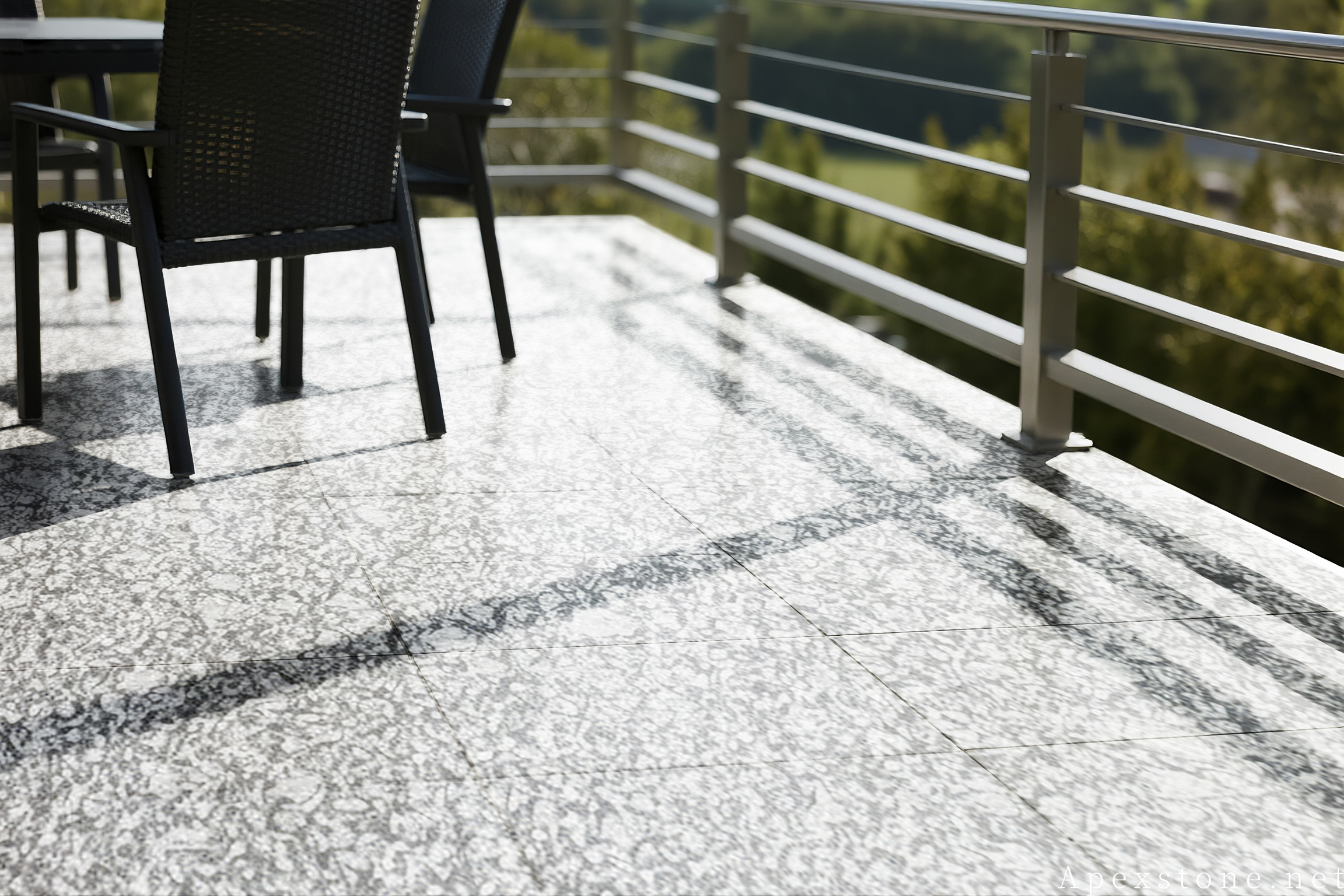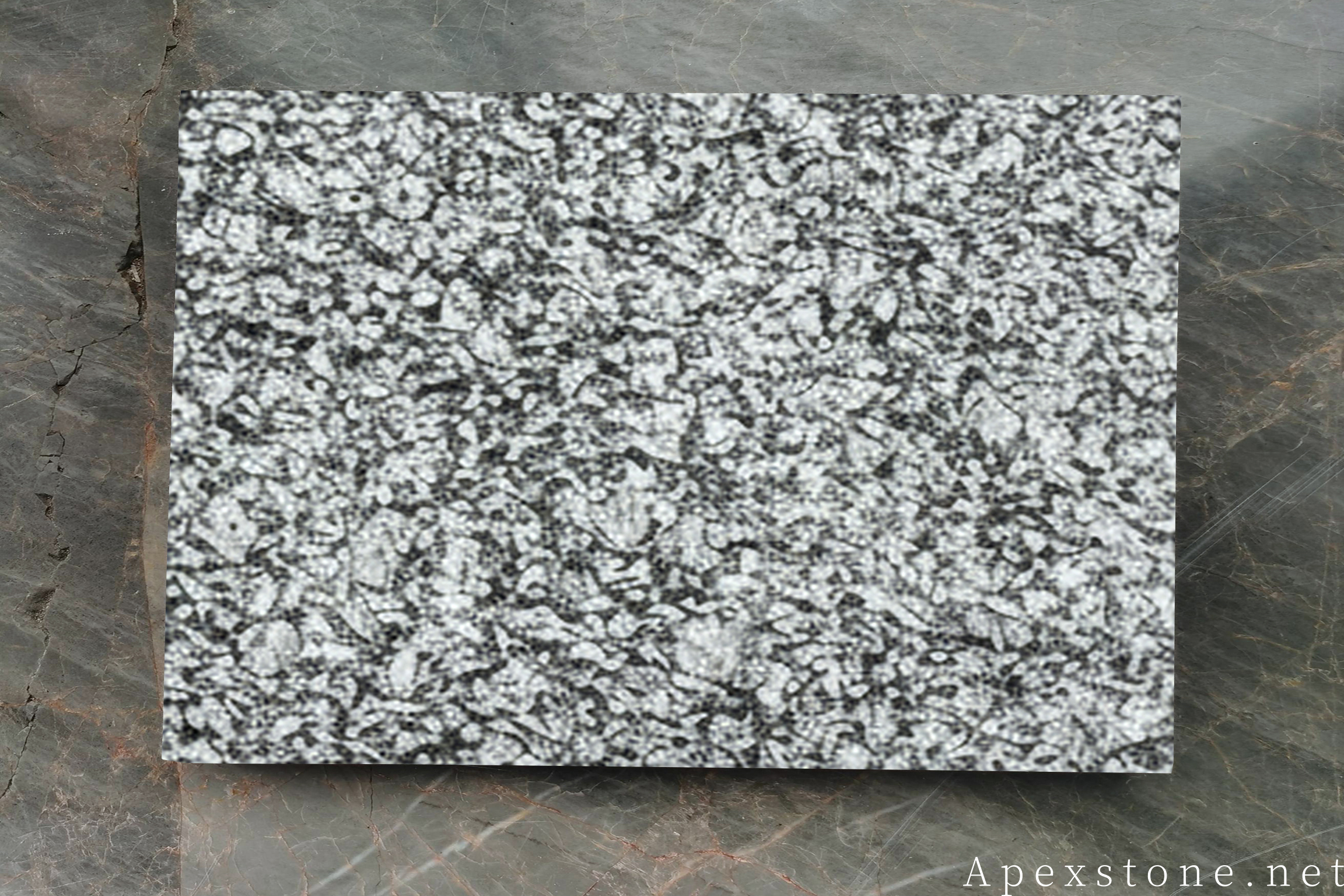
Granite pavers need a different maintenance routine from limestone or marble because the surface is silicate, not calcite. This guide covers sweeping and rinsing cadence for flamed granite driveway paving, oil drips, organic growth in shaded joints, efflorescence on new installs, and why brushing with the grain beats sealers that change grip.
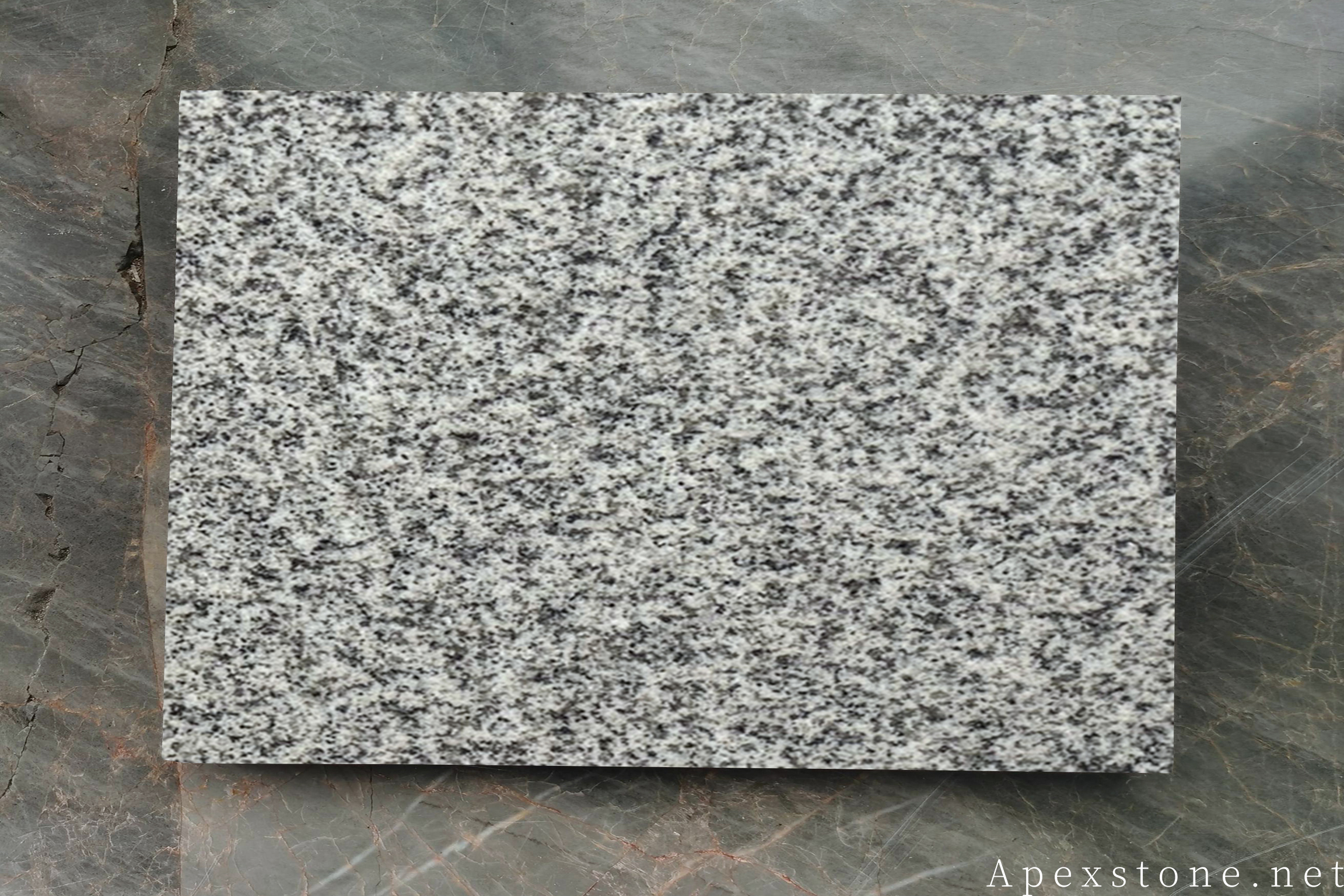
Flamed granite pavers are laid flat across driveways, patios and walkways, and they reward a routine that is mostly sweeping, rinsing and brushing. The reason is material: granite is a silicate stone, so the mild acidic cleaners sold for limestone, travertine and marble are the wrong tool here, and the flamed finish that gives the paving its grip is sensitive to anything that fills the texture.
Granite is not a calcite stone, and the care plan differs
Most outdoor stone advice is written around limestone, travertine and marble. Those are calcium carbonate stones: they react with acids, etch under acidic cleaners and generally want pH-neutral products plus a sealer. Granite is a different family. Its mineral structure is silicate-based, it does not etch the way calcite stones do, and its own care profile centres on abrasion, oil absorption and surface texture rather than acid sensitivity.
That matters for two practical decisions. First, you are not fighting etching, so you do not need to treat every spill as an emergency. Second, the surface finish itself — in this case a flamed, non-slip texture — is a maintenance asset that should be protected, not covered over.
Sweeping and rinsing cadence by surface
Grit is the main long-term enemy of any paving. On a driveway it is abrasive under tyres; on a walkway it is tracked indoors; on a patio it works into joints. A fixed cadence prevents most of the problems that later look like staining.
- Driveways: sweep or blow off weekly, and always after yard work, hedge cutting or leaf fall. Rinse monthly with plain water, working from the high side toward drainage.
- Patios: sweep before and after the season you use them most, and rinse whenever visible dust or pollen builds. Furniture legs and planters trap damp debris — lift them periodically rather than cleaning around them.
- Walkways and steps: sweep every one to two weeks. Steps with bullnose or double bullnose edges collect grit along the nosing, so brush that line deliberately.
Use a stiff-bristle brush and clean water. Detergent is not part of routine cleaning; if you use any, keep it mild, rinse thoroughly, and avoid letting it dry on the surface.
Oil drips on a driveway
Oil is the one stain class where granite genuinely needs attention, because the flamed surface is textured and a drip sits in the low points rather than on a flat plane. Two habits do most of the work:
- Lift it out, don't scrub it in. Blot fresh oil with an absorbent material and press down. Scrubbing spreads the oil across the texture and pushes it deeper.
- Draw it out with an absorbent poultice. A powder such as diatomaceous earth or cat litter left over the spot draws oil from the pores. Cover it, leave it for a day or more, then sweep it away. Repeat on old drips — they usually need more than one cycle.
For vehicle areas, deal with drips early. A drip that has sat through a summer is a much slower job than one caught the same week. If the drip has already darkened the stone and repeated poulticing is not lifting it, that is a question for the supplier or a stone restoration contractor rather than a stronger DIY chemical.
Organic growth in shaded joints
Algae, moss and lichen appear where water lingers: north-facing patios, joints under trees, the shaded edge of a wall, the bottom of steps. Granite itself does not feed the growth — the joint sand and trapped organic debris do.
- Brush the joint line with a stiff brush and clean water first. Removing the food source does more than killing the growth.
- Improve drainage and airflow where you can: clear leaf litter, keep the joint sand topped up so water does not pool in open joints, and trim planting that keeps a strip permanently damp.
- Use a dedicated outdoor stone or hardscape cleaner where growth keeps returning, follow the label dilution, and rinse well. Avoid chlorine bleach as a routine answer — it can discolour joint sand and does nothing about the underlying damp.
On a shaded patio, plan for the joint line to be the part that needs attention, not the paver face.
Efflorescence on new installs
White powdery bloom on new paving is usually efflorescence: soluble salts migrating to the surface as moisture moves out of the bedding and mortar. It is most common on fresh installs and in the first wet season, and it is a moisture story rather than a cleaning-product story.
The correct response is patient. Dry-brush the bloom off, keep the surface dry, and let the install finish curing. Washing with water can dissolve the salts and drive them back in, which brings the bloom back. If you are wetting the paving to clean it, let it dry fully before judging the result. Recurrent efflorescence months after installation points to a moisture path — check drainage, irrigation overspray and joint condition before treating the surface again.
Brushing with the grain, not sealing against it
Flamed granite is deliberately left with a rough, non-slip surface. That texture is the reason it is used on driveways, steps, pool surrounds and public walkways, and it is the reason you should not seal it with a film-forming product that fills the profile. A coating that smooths the surface changes the grip you paid for, and on outdoor paving it can also trap moisture and wear unevenly under traffic.
Instead, clean with the texture rather than against it:
- Work a stiff brush along the surface in one consistent direction, letting the bristles reach into the flamed profile.
- Rinse from the high side and push debris and water toward drainage, not back across the cleaned area.
- On steps, brush along the tread and finish on the bullnose edge separately.
- Let the paving dry completely before assessing whether a stain has gone.
If a client insists on a surface treatment, the decision should be driven by what it does to slip resistance and how it weathers outdoors, not by habit from indoor stone. Ask the supplier what they recommend for that specific finish rather than assuming a sealer is the default.
Matching the paver to the traffic
Cleaning gets easier when the paving was specified correctly in the first place. Thickness and size should follow the load.
| Use | Typical thickness | Standard sizes |
|---|---|---|
| Walkways, patios, pedestrian areas | 20 mm, 30 mm | 600×600, 450×450, 600×300 mm; 12×24, 16×24, 6×9, 4×9 in |
| Driveways and vehicle areas | 40 mm, 50 mm, 2 in | Same size range |
Bianco Crystal is a freeze-thaw resistant granite with low water absorption, which suits outdoor exposure across driveways, patios and walkways. Matching step treads, coping and wall caps are available with bullnose and double bullnose edges, so the nosing on a stair or the edge of a coping can be detailed in the same stone as the field paving instead of finished with a different profile.
Full specifications are listed on the Bianco Crystal granite pavers page.
- Sweep weekly on driveways and walkways; rinse with plain water monthly.
- Blot and poultice oil; do not scrub it into the texture.
- Treat organic growth at the joint line, not the paver face.
- Dry-brush efflorescence on new installs and let the bedding cure.
- Brush with the grain; avoid film-forming sealers that fill the flamed profile.
Frequently asked
Can I use a pressure washer on flamed granite?
A pressure washer can strip joint sand and drive water into the bedding if aimed at the joints. For routine cleaning, a brush, water and a garden hose are enough. Where heavier cleaning is needed, keep the jet off the joints and check the joint sand afterward.
Does granite need sealing outdoors?
Not in the way calcite stones often do. The priority for a flamed finish is preserving slip resistance, and film-forming sealers work against that. Confirm any treatment with the paver supplier for the specific finish and application.
How do I handle a stain I cannot identify?
Start with the gentlest method: dry-brush, then a mild detergent and water, then a poultice for anything that looks absorbed. If it persists, identify the source — oil, rust, organic, efflorescence — before choosing a product.