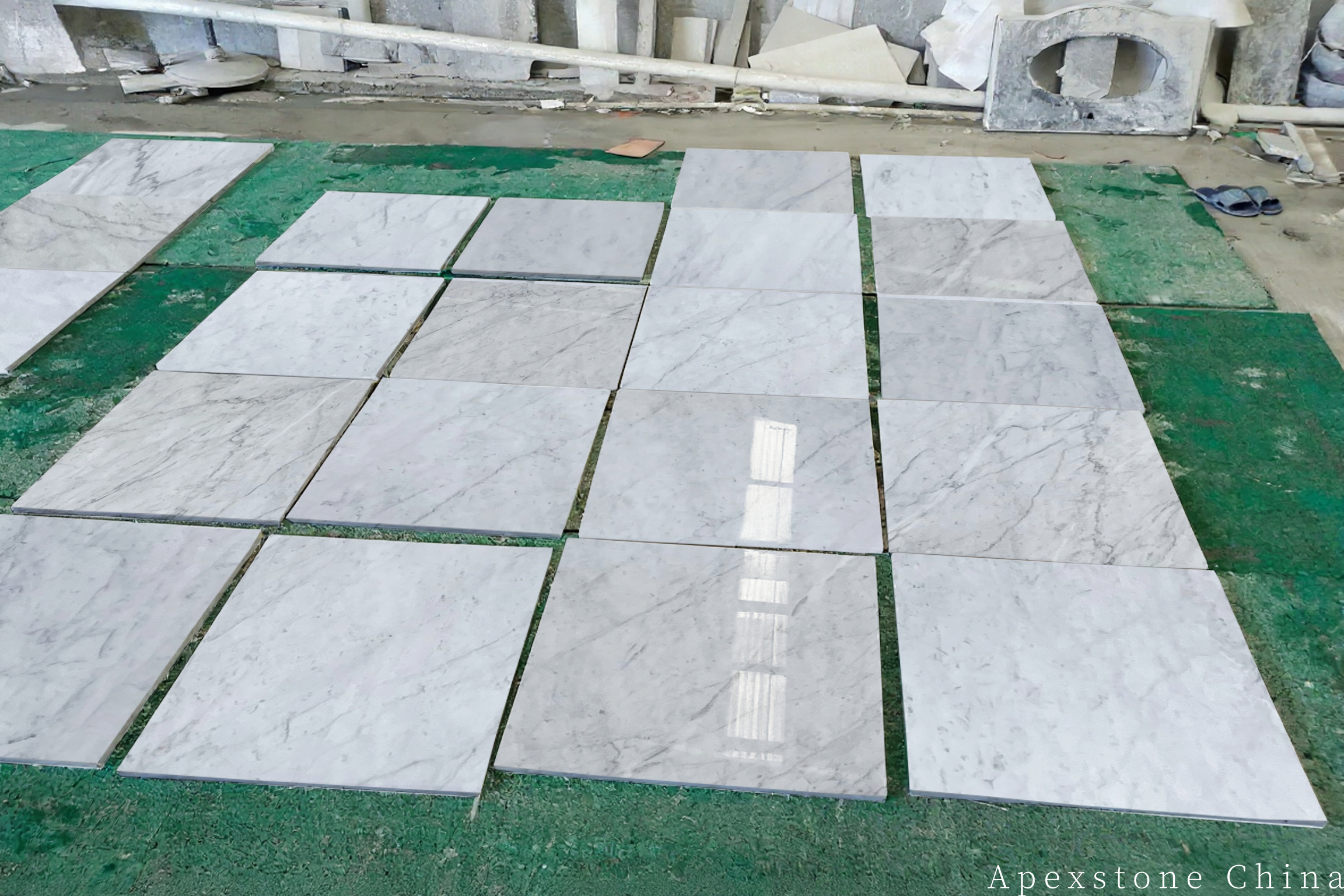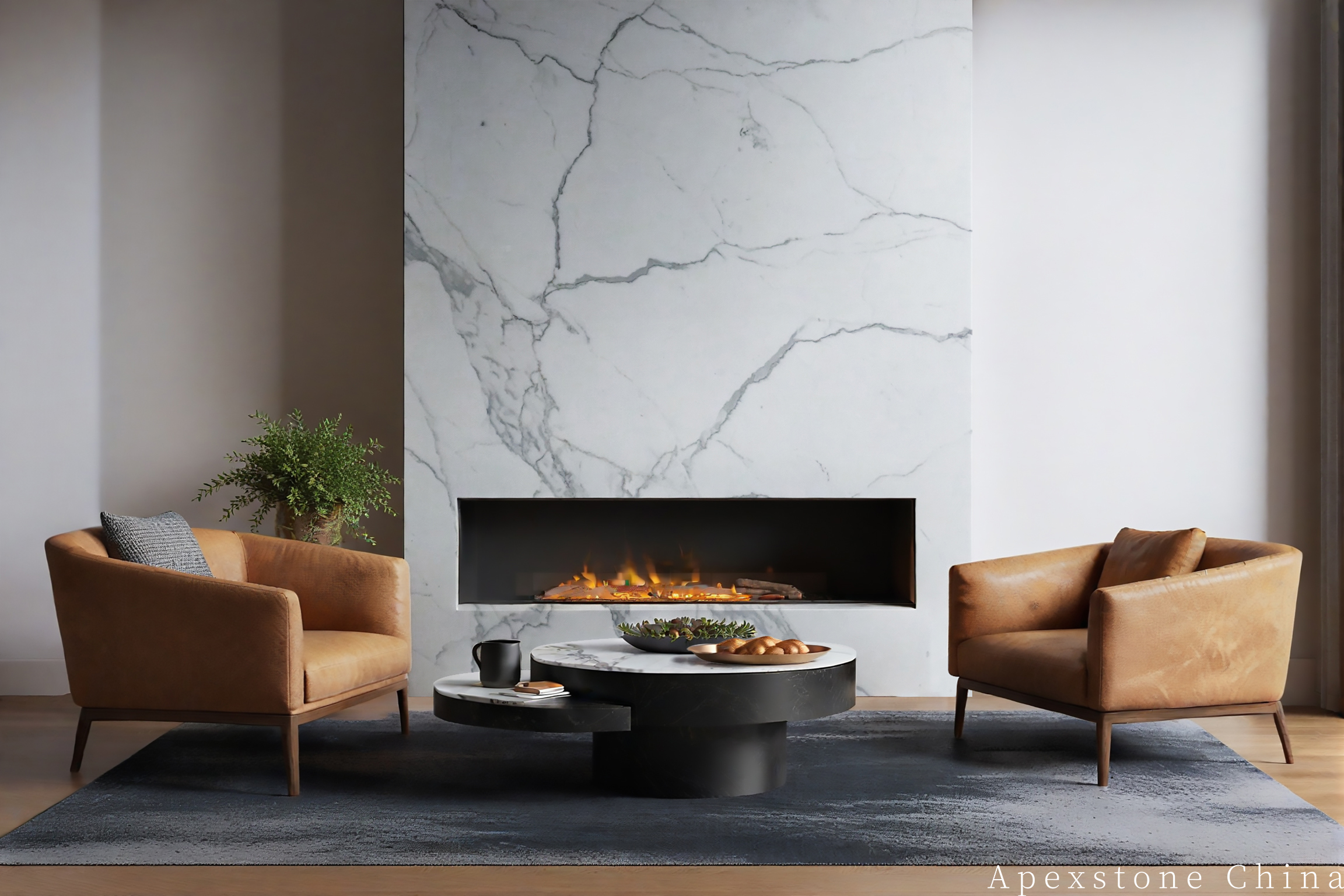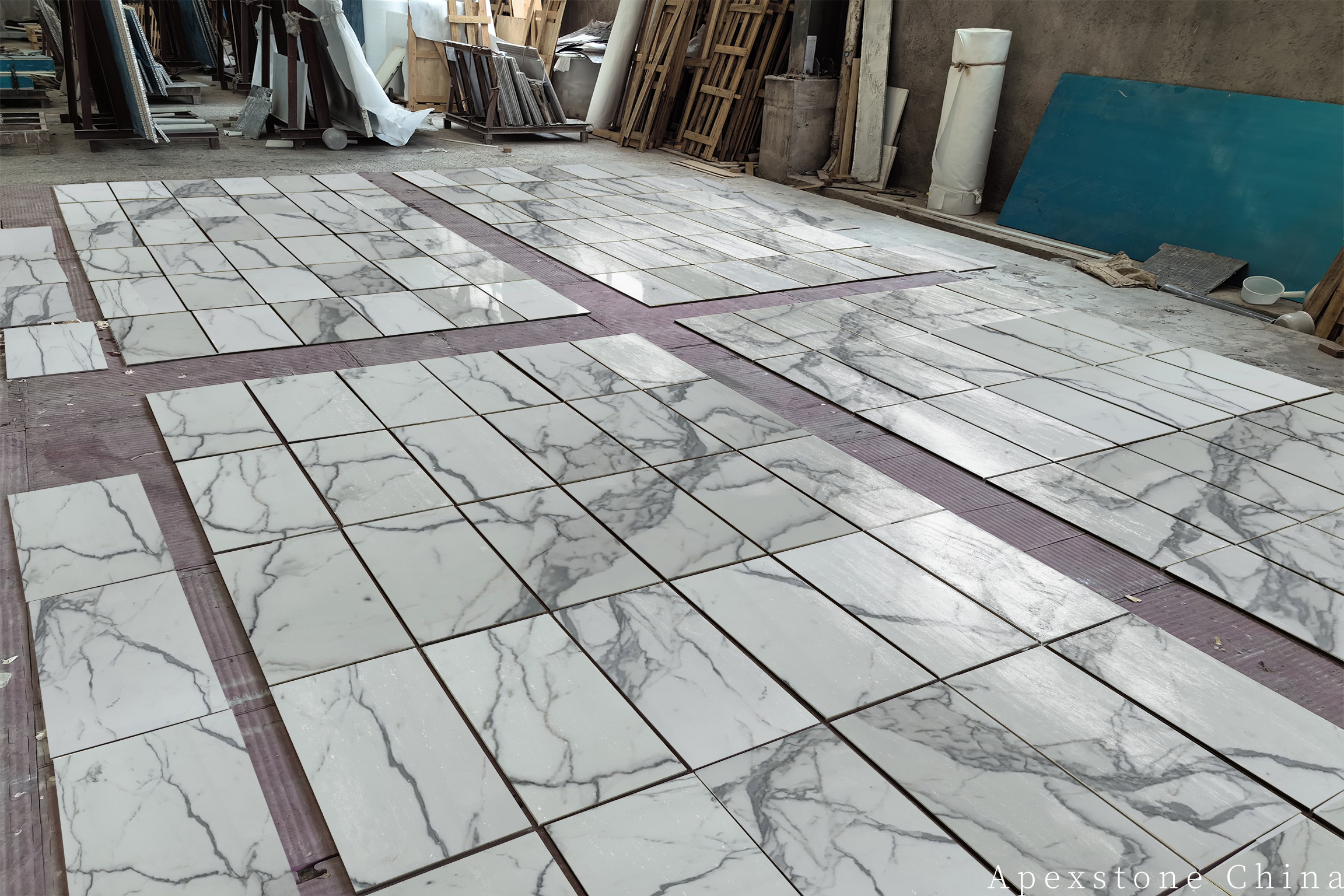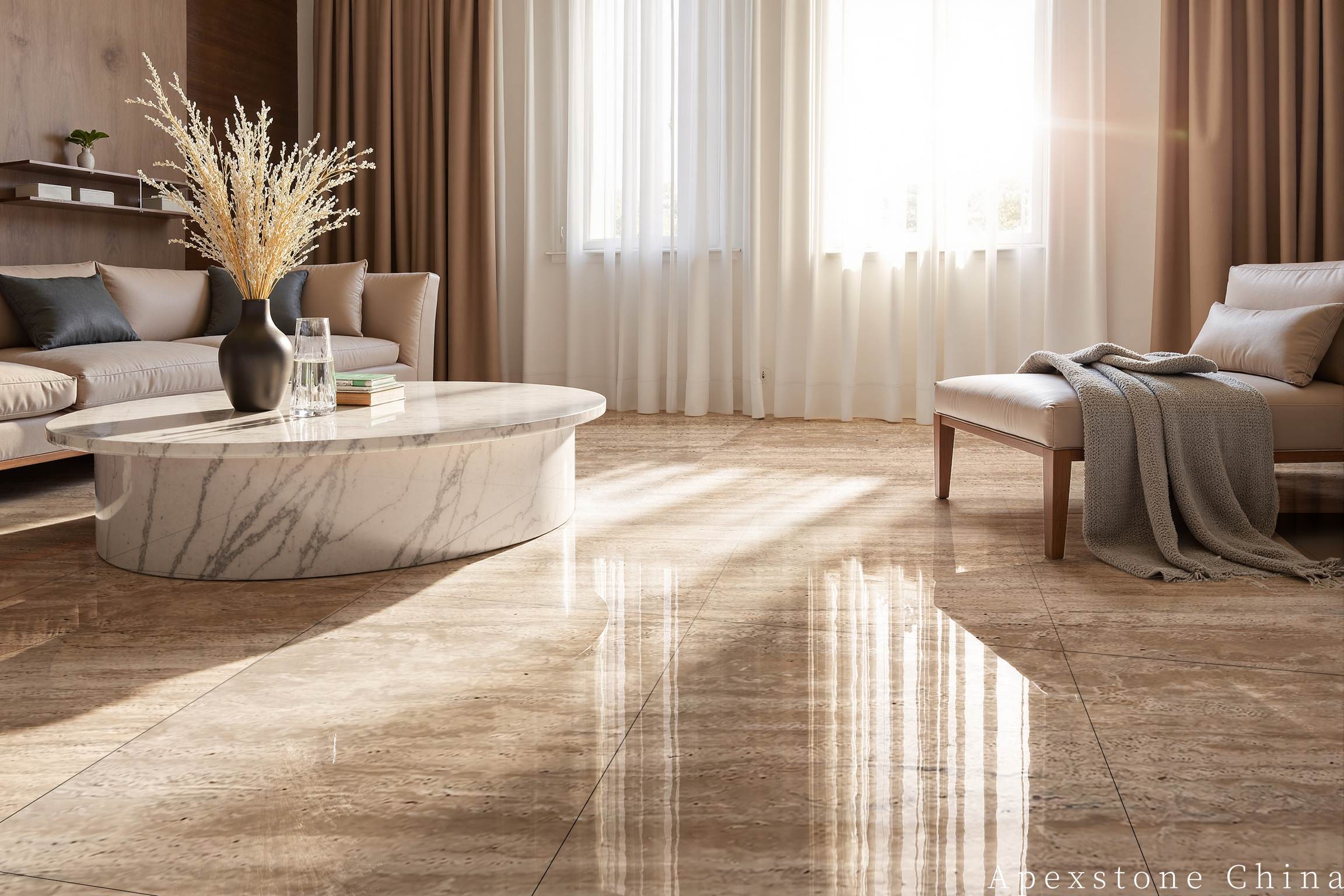
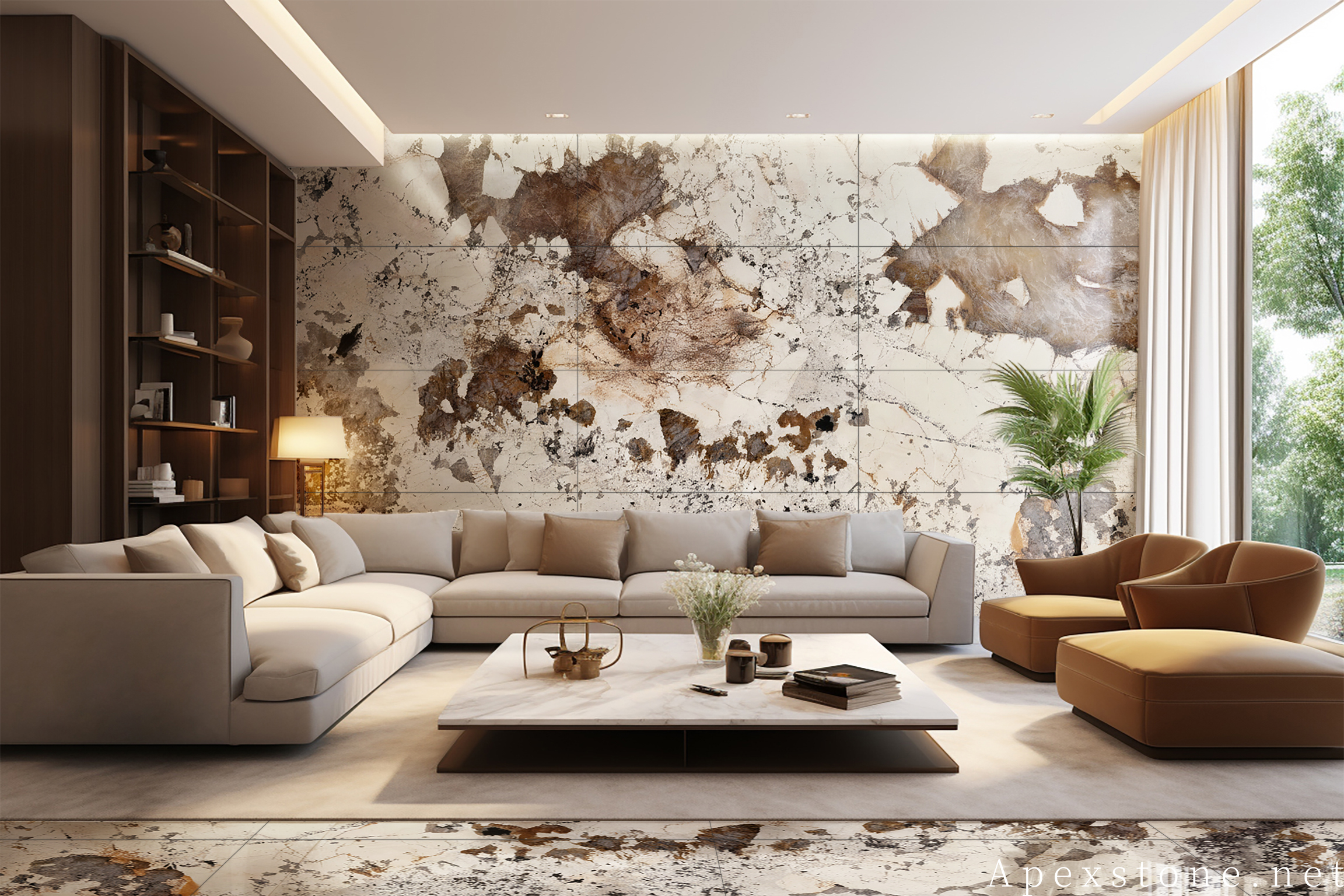
Pandora Quartzite Accent Wall & Feature Wall Panels
Pandora quartzite accent wall and feature wall panels from Brazil: cream ground, large brown floral movement, natural crystal sparkle and backlight-friendly translucency. Book-matched panels, 12x24 and large-format cuts, honed or polished.
Highlights
- Book-matched panels planned on actual-slab images before cutting
- 12x24, 24x24, 600x600 and large-format panel cuts from one stock
- Polished, honed or leathered finishes for different interior styles
- Translucent in thin sections for backlit feature walls
- Panels labelled per elevation and packed vertically in reinforced crates
Specifications
| Material | Brazilian Pandora natural quartzite |
|---|---|
| Tile Formats | 12x24 in, 24x24 in, 600x600 mm and custom panel sizes |
| Large-Format Panels | Cut to slab height for seamless feature walls, by elevation drawing |
| Reference Thickness | 1 cm (3/8 in) to 2 cm (3/4 in) depending on panel size and fixing |
| Finish | Polished, honed or light leathered |
| Book-Matching | Available; mirror direction planned on actual-slab layout |
| Backlighting | Translucent in thin sections; suitable for backlit feature walls |
| Fixing | Adhesive or mechanical anchoring per project specification |
| Documents | Elevation drawing, actual-slab layout and panel schedule |
Product Detail
Apexstone material brief
Pandora Quartzite Accent Wall & Feature Wall Panels
The pain point: joint composition decided on site, not on paper
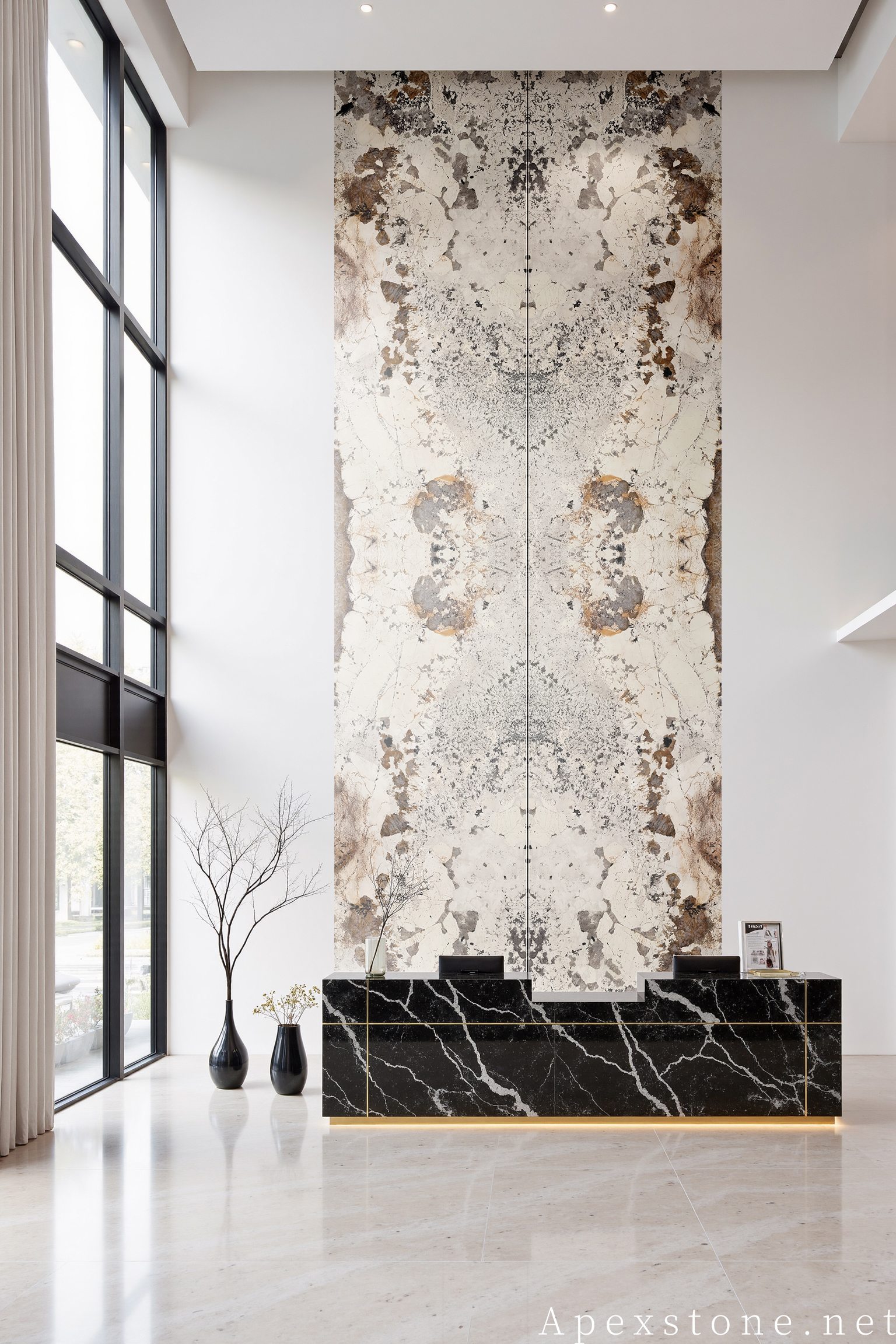
A book-matched Pandora feature wall is bought for one thing: the butterfly-wing moment where two mirrored panels open across the wall. It is also, precisely, the thing most often destroyed in transit between factory and fit-out. Panels arrive as a mixed pallet, the mirror direction is unmarked, the site team hangs them in the order they find them — and the mirrored bloom splits down a wrong joint, a corner turns where the pattern was supposed to stop cleanly, or joints meant to read tight reveal a stair-step of mismatched movement across six panels. Nothing is technically defective; every panel is within tolerance. But the wall reads wrong, and the client is looking at the one surface that was specified to be dramatic.
Interior contractors know the repair economics: re-hanging panels costs labour and re-sequencing on a finished site, and there is no such thing as a local fix for mis-composed joints on a large-pattern quartzite. The substrate, adhesive and anchors are all fine — the composition is what failed.
The answer is to decide the joint composition on paper before a single panel is cut — which is how every Pandora wall order is produced.
How the layout drawing locks the composition
Every Pandora wall order follows one sequence: slab selection from photographed stock, an elevation-based layout drawing on the actual-slab images, approval, cutting, surface finishing, and a final inspection against the numbered drawing. Because the brown floral movement is large and directional, consecutive slabs from one block mirror almost perfectly — but only when the mirror direction is assigned panel by panel. The drawing does exactly that: mirror direction, joint lines and panel numbering are all resolved before the first cut, and where a wall meets a corner or a reveal, the layout decides whether the pattern turns the corner or stops cleanly. That decision is made on paper, not on site with a pencil behind an installer's ear.
Panels are then labelled in installation order and packed vertically in reinforced crates — the orientation that survives container transport best. For mixed orders of 12x24 tile and large-format panels, pieces are sorted and labelled per room or per elevation, so a fit-out team unpacks one crate per wall instead of hunting through a mixed pallet. The result on site is a wall that hangs like a numbered diagram: the composition was signed off weeks before the first anchor was drilled.
Panel formats that serve the composition
Pandora panels are cut to the project's grid: 12x24 wall tile for a traditional laid-stone look, 24x24 squares, 600x600 mm and larger custom panels for metric projects, and large-format panels cut to full slab height for seamless feature walls — the format most specified for fireplace walls and lobby features. Both unit systems are cut from the same slabs, so mixed-market orders ship from one stock. Polished maximizes the sparkle and deepens the brown movement; honed gives a matte, chalky surface suited to country and bohemian interiors; a light leathered texture adds tactile depth to feature walls.
Because quartzite is dense and strong, panels can be cut thinner than many marbles at the same panel size — 1 cm (3/8 in) to 2 cm (3/4 in) depending on panel size and fixing — which reduces both weight on the substrate and freight cost, a quiet but real advantage on large lobby walls where every square metre is suspended.
What the composition discipline is worth
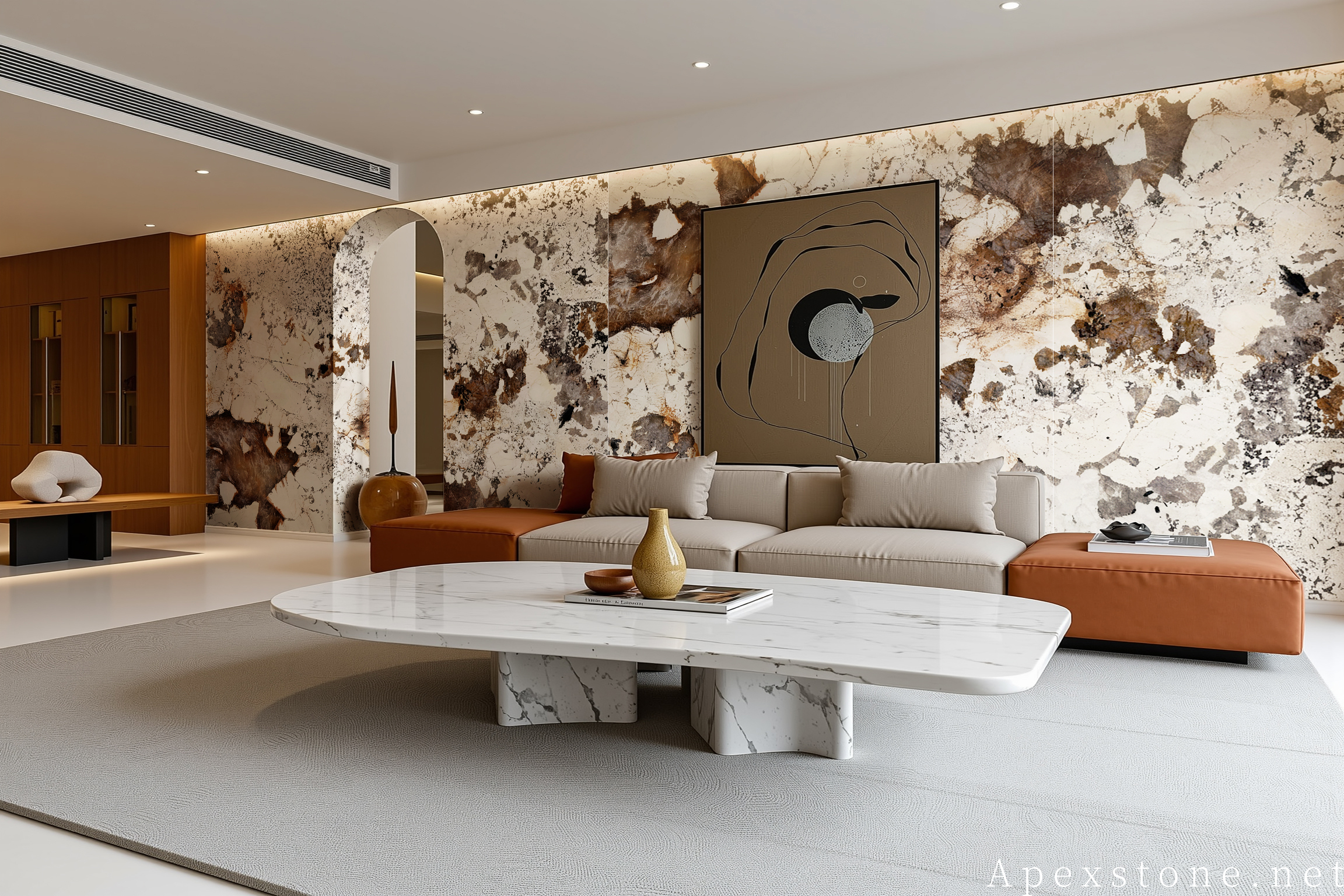
For interior contractors, a numbered, per-elevation wall turns installation into sequencing rather than problem-solving — fewer site hours, no re-hang risk, and a finished wall that matches the render the client approved. For importers and wholesale buyers, the per-room labelling removes the most common claim category on feature-wall orders: panels that are individually fine but jointly wrong. And for anyone selling the project onward, the approved layout drawing is a document the end client signs — which converts "I expected a different pattern" from a dispute into an approval trail.
The same drawing discipline extends to backlit walls: translucency varies with panel thickness, so panels destined for backlighting are planned at the thickness the illumination design assumes, not left to whatever the saw produced.
Buyer value in one line: the mirror direction, the joints and the corners are signed off on paper — the wall the fit-out team unpacks is the wall the designer drew.
Specification
| Item | Detail |
|---|---|
| Material | Brazilian Pandora natural quartzite |
| Tile formats | 12x24 in, 24x24 in, 600x600 mm and custom panel sizes |
| Large-format panels | Cut to slab height for seamless feature walls, by elevation drawing |
| Reference thickness | 1 cm (3/8 in) to 2 cm (3/4 in) depending on panel size and fixing |
| Finish | Polished, honed or light leathered |
| Book-matching | Available; mirror direction planned on actual-slab layout |
| Backlighting | Translucent in thin sections; suitable for backlit feature walls |
| Fixing | Adhesive or mechanical anchoring per project specification |
| Documents | Elevation drawing, actual-slab layout and panel schedule |
Frequently asked by trade buyers
Can book-matching be guaranteed across the whole wall? Consecutive slabs from one block mirror almost perfectly, and the mirror direction is assigned panel by panel on the approved layout — so the composition is locked before cutting, not improvised on site.
How are mixed tile and panel orders shipped? Pieces are sorted and labelled per room or per elevation and packed vertically in reinforced crates, so one crate serves one wall.
What thickness for a backlit wall? Translucency is best in thin sections; panels for backlighting are planned at the thickness the illumination design assumes. Send the lighting concept and the layout accounts for it.
Can we order a single panel for a showroom? Yes — single-panel orders are accepted for sample walls and showrooms, following the same drawing and inspection sequence.
Send the elevations — get the joint composition approved before cutting
Send the wall elevations, panel grid, finish and book-match preference, and the destination port. Your order comes back as a layout on the actual Pandora slab images — mirror direction, joint lines and panel numbering resolved before the first cut. Single-panel orders are accepted.
Request a Pandora wall layout