Interior Stone Design
Primavera Marble in Nature-Inspired Interiors
Discover Primavera Marble for floor tiles, kitchen and bathroom wall cladding, dining tables, and mosaic accents. Emerald green base with light organic veining creates a jade-like quality that brings natural tranquillity to interior spaces.
Design Inspiration
The Stone That Reads as Jade: Designing with Primavera's Emerald Green
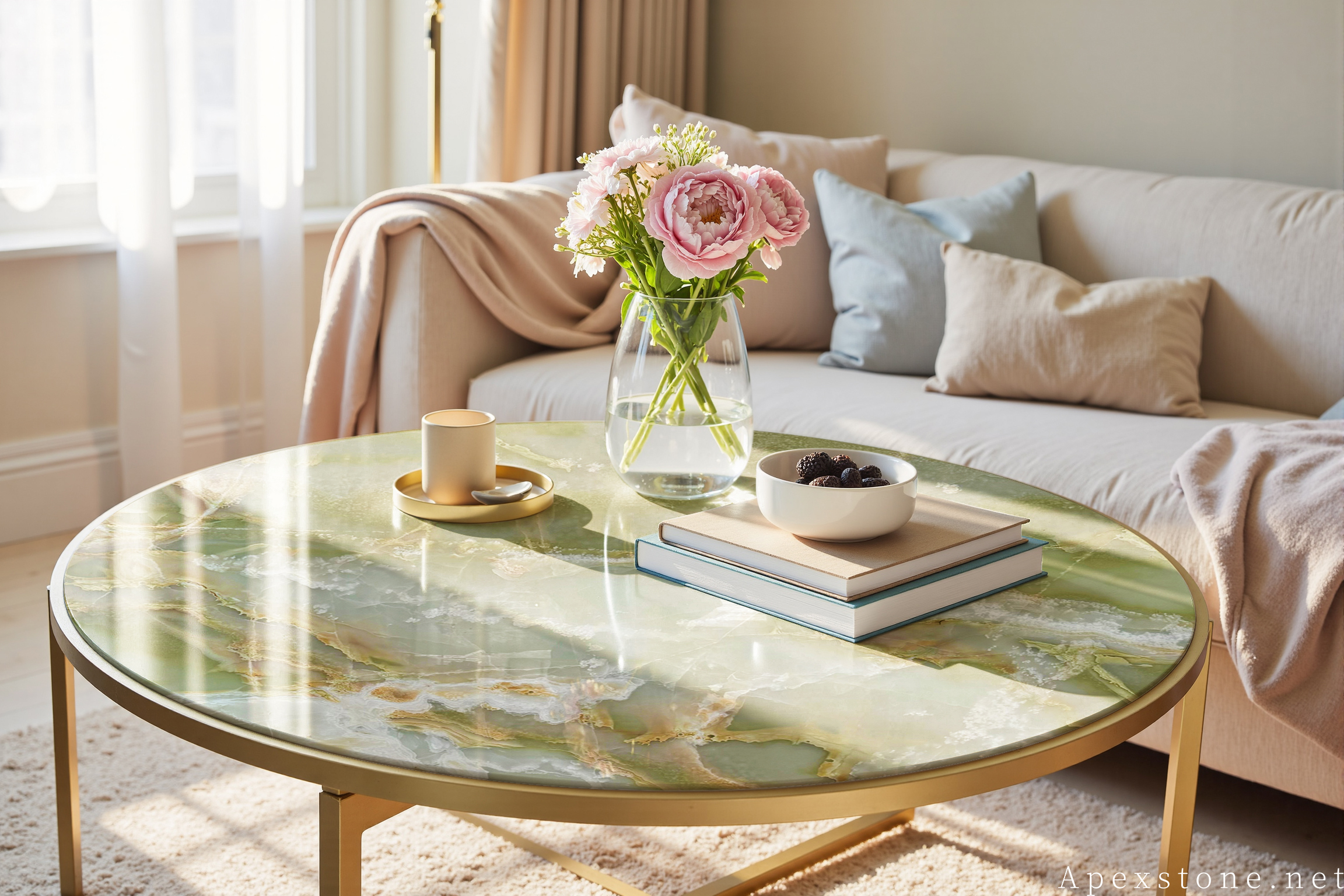
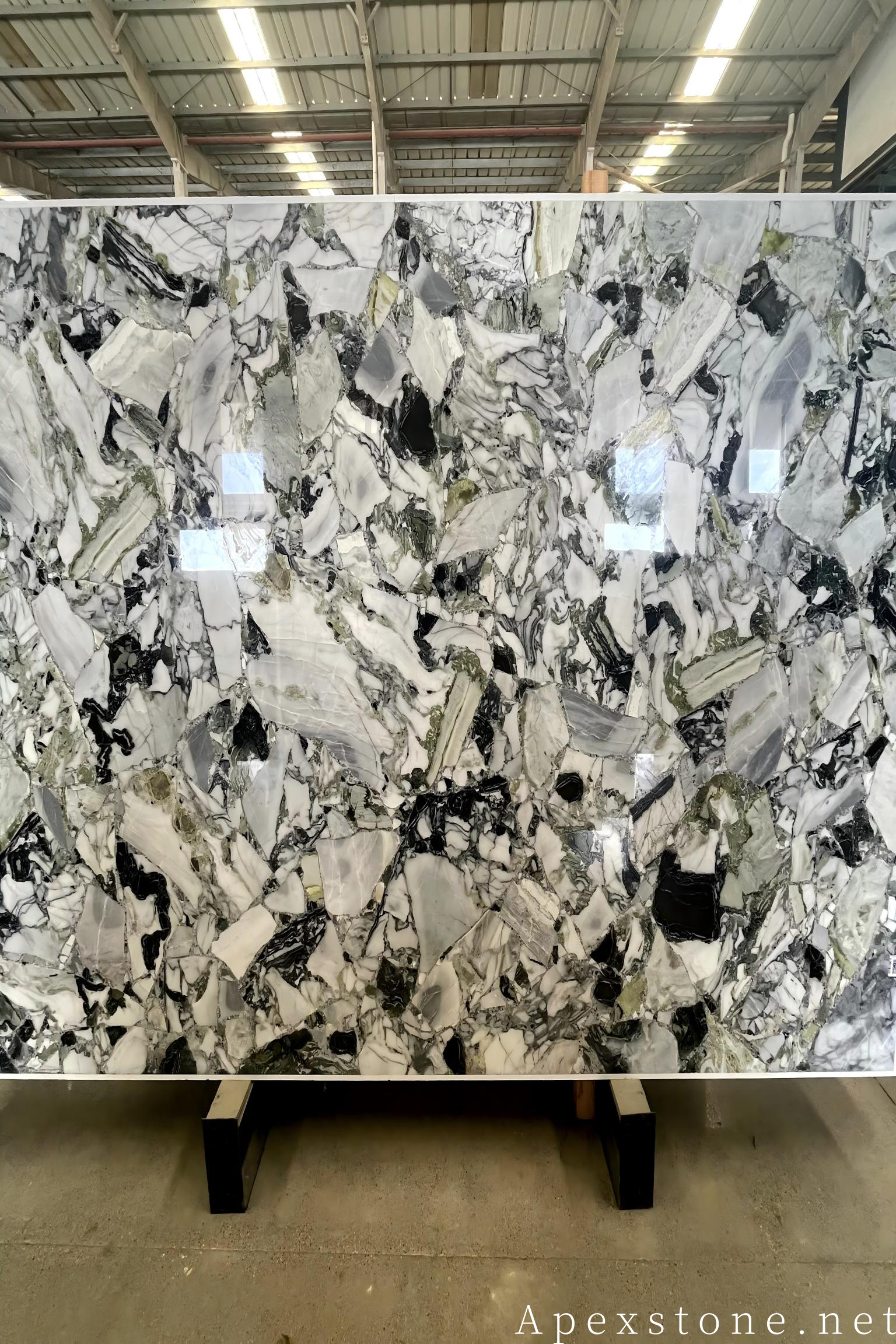
There is a reason the Chinese named this stone 冷翡翠 - cold jade. Primavera Marble reads as jade, not as stone: a deep green field scattered with light, drifting veining that behaves like the inclusions in polished jade. In a room, that quality is calming rather than loud - the stone adds depth and colour without demanding attention. Used on a wide floor plane, as wall cladding in a kitchen or bathroom, or as a dining table top, it brings a piece of the natural world indoors.
Apexstone fabricates Primavera Marble into a complete interior stone programme: wall cladding panels for kitchens and bathrooms (10-18 mm / 3/8-3/4 inch), floor tiles (600x600 mm / 24x24 inch and 800x800 mm / 32x32 inch), stone table tops for dining tables, and mosaic tiles for decorative accents in wet areas. Slab sizes up to 3000x1800 mm (118x71 inch). Polished, honed, and brushed finishes available. Whether you are specifying a single dining table or a full-home programme, our Xiamen facility delivers batch-consistent stone with lead times confirmed by project quotation and wholesale B2B pricing.
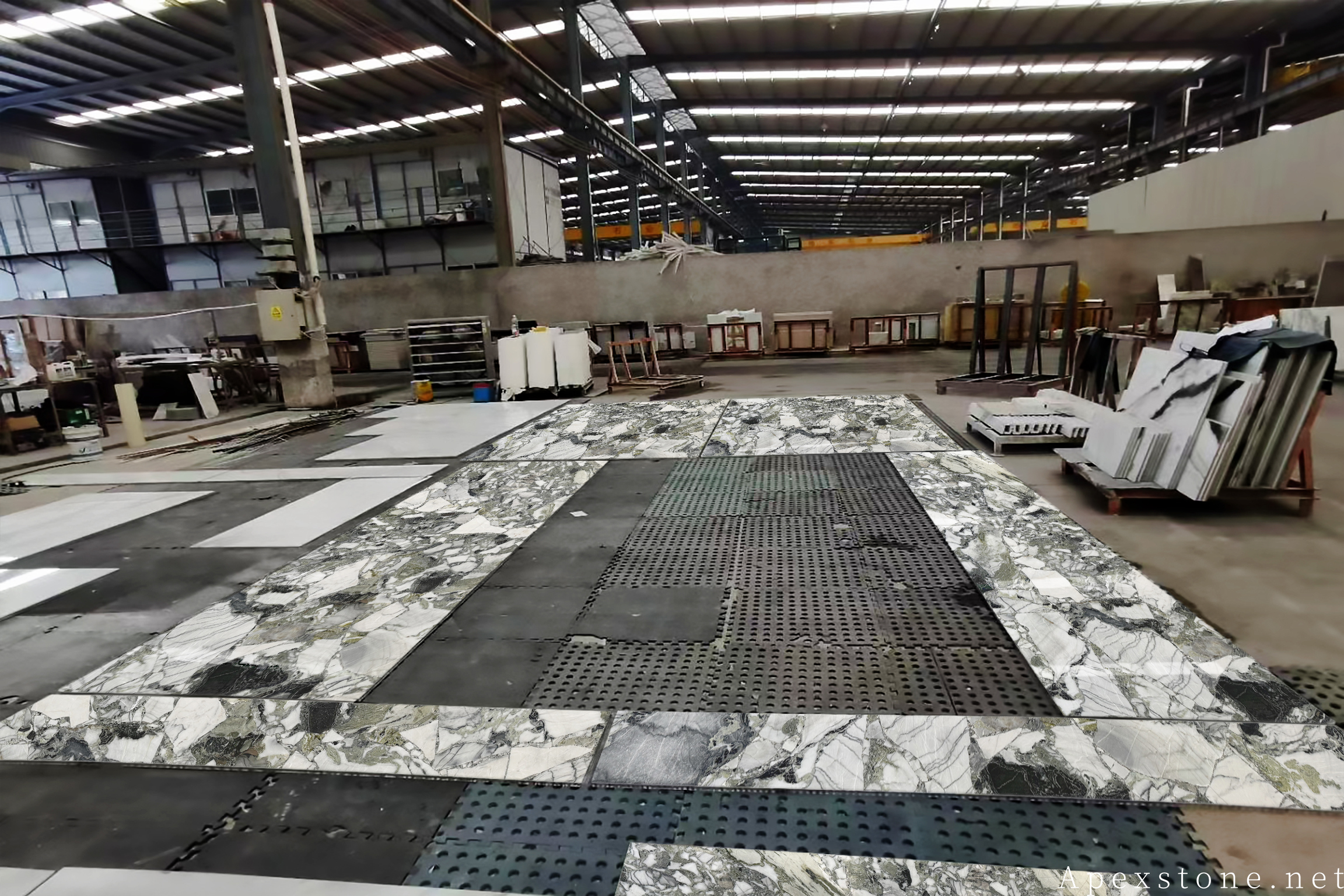
Gallery
Nature-Inspired Interior Gallery
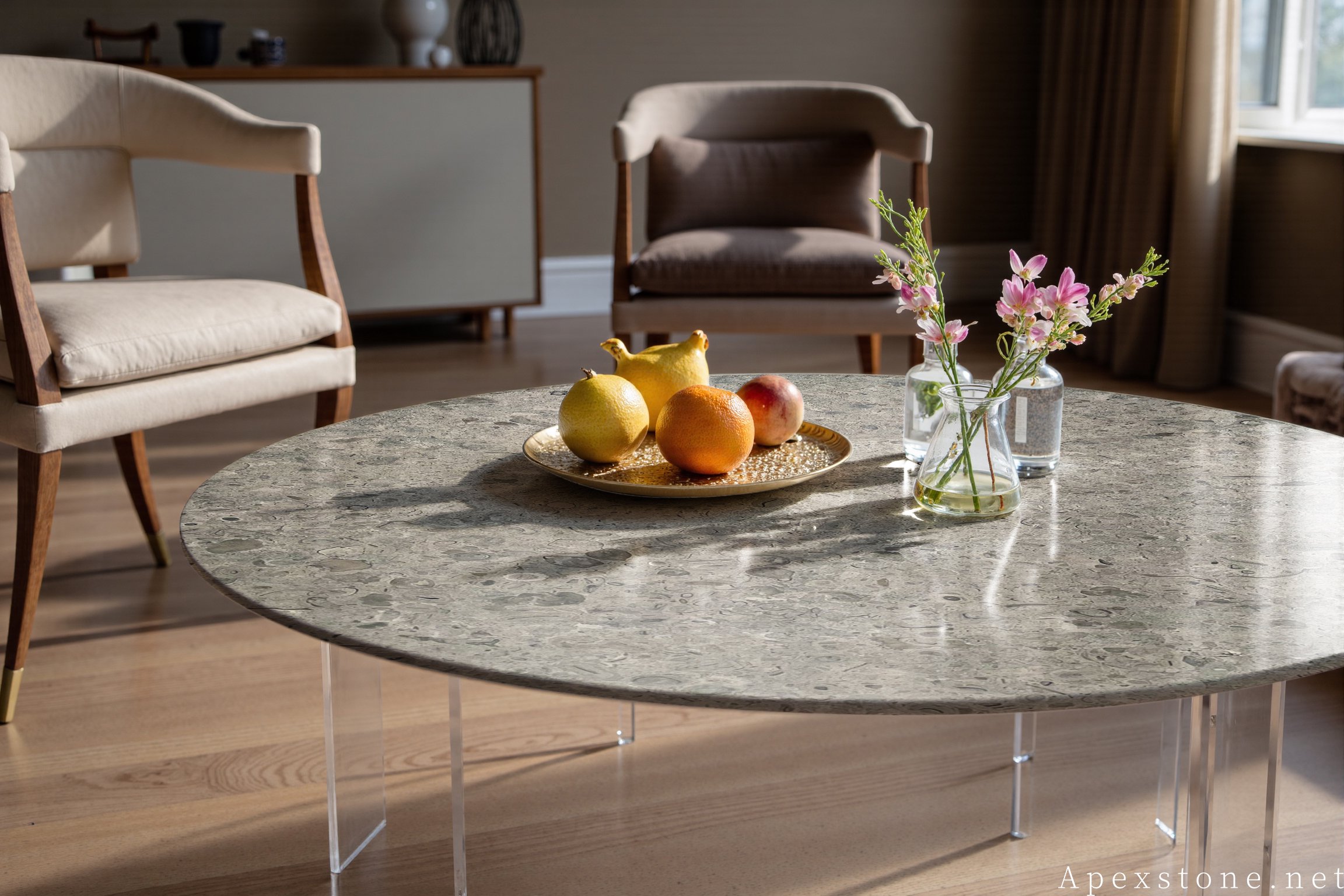
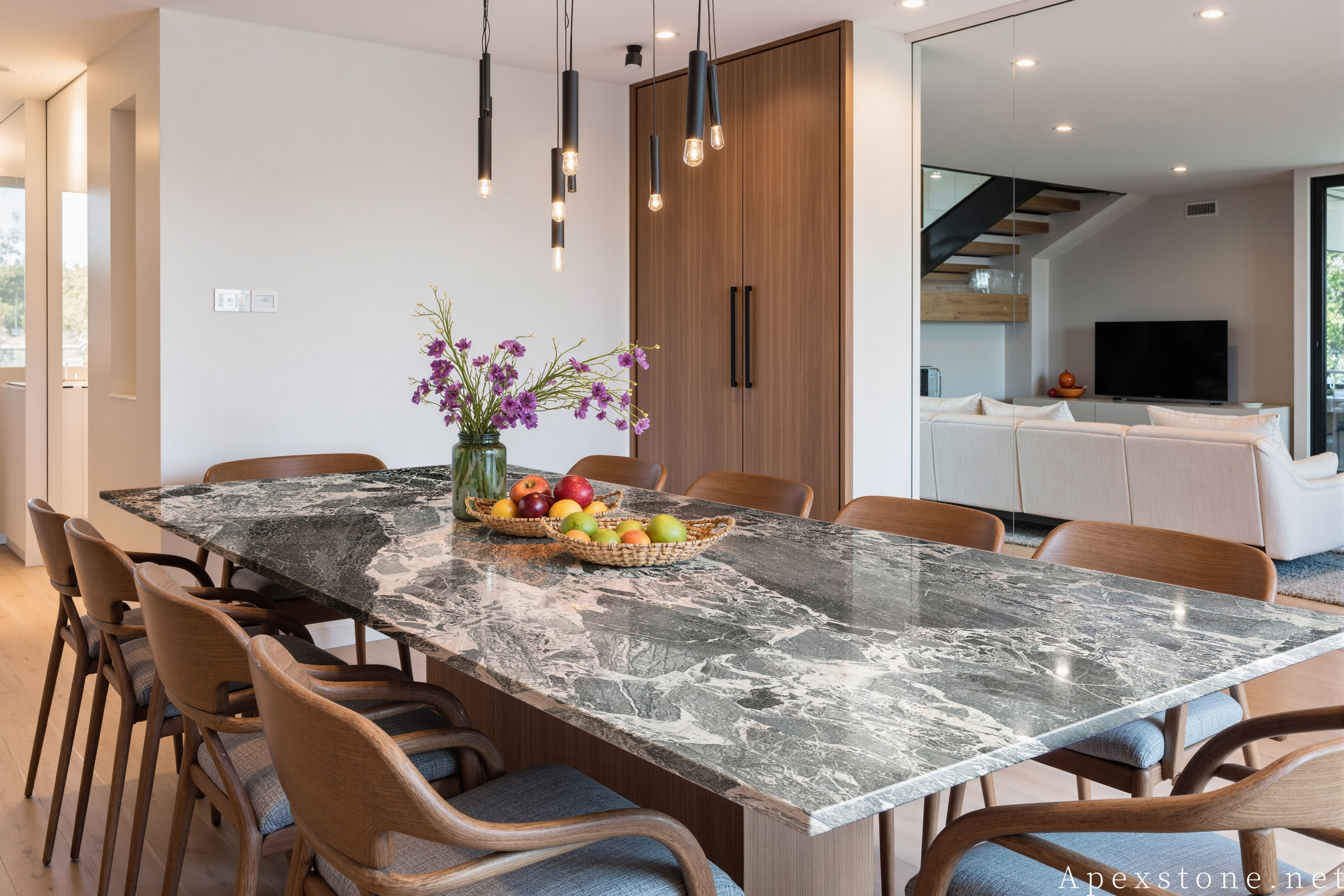
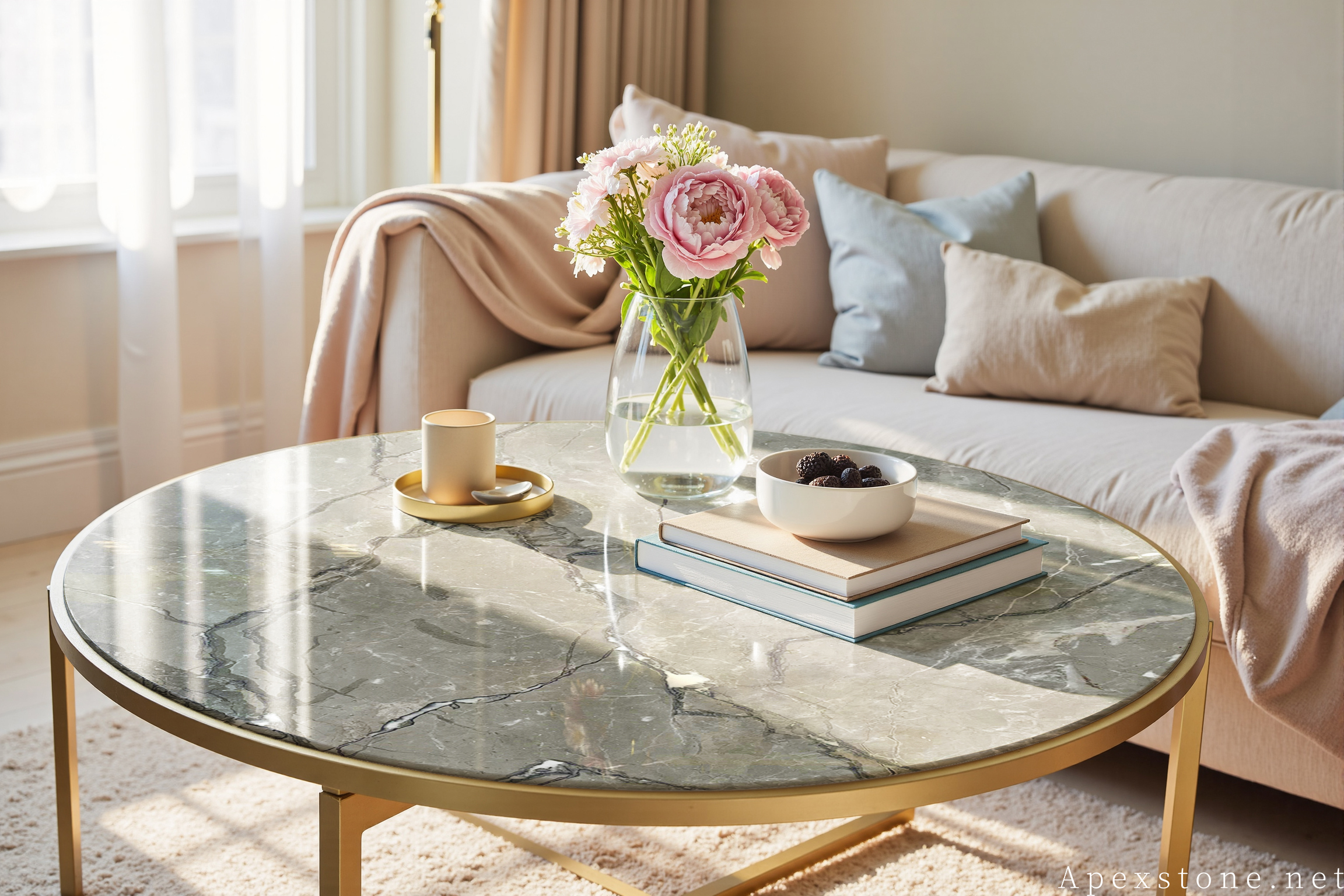
Explore Primavera Marble in interiors - surface detail, living spaces, and design details.
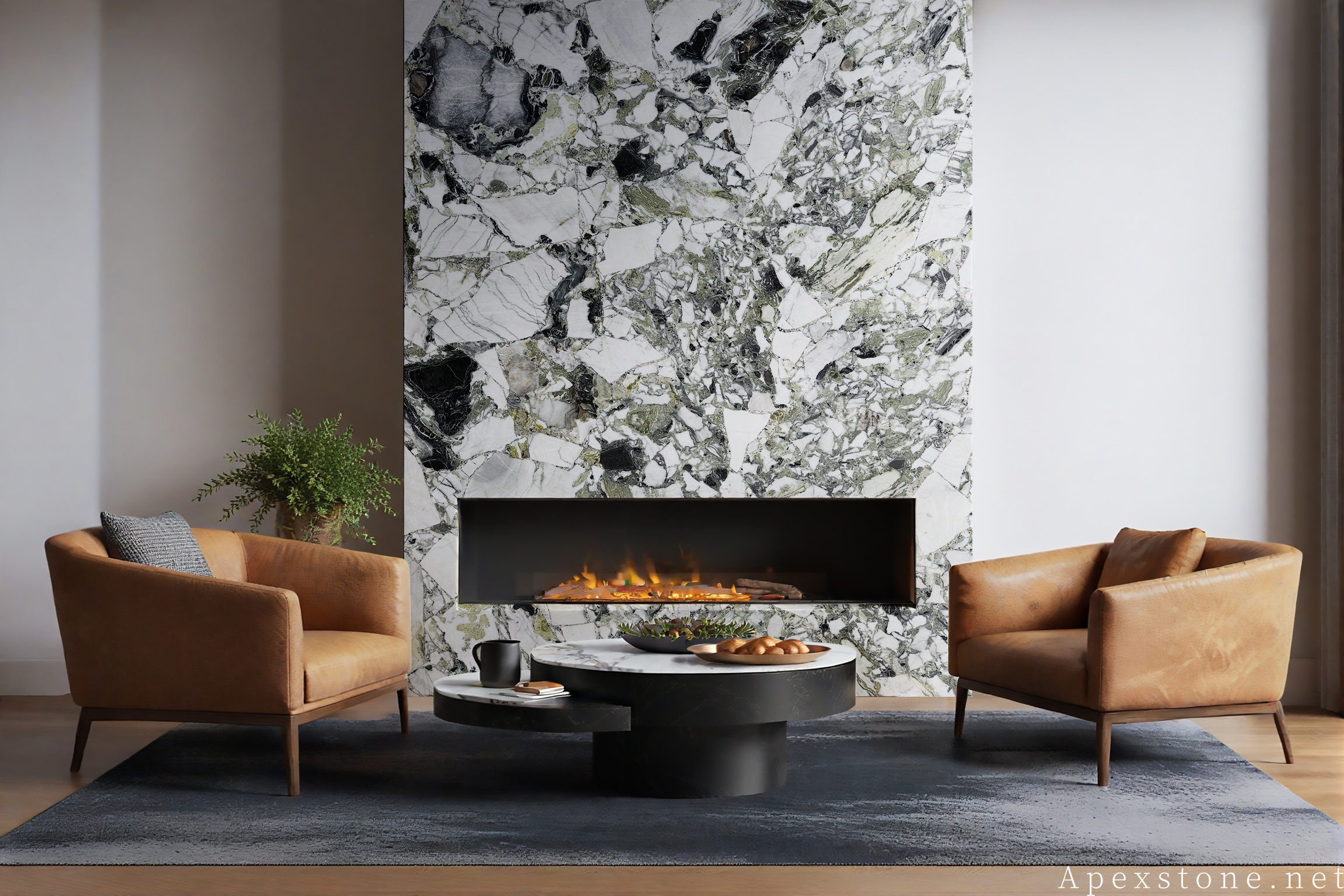
Living Interior
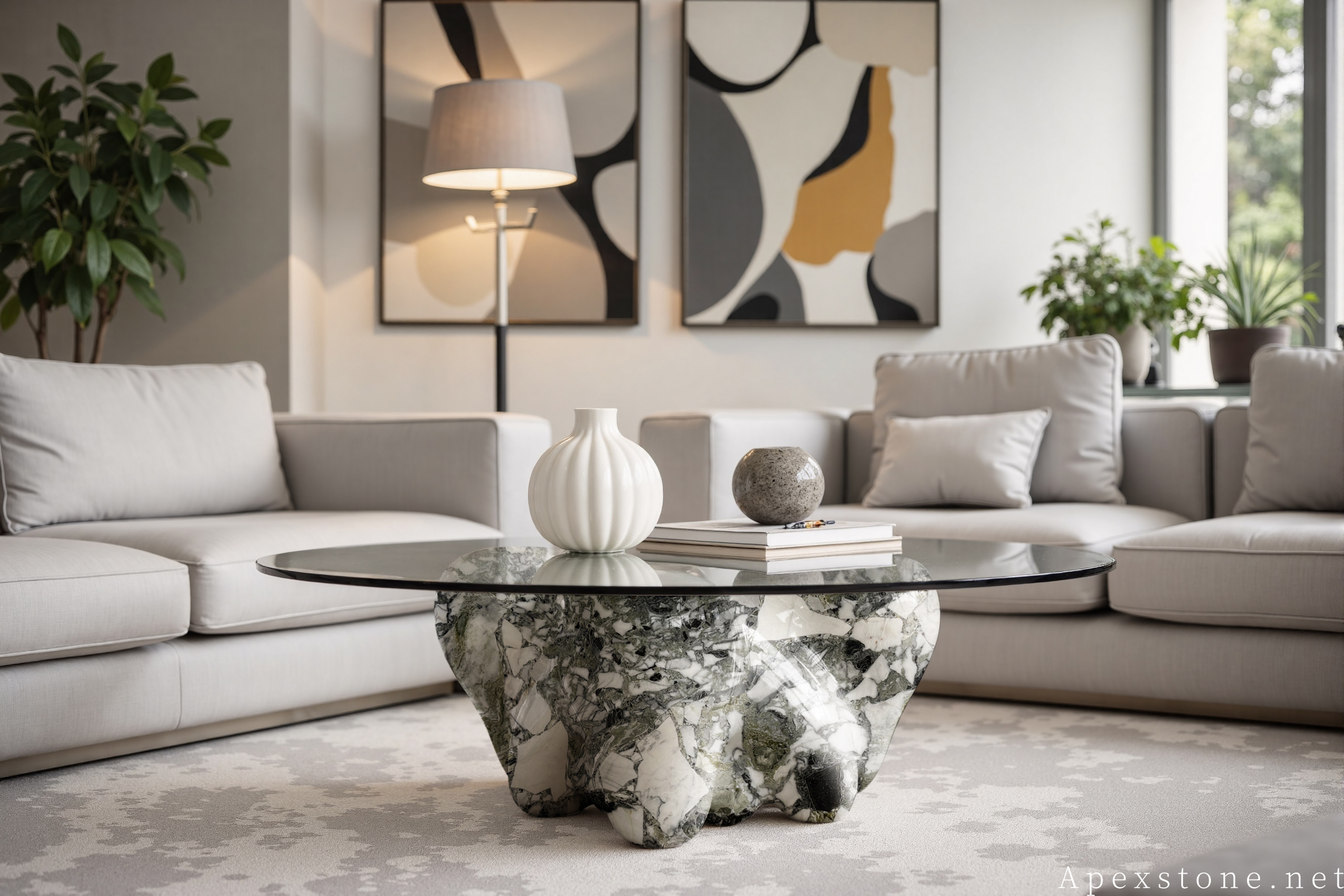
Living Room Interior
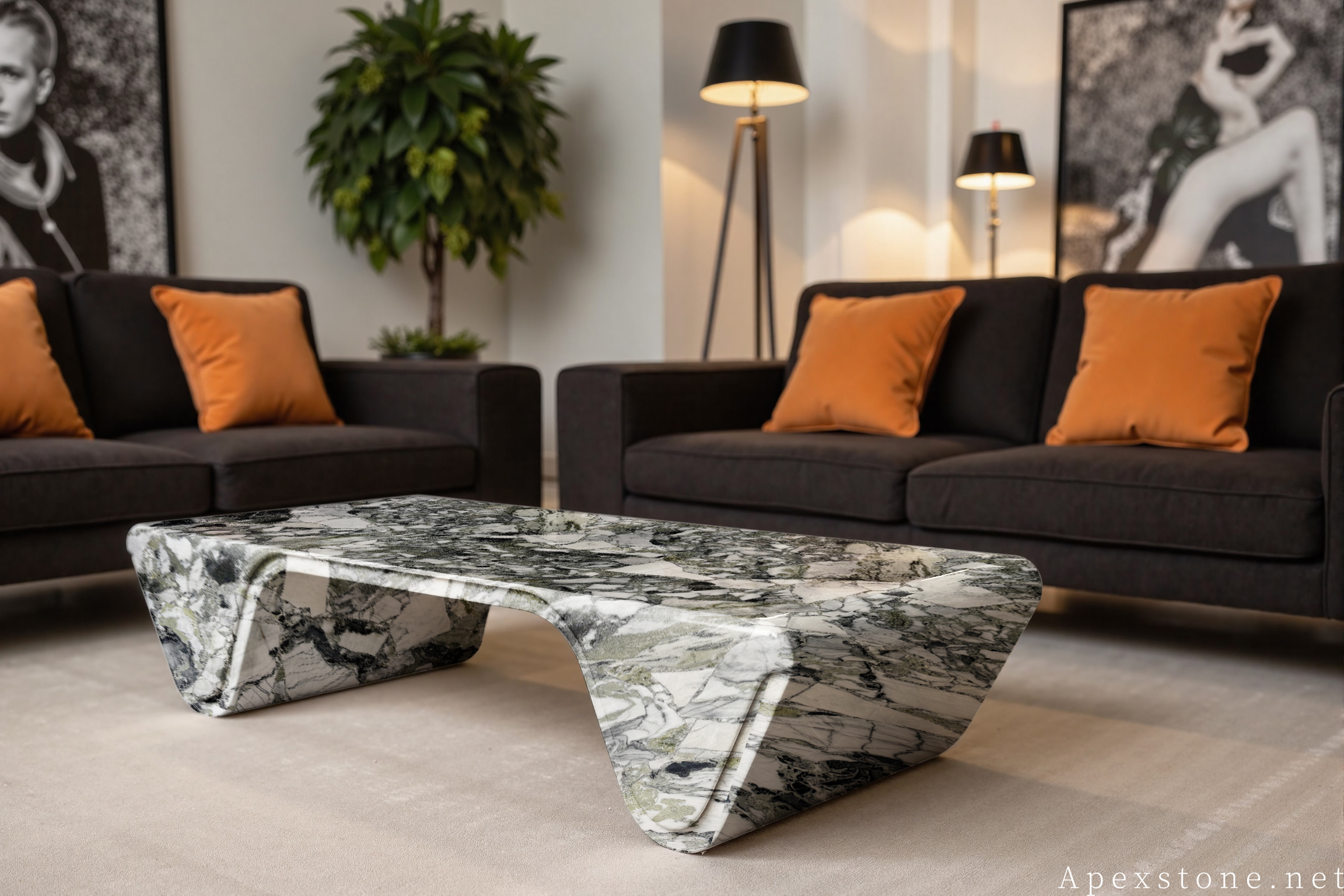
Living Room Design
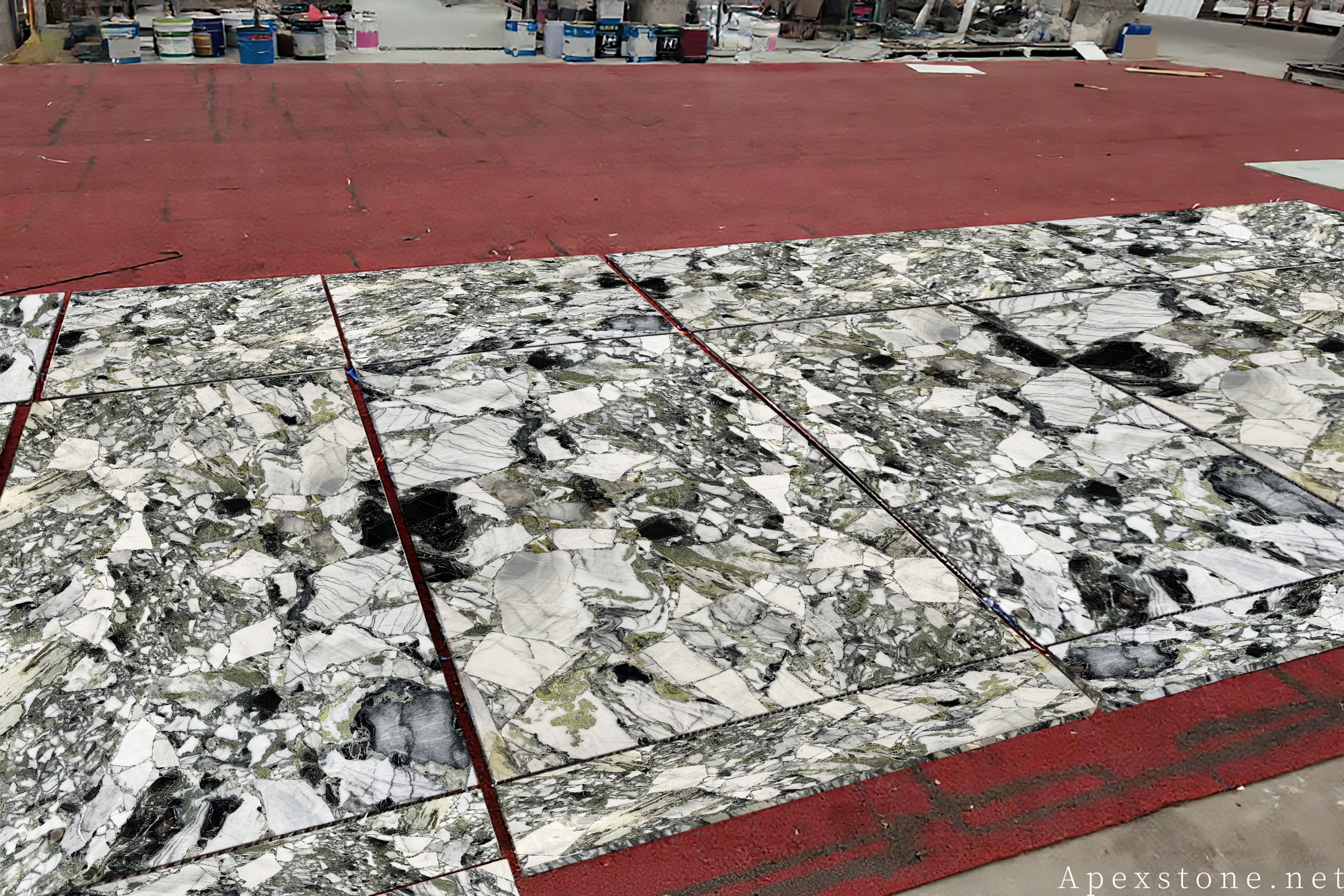
Surface Detail
Design Notes
Four Decisions That Separate a Primavera Interior from a Generic Green Stone Scheme
The Jade Effect: Why Emerald Green Reads Differently Than Grey or Blue
Primavera's emerald green base triggers a different response than the grey, blue, or white marbles that dominate most interiors. Green is widely considered the most restful colour in interior design - the eye settles on it without strain. In a home, this means jade-green stone surfaces create a calming presence that does not demand attention the way a bold grey vein pattern or a vivid blue stone does. Designers who understand this use Primavera as a grounding element - the stone that makes a room feel settled, not the stone that makes it feel exciting. Pair it with warm wood tones and natural fibres to amplify the biophilic effect.
Vein Direction as Spatial Wayfinding
Primavera's organic vein bands suggest geological flow - the movement of minerals through the stone over millions of years. That flow has a direction, and reading it before cutting is the difference between a surface that feels deliberate and one that feels random. For wall cladding runs wider than 1800 mm (71 inch), specify book-matched slab pairs so the vein pattern mirrors across the centre seam, creating a symmetrical composition. For floor tiles, maintain consistent vein direction from room to room so the eye follows a natural path. For dining tabletops with mitred edges, ensure the vein wraps from the horizontal surface down the sides without breaking. This is not a luxury upgrade - it is the baseline for any Primavera installation above 10 m2 (108 ft2).
How Natural Light Shifts the Emerald Tone Throughout the Day
Primavera Marble does not look the same at 8 AM as it does at 8 PM. Under cool morning daylight (5000K+), the green body saturates and the stone reads as vivid emerald. Under warm afternoon light (3000K), the green softens and the light vein bands become more prominent, giving the surface a warmer, more organic quality. Under evening lamp light (2700K), the emerald deepens to a dark jade that reads almost black in shadow areas. Designers should specify Primavera for rooms that receive changing natural light throughout the day - the stone's chameleon quality is its greatest asset. In rooms with fixed artificial light only, the stone appears static and loses its dynamic character.
Pairing Emerald Stone with Warm Materials Without Clashing
Green and warm wood are a classic combination in interior design, but the pairing requires restraint. The rule: let one material dominate and the other accent. If Primavera Marble is the dominant surface (a full wall of cladding or a wide floor plane), keep wood tones in the furniture (walnut dining table, oak flooring) rather than on additional large surfaces. If wood panelling is the dominant wall treatment, use Primavera as a dining tabletop or mosaic accent rather than a full wall. Avoid pairing Primavera with cool blue or grey stones in the same room - the emerald green will clash with the blue-grey undertones. Instead, pair with warm metals (brushed brass, antiqued bronze) and natural materials (linen, rattan, unglazed ceramic) that complement the organic quality of the stone.
Applications
Where Primavera Marble Belongs in Nature-Inspired Homes
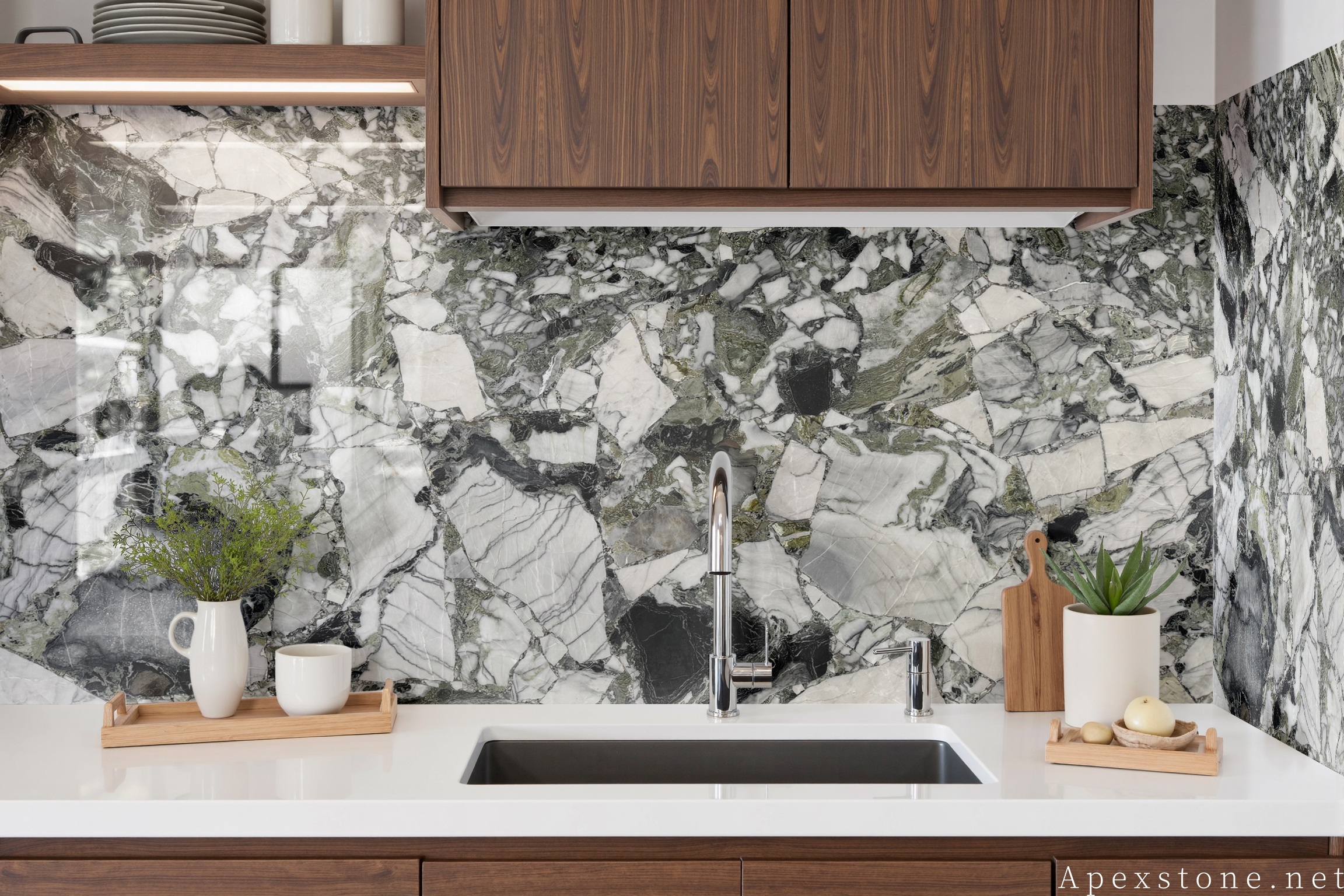
Kitchen & Bathroom Wall Cladding
Primavera Marble wall cladding brings a jade-green calm to kitchens and bathrooms. Panels cut from the same slab ensure vein continuity from counter height to ceiling, and the cool green tone pairs naturally with chrome, brushed nickel, and natural wood vanities. Book-matched pairs can mirror the vein pattern across a centre seam for a deliberate, composed effect.
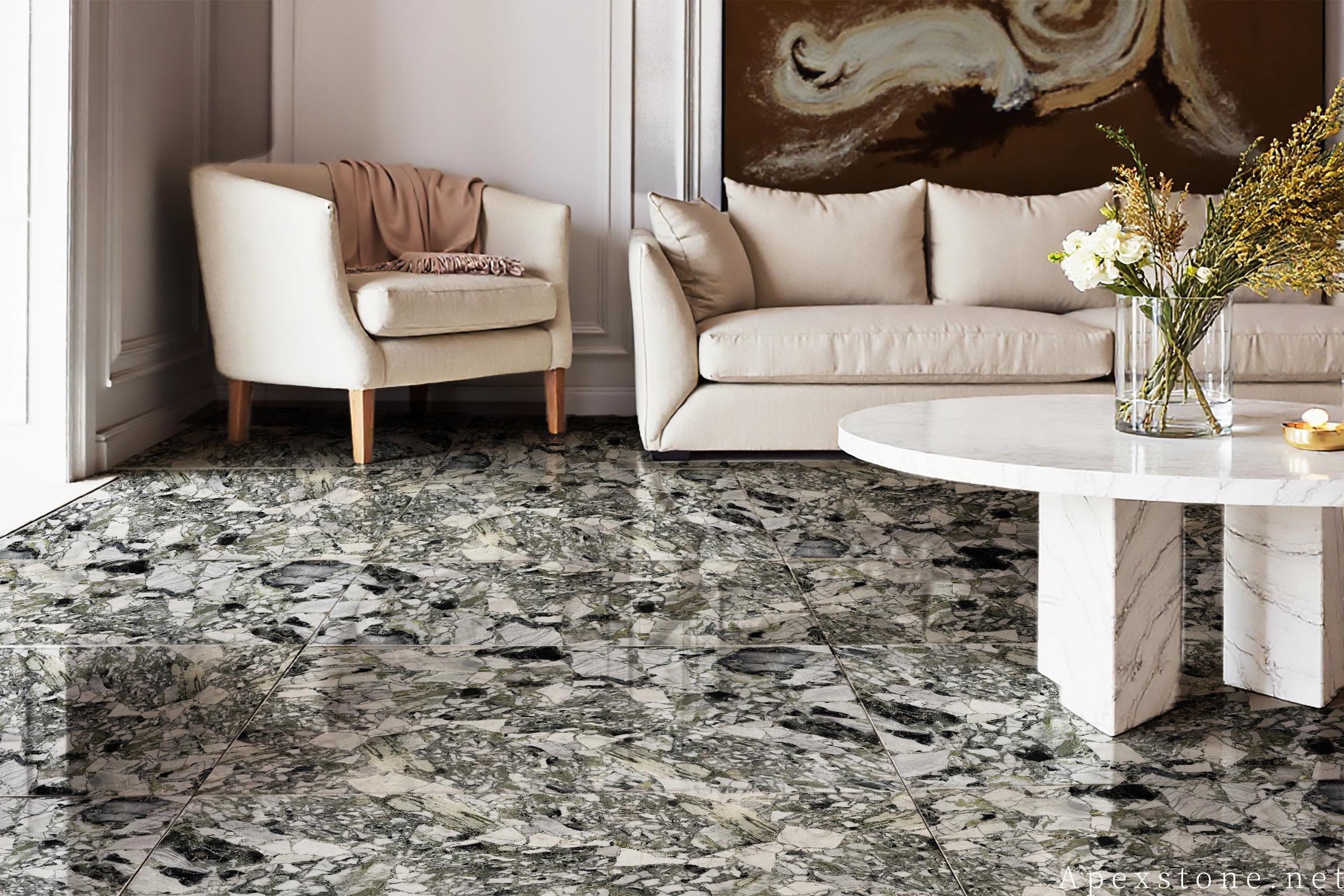
Living Space Floor Tiles
Primavera Marble floor tiles in 600x600 mm (24x24 inch) or 800x800 mm (32x32 inch) formats create a serene jade-green foundation for living spaces. The honed finish provides slip resistance while the emerald base adds quiet natural depth without overwhelming the room. Large-format tiles reduce grout lines for a seamless expanse that connects the floor visually to the rest of the interior.
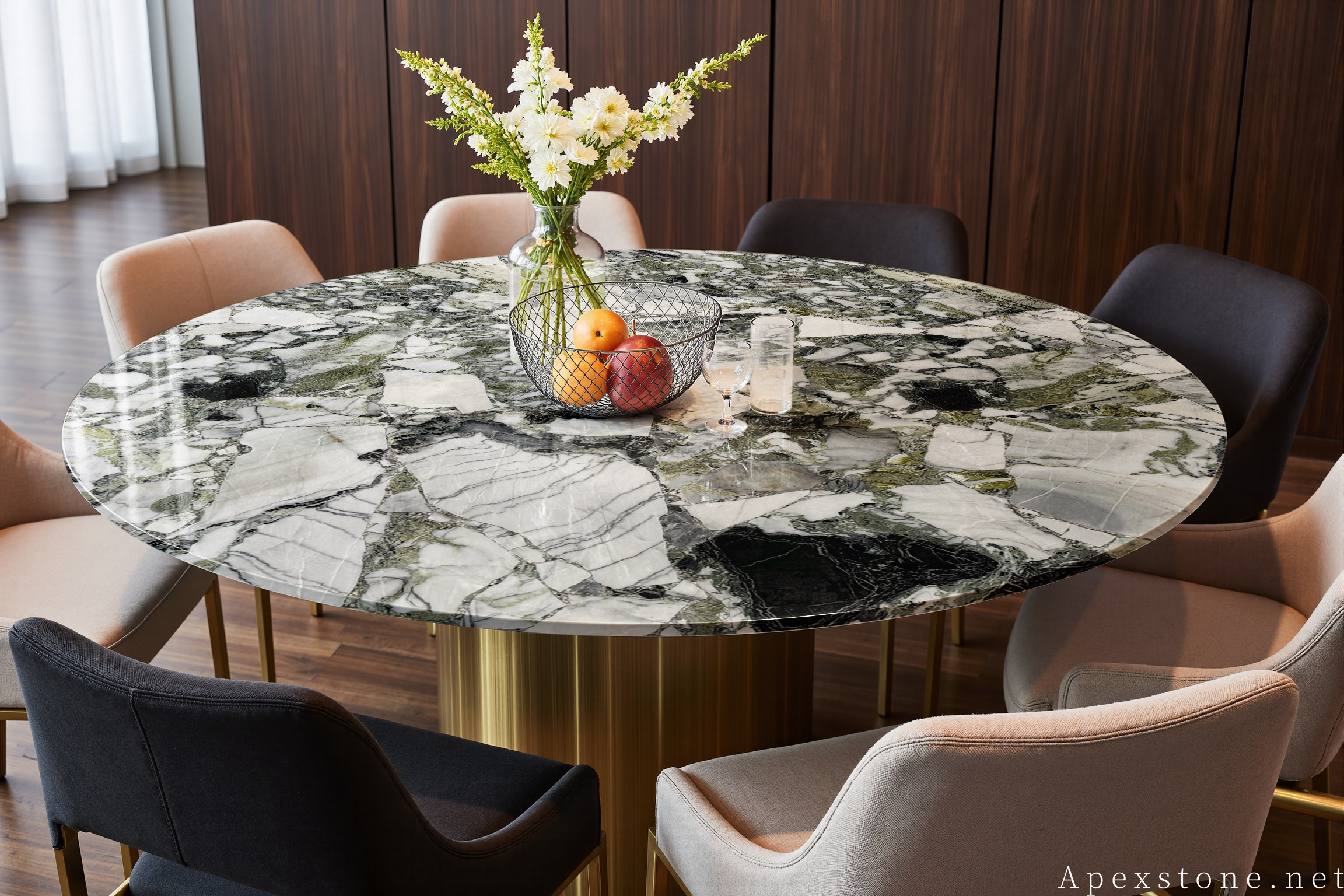
Dining Table with Emerald Top
A Primavera Marble dining table top brings the jade-green character to the dining experience. The emerald tone complements wood, brass, and gold bases, creating a warm yet sophisticated tablescape. Polished finish maximises the depth that makes each meal feel like an occasion. Available in rectangular, round, and oval shapes from 18-30 mm (3/4-1-1/4 inch) thickness.
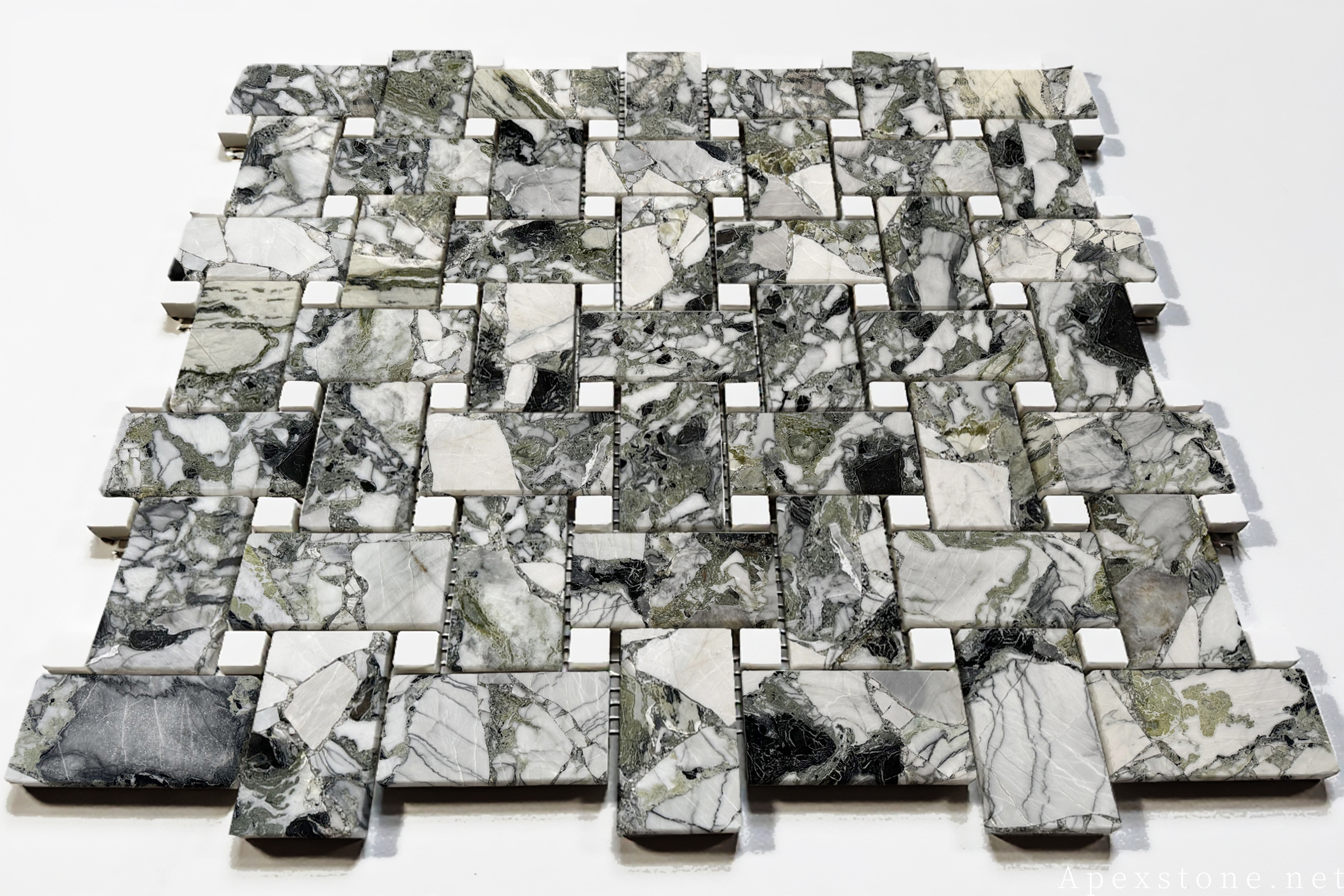
Mosaic Accents for Wet Areas
Primavera Marble basketweave mosaic tiles add a handcrafted jade-green accent to kitchen and bathroom walls. Small-format pieces follow curved walls and niches that large panels cannot, and they pair naturally with the large-format cladding elsewhere in the same room. The mosaic format also makes efficient use of smaller slab offcuts.
Specifications
Primavera Marble Interior Program Specifications
| Stone Type | Marble |
| Commercial Name | Primavera (冷翡翠) |
| Origin | China |
| Base Color | Emerald Green |
| Veining | Light-coloured organic vein movement |
| Available Finishes | Polished (walls/tabletops), Honed (floors) |
| Wall Cladding Thickness | 10 mm (3/8 inch), 18 mm (3/4 inch) |
| Floor Tile Formats | 600x600 mm (24x24 inch), 800x800 mm (32x32 inch) |
| Max Slab Size | Up to 3000x1800 mm (118x71 inch) |
| Edge Profiles | Eased, beveled, bullnose, ogee, waterfall, custom |
| Slab Grades | Grade A (Premium), Grade B (Commercial), Grade C (Utility) |
| Sealer | Penetrating sealer, 2-3 coats |
| Reseal Interval | Test water beading annually; reseal when water stops beading |
| Applications | Kitchen and bathroom wall cladding, floor tiles, dining tables, mosaic accents |
| Batch Consistency | Same-quarry-batch sourcing for full-home projects |
| MOQ | Enquire with project schedule and surface list |
| Lead Time | Confirmed by project quotation |
Our Process
The Designer's Decision Sequence: From Slab Selection to Sealing Schedule
Every Primavera Marble interior project involves a sequence of design decisions that build on each other. The workflow below is the designer's decision sequence - the order in which choices must be locked down before fabrication begins.
- ✓
Decision 1: Map the Emerald Surfaces
Identify every surface in the project that will use Primavera: wall cladding, floor tiles, dining tables, mosaic accents. Each surface has a different thickness, finish, and slab allocation requirement. This map drives the slab count and the budget.
- ✓
Decision 2: Select Slab Grade
Grade A (Premium) for visible large-format surfaces. Grade B (Commercial) for floor tiles and standard wall cladding. Grade C (Utility) for mosaic tiles and small-format pieces. Mixing grades within a single visible space creates colour inconsistency.
- ✓
Decision 3: Finish per Surface
Polished for vertical surfaces and tabletops (maximises jade depth). Honed for horizontal walking surfaces (slip resistance). Brushed for high-traffic areas (texture and durability). This decision cannot be reversed after the slab is finished.
- ✓
Decision 4: Book-Match or Natural Layout
For wall cladding runs wider than 1800 mm (71 inch), specify book-matched slab pairs from the same block. For floors and narrow surfaces, natural (non-sequenced) layout is more economical. Book-matching adds to slab cost but transforms the visual result on prominent surfaces.
- ✓
Decision 5: Slab Allocation and Sealing
Apexstone provides a slab allocation plan mapping each product to specific slab areas. All bathroom and wet-area products are sealed with penetrating sealer (2-3 coats). Sealing schedule and maintenance instructions are provided at handover.
Ready to Design?
Let's craft your jade-green interior
Share your residential project brief including room dimensions, finish preferences, and design references. Our team will propose the right Primavera Marble solution for your nature-inspired interior.