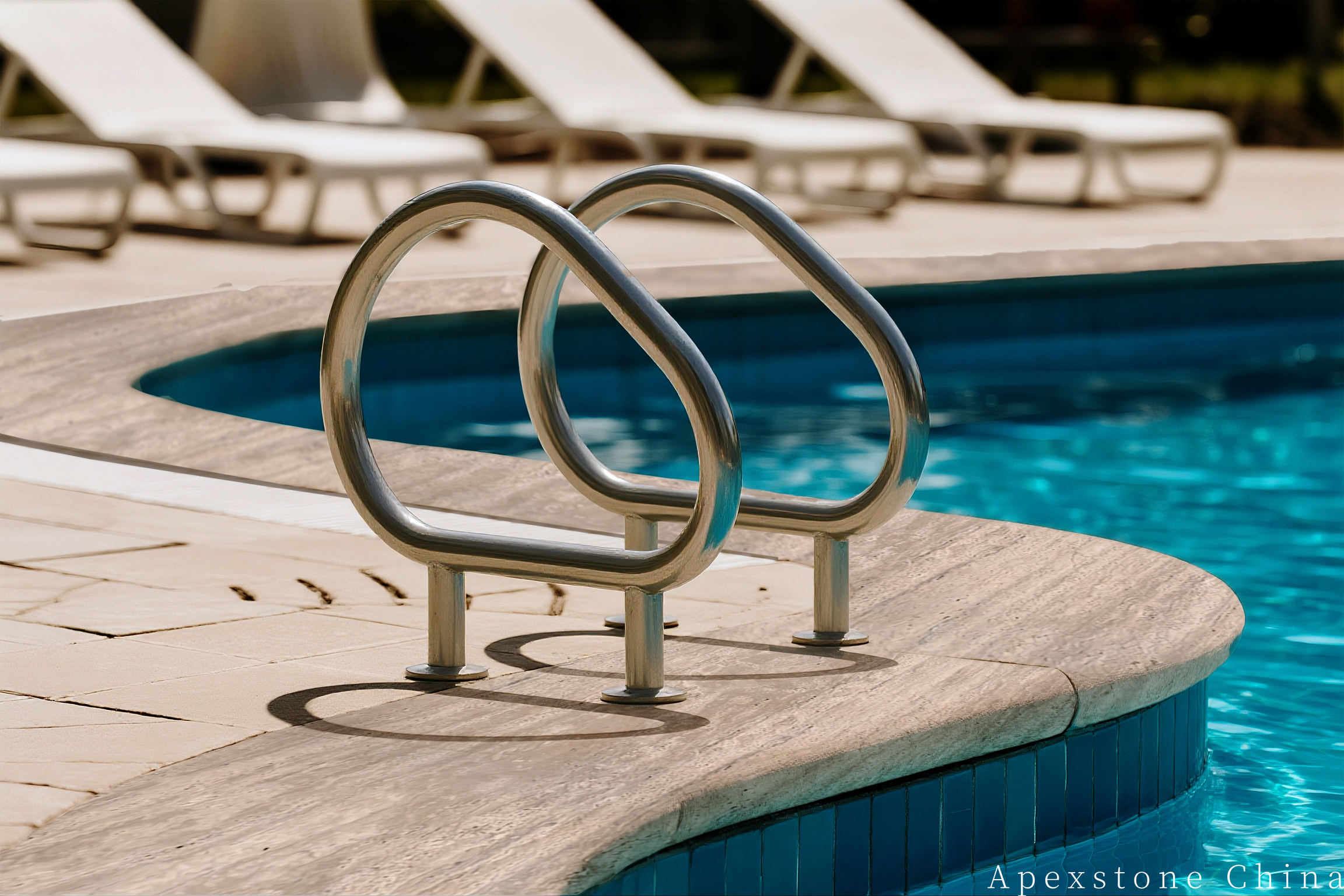
A season-long cleaning rhythm for travertine pool decks: the weekly rinse habit, managing sunscreen and body oils with a pH-neutral cleaner, watching shaded wet zones for algae, keeping chlorine concentrates from pooling on the stone, why unfilled brushed or tumbled finishes need open-texture care, and sealing as the step that protects the deck between seasons.
Pool deck care
Travertine survives a swimming season well when the deck is treated as a surface that gets dirty on a predictable schedule. Learn how to clean travertine pool deck surfaces by working with that schedule instead of against it — a light weekly rinse, a targeted midseason scrub, and a sealing step that carries the stone into the off-season.
On this page
- Small, frequent rinsing removes more soil than occasional heavy scrubbing on travertine.
- Use a pH-neutral cleaner for oils and sunscreen; the stone reacts to strong acids and strong alkalis.
- Shaded, damp corners are where algae appears first — check them weekly during hot months.
- Never let splashed chlorine or acid products pool and dry on the surface.
- Unfilled brushed or tumbled finishes have an open texture that needs brushing, not sealing shut.
- Sealing before and after installation is what protects the deck between swimming seasons.
Why a rhythm beats a deep clean
Most deck problems are not caused by one dirty weekend. They build up slowly: a film of sunscreen and body oil near the ladder, a green tinge in the corner that stays damp, a white bloom where splashed pool water dried in the sun. Each is easy to handle when it is fresh and much harder once it has settled into the stone.
That is why the useful question is not "how do I deep clean a travertine deck" but "what does a normal week of care look like?" If you answer the second question consistently, the first rarely comes up.
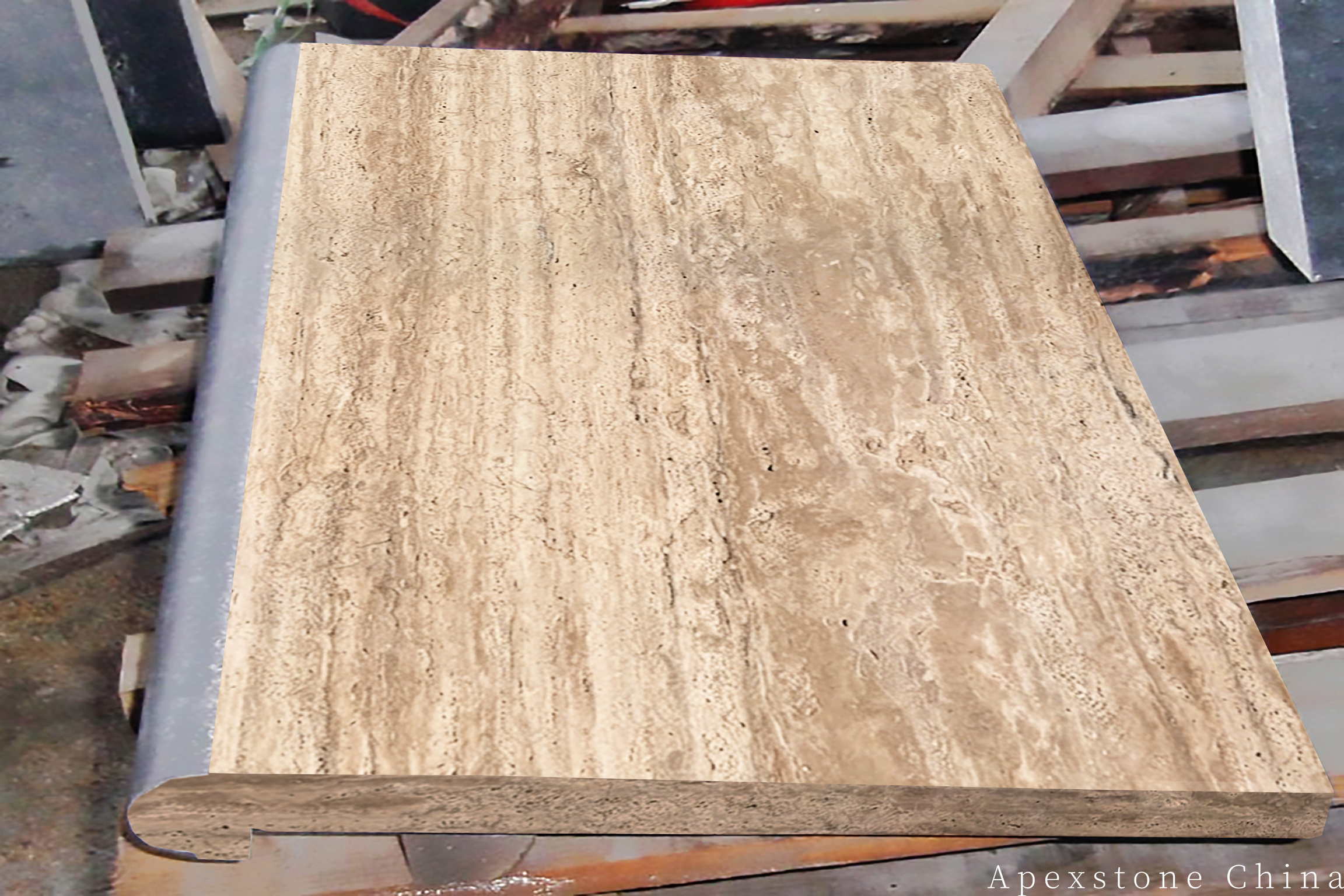
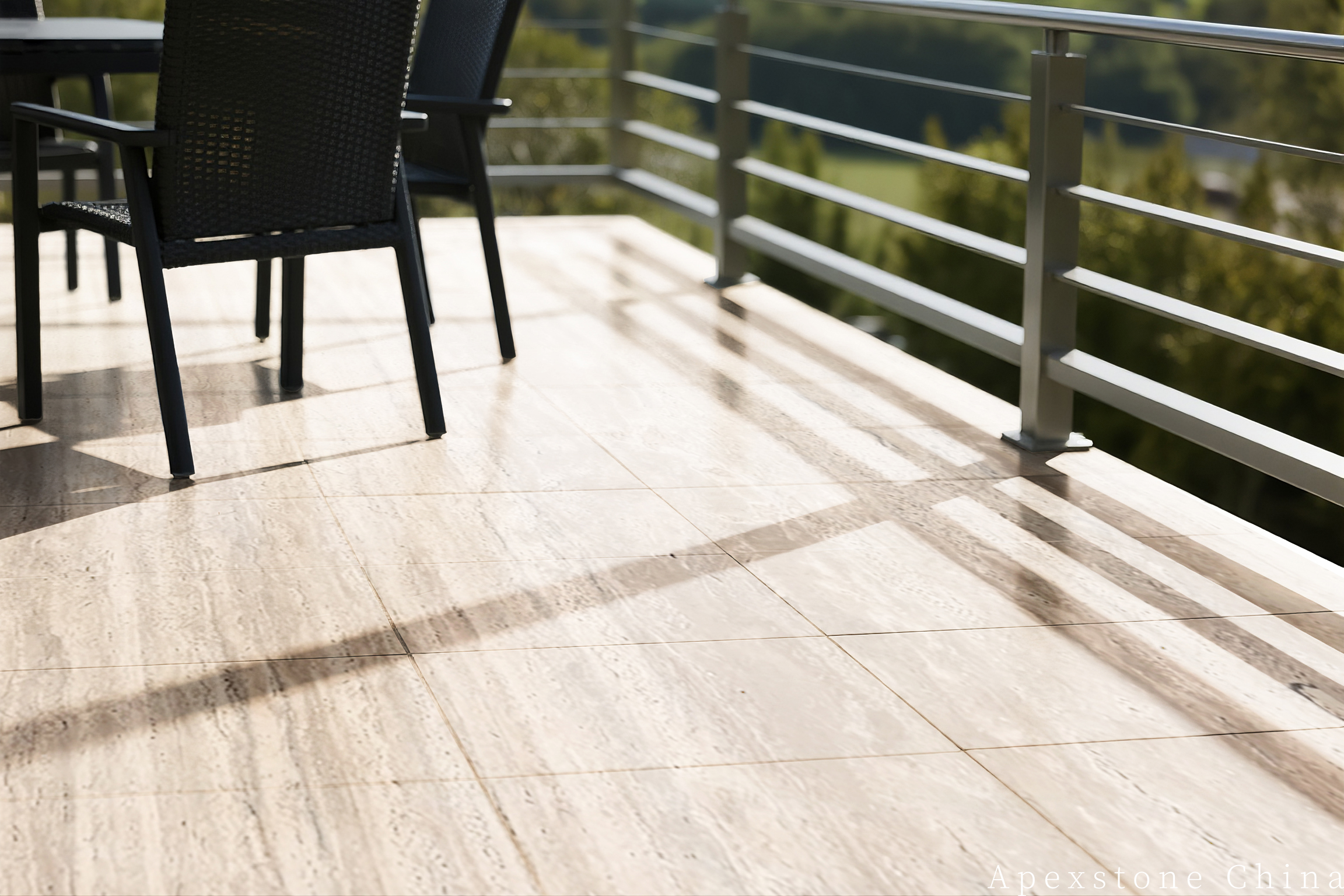
Travertine also helps here. As a natural stone it stays noticeably cool underfoot in direct sunlight compared with many hard paving options, which means the deck is comfortable to walk on and easy to rinse when the sun is highest. For pool surrounds, coping and the deck itself, the formats commonly used are 600x600 mm (24x24 inch) pavers or a French Pattern layout, both of which can be cleaned section by section without lifting anything.
The weekly rinse habit
Ten minutes with a hose and a soft brush does more for travertine than an hour of scrubbing every second month. The aim is to remove loose soil, dust, pollen and dried pool water before they bond to the surface.
- Clear the deck. Move loungers and planters so the full area gets water.
- Rinse from the highest point down. Push water toward drainage rather than letting it stand in low spots.
- Brush with the texture. Use a soft or medium brush and follow the finish direction; on an unfilled, brushed or tumbled finish, a brush reaches into the open pores where a cloth cannot.
- Rinse the coping and ladder base. These are the areas that collect the most splashed water and body contact.
- Let it dry before judging. Damp travertine looks darker than dry travertine; check for remaining marks once it has dried.
After rain or a busy pool party, repeat the rinse rather than waiting for the next scheduled week. Frequency matters more than intensity.
Sunscreen, body oils and a pH-neutral cleaner
Sunscreen, tanning oil and natural body oils are the main reason pool deck travertine starts to look patchy around the entry steps and ladder. These oils are water-resistant by design, so plain rinsing will not lift them. If the surface feels slightly tacky or looks darker in a band around the ladder, that is the signal for a targeted clean.
Use a pH-neutral stone or tile cleaner diluted as the manufacturer directs, applied to the affected area only. Neutral cleaners lift oils without attacking the calcium-based stone. Strong acids (including many descalers and acidic tile cleaners) and strong alkalis can etch or dull travertine, so keep them off the deck entirely.
- Apply the diluted neutral cleaner, let it sit for the short contact time on the label, then agitate with a soft brush.
- Rinse thoroughly — residue left to dry attracts more soil.
- Increase the frequency of this step during peak season, when sunscreen use is highest.
- Keep a mat or a small towel station at the ladder to reduce oil transfer onto the deck at the source.
Avoid mixing cleaning products. A neutral cleaner does the job on its own; combining it with anything else risks a chemical reaction on a natural stone surface.
Algae watch in shaded, wet zones
Algae does not need a dirty deck. It needs moisture, shade and warmth — three things every pool area has in abundance. The first places to check are under foliage, along the north-facing edge, behind furniture that stays in place, and any section where splash water or drainage tends to linger.
| What you see | Likely cause | Response |
|---|---|---|
| Thin green film on the surface | Algae starting in a damp, shaded spot | Brush with a soft brush, rinse, and improve drying and airflow |
| Green tint inside the pores of an unfilled finish | Moisture held in the open texture | Brush along the texture, rinse, dry fully, and address the water source |
| Black or dark spots | Established growth or organic staining | Clean with a suitable stone-safe product and confirm the method with the stone supplier if it persists |
The most effective algae control is drying the deck out. Trim vegetation that shades the surface, reposition furniture occasionally, and correct any standing water so a damp zone does not become permanent.
Keeping chlorine concentrates off the stone
Splashed pool water is normal and harmless in small amounts. The problem is concentrated pool water that lands in one place and dries there — near the skimmer, where a chlorinator discharges, around the ladder, or anywhere a splash repeatedly hits the same few pavers.
Chlorine and pH-adjusting chemicals left to evaporate on travertine can leave mineral deposits and gradually dull the finish. During a season, they create pale, chalky marks that look like stains but are actually dried chemistry.
- Rinse splash zones with fresh water after heavy pool use, especially where the waterline meets the coping.
- Never pour pool chemicals or backwash water onto the deck.
- Keep the pool's own water chemistry balanced; well-balanced water is easier on the surrounding stone.
- Check the ladder base and skimmer area each week for dried white deposits and rinse them promptly.
If a deposit has already formed, clean it gently with a stone-safe product rather than reaching for a strong acid descaler, which can damage the travertine itself.
Open-texture finishes and why they matter
Unfilled brushed or tumbled travertine finishes keep the stone's natural pores open. That open texture is deliberate: it gives the deck grip under wet feet and helps the surface stay comfortable underfoot in direct sun.
It also means the finishing method changes the cleaning routine. Dirt sits in the pores rather than on top of a sealed face, so brushing along the texture is more effective than wiping across it. Rinse water should be pushed out of the pores, not left to pool in them.
Do not try to close the texture with a heavy coating to make cleaning "easier." That defeats the slip resistance and traps moisture underneath. A water-repellent penetrating sealer protects the stone while leaving the surface open — this is the right approach for an unfilled finish.
Sealing: the care step between seasons
Sealing is what carries a travertine deck from one swimming season to the next. A water-repellent penetrating sealer is applied before and after installation, and in practice it is the single step that determines how much cleaning the deck needs the following year.
When properly sealed, travertine is also frost-resistant, which matters in regions with cold winters where an unsealed deck would be vulnerable to freeze–thaw damage. Sealing slows the absorption of water, oils and sunscreen, keeping them on the surface where a weekly rinse can remove them.
At the end of the season, after a final deep clean and complete drying, have the sealer checked and refreshed as needed. This is also a good moment to note which areas took the most work — the ladder zone, the shaded corner, the splash line — and plan the next season's routine around them.
Bringing the routine together
Week by week: rinse, brush and check the wet zones. When oils appear, use a pH-neutral cleaner on the affected area. When chlorine splashes, rinse it away before it dries. Once a season, deep clean, dry and seal.
If you are selecting travertine for a new pool deck, the finish, format and sealing history matter as much as the color. The Romano travertine outdoor paving and pool coping range shows the coping and paving formats commonly used around swimming pools.
Planning a pool deck? Confirm the finish — filled or unfilled, brushed or tumbled — the format and the sealing schedule with your supplier before ordering, so the cleaning routine above fits the stone you receive.