
A plain-language guide to how polished, honed, leathered and tumbled finishes are produced, how each one changes a stone's colour depth, sealing needs and daily cleaning, and which finish fits kitchen counters, bathroom surfaces, floors and outdoor pavers.
Stone Finishes Explained
Buyers searching for leathered granite usually know the material they want and are stuck on one question: what does the finish actually do to the surface? The same stone can come out glass-smooth and mirror-bright, flat and matte, or visibly textured under the hand. Each option changes how the stone reads in a room, how it handles spills and fingerprints, and what the fabricator has to do at installation.
This article explains how polished, honed, leathered (brushed) and tumbled finishes are produced, then sets out what each finish means for colour depth, sealing and daily care, and which surfaces suit kitchen counters, bathrooms, floors and outdoor paving.
Key takeaways
- Polished finishes are ground to a high gloss; honed finishes stop at a smooth matte; leathered finishes add a shallow texture from brushes; tumbled finishes round the edges and leave a softer, more open face.
- Glossier surfaces deepen colour, and textured surfaces soften it. The same slab can look like two different stones under different finishes.
- Honed, leathered and tumbled surfaces generally show smudges and water spots less than polished stone, but textured faces hold more dust, so cleaning is different rather than harder in every respect.
- Textured and tumbled surfaces need more open, porous material, so sealing tends to matter more than on a polished face.
How each finish is actually made
All of these finishes start from a slab that has been cut and flattened. The difference is how far the surface is refined afterwards, and with what.
Polished: ground and buffed to a high gloss
A polished surface is put through a graded sequence of abrasives, then finer polishing heads, until the stone reflects light almost like glass. The crystalline structure of hard stones such as granite, marble and quartzite takes a strong shine, and the polish is a mechanical result rather than a coating. A polished face shows its truest colour depth: dark greys go deeper, and veining reads with maximum contrast.
Honed: smooth, flat and matte
Honed stone goes through a similar grinding sequence but stops before the final polishing stages. The result is flat and smooth to the touch, with no gloss. Honed surfaces keep the stone's colour but flatten it; the same material looks quieter and more even. Many buyers choose honed marble tiles and benchtops precisely because the matte face reduces the dramatic reflections a polished finish produces.
Leathered (brushed): a shallow texture under the hand
Leathering is produced with rotating brushes or similar abrasive tooling passed over the surface. On harder stones, typically granite and quartzite, the brushes lift the softer minerals slightly and leave the harder ones proud, producing a low-relief texture. This is the finish most people mean by leathered granite or leathered granite countertops: it feels like fine leather under the fingers, catches light in a diffuse way, and can slightly soften the stone's colour compared with polish. Leathered is a textured finish, not a coating, and it does not hide joints or edge details.
Tumbled: softened edges and an open face
Tumbling is the opposite of precision. Stone pieces are run together in a drum with abrasive media, which rounds the arrises and lightly abrades the face. The result is the characteristic soft edge of tumbled travertine pavers: softened corners, a slightly uneven face and a finish that looks like it has been walked on. Tumbled finishes are usually associated with smaller formats, mosaics and pavers rather than large countertop slabs.
What each finish does to colour and reflection
Finish is a light decision as much as a texture decision. Polished faces are the most reflective and give the deepest colour. Honed faces absorb and scatter light, so the stone reads as a flatter, more uniform tone. Leathered faces scatter light across the raised texture, which can make a dark stone look slightly lighter and less mirror-like. Tumbled faces collect a little more shadow in their softened edges, so grout lines and joints become part of the look rather than something to hide.
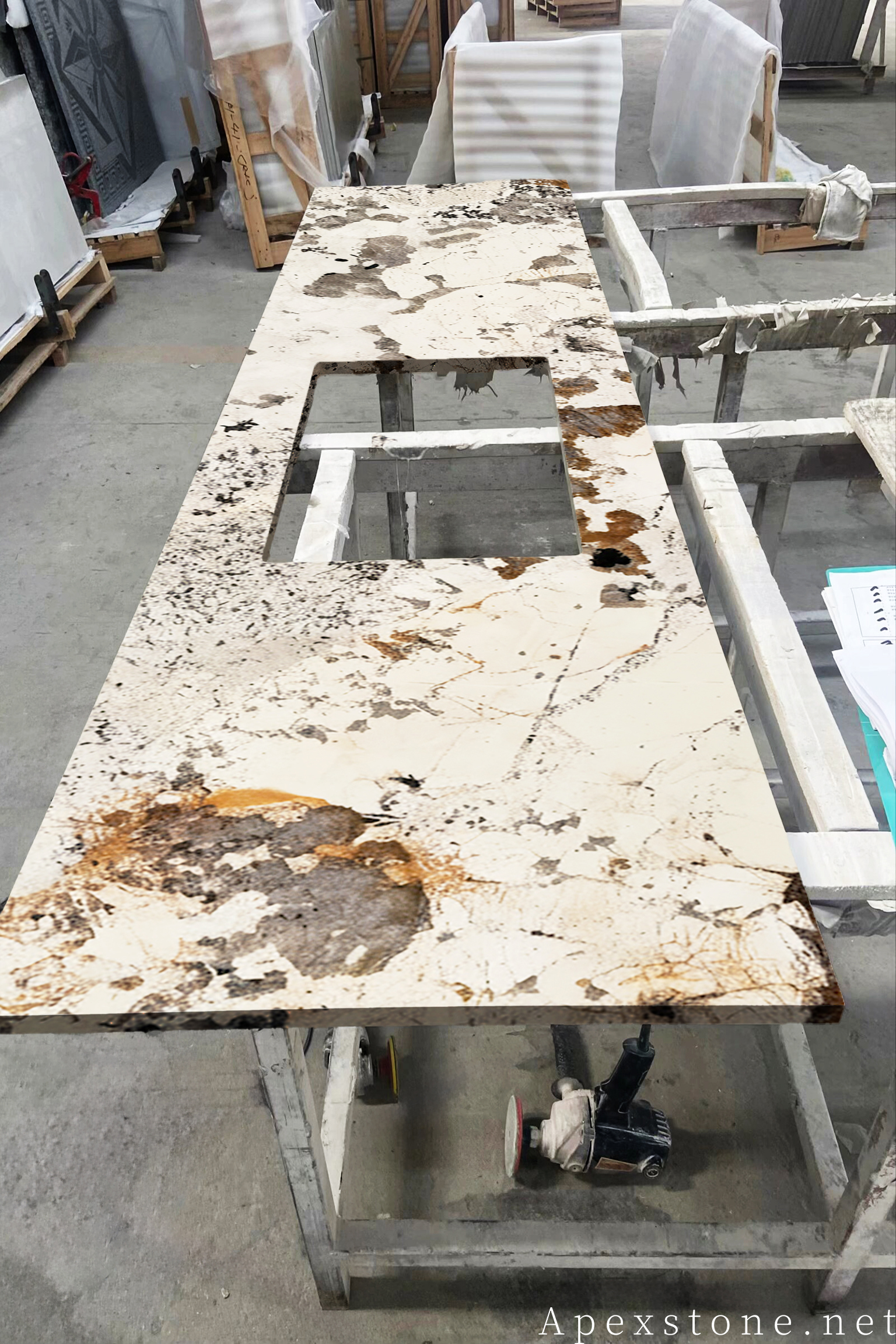
A practical way to judge this during selection is to ask for two samples of the same material in the two finishes you are choosing between, viewed together under the lighting of the final room. Photographs taken in a workshop, including the polished Pandora quartzite countertop above, show how strongly a gloss finish reflects, but the samples are still the reference point.
Finish and sealing: what changes
Sealing is where finish and material work together. A polished surface closes much of the stone's surface porosity mechanically, so a penetrating sealer has less open face to soak into. Honed, leathered and tumbled surfaces leave more of the stone's structure open. That does not mean every honed or leathered surface behaves the same; a dense quartzite and an absorbent marble are different materials, and the sealer type, coverage and maintenance regime should follow the specific stone, not the finish name alone.
If you are specifying stone for a wet area, ask the supplier two direct questions: which finish is being quoted, and what sealing guidance applies to that material in that finish. The answers belong on the quotation, not in a general care leaflet.
Daily cleaning: how care differs
Cleaning differences follow from the surface profile rather than from the stone's reputation.
- Polished: easy to wipe, but shows fingerprints, water marks and smudges most clearly. A damp cloth and a neutral pH cleaner are usually enough; dry the surface after wet cleaning to avoid spotting.
- Honed: flat and simple to clean, and much less revealing of marks than polish. Dust sits on the surface and wipes off without working into a texture.
- Leathered: the shallow texture holds dust and crumbs, particularly on horizontal counters where flour or soil can settle into the low spots. In practice this means brushing or using a soft cloth across the grain, and not leaving spills to dry in the texture.
- Tumbled: softened edges and an uneven face trap more dust near the joints, and the grout lines do the same. Floor and paving cleaning therefore focuses as much on the joints as on the stone face.
Avoid acidic cleaners on any calcareous stone such as marble and travertine, regardless of finish. Abrasive pads also change the finish over time, so a leathered or honed face should be cleaned with cloths rather than scouring pads.
Which finish fits which surface
Kitchen countertops and islands
Kitchen counters get the hardest trade-off: a polished face is the easiest to wipe but shows every mark, while a honed or leathered face hides marks and resists a working-kitchen look. Pandora quartzite kitchen counters and islands are offered in polished, honed or leathered finishes, in 2 cm or 3 cm thickness, with island slabs at 96 in and 72 in long by 36 in and 48 in deep, alongside a 25.5 in standard depth. That combination lets a buyer keep one material across the run while choosing the finish that matches how the kitchen is actually used: polished for a formal look, honed for a quieter matte surface, leathered where fingerprint-prone dark stone is a concern.
Bathroom and splashback surfaces
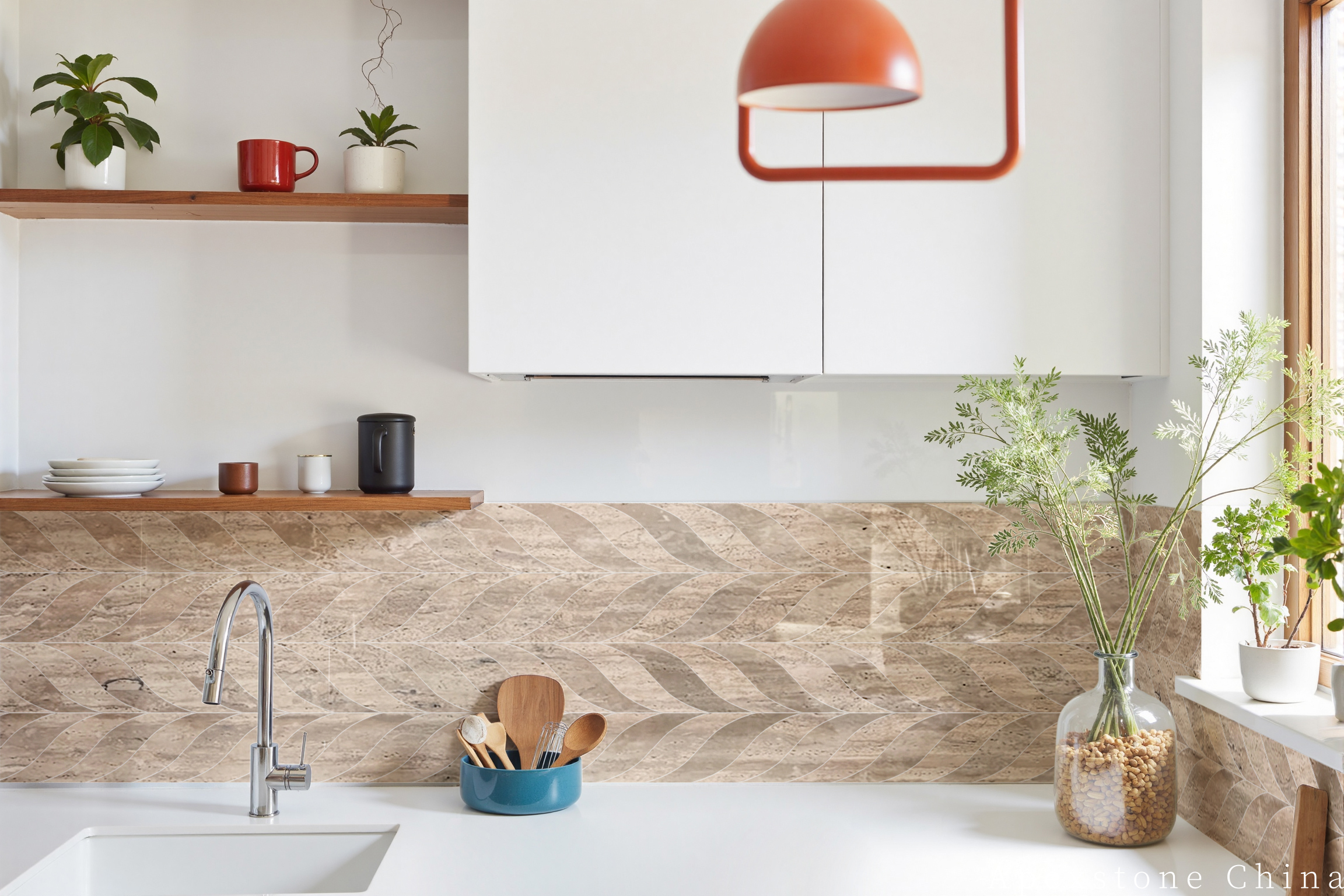
Bathroom vanities see water, soap and toothpaste, so the finish should be easy to wipe. Honed marble tiles and polished marble tiles are both used here; polished stone is easier to wipe but shows water spots, while honed faces are more forgiving of marks. Backsplash panels above a hob or basin should be chosen with cleaning access in mind, because textured faces are harder to wipe in a vertical run.
Floors
On floors, slip and texture matter more than gloss. A honed or tumbled face is the usual choice for a matte floor, and tumbled pieces soften the transitions between tiles. Polished floors look dramatic, but in wet areas a polished surface gives less grip and shows scuffs more readily.
Outdoor paving and pool surrounds
Outdoors, the finish has to survive wet-dry cycling as well as foot traffic. Tumbled travertine pavers are the classic answer: the tumbled face and softened edges look right underfoot and in weathered settings. Travertine Romano mosaics are produced in split face, tumbled and honed herringbone or basketweave patterns, mesh-mounted on 300x300 mm (12x12 in) sheets. The split-face option gives a rougher, more textured surface; honed gives a flatter matte; tumbled keeps the softened, informal edge that suits paving and wet zones.
Comparison at a glance
| Finish | Surface and look | Cleaning tendency | Typical uses |
|---|---|---|---|
| Polished | High gloss, deepest colour, mirror reflections | Easy to wipe; shows marks and water spots | Countertops, island tops, formal floors, polished marble tiles |
| Honed | Smooth matte, flatter colour, no gloss | Easy to wipe; less revealing of marks | Kitchen counters, bathroom vanities, floors, honed marble tiles |
| Leathered (brushed) | Shallow tactile texture, diffuse light, slightly softer colour | Needs brushing or a soft cloth; texture can hold dust | Leathered granite countertops, quartzite islands and counters |
| Tumbled | Softened edges, open face, informal character | Dust collects near edges and joints | Tumbled travertine pavers, mosaics, outdoor and wet areas |
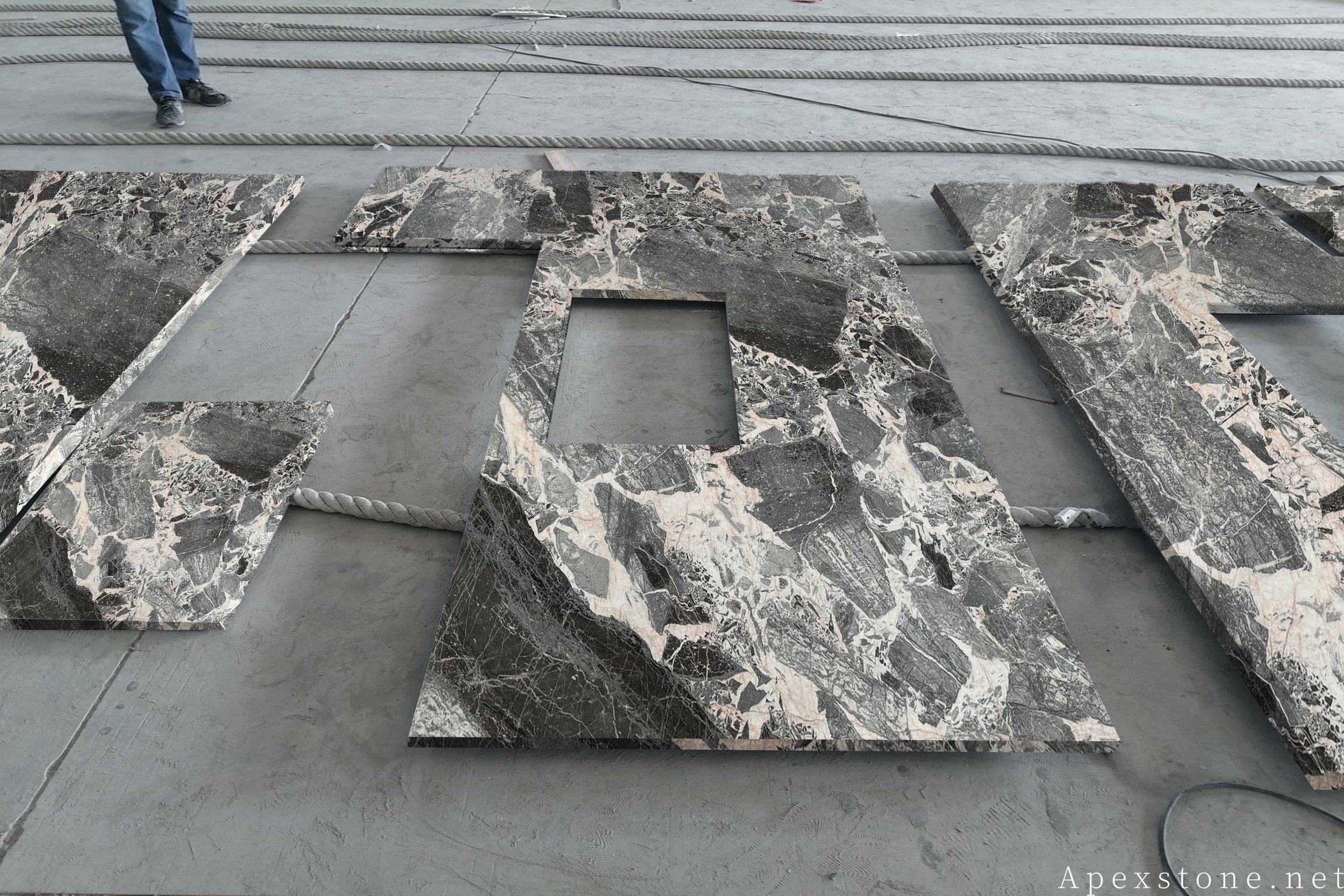
Thickness is quoted separately from finish and applies across the range: the Chanel Grey marble benchtops are offered honed, polished or brushed in 18 mm, 20 mm or 30 mm thickness, with waterfall edges possible.
Choosing between finishes
Work through these questions in order, because each one narrows the field:
- Where will the stone live? A dry kitchen counter and an outdoor step demand different surfaces. Wet and outdoor areas favour honed or tumbled surfaces with grip and texture.
- How much of the stone's character do you want to see? Polished for maximum colour and reflectance; honed for a calmer, more even look; leathered for visible texture; tumbled for a softened, weathered edge.
- Who cleans it, and how? A polished face wipes fastest but shows marks; a leathered face hides marks but needs a cloth worked over the texture. Match the finish to the routine that will actually happen.
- What does the supplier quote? Confirm the finish name, the thickness and the sealing guidance in writing on the same quotation.
Frequently asked questions
Is leathered granite harder to clean than polished granite?
It depends on what you mean by clean. Leathered granite has a shallow texture that can hold dust and crumbs, so it calls for brushing or wiping with a soft cloth rather than a single pass. Polished granite wipes faster but shows every fingerprint and water mark. Leathered surfaces tend to hide marks better; polished surfaces are quicker to wipe. Neither is universally easier.
Can marble tiles be honed after installation?
Honing is a mechanical process carried out with abrasives, normally before packing and installation. Re-honing an installed tile floor means grinding the surface in place, which is a specialist operation rather than routine maintenance. The practical route is to specify the finish you want at order stage: if you want honed marble tiles, order them honed rather than planning to convert polished tiles later.
Do tumbled travertine pavers need sealing?
Tumbled travertine has an open, textured face, and travertine is a porous material, so sealing is a normal part of the specification. The specific sealer and application should follow the supplier's guidance for that material and finish, and outdoor paving also needs to be assessed on drainage and exposure rather than on the finish name alone.
Finish is one line on a quotation, but it decides how the stone reads in the room, how it ages, and how it is cleaned every day. If you are comparing options for a project, the most useful next step is to request the same material in the two or three finishes under consideration, with thickness and sealing guidance confirmed for each, so the choice is made on samples rather than on photographs.